


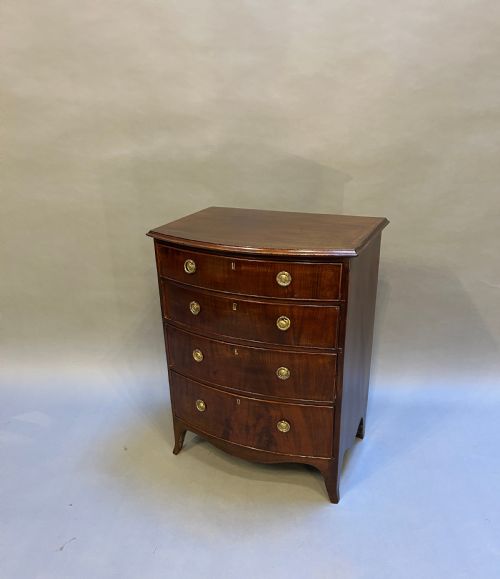
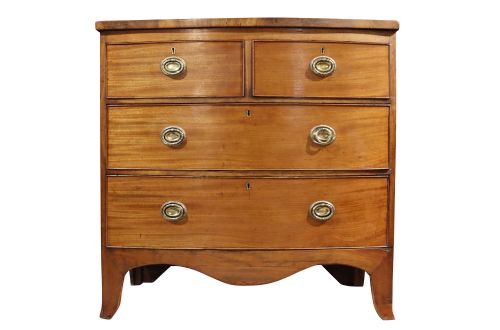
Small Bow Fronted Chest
A small bow fronted chest offers curved elegance and practical storage, combining compact proportions with the rich grain of mahogany or walnut.
Small Bow Fronted Chest
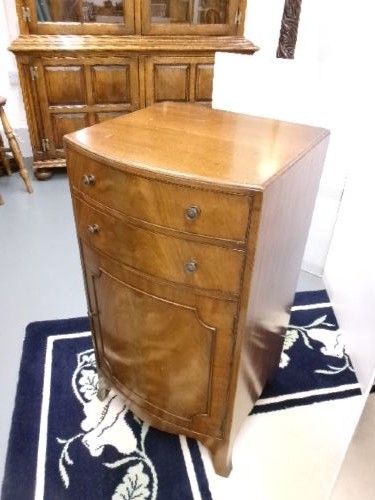
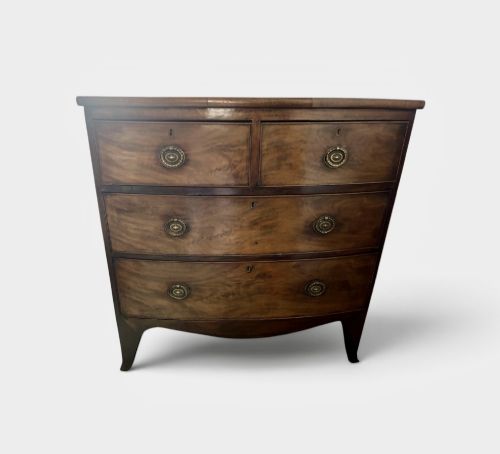
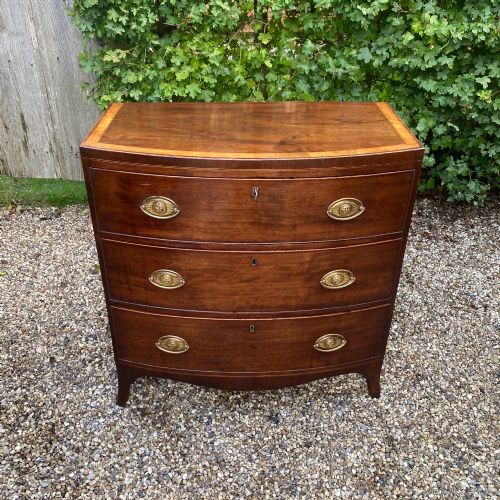
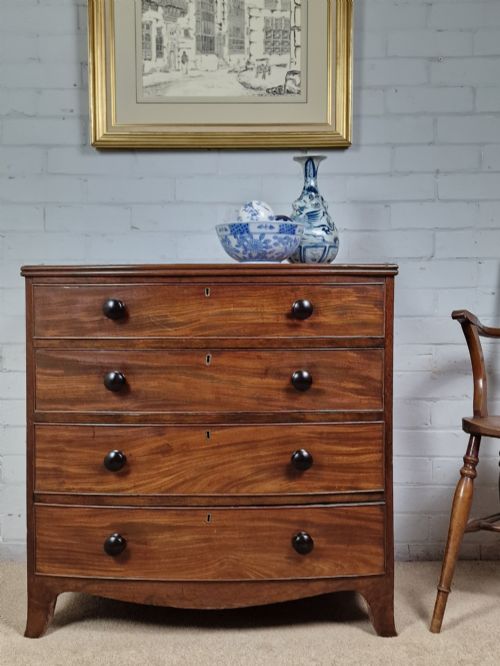
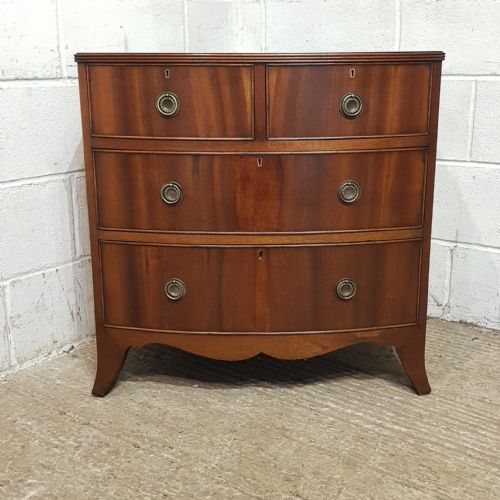
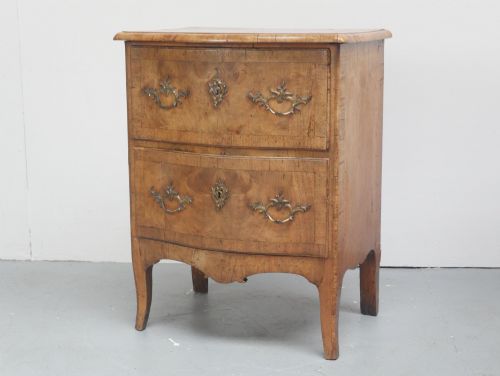
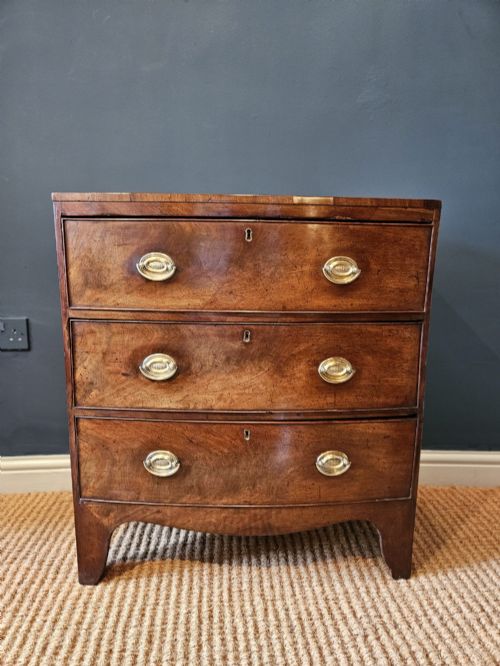
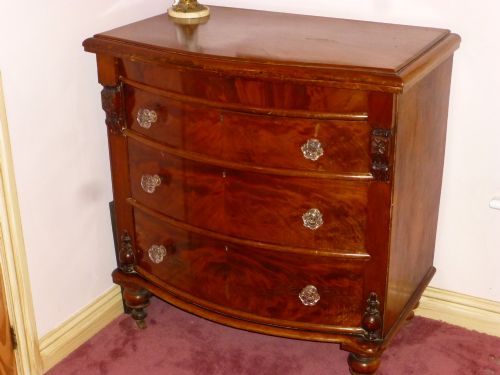
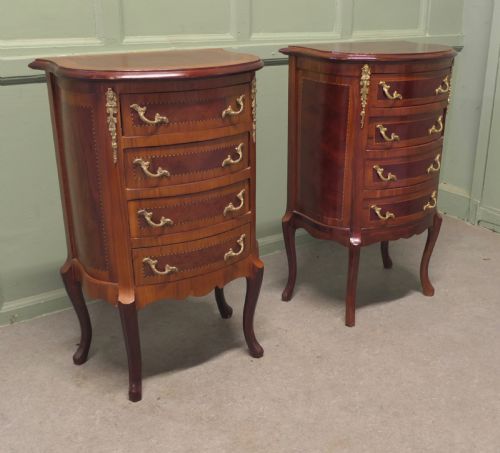
A small bow fronted chest functions as a compact storage unit featuring a curved, convex front facade that projects outward. These pieces appear frequently in mahogany and walnut, spanning periods from the Georgian era through to the early twentieth century.
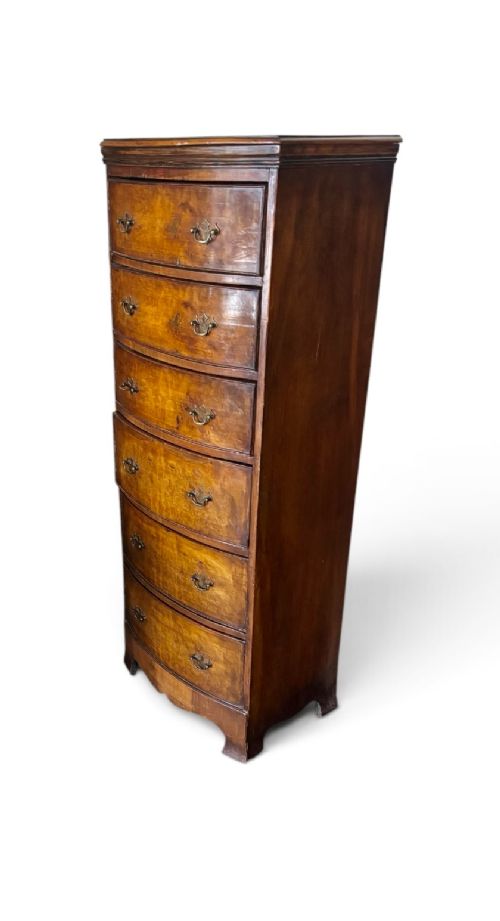
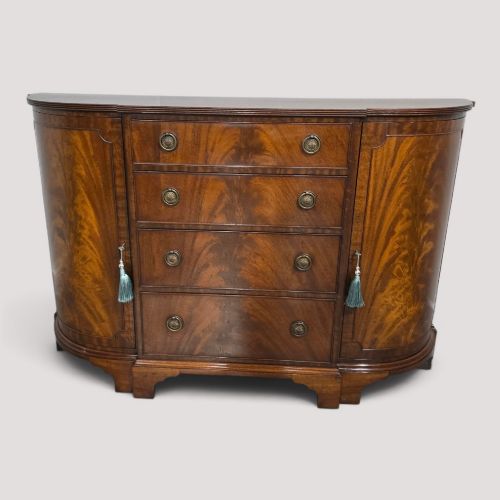
Buyers encounter standard chests of drawers alongside miniature examples, bedside cabinets, tallboys, and occasional sideboards. The proportions remain scaled down, making them suitable for smaller rooms where floor space is limited.
How they were made
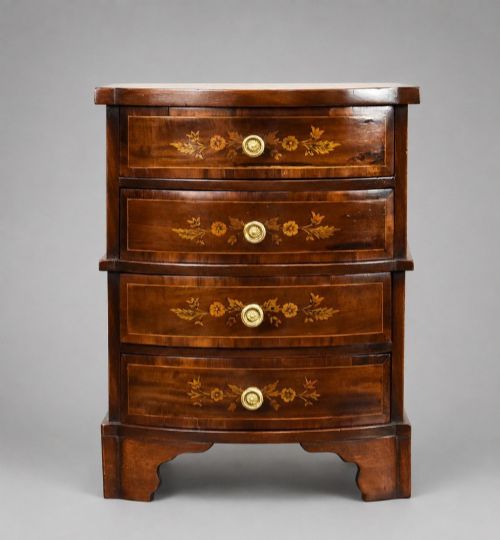
Cabinet makers utilised solid timbers alongside fine veneers, selecting figured mahogany, flame mahogany, burr walnut, and satinwood to cover the curved frames. Inlaid wood and brass handles or escutcheons frequently complete the decorative scheme.
Constructing the sweeping curve of a bow front required precise joinery to shape the drawer fronts and matching frames. Secondary timbers line the interior drawer boxes, while specialist details such as brushing slides or secret drawers appear in specific pieces.
Some miniature chests hide tiny secret compartments designed to safeguard small treasures from curious eyes.
What varies in quality
The standard of timber selection largely dictates the visual appeal, with symmetrical grain patterns and rich, warm patination elevating certain examples above plain counterparts. Figured veneers require expert matching across the curved drawers to maintain a cohesive surface.
Fine craftsmanship shows in the smooth action of the drawers, the precision of the inlaid details, and the survival of original brass hardware. Miniature and apprentice pieces demonstrate particular skill in scaling down traditional cabinet making techniques.
The Small Bow Fronted Chest Glossary
- Bow front
- A convex, curved front facade that projects outward from the main body of the furniture. This shape softens the profile of a standard rectangular chest.
- Brushing slide
- A pull-out shelf positioned above the top drawers, historically used for folding clothes or grooming. It slides flush into the cabinet when not in use.
- Tallboy
- A tall chest of drawers, often constructed in two stacked sections to provide generous vertical storage within a narrow footprint. They appear in walnut and mahogany finishes.
- Apprentice piece
- A miniature furniture item created by a trainee craftsman to demonstrate mastery of joinery and proportion. These small chests replicate full-sized designs with exact detail.
- Patina
- The surface sheen and mellow depth developed by aged wood through years of handling and polish. A desirable quality that denotes genuine antique status.
Small Bow Fronted Chest: Frequently Asked Questions
Where should I place a small bow fronted chest?
These compact chests fit easily into hallways, bedrooms, or living spaces as accent storage. Their shallow curved profile allows them to sit comfortably against walls without dominating the room.
They function well beneath mirrors or artwork, providing useful surface space alongside traditional drawer storage for smaller household items.
How do I identify a Georgian bow front chest?
Georgian examples typically feature hand-cut dovetails, oak or pine secondary drawer linings, and understated bracket feet or tapered legs. The timber often shows a deep, aged mahogany patina.
Construction methods of this period rely on traditional joinery without modern fixings, and the proportions tend to be robust yet elegant.
What is the difference between a miniature and a standard chest?
Miniature chests are significantly scaled-down versions of standard furniture, often measuring small enough to sit on a tabletop or desk. They replicate full-sized chests in exact detail.
Standard chests stand on the floor and provide full-scale drawer storage, whereas miniatures served as decorative display items or cabinet maker showpieces.
Are these chests suitable for modern homes?
Their modest dimensions make them practical for contemporary interiors requiring storage with traditional character. They integrate easily into various room layouts without overwhelming modern decor.
The warm wood tones and curved fronts introduce classic texture and useful surface space to bedrooms and landings.