

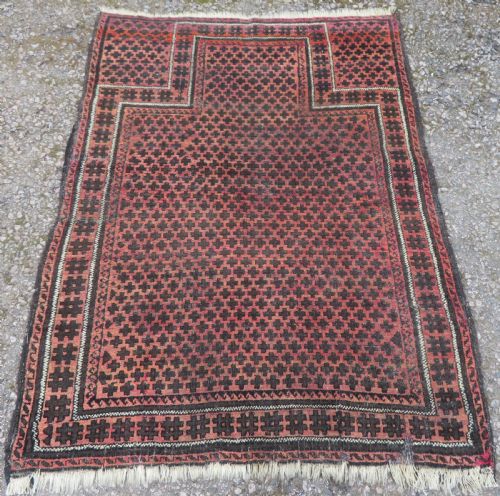


Small Baluch Rug
A small baluch rug brings tactile warmth and deep geometric patterns into a room, woven by tribal makers across Persia and Afghanistan.
Small Baluch Rug
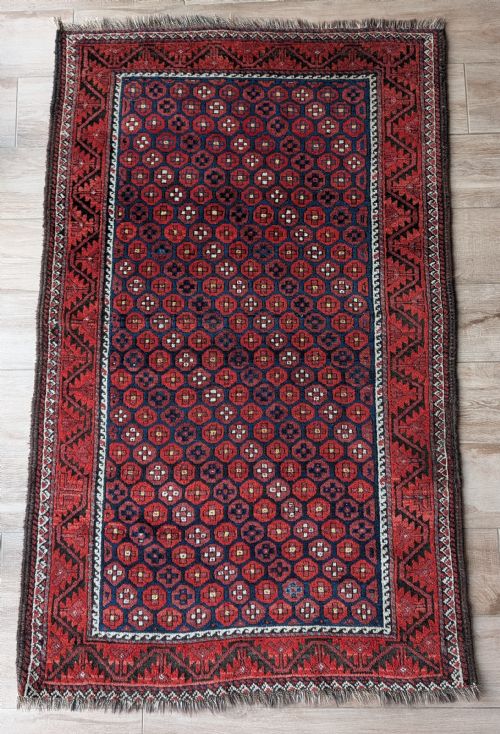
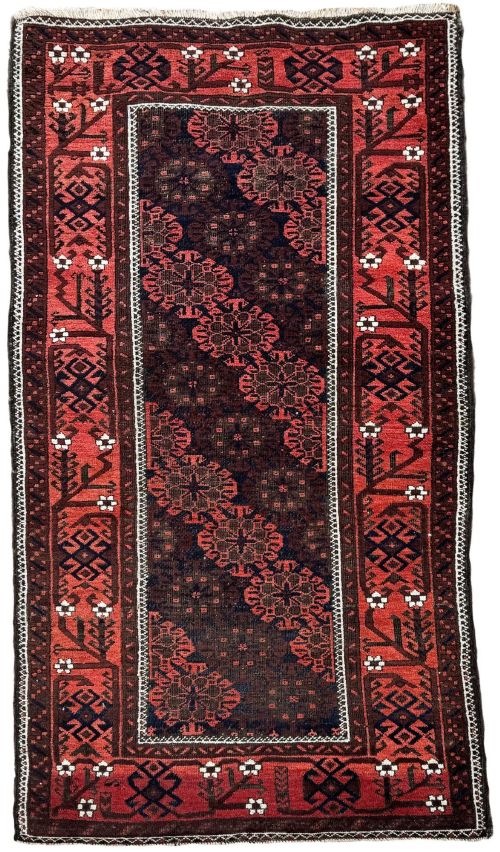
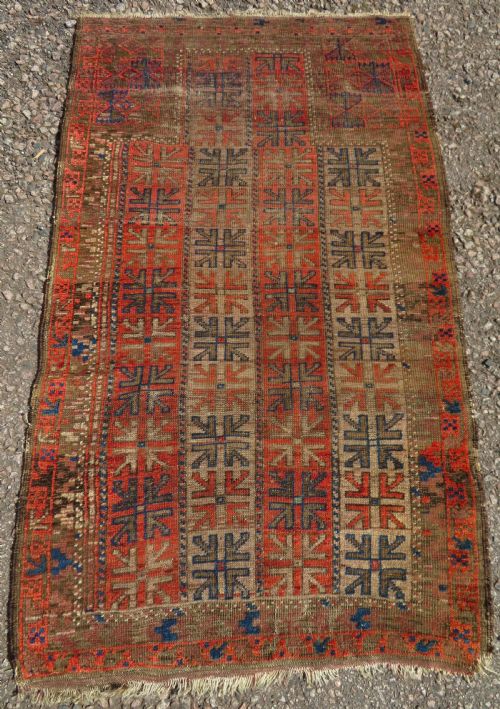
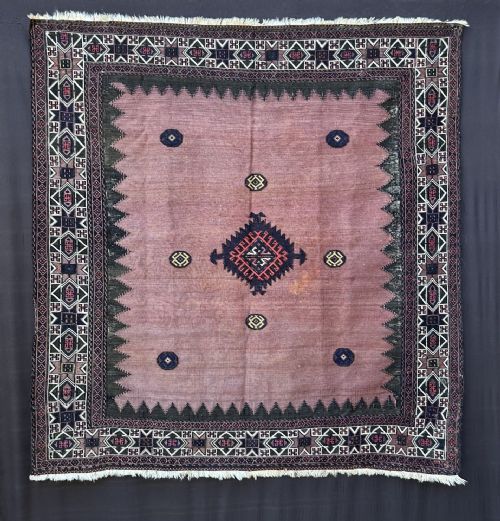
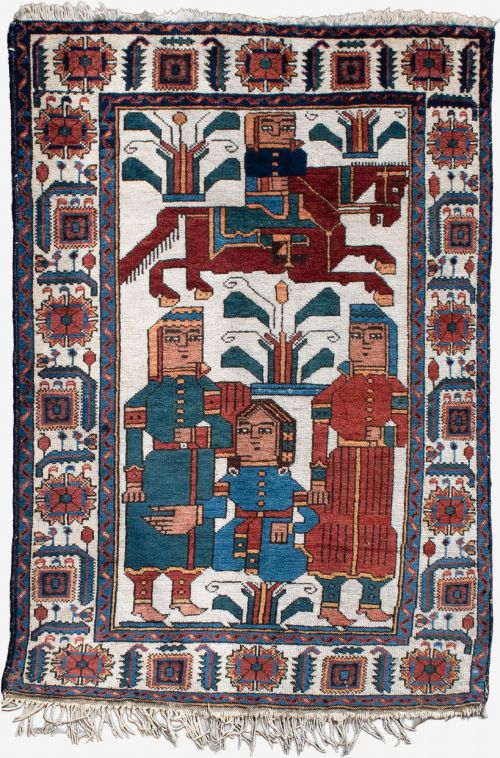
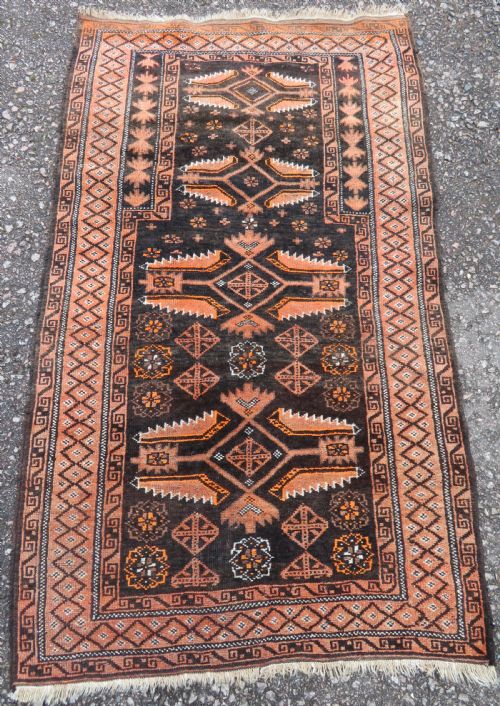
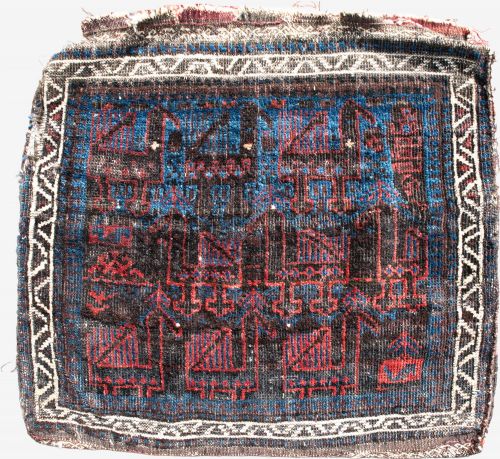
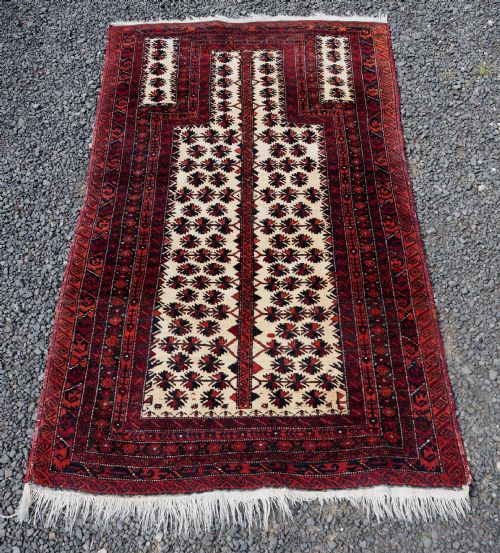
A small baluch rug represents the portable textile artistry of nomadic and semi-nomadic groups inhabiting the borderlands of Persia and Afghanistan. These pieces include floor coverings, prayer rugs with mihrab arches, saddle bag faces, and utilitarian items created for daily tribal life.
Examples on this page span the late nineteenth century through the early twentieth century, showcasing regional variations from Khorassan, Herat, and Sistan. Buyers encounter formats designed for compact spaces, prayer rituals, or animal transport rather than expansive salon floors.
Tribal weavers utilised traditional motifs such as the tree of life, lotus leaf patterns, shrub designs, and repeating tile layouts. Each small baluch rug carries the distinct aesthetic language of specific confederations like the Taimani, Timuri, and Bahluli.
Materials and construction
Weavers relied principally on hand-spun wool and occasional camel hair to construct the foundation and pile of these textiles. Natural dyes provided a deep palette derived from local flora and minerals, producing the characteristic dark indigos, madder reds, and earthy browns visible across the pieces.
The construction involves hand-knotting wool onto sturdy woolen or occasionally mixed warps and wefts, creating dense structures designed to withstand nomadic existence. Artisans employed traditional upright or horizontal ground looms set up temporarily during seasonal migrations.
Small Baluch Rug Retail Price Guide 2026
Typical asking prices for small baluch rug among the pieces listed under this phrase on Sellingantiques today, from the lower quarter to the upper quarter. They describe what is for sale here now, not the wider market.
Listings feature natural dyes, hand-spun wool, and camel hair across pieces dated from the nineteenth century to 1930.
Factors of quality
Knot density and handle softness distinguish finer weaving from coarser utilitarian output. Superior pieces display precise geometric execution and handle with a supple, flexible weight that reflects careful preparation of the hand-spun wool.
Colour saturation and the complexity of the dye work dictate visual hierarchy within the weaving. Depth of tone achieved through natural dyeing techniques elevates certain examples, while crisp execution of specific patterns such as the dokhtar-e-qazi or multiple mihrab arches marks superior tribal craftsmanship.
The Small Baluch Rug Glossary
- Pushti
- A small mat or rug format, often used as a cushion or placed on a piece of furniture. These compact textiles share the design vocabulary of larger floor carpets.
- Ru Korssi
- A decorative cover traditionally placed over a low table heated by coals underneath in Persian homes. They often feature square or rectangular dimensions suited to domestic warmth.
- Saddle bag face
- The front panel of a larger pack animal bag preserved as a distinct rug. These pieces display concentrated medallion or tile designs within a reduced format.
- Tree of life
- A symbolic motif depicting growth and the connection between earth and heaven. Weavers frequently centre this vertical axis within the field of prayer rugs.
Small Baluch Rug: Frequently Asked Questions
How were these rugs used originally?
Nomadic families used these textiles for ground cover inside tents, as saddle bags for transport, or as portable prayer mats during daily devotions. Their compact sizes suited the mobile lifestyle of weavers traversing Khorassan and Afghanistan.
Specific formats like the ru korssi warmed domestic spaces over charcoal heating basins, while others served as utilitarian pouches for household storage.
Where were these textiles made?
The pieces originate from tribal groups inhabiting the border regions between eastern Persia and western Afghanistan. Regions such as Khorassan, Herat, and Sistan produced distinct regional variations.
Different tribal confederations, including the Timuri, Taimani, and Bahluli, contributed specific design traditions and colour palettes to this geographical area.
How do I care for a vintage rug?
Protect the wool by placing a breathable, non-slip underlay beneath the textile on hard floors. Vacuum gently using suction attachments without rotating bristle brushes.
Keep the piece out of direct sunlight to preserve natural dye colours and rotate the rug periodically to ensure even wear patterns over time.
How can I tell the age of a piece?
Inspect the materials, dye palette, and structural wear to gauge the period of manufacture. Pieces from the nineteenth and early twentieth centuries typically utilise hand-spun wool and specific natural dye compounds that mellow distinctively.
Structural irregularities in tribal weaving also indicate older hand-knotted production methods prior to the introduction of commercial synthetic dyes.