
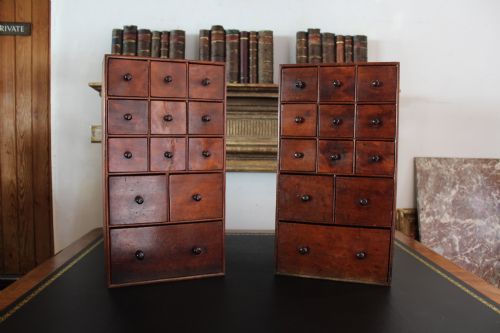
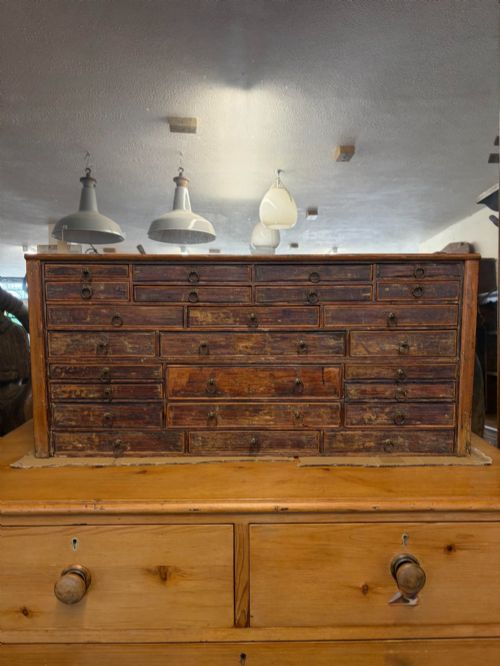
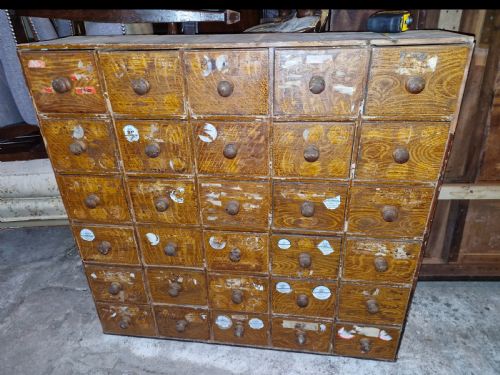
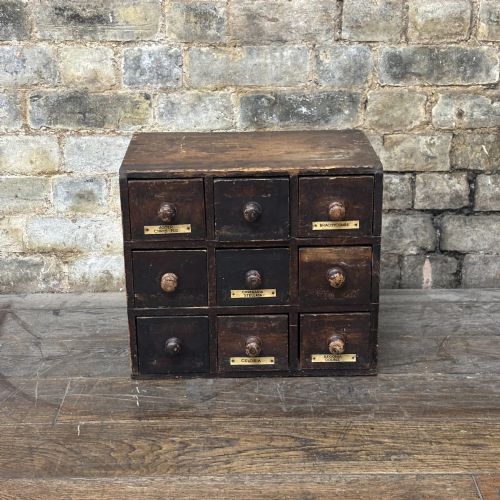
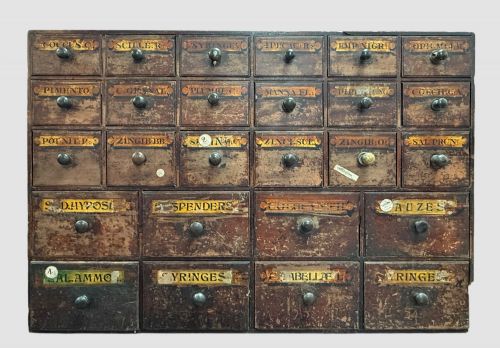
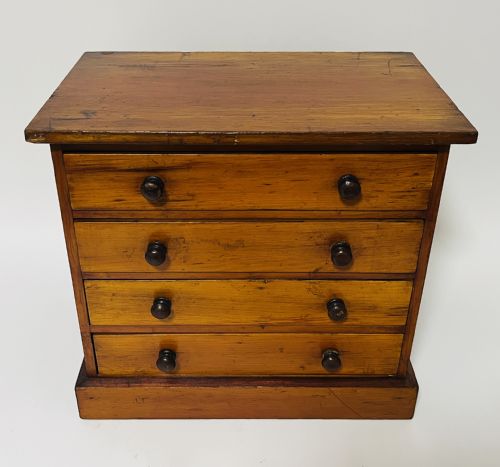
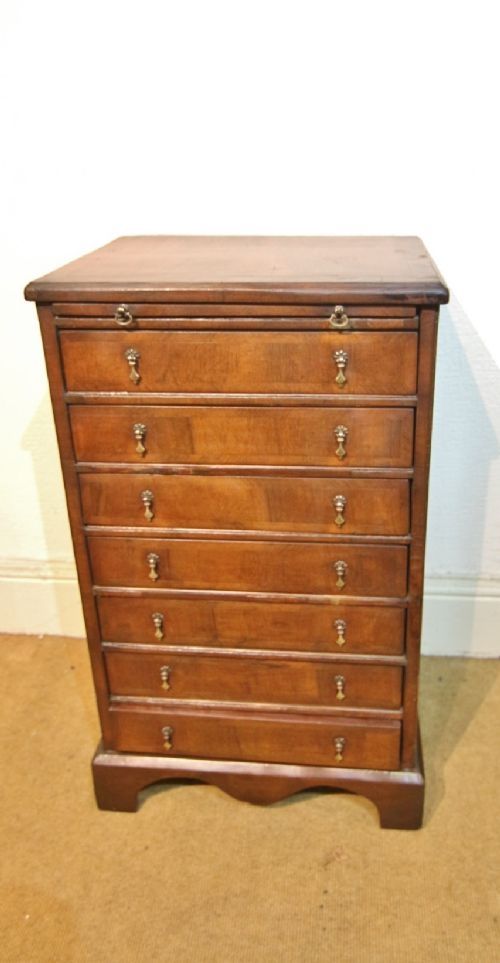
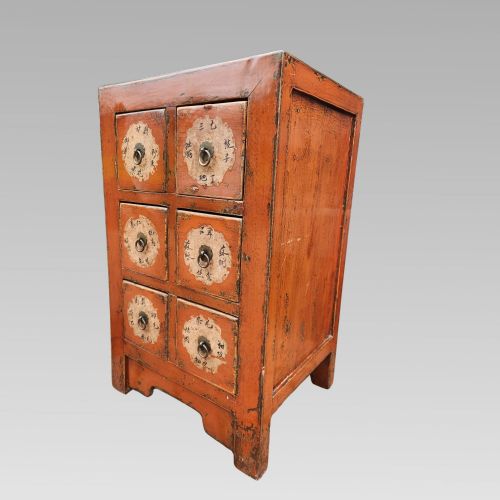
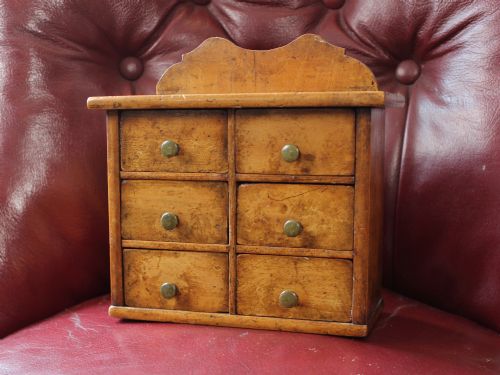
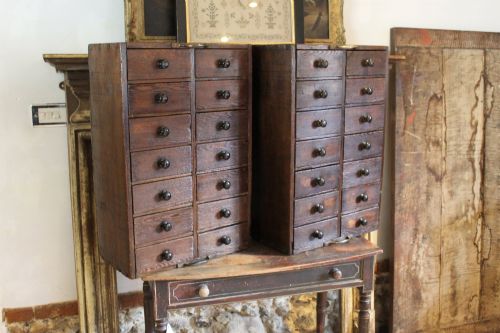
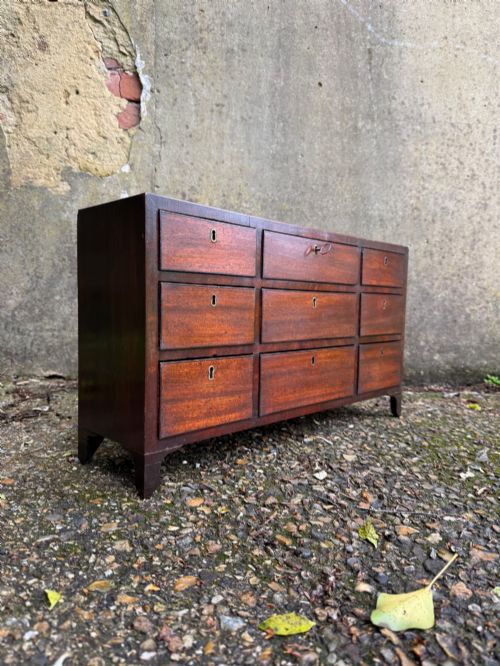


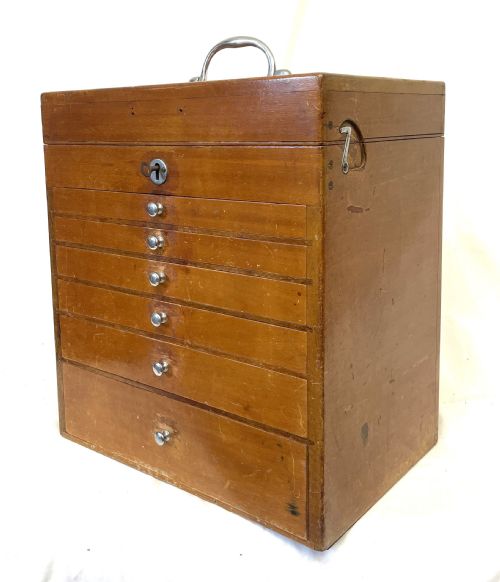
Small Apothecary Drawer Cabinet
These small apothecary drawer cabinet pieces provide compact storage through numerous compartments, developed for sorting roots, seeds, and medical supplies.
Small Apothecary Drawer Cabinet
A small apothecary drawer cabinet comprises multiple compact compartments housed within a timber frame, designed for sorting medicines, spices, and small specimens. Buyers searching this phrase encounter apothecary chests, spice cabinets, banks of drawers, and collectors cabinets originating from periods spanning the eighteenth century through the twentieth century.
The versions most frequently met on this page include nineteenth century pine, oak, and walnut banks of drawers alongside Victorian and Edwardian examples. These pieces serve domestic and commercial storage roles, taking the form of table top chests, wall-hanging spice boxes, and multi-drawer pharmacy units.
How they were made
Cabinet makers constructed these pieces primarily from solid timbers such as pine, oak, walnut, mahogany, fruitwood, and deal, often combining pine carcases with hardwood drawer fronts. Joints typically include dovetailing on the drawer construction to withstand the frequent pull of multiple compartments.
Hardware consists of brass or iron pulls, handles, and occasional key escutcheons, while specific pieces incorporate glass fronts or metal labels to identify the contents of each drawer.
Medical carrying chests once travelled the roads to dispense remedies on the move.
What varies in quality
Quality differentiates by the selection of timber and the precision of the drawer joinery, with dense hardwoods like oak and walnut or figured fruitwood indicating superior craft compared to basic stained pine. Original brass or iron hardware and intact drawer proportions also distinguish finer utility pieces from simpler workshop storage.
The degree of original surface preservation, such as untouched patination on older pine and oak, marks the distinction between standard utilitarian boxes and highly finished domestic collectors chests.
Luxmore's of Ilfracombe·D Napier & Sons
The Small Apothecary Drawer Cabinet Glossary
- Bank of drawers
- A multi-tiered furniture form containing numerous small drawers stacked vertically or horizontally. This configuration provides systematic sorting for pharmacy ingredients or small hardware.
- Spice cabinet
- A small wooden chest fitted with multiple internal drawers for culinary herbs and roots. These pieces frequently hang on walls or sit upon kitchen tables.
- Collectors cabinet
- A specialised storage unit designed to hold natural specimens, coins, or horological items. They feature shallow drawers to protect delicate objects.
- Dovetail
- A carpentry joint formed by interlocking wedge-shaped fingers. This method secures drawer corners against the persistent pull of daily use.
Small Apothecary Drawer Cabinet: Frequently Asked Questions
What were small apothecary drawer cabinets used for?
These cabinets stored dried herbs, roots, chemical compounds, and small medical equipment for apothecaries, chemists, and domestic households. The numerous small drawers kept ingredients separated and protected from light and moisture.
Over time, similar multi-drawer formats were adopted by seed merchants, watchmakers, and collectors to sort small items like watch parts and botanical specimens.
How do I date a small apothecary drawer cabinet?
Dating relies on observing timber choices, construction methods, and hardware styles across the piece. Eighteenth and early nineteenth-century examples often feature solid oak or walnut with hand-cut dovetails, while later nineteenth and twentieth-century items frequently employ pine with machine-cut elements.
Hardware transitions from hand-forged iron to turned wooden knobs and standardised brass pulls in the Victorian and Edwardian periods.
Are these cabinets suitable for modern kitchens?
Their compact proportions and numerous compartments make them practical for organising spices, tea, and kitchen utensils on countertops or walls. The shallow drawer depths prevent items from getting lost at the back.
Buyers should measure available wall space or surface depth carefully, as multi-drawer banks vary significantly in their overall width and height.
How do I care for antique pine and oak cabinets?
Maintain the wood by applying a natural beeswax polish occasionally to nourish dry timber and preserve the historic surface finish. Avoid placing the cabinet near direct heat sources or in damp environments to prevent wood splitting.
Clean the interior drawers gently with a dry cloth or soft brush to protect original linings and timber patination.