
Small Tilt Table
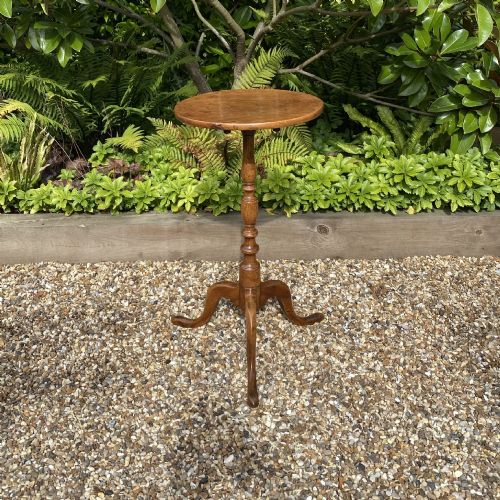
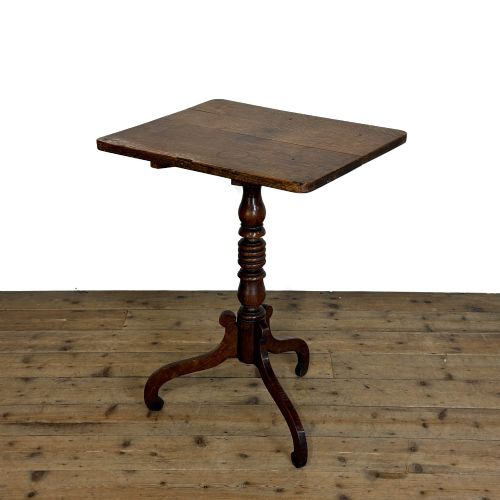
A small antique tilt table provides a compact surface that folds flat when not in use, combining practicality with refined period cabinetmaking.
Small Tilt Table
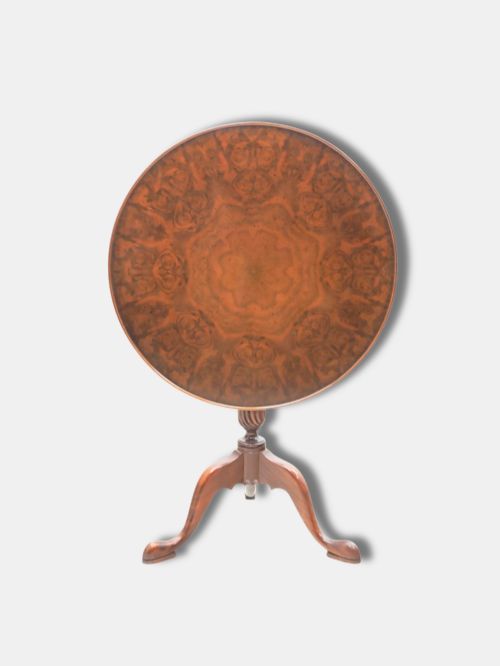
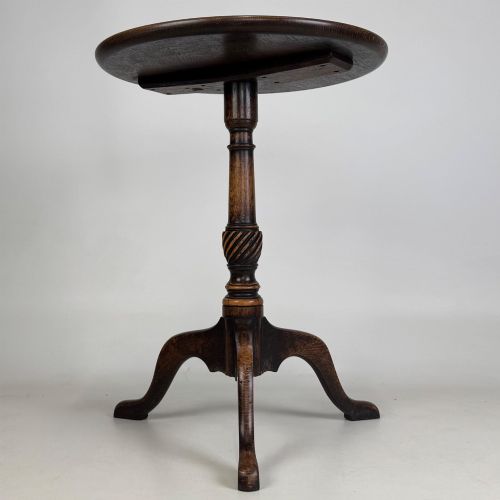
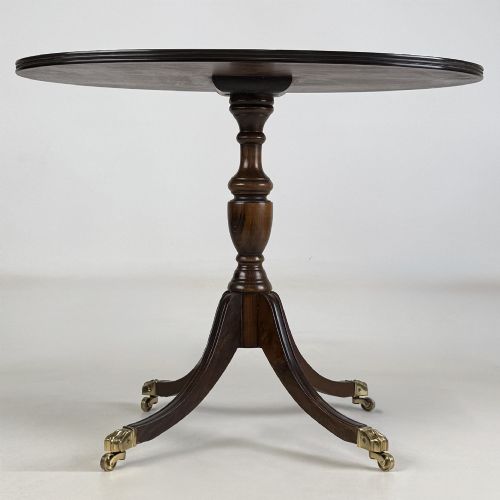
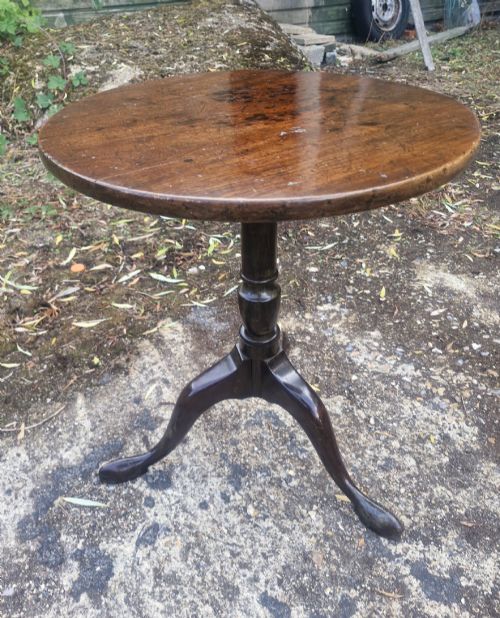
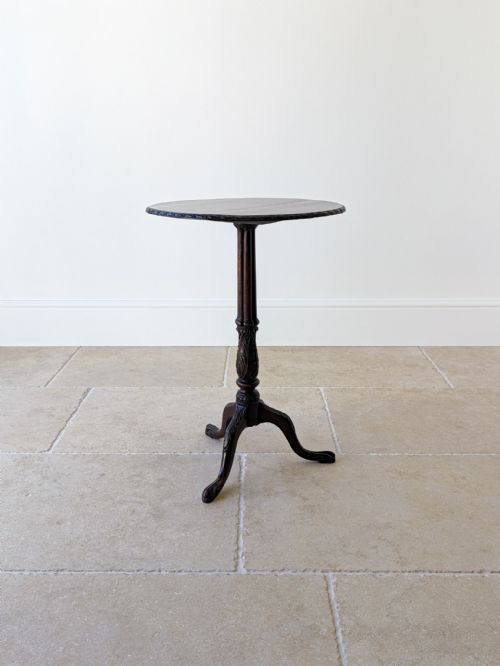
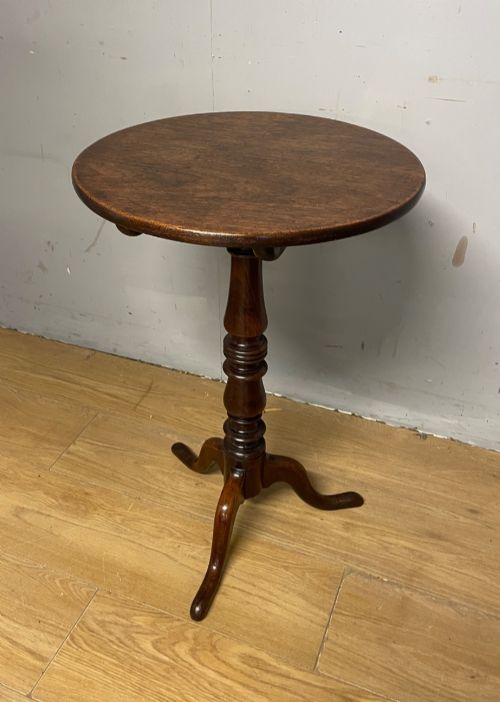
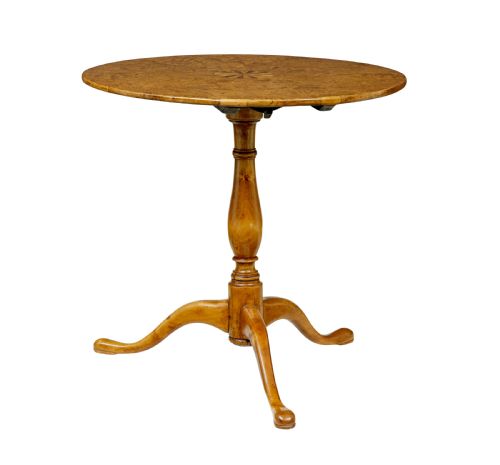
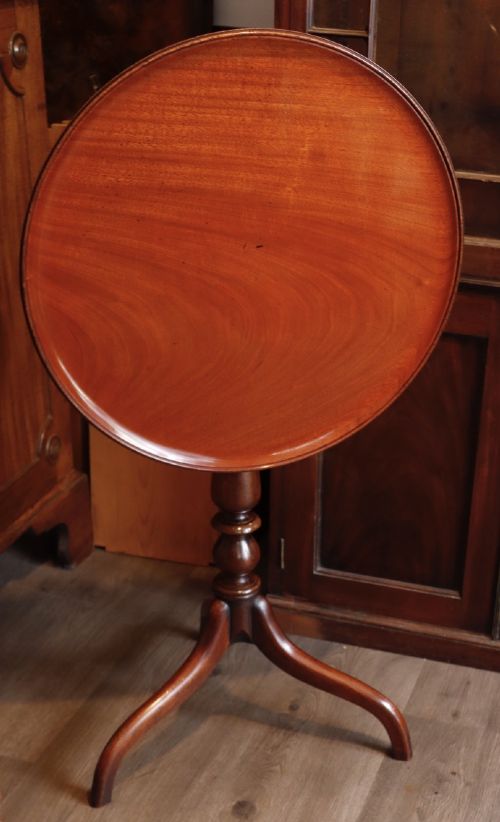
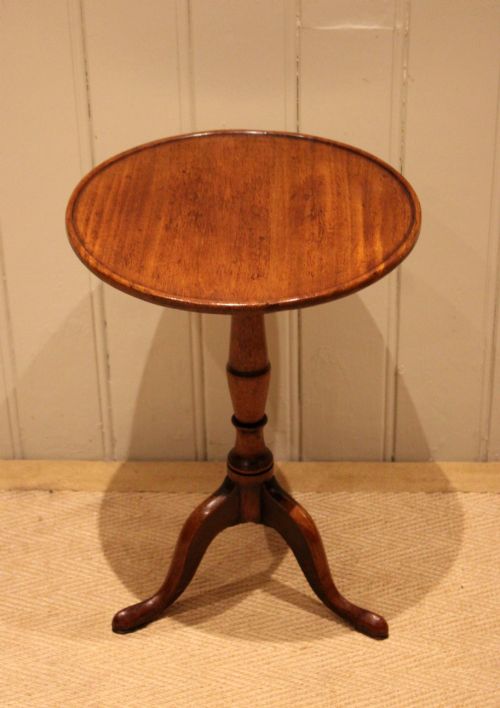
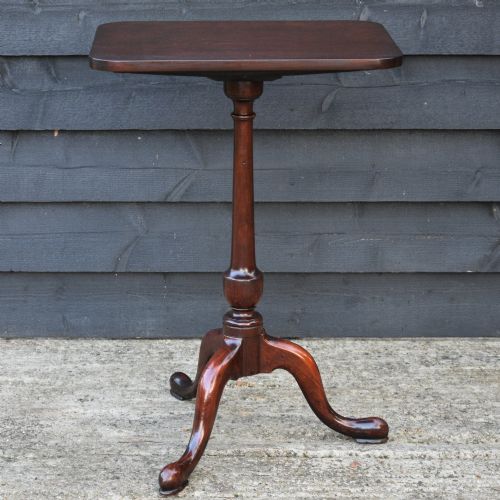
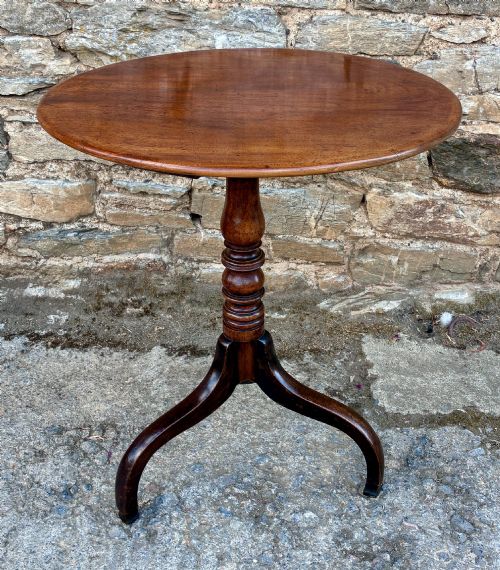
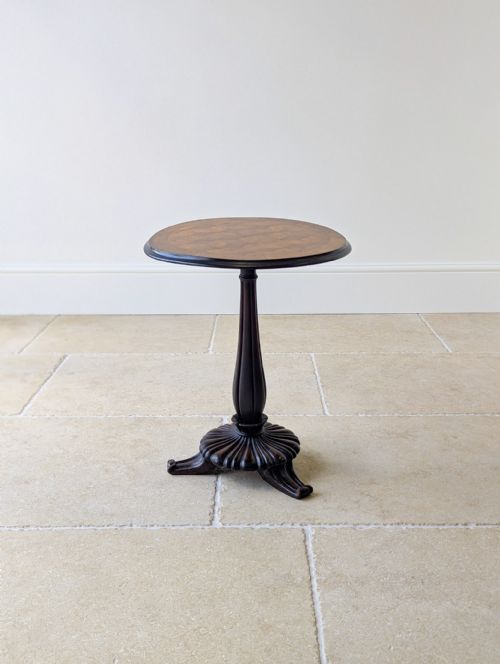
When searching for a small antique tilt table, a buyer encounters tripod bases supporting circular or occasionally octagonal tops designed to tip vertically against the column. These pieces emerge predominantly from the Georgian, Regency, and Victorian periods, alongside later revival examples.
Origins span English workshops of the eighteenth and nineteenth centuries, with occasional continental pieces appearing in regional woods like burr birch or fruitwood. The form adapts easily to modern rooms while retaining period character.
How they were made
Cabinetmakers utilised dense hardwoods such as mahogany, walnut, and oak for structural stability, often turning slender central columns on a lathe to create balanced tripod supports. Tops were joined to the pedestal via a tilting mechanism that allowed the surface to pivot and lock flat.
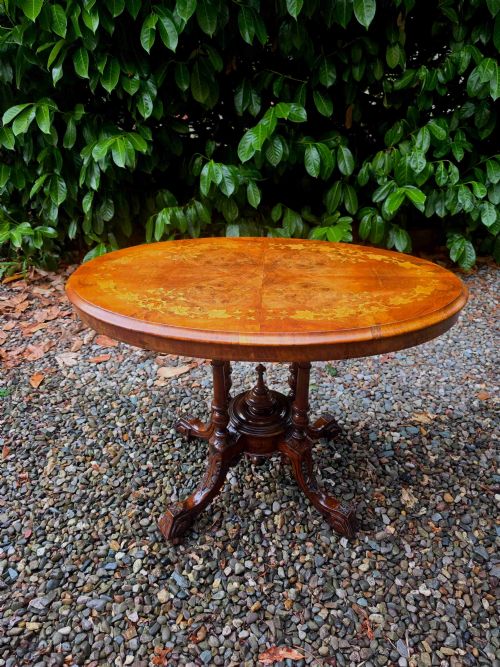
Decorative elements included boxwood inlay, brass fittings, penwork decoration, and hand-painted motifs applied to the timber surfaces. Timber selection often focused on figured grains, such as burr walnut or burr oak, to enhance visual depth.
Some nineteenth-century examples include miniature apprentice pieces built by learners to demonstrate their mastery of the tilt table form.
What varies in quality
Quality rests in the precision of the turning on the column and the stability of the birdcage or block mechanism that connects the top to the tripod base. Fine examples maintain a tight joint when the top is locked horizontal, without excessive play in the pivot.
The choice of timber grain and the execution of secondary details like boxwood stringing or brass inlay separate standard regional pieces from superior workshop productions. Original surfaces and patination heavily influence the character of the piece.
The Small Tilt Table Glossary
- Tilt top
- A table surface mounted on a hinge mechanism that allows the top to pivot to a vertical position when not in use. This design originated to save floor space in domestic interiors.
- Tripod base
- A support structure featuring three splayed legs radiating from a central turned column. It provides steady contact on uneven floorboards.
- Snap top
- A spring-loaded or catch-secured mechanism holding the tabletop firm in the horizontal position. It releases to allow the table to tip.
- Wine table
- A small occasional table designed to hold glasses or a decanter beside a chair. These typically feature circular tops supported on slender pedestals.
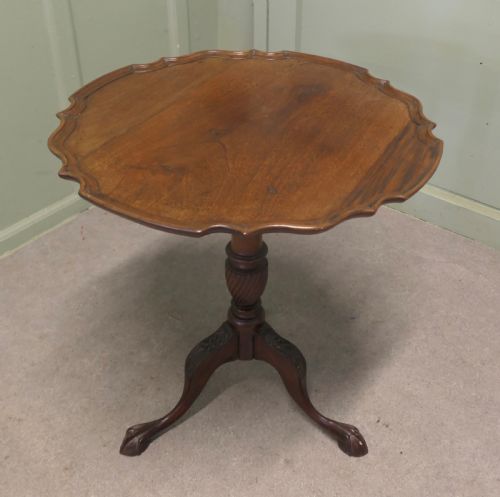
- Pie crust edge
- A carved, undulating raised rim shaping the perimeter of the tabletop. This style appears frequently on Georgian and revival pieces.
Small Tilt Table: Frequently Asked Questions
How do I use a tilt table today?
These tables function well beside armchairs as lamp or drinks surfaces, taking up minimal floor space when tipped against a wall.
Their compact scale allows them to fit into awkward corners or narrow hallways without overwhelming a room.
Were these tables used for dining?
Smaller examples served wine or supported lamps, while larger variants known as breakfast tables accommodated morning meals in private chambers.
The tilting mechanism enabled servants to store multiple tables compactly against the perimeter of a dining saloon.
How do I tell a Georgian table from a Victorian one?
Georgian examples often display restrained mahogany timbers with simple tripod legs and subtle turning, prioritising architectural proportion.
Victorian versions frequently introduce heavier pedestal carving, walnut veneers, or applied decorative elements like boxwood inlay and hand-painted details.
What is the purpose of the catch under the top?
The brass or wooden catch locks the tabletop securely into the horizontal position so it remains stable during use.
Releasing this catch allows the surface to pivot safely back down against the central column.