





Small Library Desk
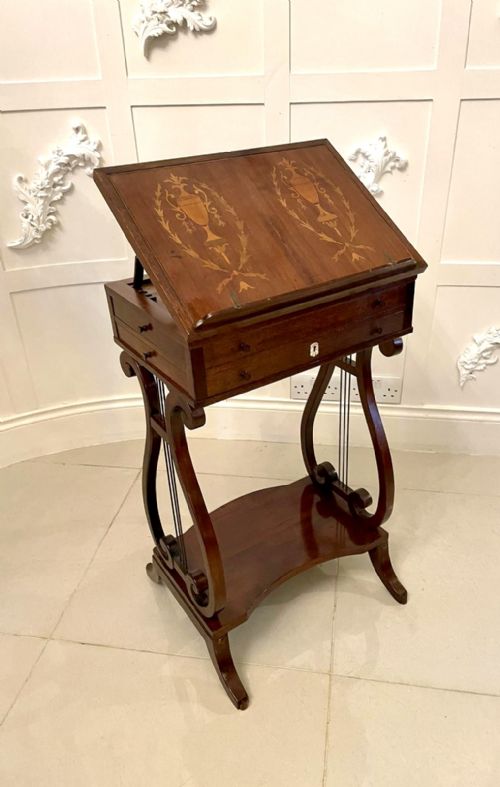
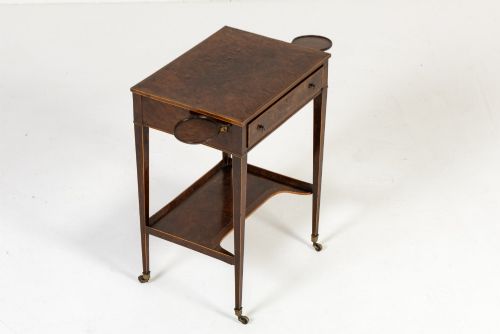
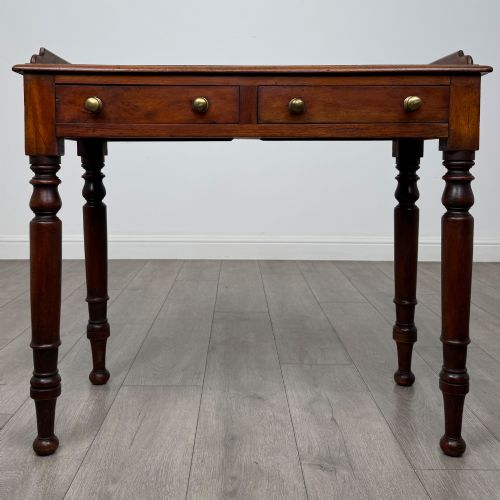
A small antique library desk provides a compact workspace, combining period cabinetmaking with proportions suited to modern rooms.
Small Library Desk
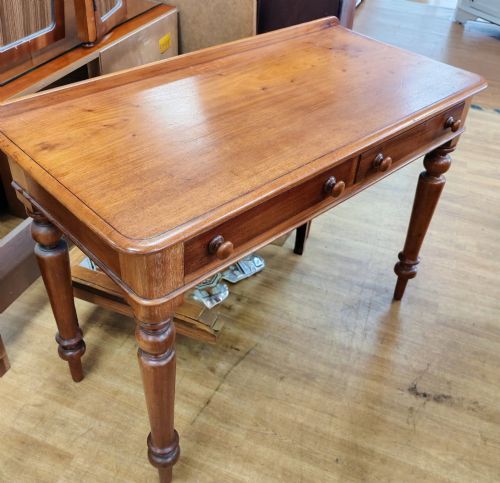
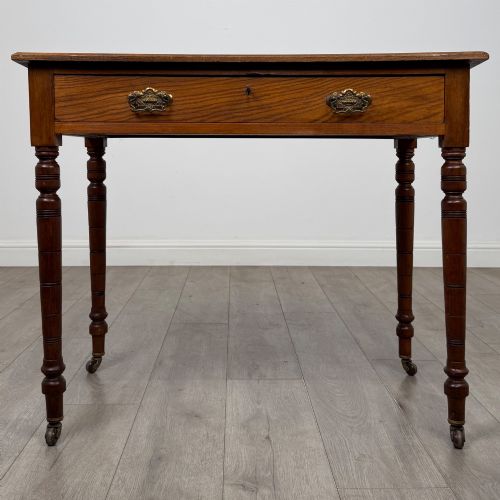
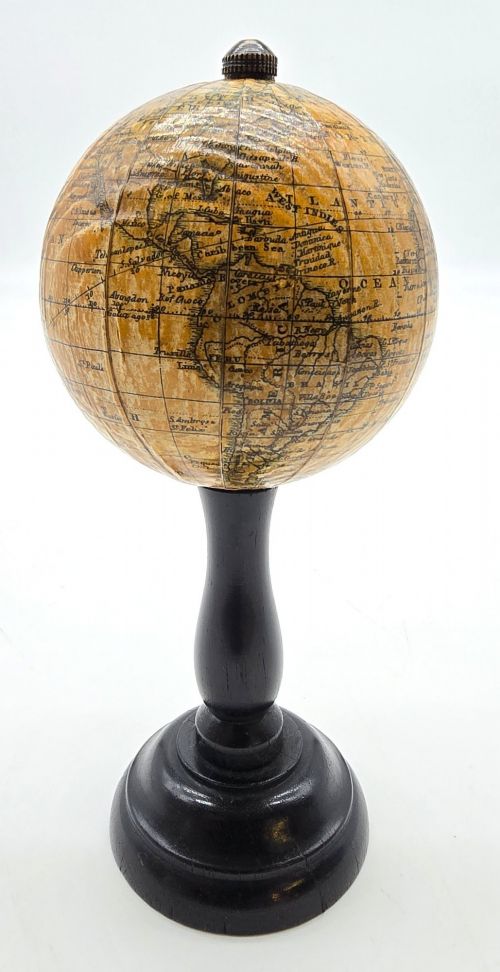
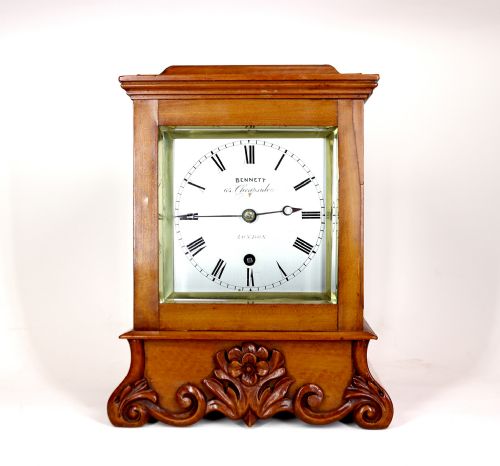
A small antique library desk spans several eras, appearing in Georgian, Regency, Victorian, and Edwardian iterations. These pieces function primarily as writing tables, partners desks, and reading tables designed for domestic studies or libraries. Mahogany and oak dominate the selection, often accompanied by smaller associated items like miniature globes and library clocks.
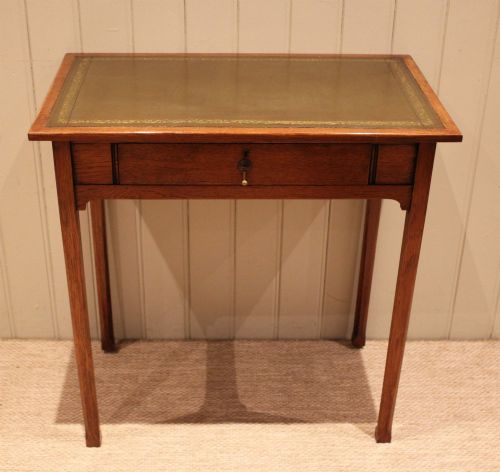
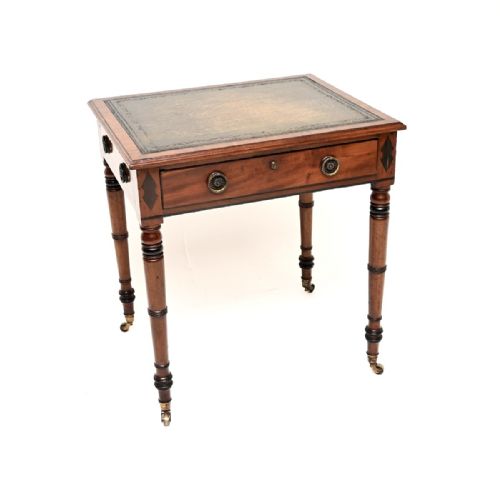
The most common forms on this page are compact writing tables featuring inset leather tops and narrow drawers. Makers constructed these pieces in walnut, satinwood, and burr yew wood, alongside polished mahogany. Buyers encounter freestanding oval shapes and neat rectangular formats intended for efficient placement.
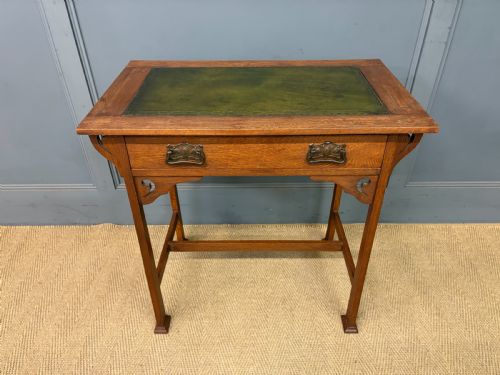
Periods range from the eighteenth century through to the interwar years, encompassing styles from Arts and Crafts to Art Deco. Alongside traditional writing desks, the category accommodates rotary bookstands, magnifying glasses, and desk globes. Each object reflects the compact functional requirements of historical study spaces.
Materials and construction
Cabinetmakers utilised solid timbers such as mahogany, oak, and walnut for the primary frames of these desks. Secondary woods provided structural stability for drawer linings and internal dividers, while decorative veneers like satinwood, burr yew, and pollard oak added surface pattern. Brass hardware, including handles and locks, completed the construction.
Writing surfaces frequently incorporated inset leather tops, often embellished with gilt tooling. Glass featured in bookcase doors and clock faces, while paper and metal constituted the construction of desktop globes and magnifying glasses. Workshops applied traditional polish finishes to highlight the natural grain of the wood.
Small Library Desk Retail Price Guide 2026
Typical asking prices for small library desk among the pieces listed under this phrase on Sellingantiques today, from the lower quarter to the upper quarter. They describe what is for sale here now, not the wider market.
Desk accessories include rotary bookstands designed to keep your heavy volumes spinning smoothly while you write.
Distinctions in quality
The standard of timber selection divides standard pieces from superior examples. Workshops using highly figured pollard oak, burr walnut, or satinwood achieved a more decorative finish than those employing plain straight-grained woods. Figured mahogany and birdseyes maple also indicate higher tier production.
Attribution to known makers or documented workshops elevates the standing of a desk. Pieces bearing signatures from makers like Gillows of Lancaster or James Shoolbred demonstrate superior cabinetmaking standards. Finer execution is likewise visible in the precision of inlay work and the integration of secondary compartments.
Gillows of Lancaster·James Shoolbred·Sir John Bennett·Mappin & Webb·McCabe
The Small Library Desk Glossary
- Partners desk
- A double-sided writing table designed for two people to work opposite one another, featuring drawers on both long sides. These large forms are sometimes scaled down into neat proportions.
- Secretaire bookcase
- A tall cabinet incorporating a drop-front writing drawer that conceals a fitted interior of pigeonholes and small drawers. They combine library storage with a compact writing surface.
- Pollard oak
- Oak timber taken from trees that have been pollarded, producing a heavily knotted and burred grain pattern. Cabinetmakers utilised this timber for decorative veneered surfaces.
- Library clock
- A portable timepiece designed for use on a desk or mantel, often housed in brass, mahogany, or glass cases. These clocks kept time in private studies and reading rooms.
- Library table
- A freestanding table utilised for sorting papers and reading large volumes rather than intensive writing. They feature finished backs allowing placement in the centre of a room.
Small Library Desk: Frequently Asked Questions
What is a small antique library desk?
A small antique library desk is a compact writing table or freestanding desk built during the eighteenth, nineteenth, or early twentieth centuries. These pieces were designed for reading, correspondence, and administrative tasks in private homes.
Craftsmen constructed them in woods like mahogany, oak, and walnut, frequently incorporating inset leather writing surfaces. Their reduced dimensions make them practical for contemporary study spaces.
How do I identify a Regency writing table?
Regency writing tables typically date from the early nineteenth century and often feature classical proportions, sabre legs, or brass inlay. Cabinetmakers working in this period utilised figured timbers like pollard oak and mahogany.
Many examples include small drawer arrangements and freestanding designs meant to be viewed from all sides. Examining the structural construction and secondary woods helps confirm the era.
Where were these desks used?
These desks were used in private libraries, studies, and drawing rooms for correspondence, reading, and managing household accounts. Their smaller scale allowed placement against walls or in the centre of domestic rooms.
Accessories such as ink wells, rotary bookstands, and desk globes often accompanied them to support daily study habits.
What woods were used for library desks?
Makers relied heavily on mahogany, oak, and walnut for the primary frames of these desks. Decorative veneers such as satinwood, burr yew, pollard oak, and birdseye maple provided contrasting surface patterns.
Secondary timbers were used internally for drawer construction and hidden framing components, while brass supplied structural hardware.