





Small Kilim
A small antique kilim brings warmth and genuine tribal character to a floor or furniture top.
Small Kilim
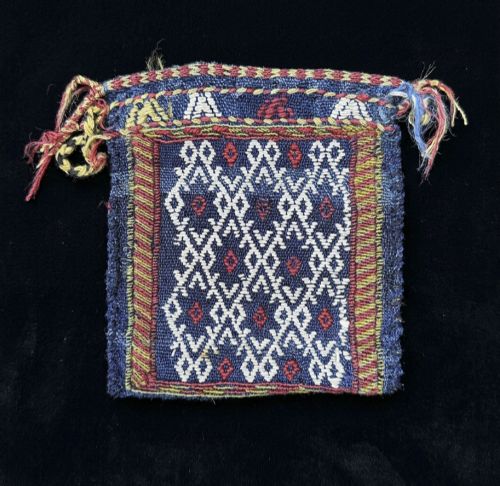
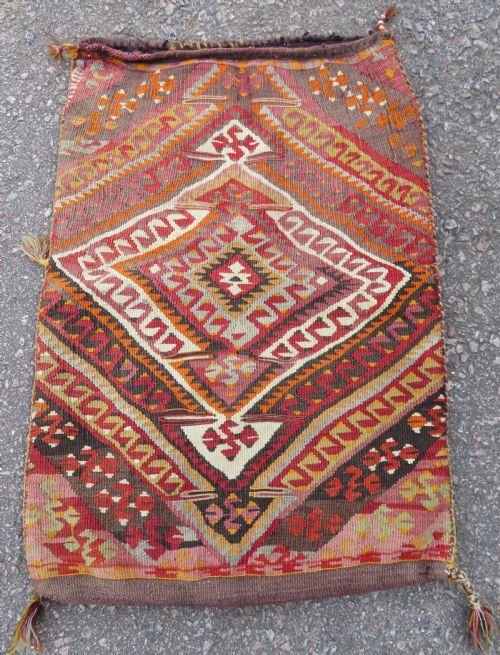
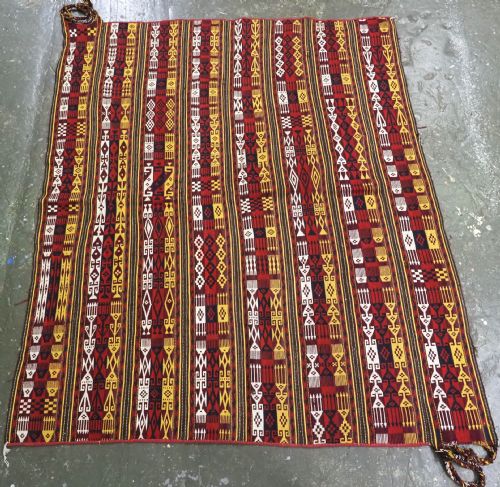
A small antique kilim encompasses flatwoven rugs, bags, sofrehs, and footstools originating from tribal and regional weaving traditions. When you search for small antique kilim, you encounter portable textiles produced by nomadic and village communities for practical domestic use.
The pieces appearing here include Anatolian tribal formats, Persian tribal works from groups such as Afshar and Baluch, Caucasian Shahsavan panels, and Central Asian Uzbek weaving. Formats range from dining sofrehs and grain sacks to small banded chevron rugs and round Victorian walnut footstools inset with tapestry.
Dates span the Victorian era and the early decades of the twentieth century, specifically around nineteen hundred to nineteen thirty. Buyers find utility in these compact sizes for targeted placement in hallways, under small tables, or mounted as textile art.
Materials and construction
These textiles rely principally on wool and cotton foundations and surface yarns, spun and dyed by hand for nomadic or village use. Selected pieces integrate structural elements of walnut timber, such as footstool frames, alongside ceramic or textile components.
Weaving techniques involve flatweaving methods where pattern and structure intertwine without a pile, producing lightweight and flexible floor coverings and storage bags. Certain items repurpose utilitarian objects like grain sacks, tent bands, and mafrash panels into compact rugs.
Small Kilim Retail Price Guide 2026
Typical asking prices for small kilim among the pieces listed under this phrase on Sellingantiques today, from the lower quarter to the upper quarter. They describe what is for sale here now, not the wider market.
Several items started life as bread cloths or grain sacks before finding a second career as decorative flooring.
Judging quality in early flatweaves
Quality rests in the tightness of the weave, the clarity of geometric or banded chevron designs, and the integrity of the natural materials. Pieces retaining their original structural context, such as complete sofrehs or authentic bag faces, hold greater textile interest.
Condition varies according to how heavily the item served its original purpose as a grain sack, bread cloth, or floor covering. The skill of the hand spinning and the depth of the dye work distinguish standard village output from finer tribal examples.
The Small Kilim Glossary
- Kilim
- A flatwoven carpet or rug produced without a pile across various regions of the Near East and Central Asia. These textiles are lighter than knotted pile carpets.
- Sofreh
- A spread or cloth used for dining, kneading bread, or serving meals in Persian and nomadic households. They often feature square or slightly oblong proportions.
- Mafrash
- A large nomadic storage bag or chest panel produced in the Caucasus and Persia. Panels are frequently repurposed into smaller flatwoven formats.
- Chequer
- A geometric pattern arrangement visible in traditional banded designs. It forms repetitive visual rhythm across the textile surface.
- Tunbridge ware
- Woodworking craftsmanship incorporating small mosaic wood blocks to create geometric decorative motifs. It appears on Victorian furniture frames housing textile panels.
Small Kilim: Frequently Asked Questions
Where can I use a small kilim?
These compact flatweaves suit small floor spaces, entryways, and tabletops where a full-sized carpet overwhelms the room. Many buyers also hang them on walls as textile art or place them over footstools.
Their flexible nature allows them to adapt to diverse interior settings while introducing authentic tribal patterns and natural materials.
How do I care for an antique flatweave?
Gentle vacuuming without a rotating brush roll helps remove dust from the wool and cotton fibres. Professional textile cleaning is recommended for deeper maintenance.
Keep these pieces out of harsh direct sunlight to protect the natural dyes from fading over time.
What is the difference between a sofreh and a rug?
A sofreh was originally utilised for domestic food preparation, dining, or gathering bread within nomadic households. They typically feature specific square formats and utilitarian designs distinct from standard floor rugs.
Both share flatwoven construction methods, but their initial domestic functions shaped their dimensions and composition.
How are these pieces dated?
Dating relies on stylistic markers, structural characteristics, dye types, and historical production periods such as the Victorian era or the early twentieth century. Dealers assess the specific tribal motifs and materials typical of those decades.
Exact years remain approximate unless documented by direct provenance or specific regional weaving timelines.