
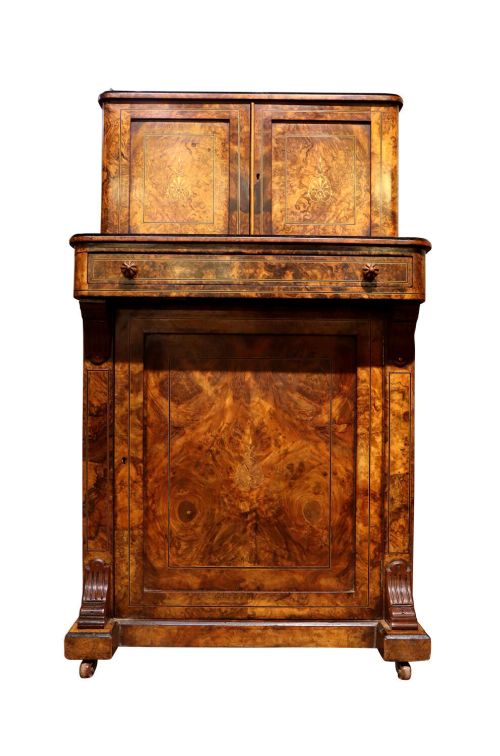
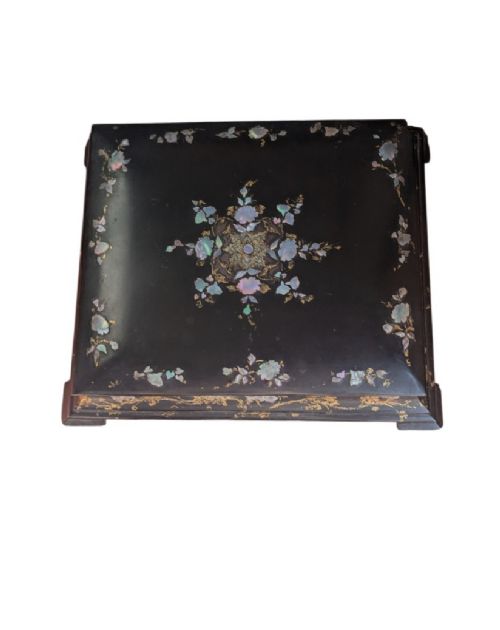
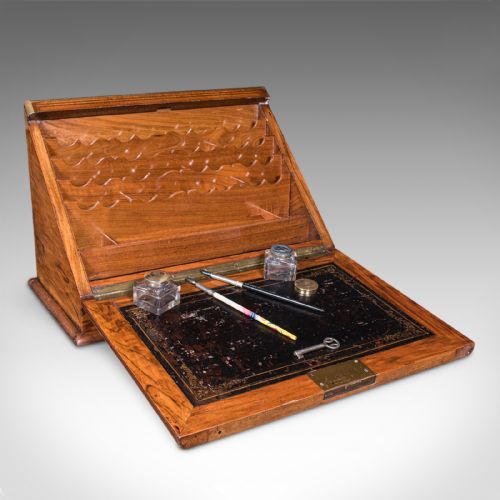
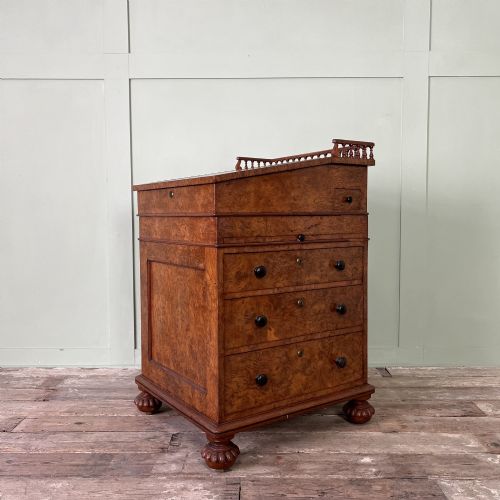



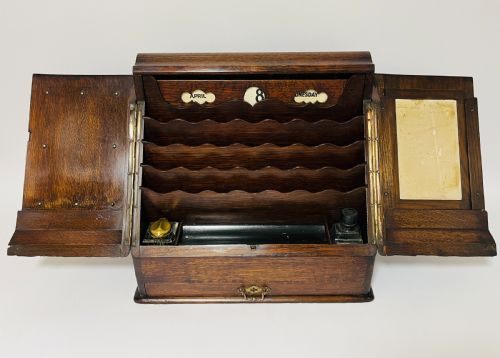
Sloped Stationery Cabinet
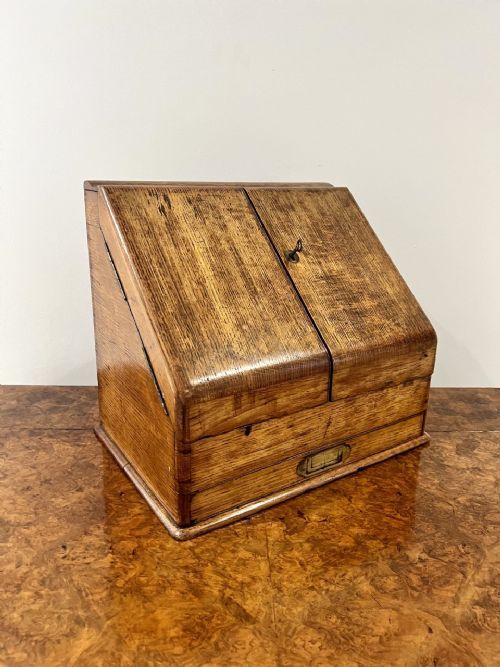
A sloped stationery cabinet is a practical desk accessory designed to organise correspondence, most frequently seen here in Victorian burr walnut or oak.
Sloped Stationery Cabinet
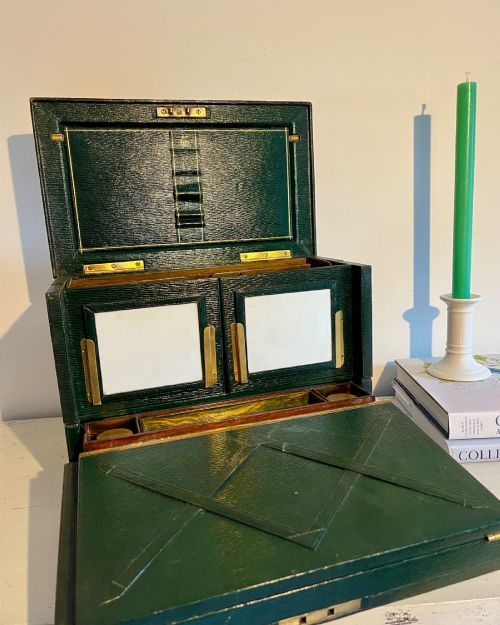
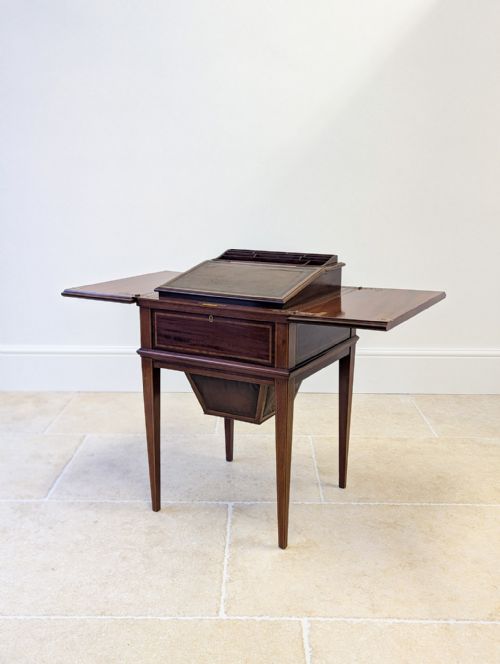
A sloped stationery cabinet provides a dedicated repository for writing materials, letters and documents, keeping desks tidy while presenting a neat architectural profile. These pieces appear primarily in nineteenth century forms, ranging from tabletop boxes with fall fronts to larger desk forms like Davenports and writing tables.
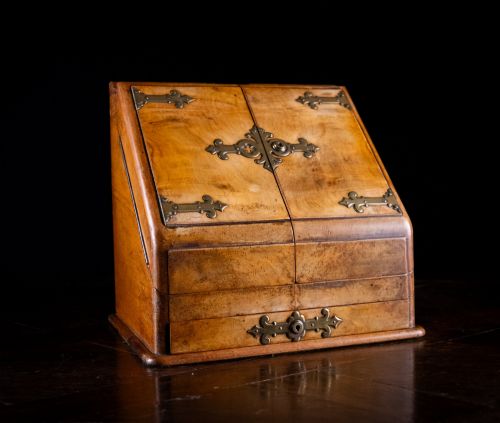
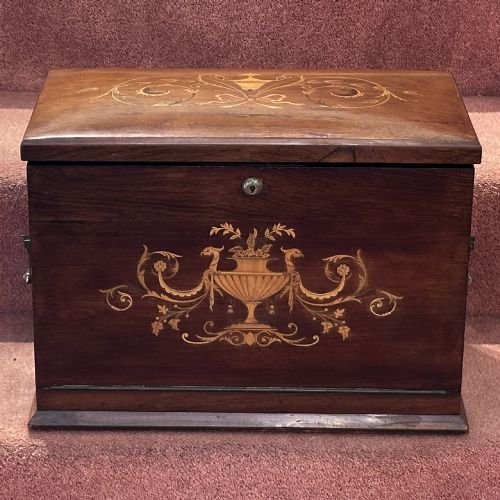
Victorian examples in burr walnut or oak dominate the selection, often featuring hinged lids, slope fronts, or fitted interiors with compartments for paper and envelopes. Buyers also encounter Edwardian mahogany versions and earlier Regency rosewood pieces, reflecting changing domestic habits across the periods.
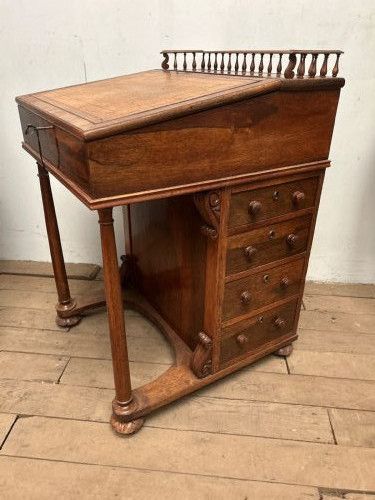
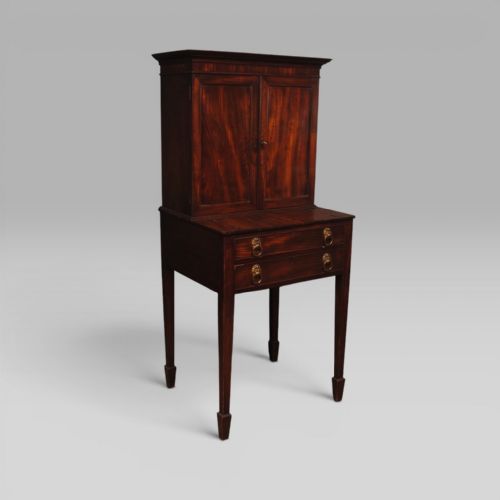
Many items combine storage with writing surfaces, functioning as compact bureaus or davenports where the sloped top lifts or tilts to reveal inkwells and pen trays. Their origins span English cabinet makers as well as specific regional interpretations like Anglo-Indian and Japanese lacquer pieces.
Materials and construction
Cabinet makers utilised dense hardwoods such as mahogany, walnut, rosewood and oak, frequently selecting burr veneers to create richly figured exterior surfaces on stationery boxes and desk chests. Brass mounts, hinges and inlaid details provide structural reinforcement and decorative contrast against the dark wood grains.
Secondary elements incorporate leather writing surfaces, satinwood stringing, and papier-mâché, demonstrating varied craft traditions from English workshops to Meiji period lacquer production. Joinery relies on traditional box construction and dovetailed carcases designed to withstand daily handling of heavy paper and books.
Green Man carvings occasionally peer out from Victorian oak desks, keeping a watchful eye on your morning correspondence.
Distinctions in quality
Quality depends upon the choice of timber and the precision of the cabinet work, particularly in the figuring of burr walnut veneers and the tightness of inlaid brass or satinwood stringing. Superior pieces maintain crispness in carved details, such as oak leaf motifs or figural carvings, without soft edges or obscured grain patterns.
Internal arrangement and hardware execution separate standard boxes from finer productions, evident in smoothly operating pop-up mechanisms, well-fitted pigeonholes, and original locks with functioning keys. The integrity of secondary woods and the absence of warping in heavy sloped lids indicate careful seasoning of timber during construction.
Gillow and Co·Houghton and Gunn
The Sloped Stationery Cabinet Glossary
- Davenport
- A compact form of small desk featuring a sloped writing surface above a pedestal of drawers or a cupboard. The top often incorporates a stationery compartment or pen tray.
- Fall front
- A hinged panel that drops down to provide access to interior compartments or a writing surface. It remains a common closure mechanism on stationery boxes and cabinets.
- Burr walnut
- A prized timber harvested from the irregular growth knots of walnut trees, yielding highly decorative swirls and patterns used for cabinet veneers. It appears frequently on Victorian desk accessories.
- Stationery box
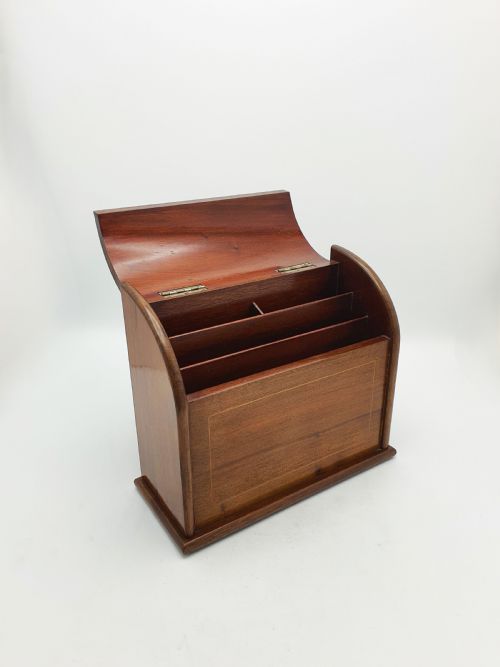
- A tabletop or desk container fitted with tiered divisions to hold envelopes, writing paper, and cards upright. Many include hinged lids or glass panels.
- Stationery cabinet
- A larger enclosed chest with vertical or sloped storage for documents and writing supplies, often incorporating doors or fall fronts.
Sloped Stationery Cabinet: Frequently Asked Questions
What is a sloped stationery cabinet used for?
These cabinets were built to store loose writing paper, envelopes, and correspondence securely on a desk or table.
They keep small writing supplies organised within dedicated internal slots and compartments.
How do I date a Victorian stationery box?
Dating relies on observing timber choices, such as burr walnut or oak, alongside the style of brass mounts and internal fittings.
Cabinet construction methods and registration marks can also help narrow down the decade of manufacture.
Where did people keep these cabinets?
They were placed on writing tables, Davenport desks, or dedicated side furniture in studies and drawing rooms.
Their compact footprints allowed them to sit conveniently within reach during correspondence.