
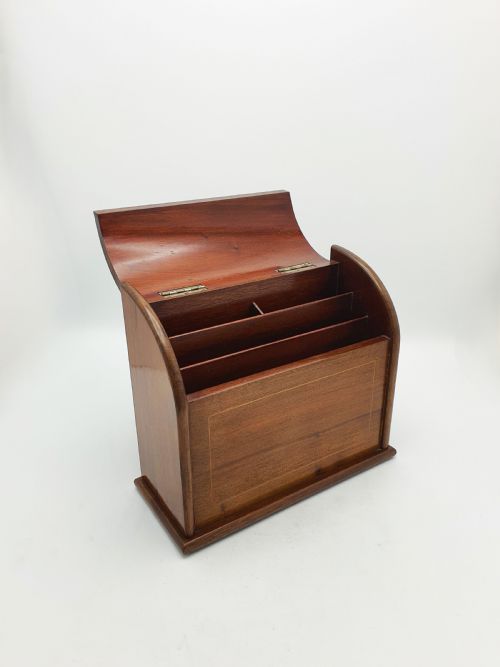


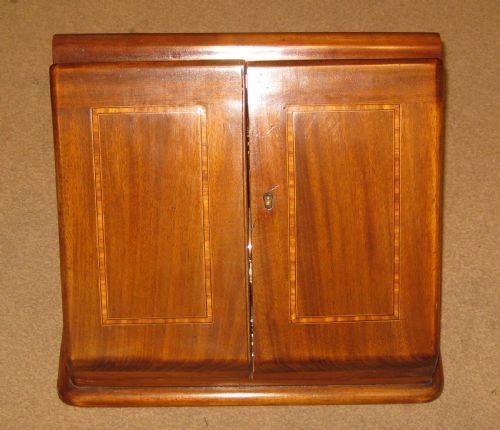


Wooden Slope Desk Organiser
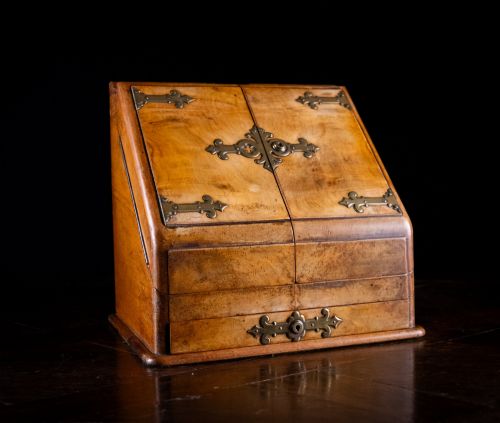
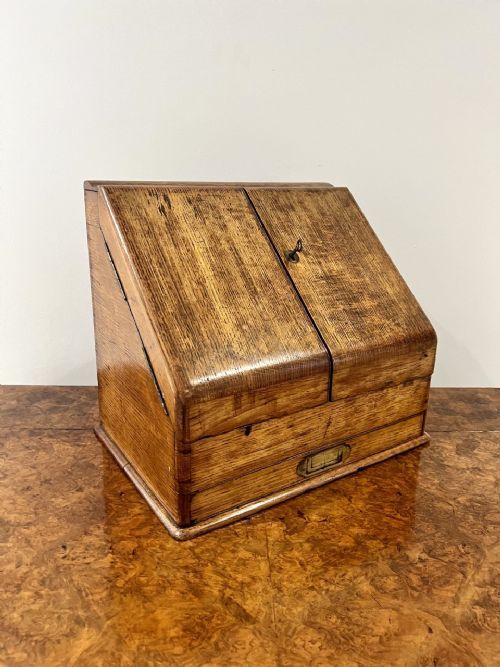
A wooden slope desk organiser keeps your correspondence tidy with hinged lids and slanted fronts rooted in Victorian and Edwardian craftsmanship.
Wooden Slope Desk Organiser
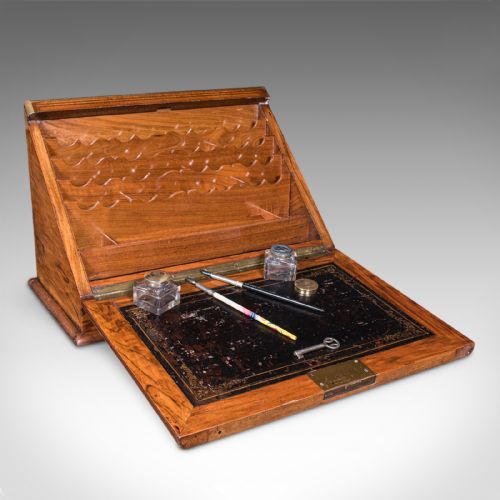
The objects take various functional forms, including stationery boxes, writing slopes, inkstands, desk tidies, and correspondence chests. Many pieces incorporate specialised compartments for incoming and outgoing mail, ink bottles, and pens. Oak and walnut examples dominate the selection, often reflecting the robust utility valued in nineteenth-century studies and libraries.
Materials and construction methods
Cabinet makers utilised dense hardwoods such as oak, walnut, mahogany, rosewood, and coromandel to build these desk accessories. These timbers were selected for durability and finished to highlight natural grain patterns, occasionally enhanced with satinwood or mother of pearl inlay. Brass mounts, hinges, and carrying handles reinforced the structure and added functional contrast to the polished wood.
Joinery techniques involved precise dovetailing and mortise-and-tenon joints to withstand daily lifting of slanted lids and drop fronts. Interiors frequently featured fitted partitions, velvet or leather writing surfaces, and glass ink bottles secured within wooden frames.
Some Victorian letter boxes sport cheeky 'Answered' and 'Unanswered' slots to shame slow correspondents into action.
Markers of quality in desk organisers
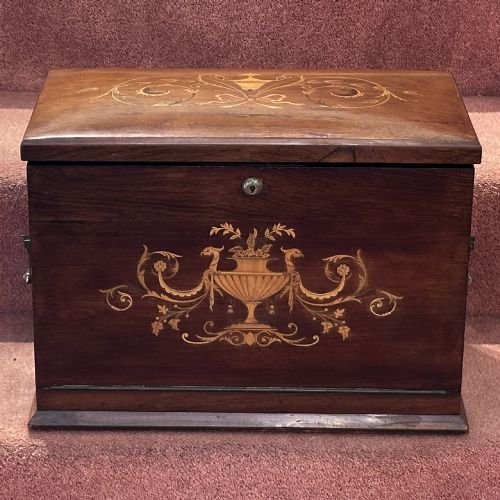
Quality rests on the selection of timber and the precision of the cabinet work, from plain solid oak panels to intricately figured walnut or coromandel veneers. Superior pieces display refined marquetry, tight dovetail joints, and robust brass hardware that operates smoothly without play in the hinges.
The internal arrangement dictates utility and grade, with better examples offering well-thought-out letter slots, integrated inkwells with original glass bottles, and makers' labels. The presence of secondary timbers and the crispness of inlaid detail distinguish high workshops from standard commercial production.
The Wooden Slope Desk Organiser Glossary
- Stationery box
- A tabletop cabinet designed to hold writing paper, envelopes, and correspondence. These units often feature sloping lids or drop fronts to permit easy access to tiered paper dividers.
- Writing slope
- A portable box with an angled writing surface that opens to reveal compartments for pens, ink, and stationery. The sloping top provides an ergonomic angle for handwriting.
- Inkstand
- A desk accessory holding one or more ink bottles, often accompanied by pen troughs and sanders. They sit upon a wooden or metal base designed to protect the desktop from spills.
- Campaign box
- A piece of utilitarian furniture or deskware made for travel, typically fitted with brass corners and flush handles for durability. These items originated for military use in the colonial era.
- Marquetry
- Decorative veneer work forming pictorial or geometric patterns using various coloured woods. This technique adorns the exterior surfaces of finer Victorian and Edwardian cabinets.
Wooden Slope Desk Organiser: Frequently Asked Questions
What is a wooden slope desk organiser used for?
These pieces provide dedicated desktop storage for writing paper, envelopes, letters, and ink bottles. They keep correspondence organised and protect writing implements within fitted compartments.
Historically, they served the daily correspondence needs of Victorian and Edwardian households and offices, sitting upon writing tables or secretaires.
How do I tell Victorian from Edwardian pieces?
Victorian items tend to employ heavier timbers like rosewood and coromandel, frequently featuring Gothic revival details or robust brass mounts. They emphasise solidity and rich, dark finishes.
Edwardian examples often utilise lighter mahogany or oak, displaying more delicate marquetry inlay and refined neoclassical influences reflecting a shift in domestic interiors.
Are ink bottles usually original?
Many surviving desk organisers retain their original cut-glass or moulded ink bottles, particularly those fitted into dedicated wooden collars within inkstands and writing boxes. Finding matching bottles with ground glass stoppers enhances the completeness of the piece.
Replacements are common due to the fragility of glass over generations of use, so inspecting the fit within the wooden aperture helps determine originality.