


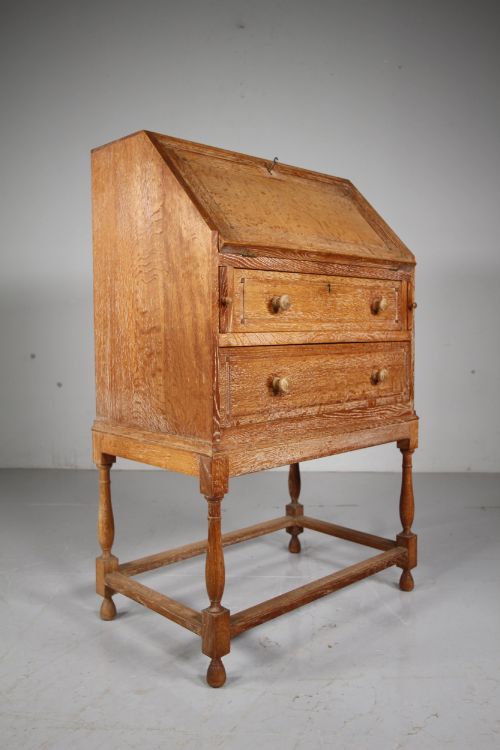
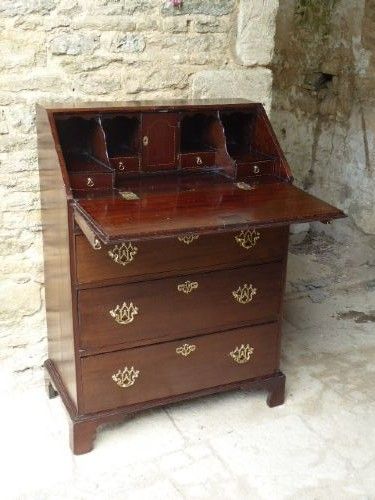
Sloped Front Desk
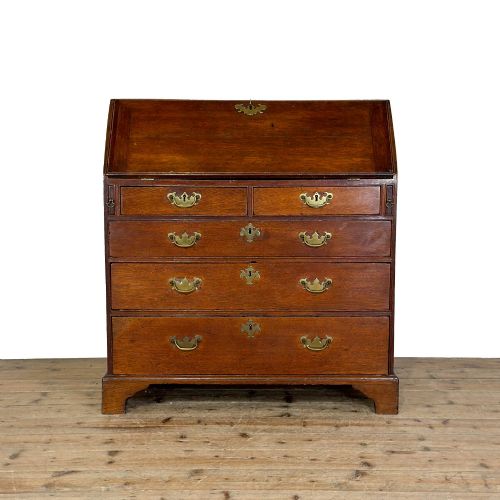
A sloped front desk is a practical writing cabinet with a hinged writing flap, offering clever fitted interior compartments for papers.
Sloped Front Desk
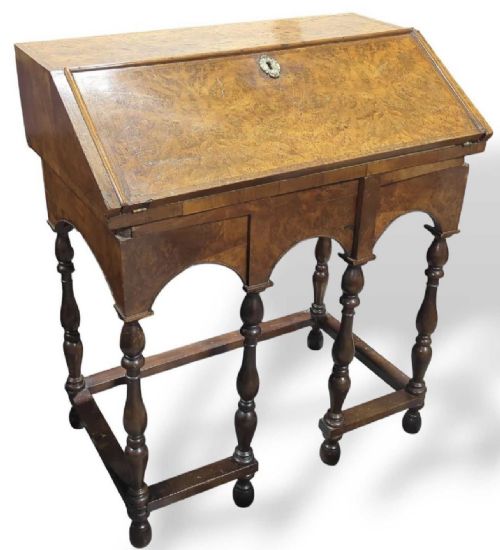
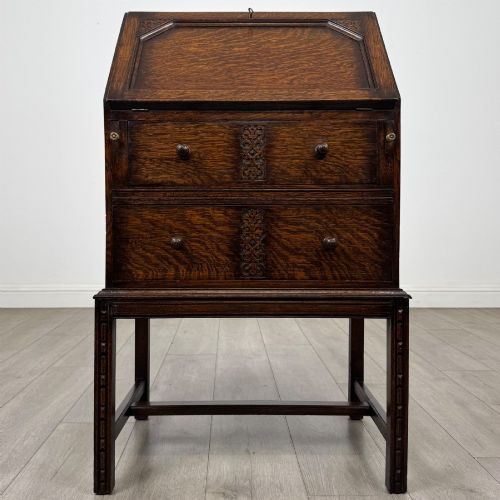
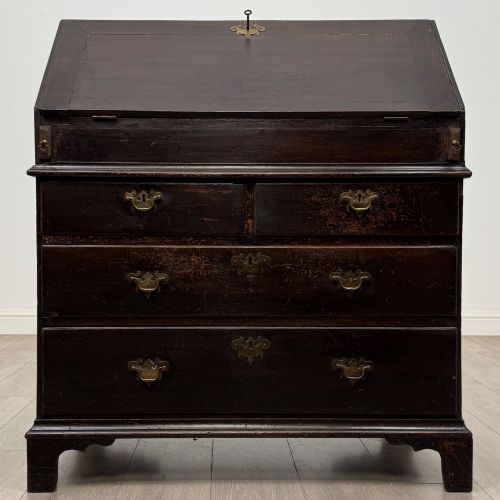
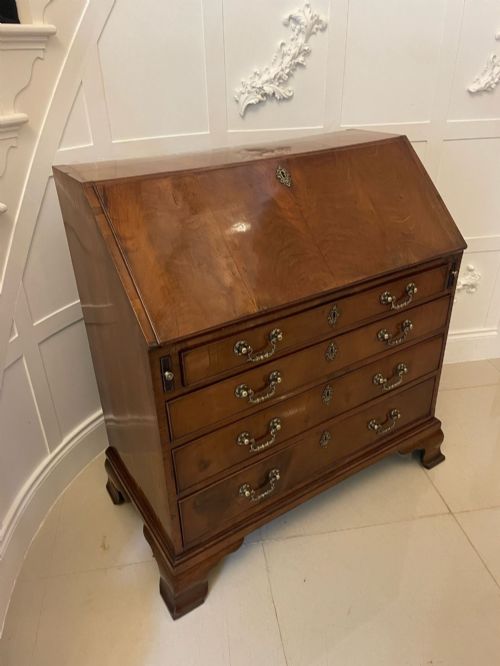
A sloped front desk provides a dedicated writing surface that conceals pigeonholes and small drawers beneath an angled lid. These pieces appear frequently in mahogany, oak, and walnut, spanning periods from the eighteenth century through the Edwardian era.
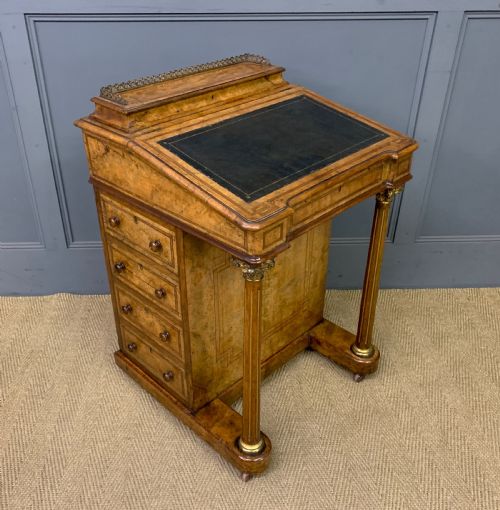
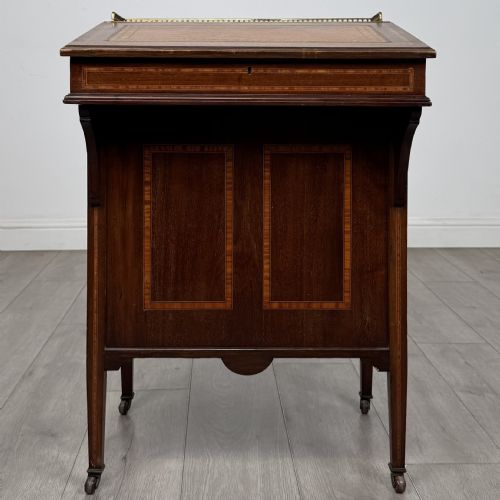
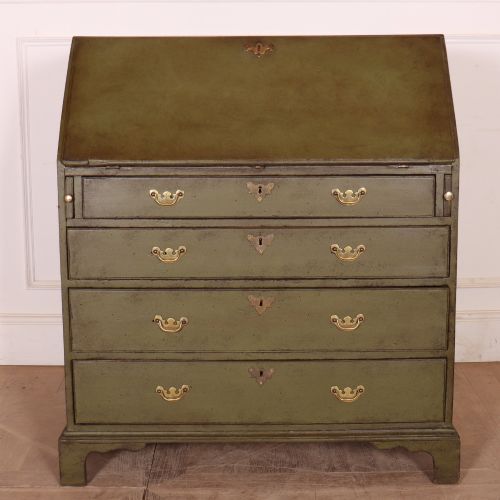
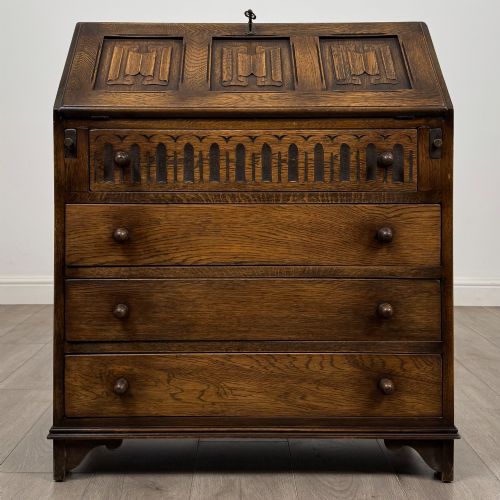
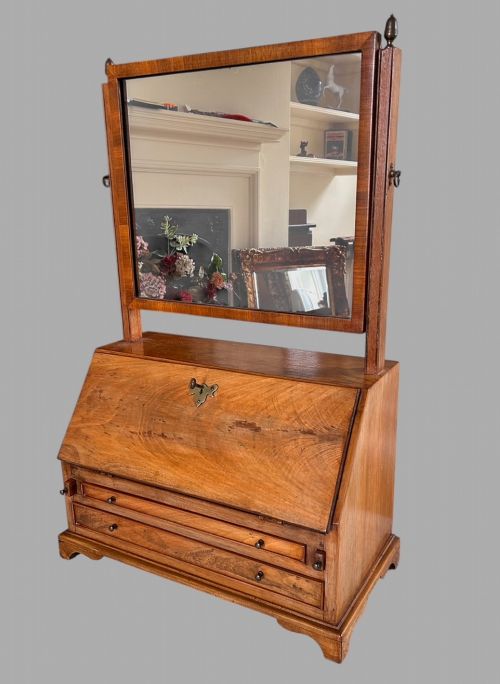
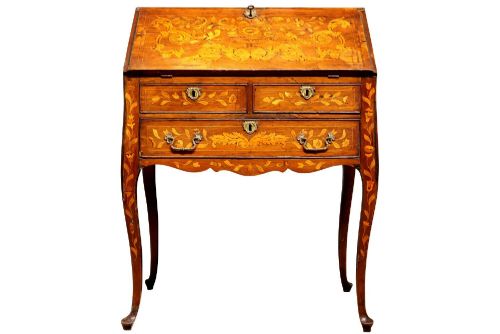
Buyers encounter various forms, including traditional freestanding bureaux, tall bureau bookcases with upper shelving, compact table-top versions, and Davenport desks. The selection ranges from plain provincial oak examples to elaborate models featuring marquetry or painted surfaces.
Originating largely from British and continental workshops, these items served as domestic administrative centres before modern office furniture took hold. Their enduring appeal lies in the combination of concealed storage and a compact footprint suitable for home use.
Materials and construction
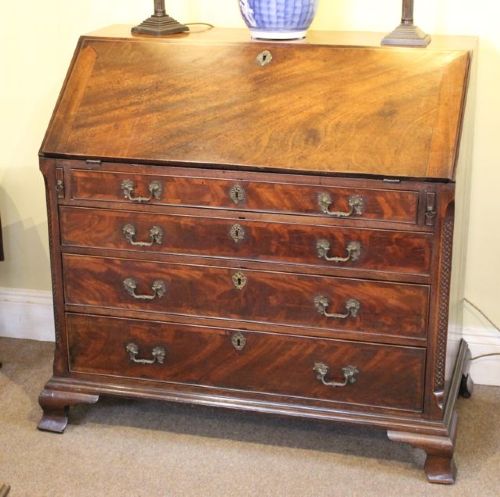
Cabinetmakers utilised dense hardwoods such as mahogany, oak, and walnut, frequently applying figured veneers or burr walnut to create decorative external surfaces. Selected pieces incorporate brass handles, locks, and hinges to secure the fall-front flap and internal drawers.
Interior compartments often feature secret drawers and pigeonholes constructed from secondary timbers like cedarwood or fruitwood. External decoration relies on carving, floral marquetry, or painted finishes rather than applied metalwork.
Several examples hide secret interior compartments behind miniature dummy drawers for storing private papers.
Factors of distinction
The refinement of the interior joinery and the selection of timber figure heavily distinguish finer pieces from standard domestic work. Superior examples display carefully matched veneers, neatly dovetailed drawer linings, and well-proportioned fall-front writing surfaces.
Decorative ambition also separates the range, moving from plain provincial utility pieces to intricate Dutch floral marquetry or specialised cabinetmaker commissions. The integration of fitted bookcases or specialist woods like amboyna elevates the status of an individual desk.
Heals of London·Stanley Webb Davies
The Sloped Front Desk Glossary
- Bureau
- A desk featuring a sloping hinged lid that drops down to form a writing surface above a chest of drawers. This term is frequently used interchangeably with sloped front desk.
- Fall front
- The hinged writing flap on a desk that opens downward to reveal an internal arrangement of small drawers and pigeonholes. It provides a flat surface for writing when lowered.
- Marquetry
- The art of applying pieces of veneer to a structure to form decorative patterns and floral pictures. Walnut and exotic woods are commonly employed in this technique.
- Davenport
- A compact form of small desk featuring a sloping writing surface and drawers opening to the side. These pieces often incorporate brass mounts and stationary boxes.
- Pigeonhole
- A small compartment within the fitted interior of a desk used for sorting letters and documents. They sit beneath the sloping lid alongside miniature drawers.
Sloped Front Desk: Frequently Asked Questions
How do I use a sloped front desk?
Lower the hinged writing flap to reveal the internal compartments, providing a stable angled surface for writing letters or placing a laptop. The interior pigeonholes and small drawers organise stationery and documents.
When writing is complete, fold the flap back up and secure it with the lock to conceal your papers. The compact footprint allows these desks to fit comfortably into living rooms or studies as decorative storage.
What is the difference between a bureau and a Davenport?
A traditional bureau provides a sloping fall-front above a set of full-width horizontal drawers, standing directly on bracket feet or a simple base. It offers a broad writing flap and deep internal storage.
A Davenport is a much smaller, upright desk where the sloping lid lifts or angles forward, and the drawers open on the side rather than the front. Davenports often include a small superstructure for pens and ink wells.
How do I date an antique desk?
Examine the timber species, construction methods of the internal drawers, and stylistic details such as brass hardware or leg design. Eighteenth-century pieces often display hand-cut dovetails and solid timber carcases.
Later Edwardian and twentieth-century interpretations may utilise machine-sawn elements, lighter oak finishes, or distinctive revival styles like Jacobean or Arts and Crafts.
Where were these desks placed in a period home?
These desks served as private administrative hubs in parlours, drawing rooms, or dedicated studies where household accounts and correspondence were managed. Their enclosed storage kept sensitive documents out of sight.
Today, they function equally well in modern hallways or bedrooms as statement writing tables that double as display surfaces for decorative objects.