


Sliding Book Stand
A sliding book stand organises a desktop library with expanding panels that adjust to fit a row of volumes.
Sliding Book Stand
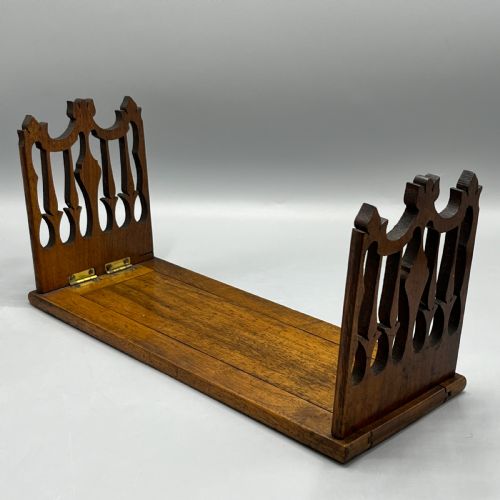
A sliding book stand provides a functional desk accessory designed to hold and display volumes upright while allowing the base to expand or contract. These pieces appear frequently as Victorian and Edwardian examples featuring folding ends and extending mechanisms.
Makers produced these stands in various forms including book slides, book racks, and troughs for home libraries and writing desks. Walnut and rosewood versions form the core of what collectors encounter in daily trading.
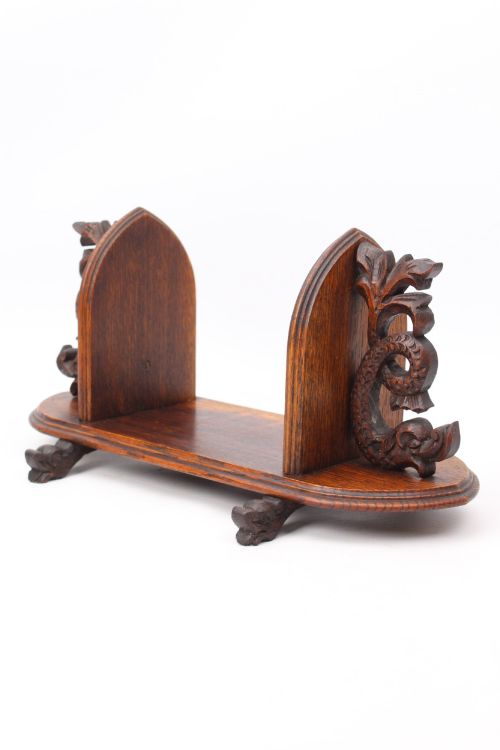
Designers incorporated decorative elements such as brass mounts, carved wood, and inlaid panels to suit the formal interiors of the nineteenth and early twentieth centuries. The extending action remains the central characteristic across all surviving specimens.
How they were made
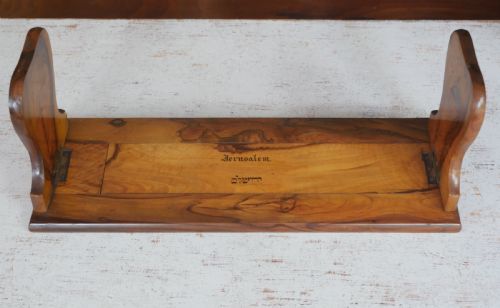
Craftsmen built the frames using timbers such as walnut, oak, mahogany, and rosewood, often pairing the timber with brass hinges and extending slides. Ebonised wood and exotic materials like olive wood and coromandel appear on more decorative examples.
Specialised techniques included brass mounting, intricate Tunbridge ware inlay, pietra dura plaques, and hand carving as seen in Anglo-Indian teak pieces. The extending mechanism relied on smooth-sliding wooden channels or scissor actions concealed beneath the base.
Materials recorded across the inventory include brass, bone, and diverse timbers from standard oak to exotic coromandel and burr walnut.
What varies in quality
Quality reveals itself in the choice of timber figurations, such as burr walnut or figured rosewood, alongside the precision of the brass mounts and hardware. Superior examples incorporate patented mechanisms or fine decorative additions like painted plaques and stone inlay.
Construction methods distinguish standard utility pieces from finer cabinet work, evident in the tightness of the joinery and the smoothness of the extending action. Simpler oak and mahogany versions offer robust daily service, while heavily ornamented specimens reflect higher workshop ambition.
Gillows·Betjemanns
The Sliding Book Stand Glossary
- Book slide
- A desktop stand with extending sections designed to hold a varying number of volumes securely between upright ends. This term is frequently used interchangeably with book rack and book stand.
- Tunbridge ware
- A type of decorative woodwork characterised by tiny mosaic tiles formed from naturally coloured woods to create pictorial or geometric designs. It frequently decorates nineteenth-century stationary boxes and book slides.
- Gothic Revival
- An architectural and decorative style drawing on medieval forms, featuring pointed arches, heavy oak construction, and ecclesiastical motifs. Pieces in this taste date largely from the Victorian era.
- Pietra dura
- An artistic technique using cut and fitted polished coloured stones to create inlaid images on a background slab. These panels appear inset into the wooden frames of select Victorian desk accessories.
- Coromandel
- A dense, heavily variegated dark timber imported from Asia, prized by nineteenth-century cabinet makers for luxury boxes and book rests.
Sliding Book Stand: Frequently Asked Questions
How do sliding book stands work?
The base comprises interlocking or sliding sections that pull apart or push together to shorten or lengthen the platform holding the books. Hinged or fixed upright ends keep the volumes contained as the length adjusts.
Most mechanisms rely on wooden channels or brass tracks concealed within the construction. This allows the user to alter the capacity of the stand to suit a growing or shrinking row of books.
What woods were used for book stands?
Cabinet makers utilised a wide variety of timbers depending on the period and desired formality. Walnut, rosewood, oak, and mahogany form the foundation of most surviving examples.
More decorative items employed exotic woods like coromandel, olive wood, and ebonised finishes. Inlaid details and contrasting secondary timbers frequently highlight the primary grain.
How do I date a book stand?
Dating relies on stylistic clues, prevailing materials, and construction techniques associated with specific eras like the Victorian and Edwardian periods. Heavily carved oak often points to Gothic Revival tastes, whilst brass-mounted walnut typifies mid-nineteenth-century desk furniture.
Patents marked on the hardware provide precise chronological markers when present. Simple rosewood racks without ornament frequently date to the middle decades of the nineteenth century.
Where were these used in the home?
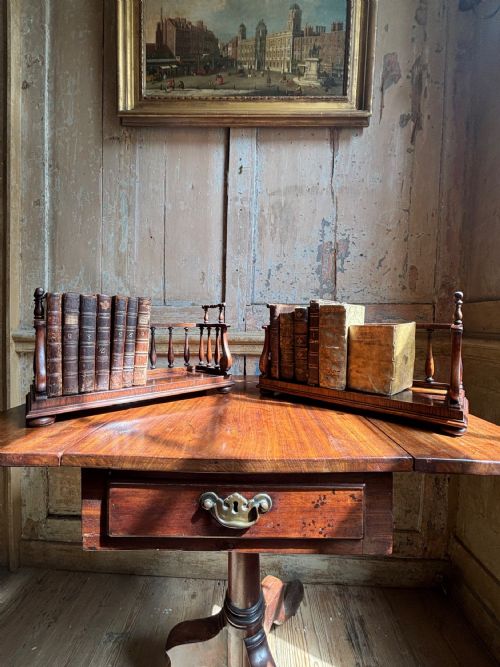
These stands sat upon library tables, writing desks, and occasional furniture to keep working volumes close to hand. They provided a tidy method for managing reference books or favourite reading.
Larger versions accommodated heavy octavo and quarto volumes in gentleman's studies. Smaller decorative slides suited lighter domestic parlours and bedroom reading tables.