
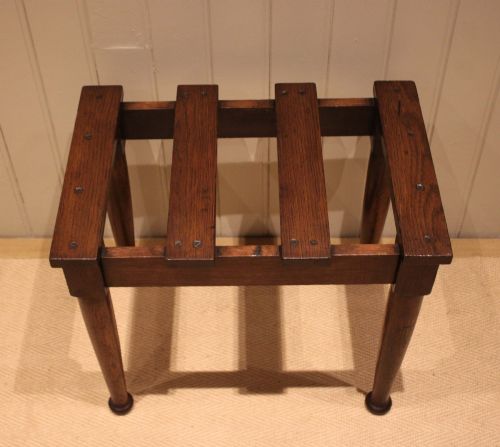
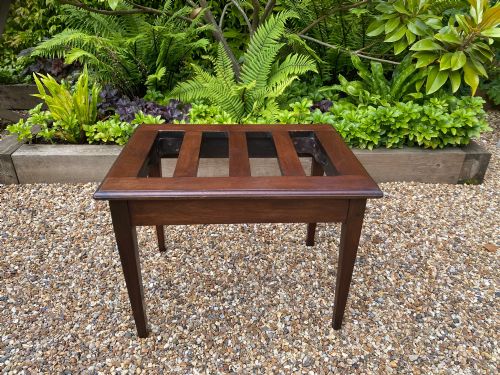
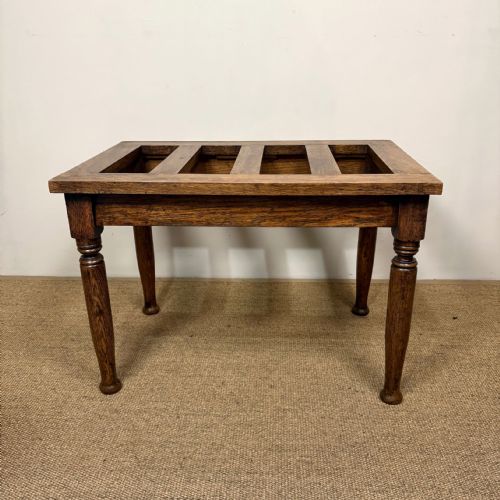
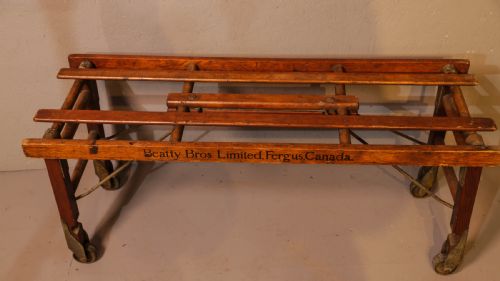
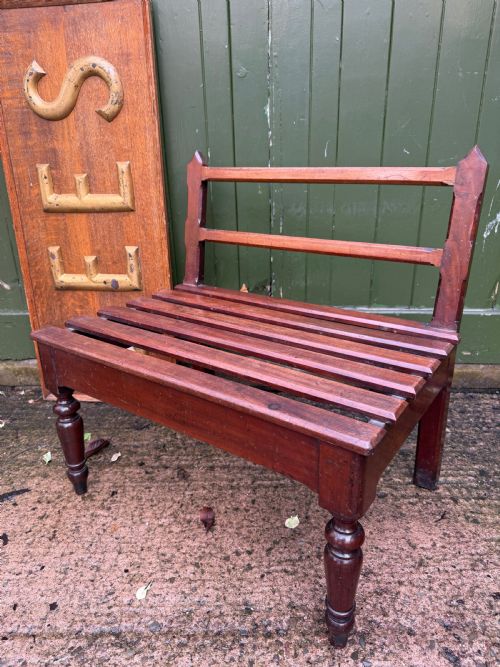


Slatted Wooden Luggage Stand
A slatted wooden luggage stand is a practical guest room essential, offering sturdy folding frames and traditional utility for any home.
Slatted Wooden Luggage Stand
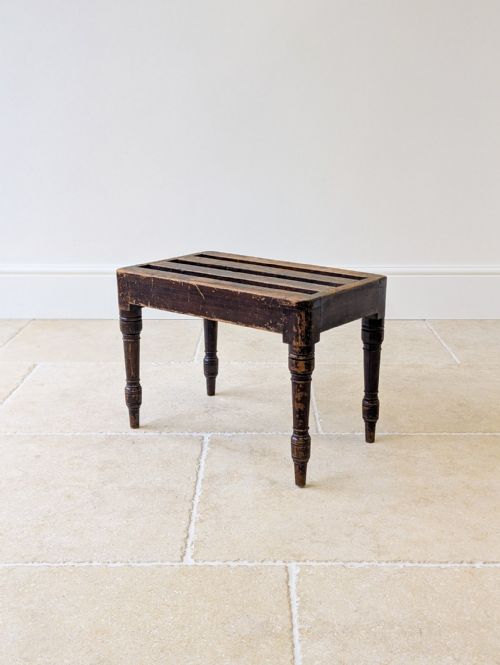
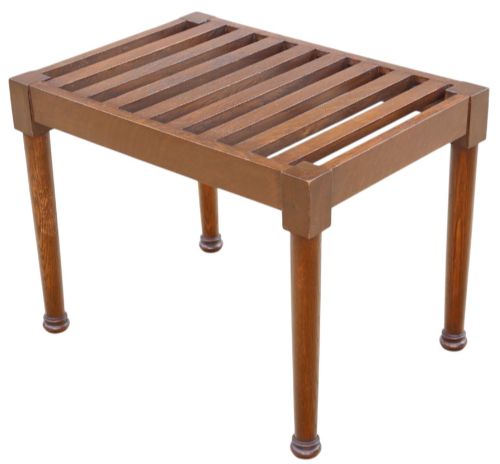
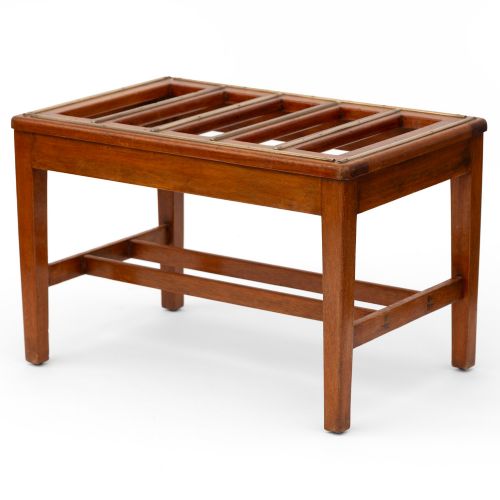
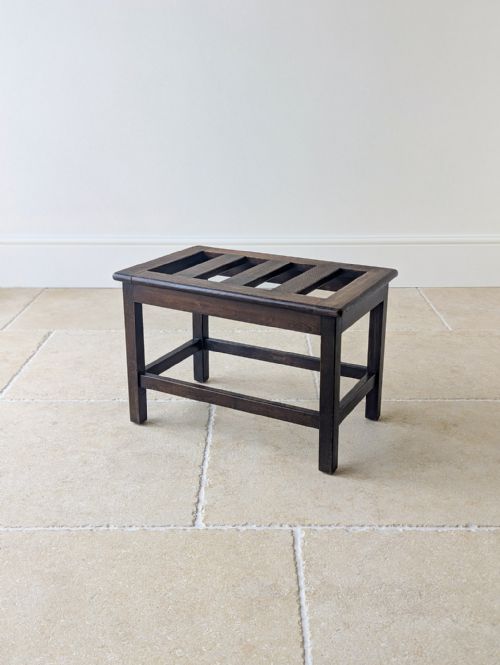
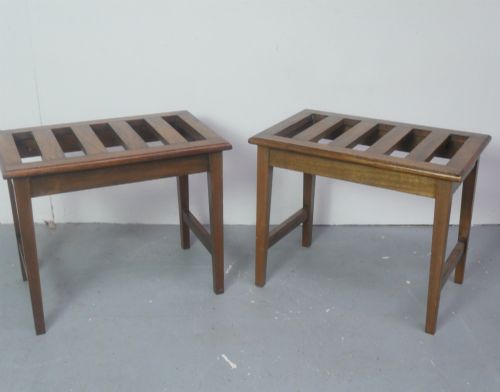
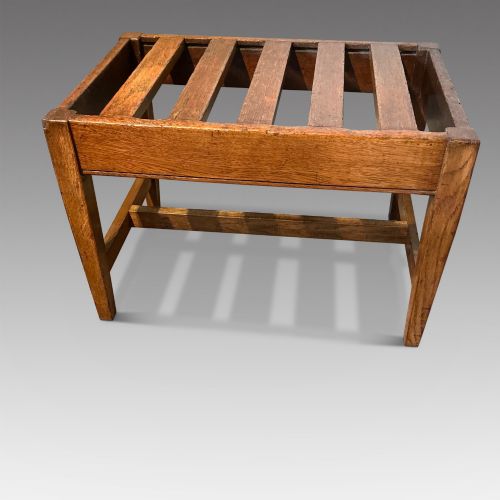
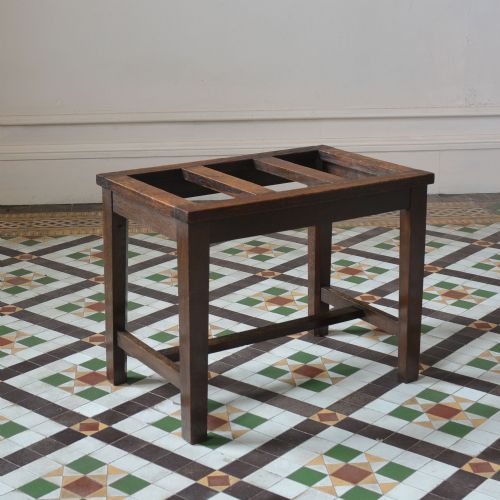
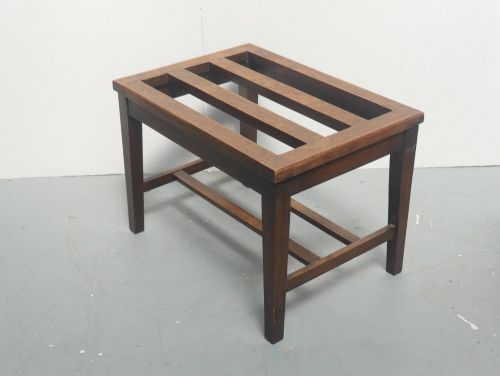
When you search for a slatted wooden luggage stand, you are looking at utilitarian furniture built to hold travel trunks and cases at a convenient height. The versions you are most likely to meet on this page date from the nineteenth century through to the early twentieth century, spanning Victorian, Edwardian, and mid-century periods.
These pieces typically take the form of low folding or fixed benches with horizontal wooden slats across the top. Many examples originate from domestic contexts like English country houses, while others bear the provenance of West End hotels or Canadian makers.
Materials and construction
Makers constructed these stands using hardwoods such as oak, mahogany, walnut, ash, yew wood, and painted pine. Timber frames were joined simply yet robustly to support heavy travelling chests and suitcases without flexing.
Some variations incorporate brass or iron fittings, along with canvas or leather support elements, while luxury French luggage examples utilise specialist stamped canvas and wood construction.
Some stands retain the sturdy proportions required to support heavy steamer trunks once hauled across the Atlantic.
Judging construction and character
Quality in these stands rests upon the selection of timber and the integrity of the joinery rather than ornate decoration. Denser hardwoods like mahogany or figured walnut indicate better workshop production than utilitarian painted pine.
Refined proportions, such as raised and raked rear upstands or maker stamps from notable firms, distinguish utilitarian hotel pieces from superior domestic examples.
Beatty Bros Fergus Canada·Brown & Lamont·Waring & Gillow·Louis Vuitton
The Slatted Wooden Luggage Stand Glossary
- Slatted
- Constructed with narrow strips of wood spaced evenly apart. This allows air circulation around travel trunks placed on top.
- Upstand
- A vertical barrier rising from the rear edge of the stand. It prevents luggage from sliding backward against a bedroom wall.
- Malle penderie
- A French wardrobe trunk designed for vertical hanging and travel. These large pieces represent the pinnacle of luxury luggage making.
- Country-house
- A style descriptor indicating sturdy, practical furniture intended for large domestic estates. These items prioritise honest utility and durable timber.
Slatted Wooden Luggage Stand: Frequently Asked Questions
How were luggage stands used?
These stands were placed in guest bedrooms to hold heavy leather trunks or canvas suitcases at a comfortable height for packing and unpacking.
Servants used them to assist guests without placing luggage directly onto delicate carpets or upholstered furniture.
Are these stands sturdy enough for daily use?
Most surviving examples are built from solid hardwoods like oak or mahogany, designed to bear the considerable weight of nineteenth-century travel chests.
They easily support modern suitcases, making them practical accessories for contemporary guest rooms.
How do I identify an Edwardian stand?
Edwardian pieces often feature lighter oak frames with clean lines and simpler joinery than their heavily carved Victorian predecessors.
They reflect the domestic interior trends of the early twentieth century, focusing on bright timber and tidy utility.
What is a raked rear upstand?
A raked upstand is an angled wooden barrier at the back of the luggage rack designed to cradle suitcases securely.
This feature prevents the luggage from tipping backward or scuffing the wall behind the stand.