


Slant Front Secretary Desk
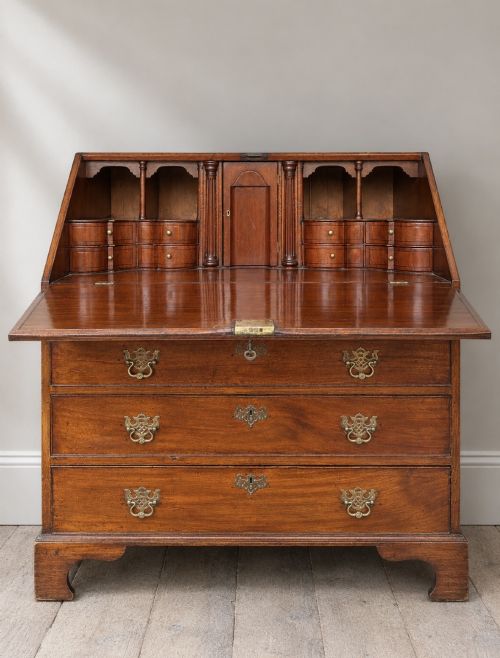
A slant front secretary desk combines a sloping fall-front writing flap with drawers and fitted compartments, offering a classic workspace that conceals papers when closed.
Slant Front Secretary Desk
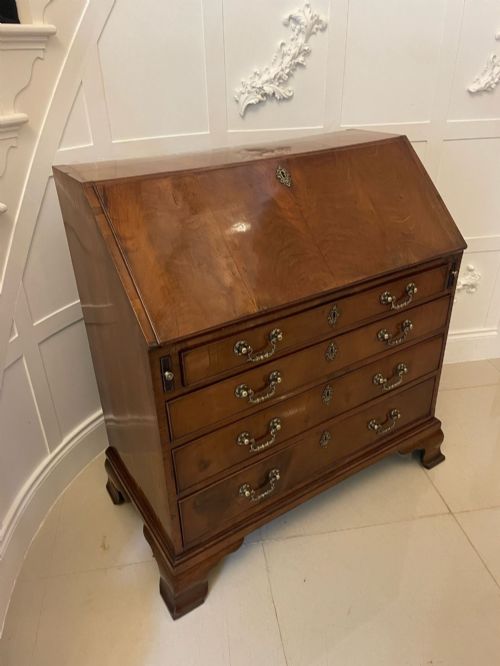
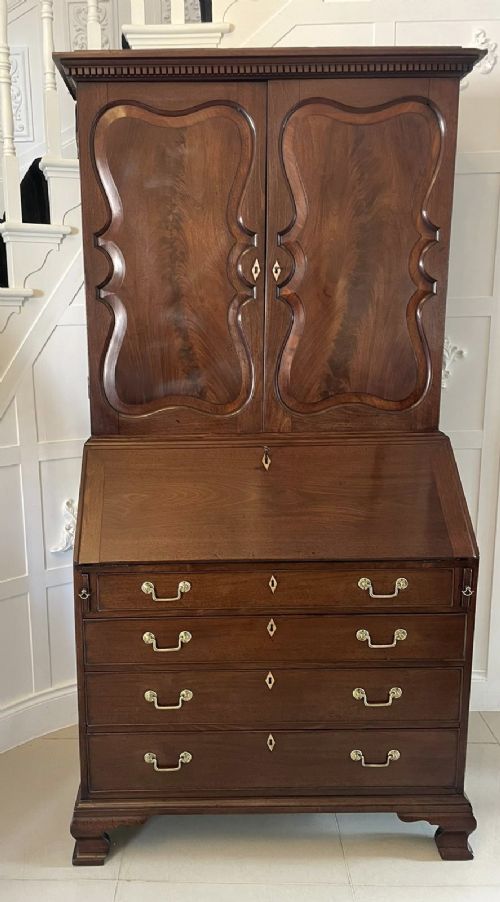
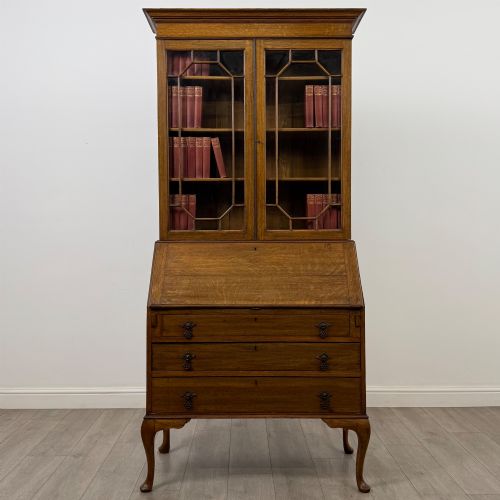
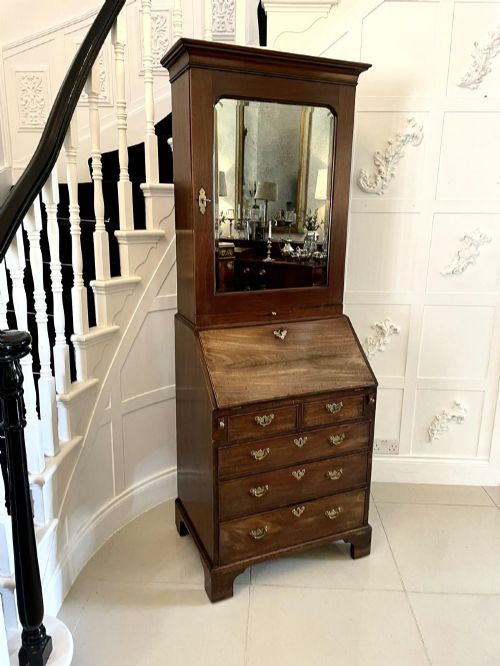
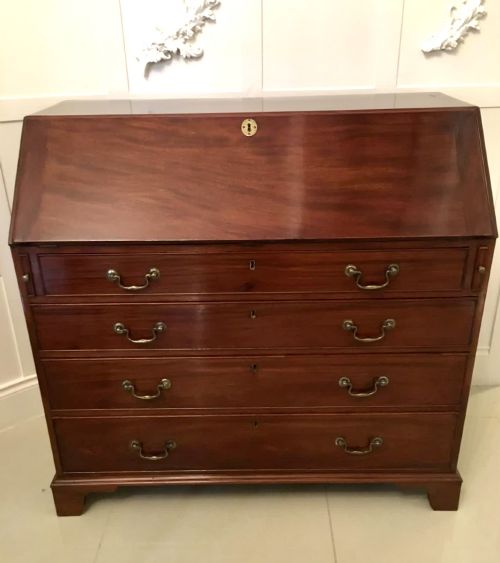
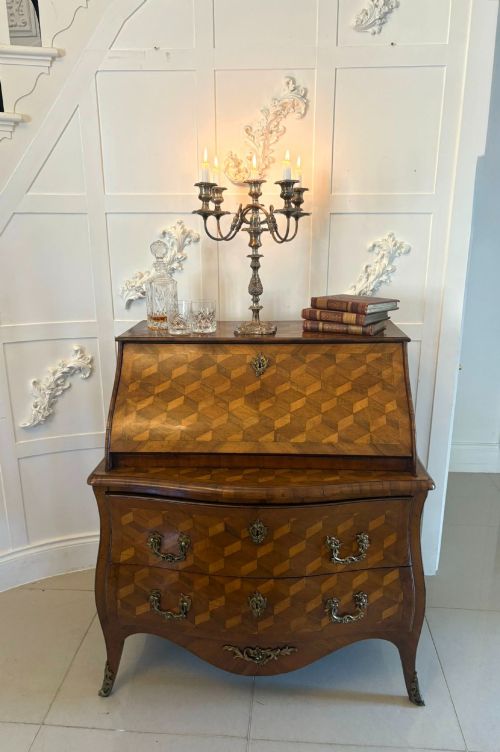
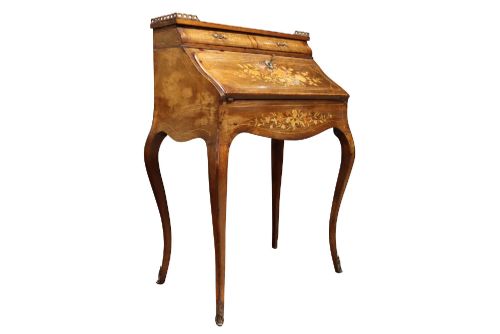
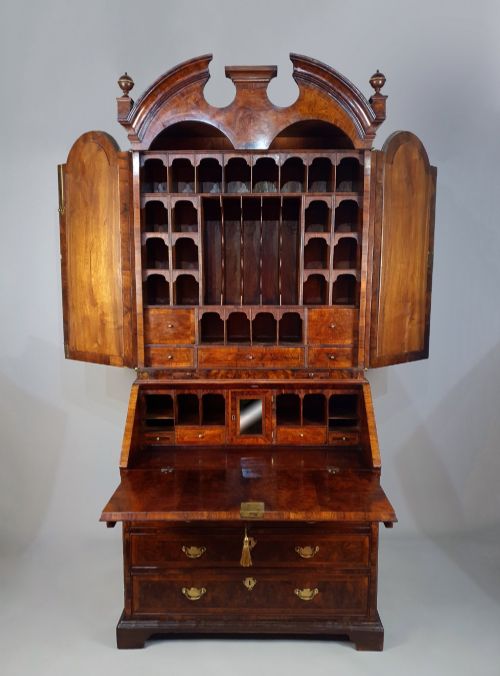
A slant front secretary desk takes several forms across different periods, appearing frequently as standalone writing desks or as tall bureau bookcases with upper shelving. These pieces serve primarily for correspondence and storage, utilising a hinged writing flap that opens down to provide a flat surface.
The materials and construction span multiple eras, showing particular prevalence in 18th century Georgian designs and later Edwardian interpretations. Buyers encounter oak, mahogany, and walnut surfaces, often housing stepped pigeonholes and small drawers within the interior writing compartment.
Materials and construction methods
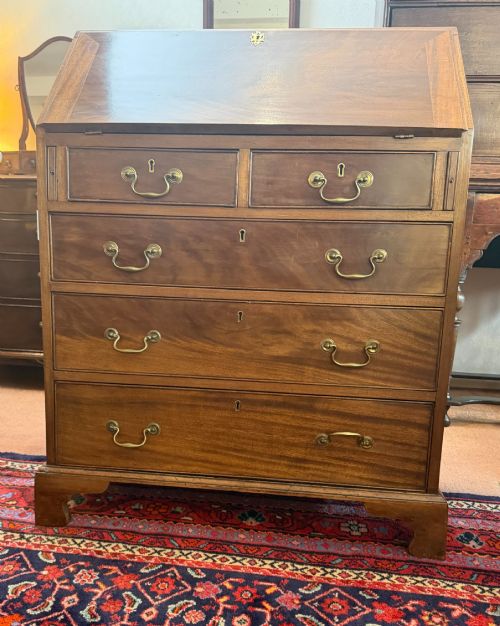
Cabinet makers relied on solid timbers and applied veneers, selecting figured mahogany, burr walnut, and oak for their structural strength and visual grain patterns. Brass hardware typically secures the drawers and supports the drop-front writing surface.
Joinery methods include bracket feet, fitted internal compartments, and occasional parquetry or floral marquetry inlay work. Glazed doors appear on upper bookcase sections, framed by timber mouldings.
Listings feature walnut, oak, and mahogany as the primary timbers, spanning the 18th century to the Edwardian period.
Indicators of craftsmanship
The refinement of the interior pigeonholes and small drawers dictates much of the distinction between standard and superior examples. Stepped or secret compartments demonstrate a higher level of joiner skill.
Timber selection and grain matching across the fall front and drawer faces determine visual depth. Figured veneers and detailed brasses elevate the overall execution.
Heals of London·Arthur Basil Reynolds·Larkin
The Slant Front Secretary Desk Glossary
- Bureau
- A desk with a sloping writing flap. It often includes internal drawers and pigeonholes.
- Bureau bookcase
- A writing desk combined with an upper shelving unit enclosed by doors. These doors frequently feature glass panels.
- Fall front
- A hinged panel that drops down to form a horizontal writing surface. It conceals internal compartments when closed.
- Marquetry
- Decorative veneer work forming pictorial or geometric patterns using various woods. It appears on finer surfaces.
- Bracket foot
- A simple furniture foot shaped like a bracket, supporting the corners of the base. It is common on Georgian case pieces.
Slant Front Secretary Desk: Frequently Asked Questions
What is a slant front secretary desk?
A slant front secretary desk is a form of writing furniture featuring a hinged sloping flap that opens for correspondence. Inside, it typically contains small drawers and pigeonholes.
Beneath the writing surface, multiple drawers provide storage for papers and household items. Some variants include an upper bookcase section with glazed doors.
How do I date a bureau?
Dating relies on timber choices, construction techniques, and stylistic markers such as bracket feet or internal drawer configuration. Georgian pieces often display figured mahogany and stepped walnut interiors.
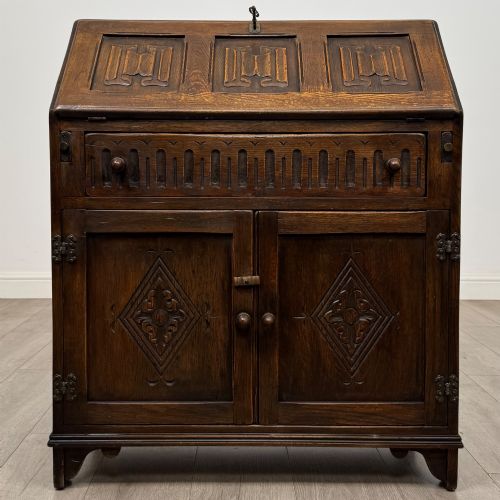
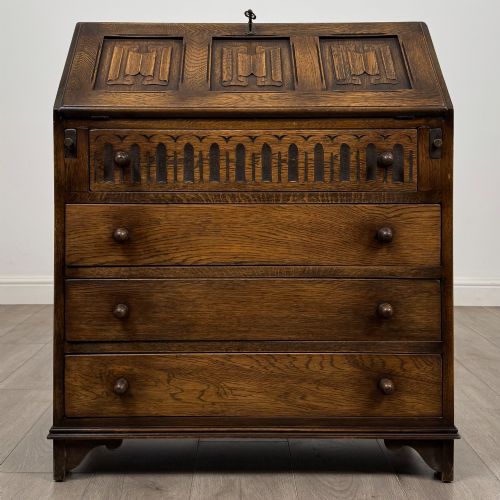
Edwardian and later 20th-century examples utilise golden oak or linenfold carving. Examining the secondary woods inside the drawers aids verification.
Where should I place a secretary desk?
These desks suit studies, living rooms, and bedrooms where a compact writing station is useful. The enclosed fall front keeps correspondence out of sight when not in use.
Sufficient clearance must be allowed in front of the piece for the writing flap to lower completely. Taller bureau bookcase versions require adequate ceiling height.
How do I maintain the wood surface?
Regular dusting with a dry, soft cloth prevents particle buildup on polished mahogany, walnut, and oak surfaces. Direct sunlight should be avoided to protect timber colours and prevent veneer drying.
Occasional application of appropriate wax polish nourishes the grain. Moisture and excessive heat must be kept away from the writing surface.