


Slant Front Secretary Bookcase
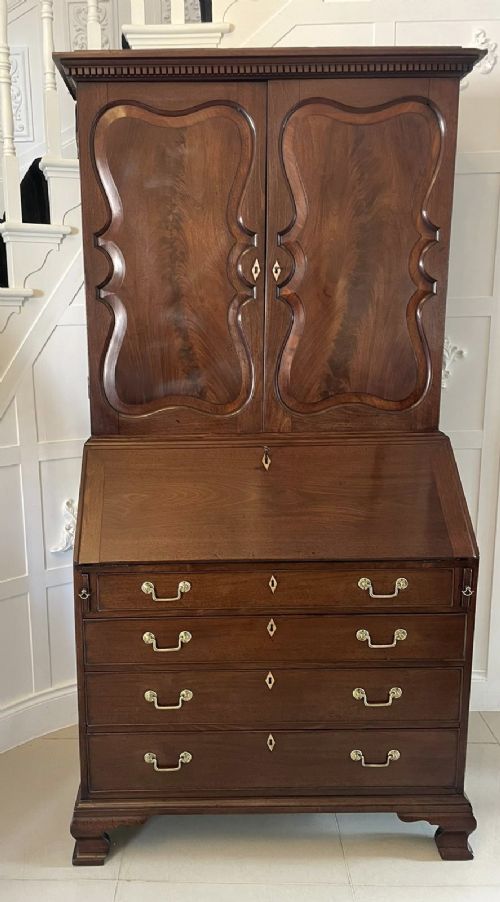
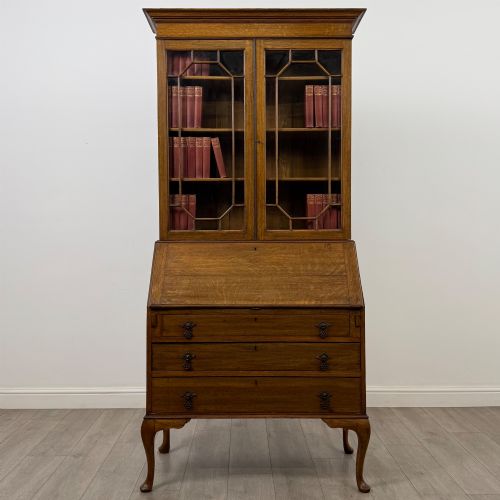
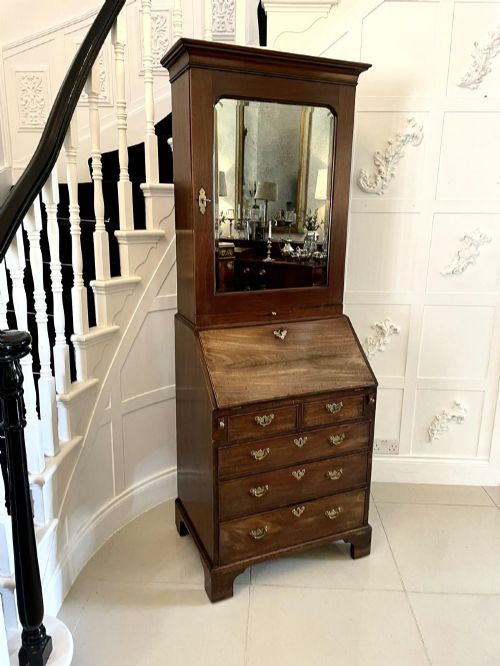
A slant front secretary bookcase combines a practical writing desk with upper shelving, offering traditional storage for books and correspondence.
Slant Front Secretary Bookcase
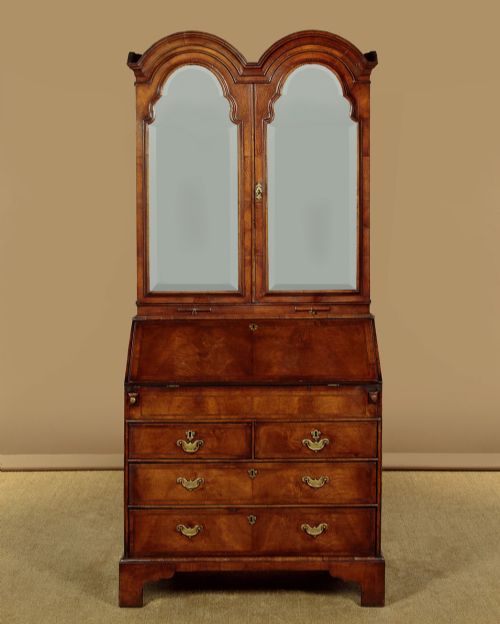
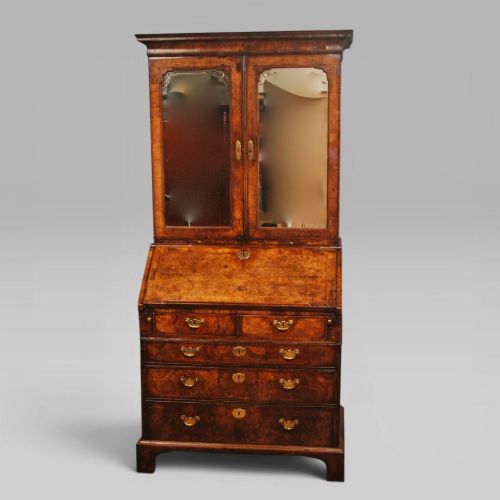
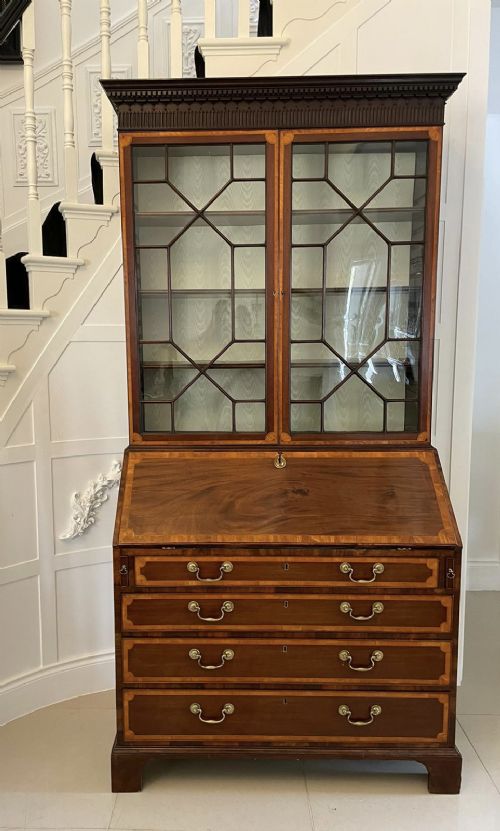
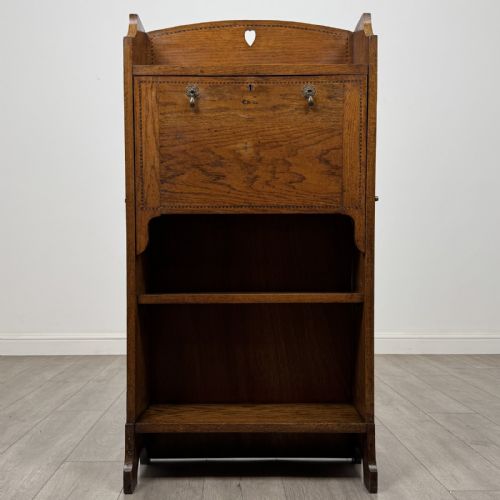
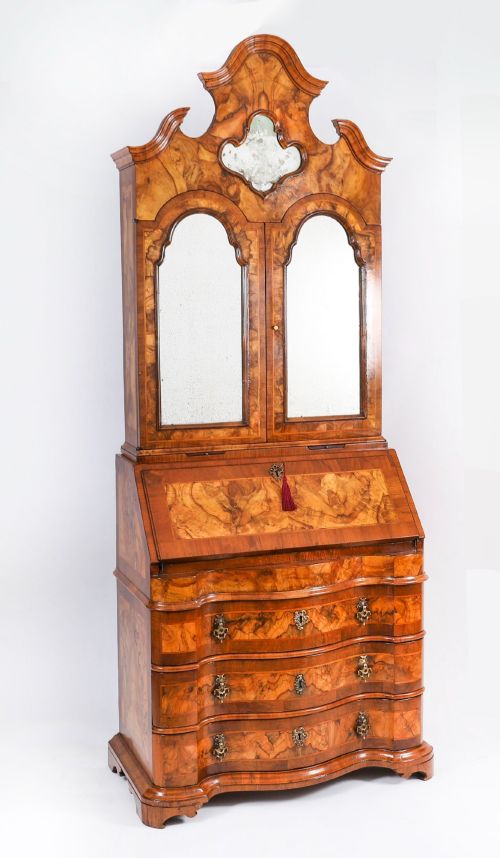
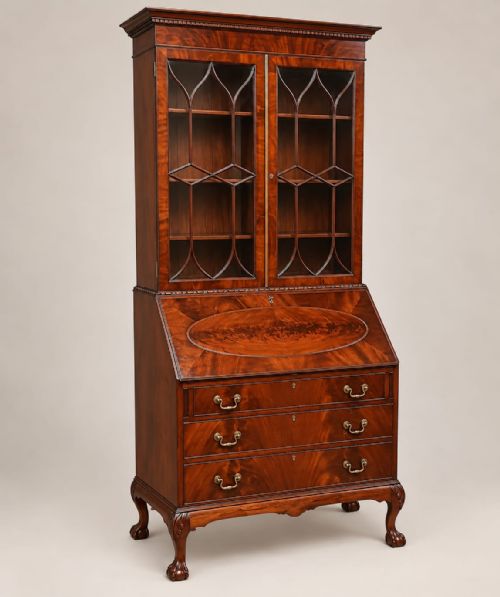
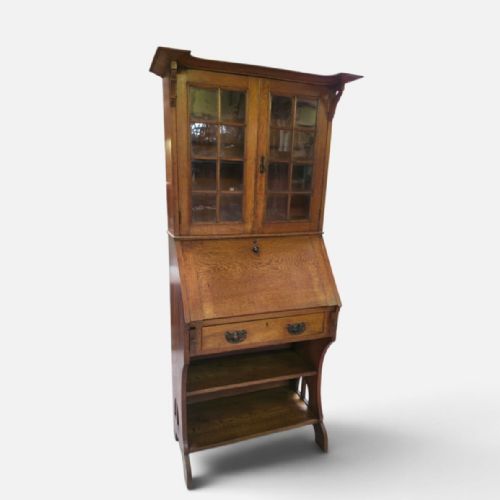
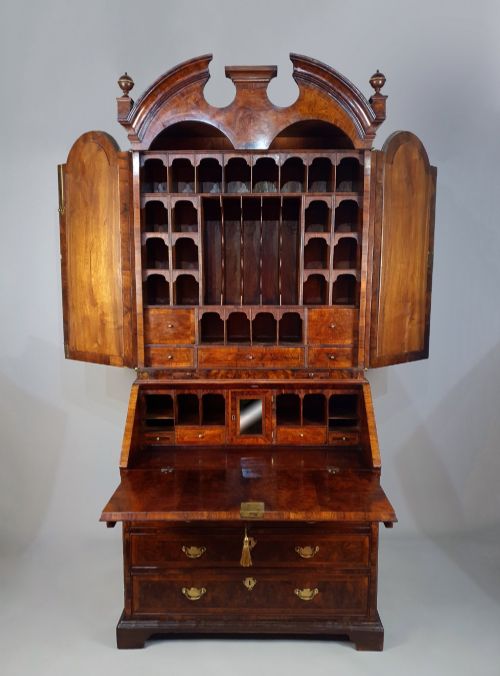
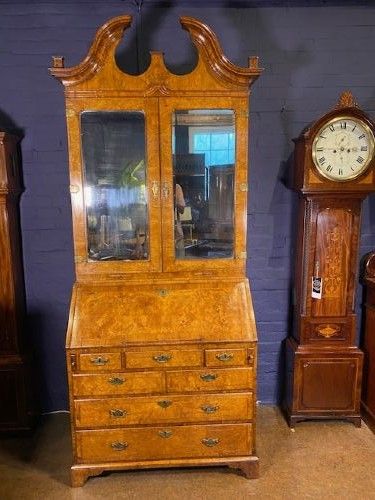
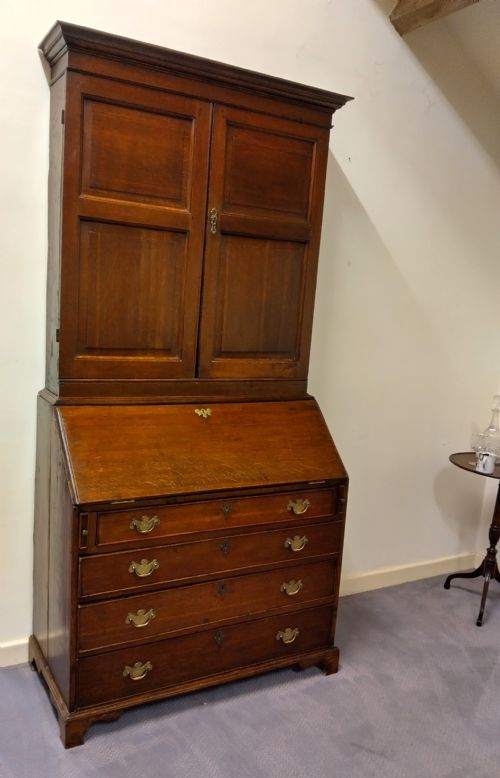
Examples on this page span the seventeenth century through to the Edwardian period and the 1920s. Pieces appear in forms ranging from tall walnut or mahogany Georgian double dome cabinets to simpler oak and pine Edwardian variations.
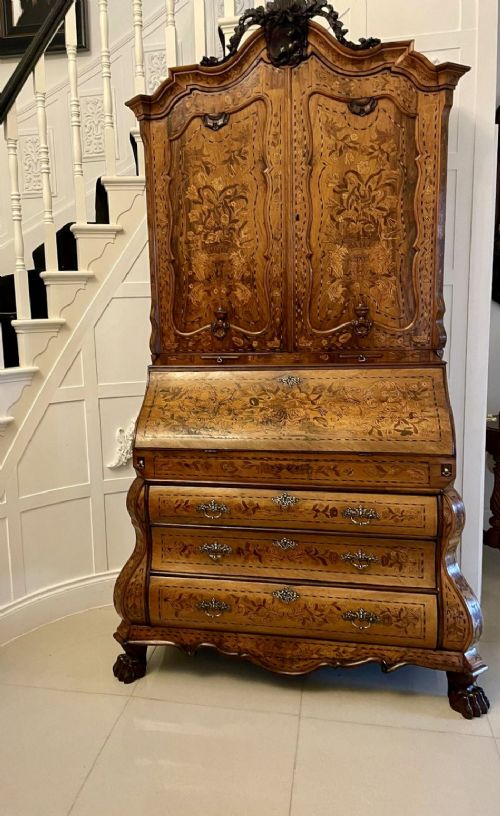
Makers utilised regional styles such as Venetian marquetry, Swedish painted finishes, and Jacobean revivals alongside standard British Georgian designs. The combination of enclosed upper shelving and a functional desk surface defines the persistent utility of the form.
Judging execution
Quality rests upon the selection of timber veneers, such as figured mahogany or burr walnut, and the precision of the wood inlay and marquetry. Superior examples exhibit continuous grain matching across the fall front and drawer tiers.
Internal joinery reveals the standard of craftsmanship, demonstrated by finely dovetailed small drawers within the fitted desk section and robust secondary timbers. The architectural proportions of the upper cornice and the integration of the two sections dictate the visual harmony of the piece.
Current listings feature slant front secretary bookcases spanning the 17th century, the Georgian era, the Victorian period, and the 1920s.
The Slant Front Secretary Bookcase Glossary
- Fall front
- The hinged panel that folds down to create a horizontal writing surface. It conceals the fitted interior of pigeonholes and small drawers.
- Fitted interior
- The arrangement of small drawers, pigeonholes, and secret compartments housed behind the writing flap. It provides organised storage for papers and stationery.
- Candle slide
- A pull-out wooden board mounted beneath the upper cabinet doors. It held candles to illuminate the writing surface before the advent of gas and electric lighting.
- Marquetry
- Decorative patterns formed by inlaying pieces of veneer into a solid wooden background. It often depicts floral or geometric designs on cabinet doors and drawer fronts.
- Double dome
- An upper cabinet roof profile featuring two arched or domed sections. It is typical of high-status pieces from the William and Mary and Queen Anne periods.
Slant Front Secretary Bookcase: Frequently Asked Questions
How do I use a slant front secretary bookcase today?
The drop-down desk flap provides a compact writing surface that conceals laptops and correspondence when closed. Upper glass doors offer dust-free display space for books and decorative objects.
Lower drawers provide general storage for household items or office supplies. The combination of closed storage and a working desk makes the form adaptable for modern study rooms and living spaces.
How do I tell an 18th-century piece from an Edwardian revival?
Eighteenth-century examples often utilise solid native timbers, hand-cut dovetails, and dense secondary woods like oak or pine inside the drawers. Timber patination develops a warm, deep glow from centuries of polishing.
Edwardian revivals and 1920s interpretations frequently display machine-sawn internal components and lighter framing methods. Stylistic cues like Jacobean twist turnings or Chinoiserie decoration often point to early twentieth-century revivals of older aesthetics.
Can I fit a television inside one?
Adaptations occur, such as historical examples modified for modern appliances like televisions. The deep lower bureau section can accommodate certain screens if the internal fittings are adjusted.
Consult measurements carefully before placing modern equipment inside enclosed compartments. Many owners prefer to keep the interior intact for traditional desktop use.
How do I care for walnut and mahogany finishes?
Keep wooden furniture away from direct sunlight and heat sources to prevent timber splitting and veneer lifting. Maintain a stable room temperature to protect antique glues and polishes.
Apply traditional beeswax periodically to nourish the grain and preserve the surface sheen. Avoid silicone-based sprays that can penetrate the pores of older finishes.