





Skeleton Clock Under Dome
A skeleton clock under dome reveals its gear train inside a glass cover, combining mechanical precision with visual lightness.
Skeleton Clock Under Dome
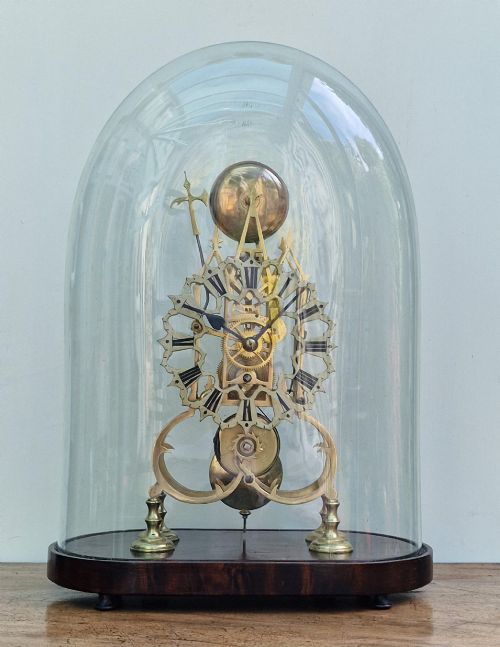
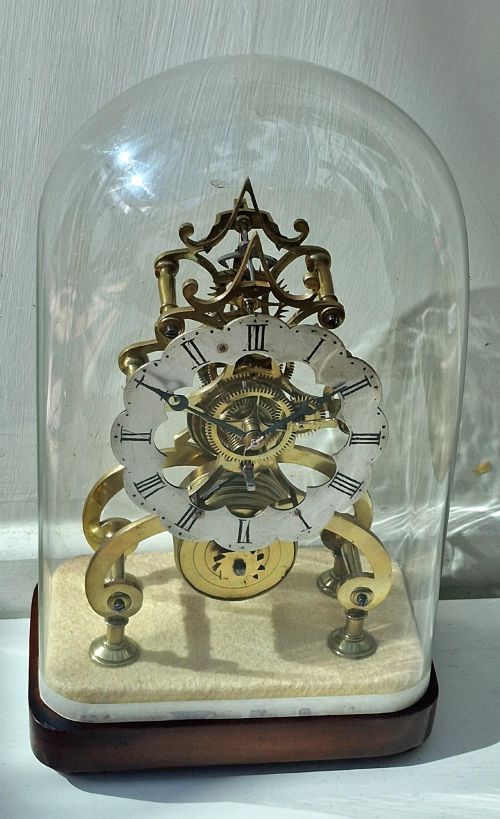
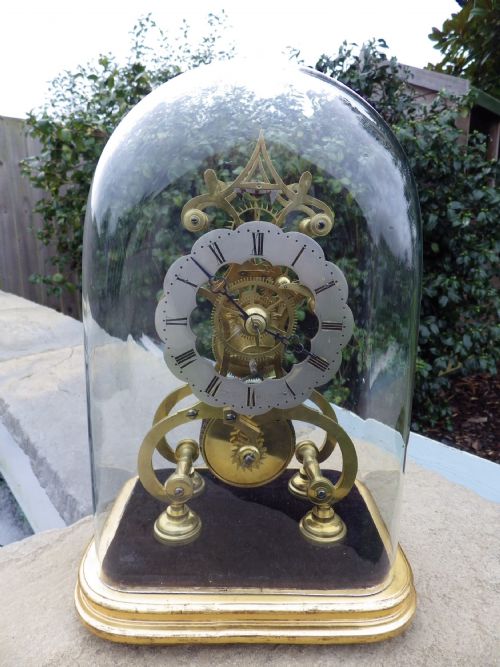
A skeleton clock under dome presents an exposed brass movement beneath a clear glass cover, often resting upon a wooden or marble base. These pieces originate primarily from the Victorian era, spanning dates from eighteen-fifty through to the nineteen-fifties.
The form includes English fusee skeleton clocks, miniature French examples, and cathedral designs referencing nineteenth-century French styles. Most items function as mantel clocks designed to display the intricate wheel work clearly from every angle.
Materials and Construction
These timepieces employ brass for the open frame and wheel work, matched with steel components and glass for the protective domes. Bases frequently incorporate mahogany, marble, or velvet lining to support the weight of the mechanism.
Craftsmen built fusee movements and six-spoke wheel structures requiring precise manual adjustment. The glass domes protected the delicate exposed mechanism from dust while permitting light to pass through the open plates.
Skeleton Clock Under Dome Retail Price Guide 2026
Typical asking prices for skeleton clock under dome among the pieces listed under this phrase on Sellingantiques today, from the lower quarter to the upper quarter. They describe what is for sale here now, not the wider market.
Some cathedral clocks mimic miniature Gothic architecture so faithfully that tiny flying buttresses support the ticking brass work.
Judging Quality
Quality rests in the complexity of the wheel work and the presence of original components like the glass dome. Simpler timepieces differ from double fusee movements or those featuring passing strike mechanisms.
Miniature dimensions and architectural forms, such as cathedral styling, demand greater fineness in execution. The integrity of the original glass dome and the execution of the brass framework distinguish finer examples.
Ferdinand Barbedienne
The Skeleton Clock Under Dome Glossary
- Fusee
- A conical pulley used in clock movements to maintain even force as the mainspring unwinds. This mechanism improves timekeeping accuracy across the power reserve.
- Passing strike
- A clock mechanism that strikes a bell once each hour without indicating the full hour count. This feature adds auditory interest to a visual timepiece.
- Garniture
- A set consisting of a clock flanked by matching decorative objects such as vases or candelabra. Such sets were designed to display together on a mantelpiece.
- Cathedral clock
- A skeleton clock designed in an architectural Gothic style resembling ecclesiastical buildings. These pieces utilise pointed arches and traceried brasswork.
Skeleton Clock Under Dome: Frequently Asked Questions
What is a skeleton clock under dome?
A skeleton clock under dome is a timepiece with an exposed gear mechanism housed beneath a protective glass cover.
These pieces showcase the brass wheel work directly to view rather than hiding it behind a conventional dial face.
Where should I place a fusee skeleton clock?
Place the clock on a sturdy mantelpiece or table away from direct sunlight and drafts.
Level the wooden or marble base carefully to ensure the pendulum and fusee movement operate correctly.
How do I identify a Victorian skeleton clock?
Victorian examples date from the nineteenth century and typically feature brass frames mounted on mahogany or marble bases.
Many incorporate fusee movements or passing strike complications within their open framework.