



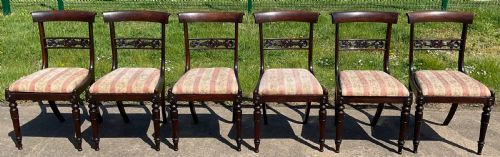


Six Rosewood Dining Chairs
When you search for six rosewood dining chairs, you encounter formal seating from the Regency, William IV, and Victorian periods designed to anchor a proper dining room.
Six Rosewood Dining Chairs
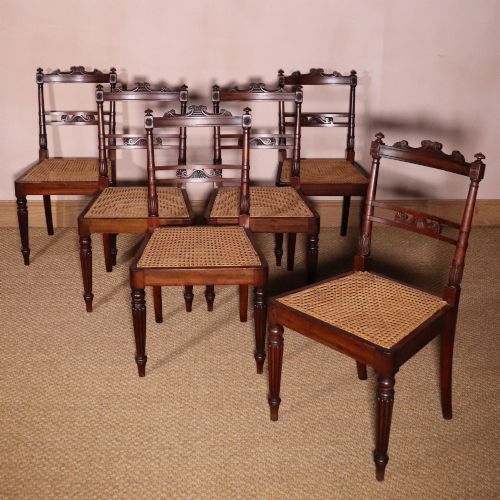
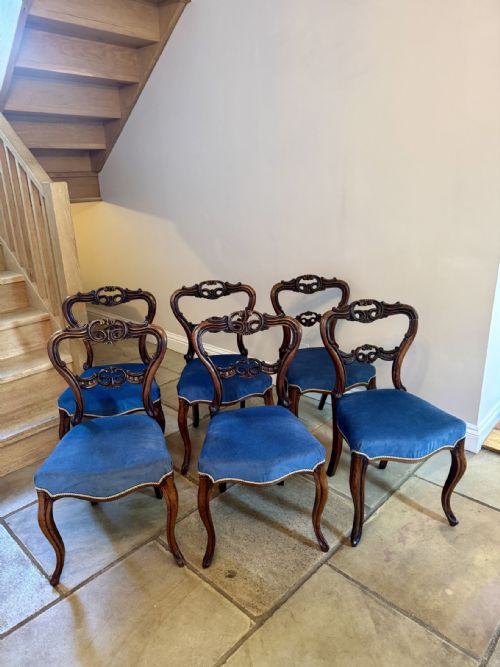
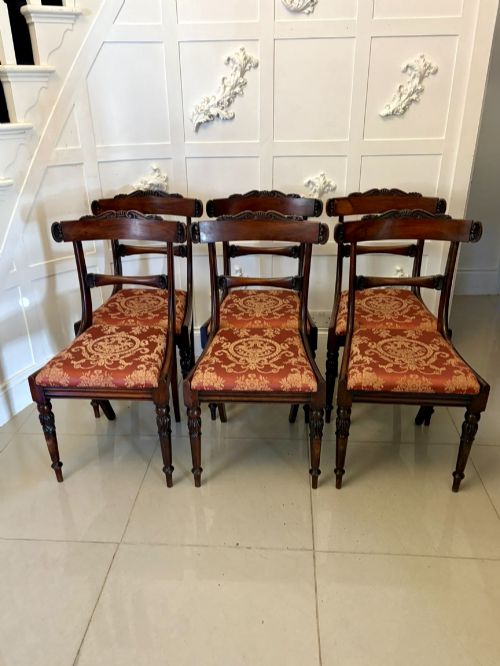
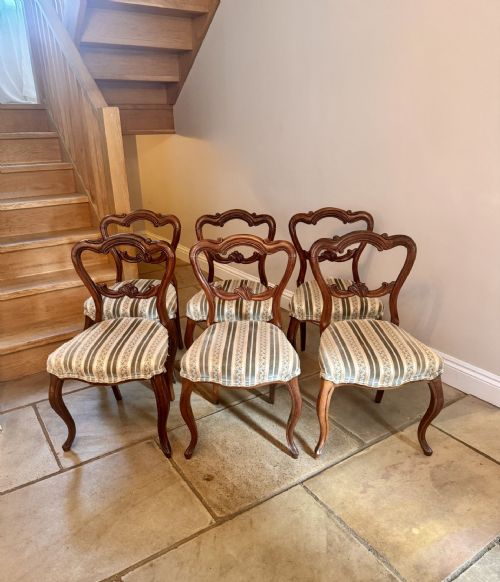
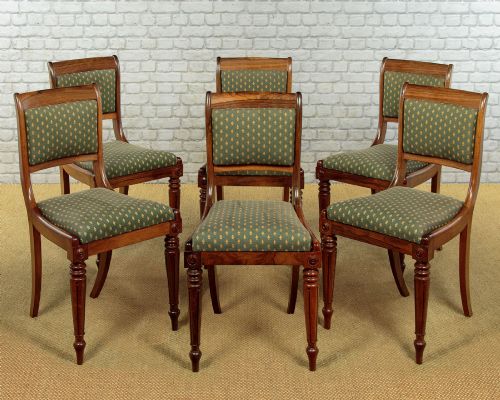
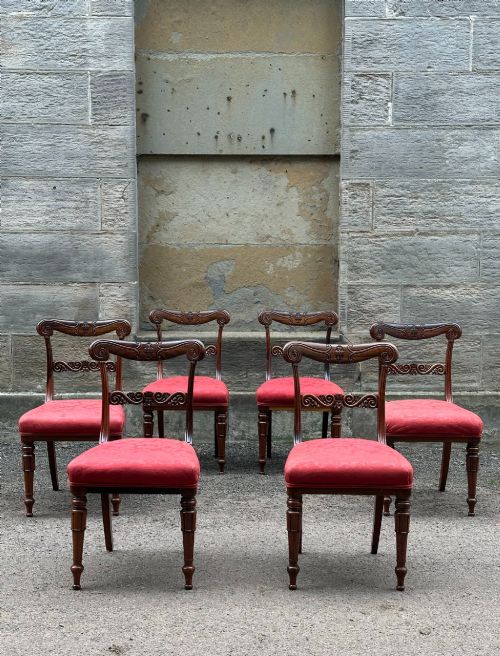
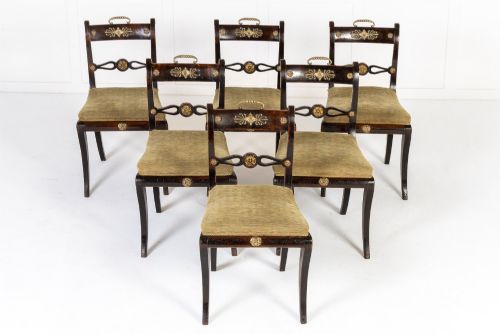
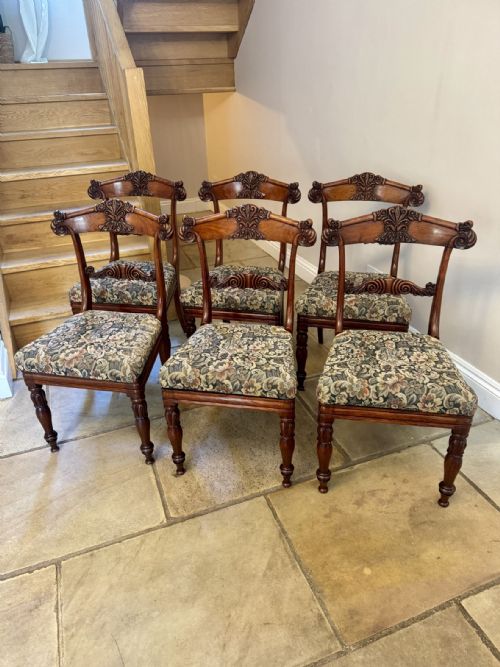
Six rosewood dining chairs comprise matching sets of seating built primarily during the nineteenth century across Regency, William IV, and Victorian eras. These dining chairs appear in distinct forms, from early Regency brass inlaid examples and simulated rosewood models to mid-Victorian balloon back variants.
A buyer seeking this phrase encounters heavy timber frames designed for formal dining spaces. Sets frequently incorporate carved rails, needlepoint seats, or cane inserts depending on the specific decade of manufacture.
Materials and construction
Cabinet makers utilised solid rosewood or applied decorative veneers over foundational timbers, sometimes finishing pieces with simulated graining. Metal elements such as brass inlay appear across Regency designs to accentuate the dark timber.
Seating portions rely on textiles including velvet, fabric, upholstery, and needlepoint, alongside woven cane inserts. Frames incorporate carved structural rails and supportive joinery suited to daily domestic use.
Six Rosewood Dining Chairs Retail Price Guide 2026
Typical asking prices for six rosewood dining chairs among the pieces listed under this phrase on Sellingantiques today, from the lower quarter to the upper quarter. They describe what is for sale here now, not the wider market.
The recorded inventory spans the Regency, William IV, and Victorian periods, dating from eighteen hundred to eighteen seventy.
Factors that separate the range
The degree of hand carving on the rails and splats dictates much of the visual distinction between standard sets and more ambitious workshop output. Crisp execution of brass inlay and the integrity of the underlying rosewood grain also separate standard production from finer cabinet work.
Originality of the components plays a significant role, as matched sets retaining their period upholstery or cane work command distinct interest from those altered over subsequent decades.
Gillows·Munro
The Six Rosewood Dining Chairs Glossary
- Rosewood
- A dense, dark timber prized for its rich grain patterns and deep colour used extensively in high-status nineteenth-century furniture. It forms the primary visual and structural material for these dining sets.
- Balloon back
- A rounded, scroll-topped chair back shaped like a swollen oval that became immensely popular during the Victorian era. This form provides ergonomic support while offering a softer profile than earlier rectilinear designs.
- Brass inlay
- Technique involving the insertion of thin brass strips into routed channels within the wood surface. Regency makers employed this method to create geometric and floral motifs.
- Simulated rosewood
- The practice of painting or graining alternative, less costly timbers to imitate the appearance of genuine rosewood. This finish allowed workshops to offer fashionable furniture at accessible price points.
- Needlepoint
- A form of counted-thread canvas work used to create durable, decorative coverings for seat pads. These stitched textiles frequently display floral patterns in muted historic palettes.
Six Rosewood Dining Chairs: Frequently Asked Questions
How do I date these dining chairs?
Dating relies on observing structural shifts from the clean lines and brass inlay of the Regency period through to the heavier carved curves of Victorian balloon backs. Cabinet making techniques and timber selection help narrow the decade of manufacture.
Comparing existing joinery against known stylistic markers assists in confirming whether a set originates from the early nineteenth century or the mid-Victorian era.
Are these chairs suitable for daily use?
Nineteenth-century dining chairs were built using solid hardwoods and traditional joinery designed to withstand regular domestic service. Proper maintenance of the frame ensures they remain practical for modern dining.
Buyers should inspect the structural stability of the joints and the condition of the upholstery webbing to ensure the seating handles daily weight comfortably.
What is a harlequin set?
A harlequin set consists of chairs that share a broadly similar style, period, and timber but were not originally manufactured as a single unified group. These collections are assembled later to provide a matching dining arrangement.
Such sets display subtle variations in carving or proportions upon close inspection, reflecting pieces gathered from multiple sources.
How should I care for rosewood furniture?
Rosewood benefits from stable indoor humidity levels away from direct heat sources and strong sunlight, which can dry out the timber and fade the polish. Regular dusting with a soft, dry cloth preserves the original surface sheen.
Avoid harsh chemical cleaning products, utilising traditional beeswax sparingly to nourish the timber grain over time.