
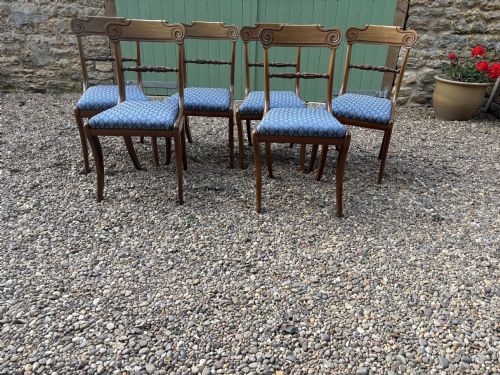
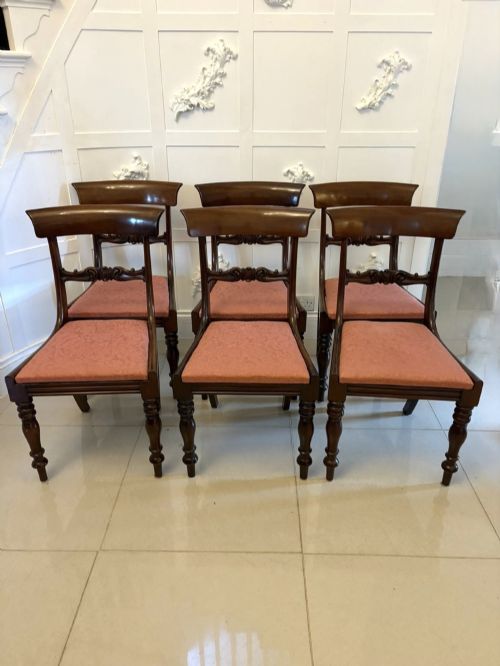
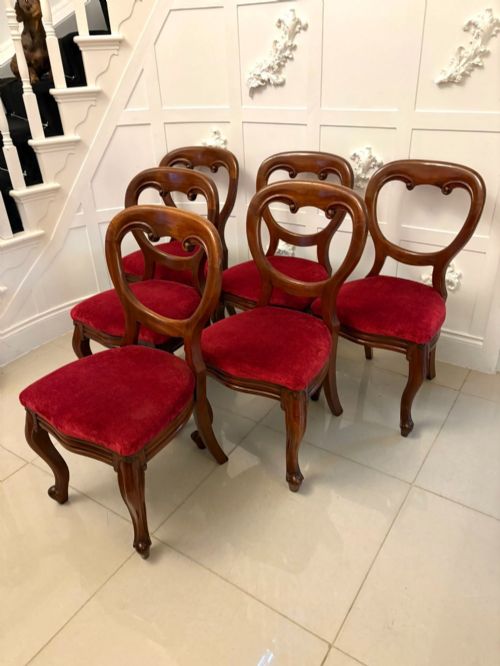
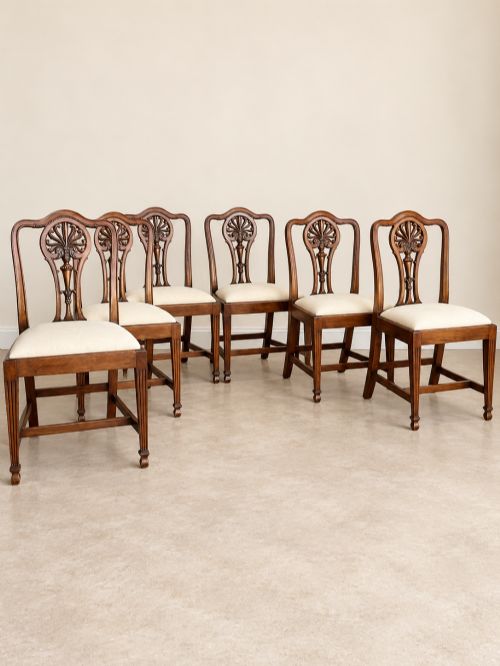

Six Mahogany Chairs
When buying six mahogany chairs, you are acquiring a complete dining set that brings centuries of British cabinet-making history directly to the table.
Six Mahogany Chairs
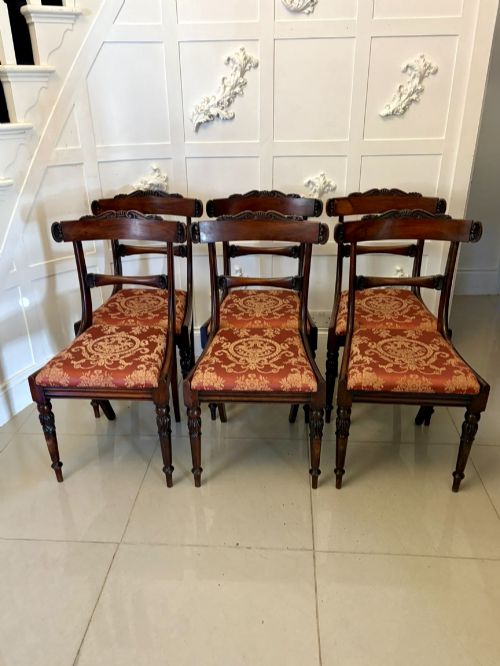
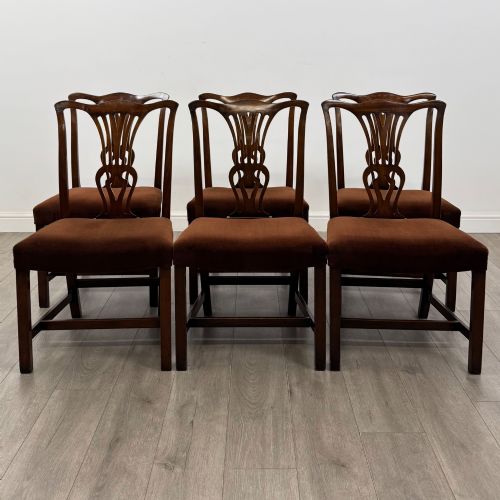
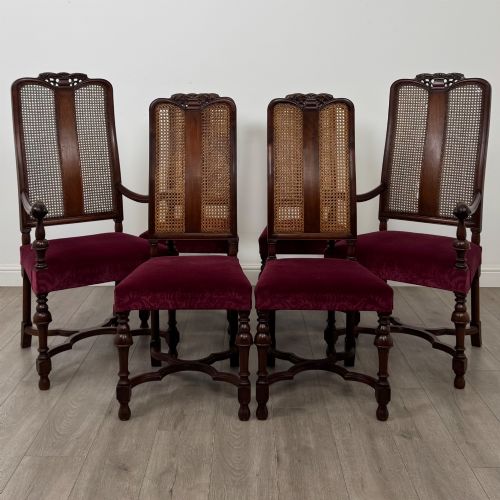
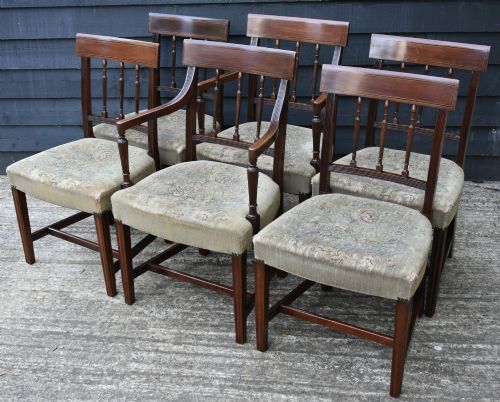
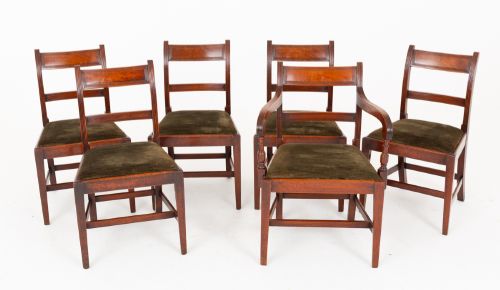
Six mahogany chairs typically comprise a unified suite of dining seating, often featuring a combination of single chairs and carver armchairs for the host ends. The selection spans formal dining chairs, library chairs, and hall chairs designed for grand interiors.
The most frequent examples encountered on this page date from the Georgian, Regency, and Victorian periods, alongside later revival pieces produced in Edwardian workshops. These sets reflect changing domestic habits as dining rooms evolved into the social heart of the home.
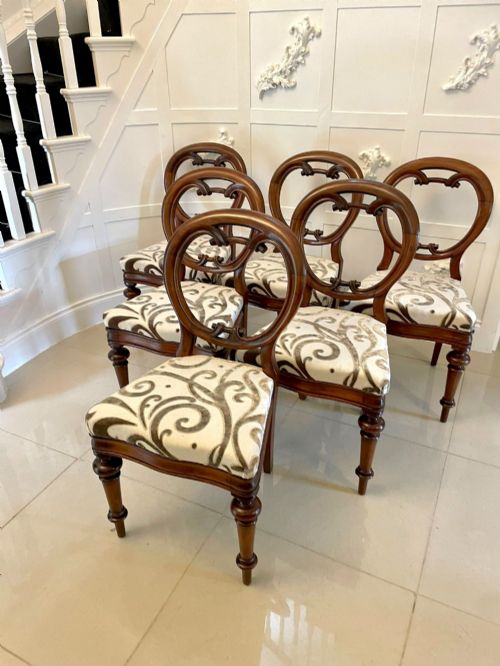
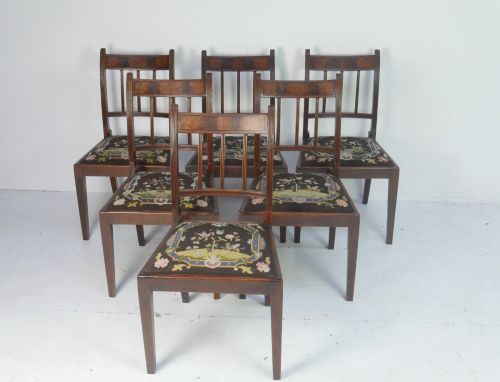
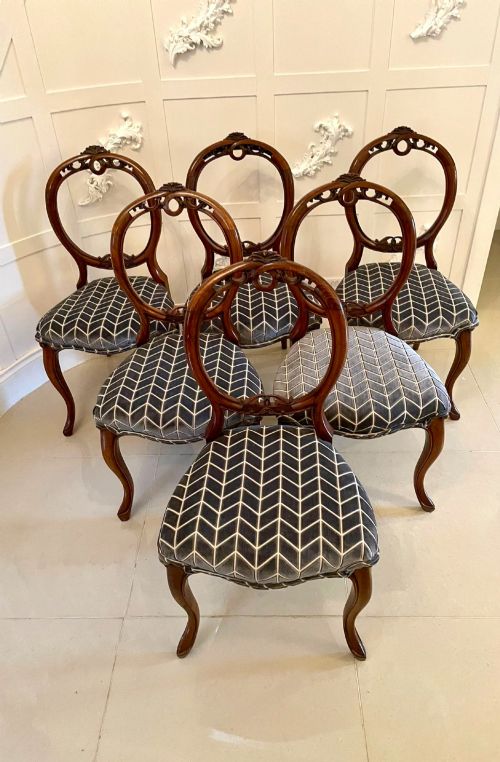
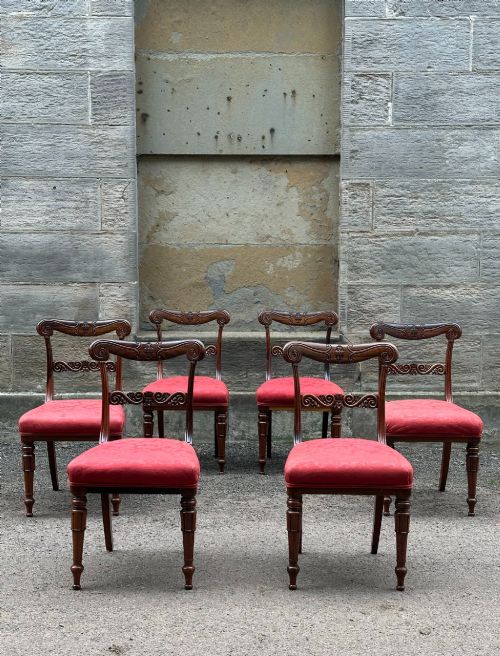
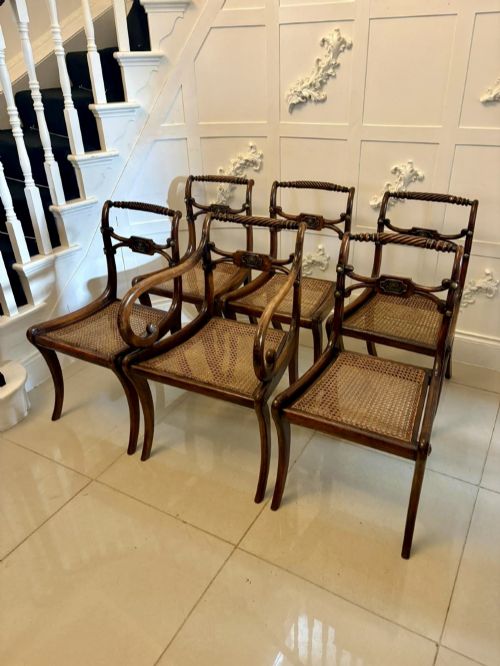
Formations range from strict geometric bar backs and balloon backs to ladderbacks and open-arm Regency models with sabre or reeded legs. Sets occasionally incorporate cane seating or drop-in upholstered pads covered in contemporary fabric or velvet.
How they were made
Makers utilised dense timbers such as Cuban and solid or figured mahogany, frequently augmented by secondary framing woods and structural brass detailing. The timber was selected for its grain pattern, strength, and capacity to take a deep, polished finish.
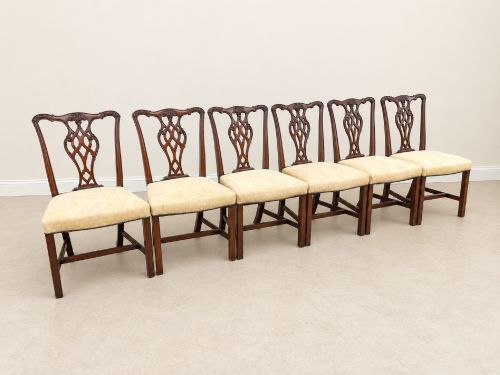
Joinery relied on traditional mortise and tenon construction, secured with pegged joints and reinforced corner blocks to withstand daily dining use. Carved splats, reeded legs, and shaped top rails were hand-chisel worked by skilled joiners before final assembly and polishing.
Listings span the eighteenth, nineteenth, and twentieth centuries, incorporating Georgian, Regency, Victorian, and Edwardian periods.
What varies in quality
The degree of hand-carving refinement separates standard sets from exceptional examples, with crisp detailing on shield backs, bar backs, or scroll arms indicating superior workshop output. Figured mahogany grain selection across all six frames also distinguishes high-status productions from simpler country-made equivalents.
Originality of the set remains paramount, meaning uniformity across all six pieces without mismatched replacements or spliced legs. The integrity of the underlying frame construction and the survival of period surfaces dictate the standing of any given set.
The Six Mahogany Chairs Glossary
- Bar back
- A chair design featuring a horizontal wooden crossbar across the upper backrest, often curved for comfort. This style became particularly popular during the Regency and William IV periods.
- Balloon back
- An upholstered oval or rounded backrest resembling a balloon shape, heavily favoured by Victorian cabinet makers. It offers ergonomic support while displaying polished mahogany frames.
- Carver
- An armchair designed to match a set of single dining chairs, traditionally placed at the head of the table. These incorporate sweeping armrests integrated into the primary frame.
- Sabre leg
- A concave, outward-curving leg tapering towards the foot, characteristic of Regency furniture design. It provides structural stability while imparting a lighter visual appearance.
- Cane seat
- A woven rattan seating panel that offers flexible support and a lighter texture. It requires skilled hand-weaving around the seat aperture.
Six Mahogany Chairs: Frequently Asked Questions
What defines a set of six?
A set of six traditionally includes multiple single chairs alongside one or two matching carvers for the table ends. This configuration supplied adequate seating for standard Victorian and Georgian dining arrangements.
Survival as an intact group of six depends on how well the chairs were kept together through successive generations of domestic use.
How do I spot a Regency chair?
Regency chairs typically exhibit classical restraint, featuring reeded legs, brass inlay, or tablet top rails inspired by ancient Greek and Roman forms. The timber is often dark, dense mahogany with minimal heavy carving.
Proportions tend to be lighter and more refined than the heavier walnut or oak styles of earlier centuries.
Are these chairs suitable for daily use?
Antique mahogany chairs were built using robust joinery techniques like pegged mortise and tenon frames designed for active dining rooms. Regular maintenance of the joints ensures they remain structurally sound for modern meals.
Care should be taken with antique upholstery fabrics and delicate cane panels to preserve their original condition.