
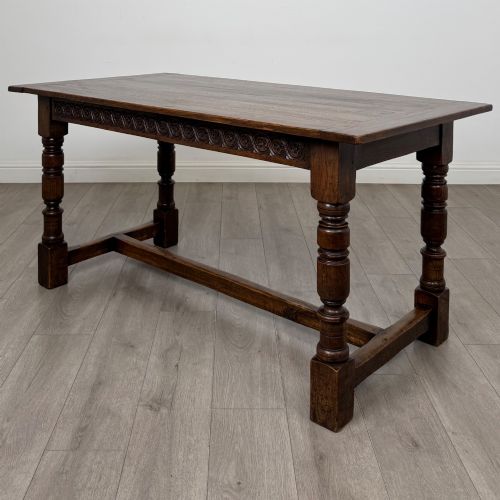
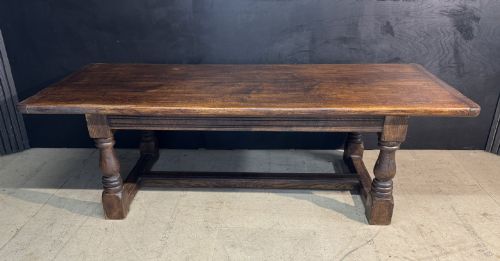
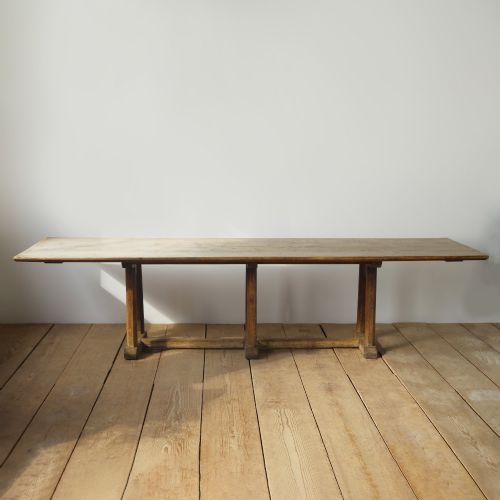
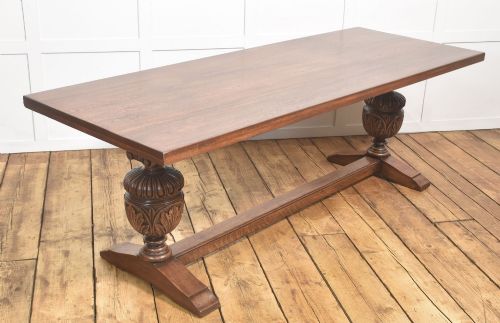
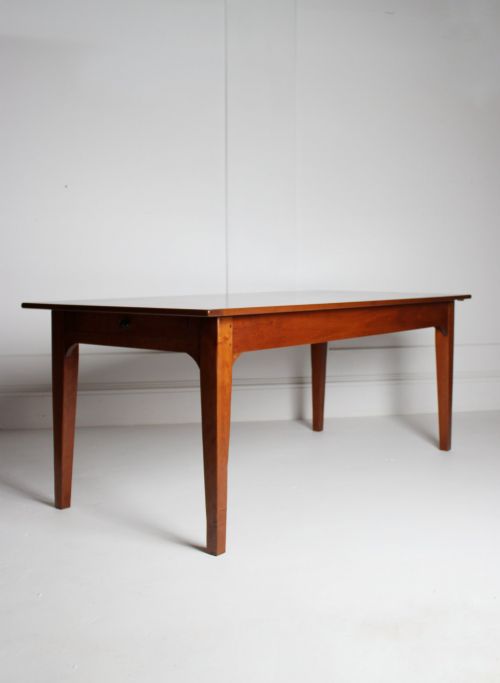
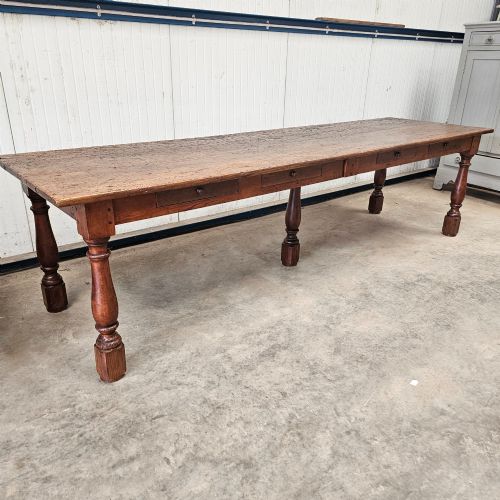
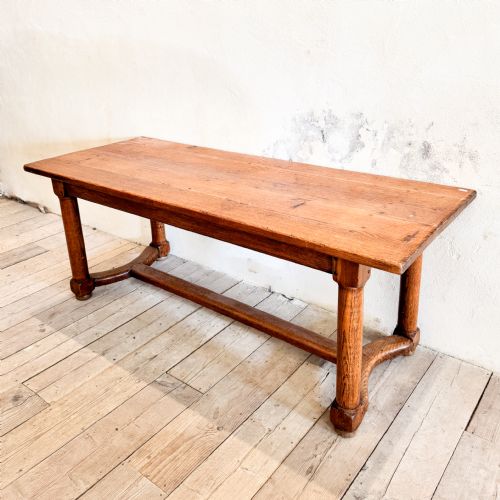


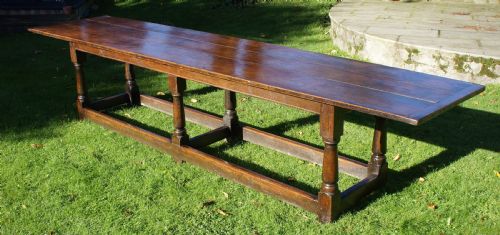

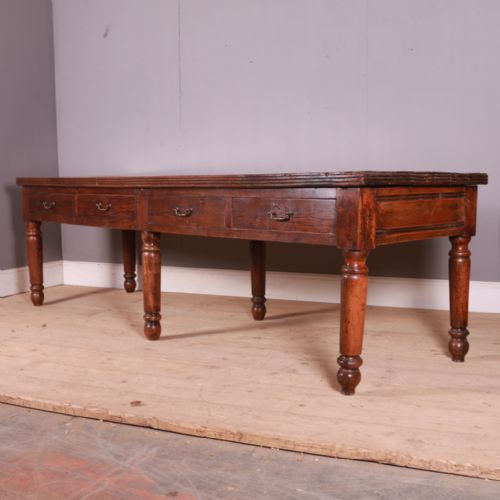
Six Leg Refectory Table
A six leg refectory table gives a room an anchor of solid timber, built for gathering and daily use.
Six Leg Refectory Table
When you search for a six leg refectory table, you are looking at substantial dining and kitchen tables designed to seat many people. The versions you are most likely to meet on this page span the 17th century through to the Edwardian period, built primarily in oak, pine, and cherrywood. These pieces often carry styles such as Jacobean Revival and rustic farmhouse, reflecting long traditions of English and continental country cabinet making.
Forms range from large kitchen preparation tables with multiple drawers to long dining boards supported by sturdy underframes. Many examples show the influence of 19th-century and Victorian country workshops, where utility dictated the construction. The emphasis remains on length and stability, making them practical for modern dining rooms and large kitchens alike.
How they were made
Makers relied heavily on solid oak and pine, supplemented by timbers like chestnut, cherrywood, and satin birch for tops and framing. Boards were selected for width and grain, then joined with traditional woodworking techniques to support heavy daily use over centuries.
Underframes frequently incorporated stretchers and multiple legs to bear the weight of long timber tops. Drawer construction on preparation pieces used straightforward joints, fitted with brass or wooden pulls appropriate to the period.
Listings feature timbers including oak, pine, cherrywood, chestnut, and satin birch across periods from the 17th century to the Edwardian era.
What varies in quality
Quality rests in the selection of timber and the integrity of the original construction rather than decorative flourishes. Tables built from dense oak or well-figured cherrywood hold their structural rigidity better than those made from softer secondary woods.
The degree of hand-carving and the subtlety of the timber finishing distinguish provincial utility pieces from finer Revival commissions. Original surface patination accumulated through decades of use also separates superior examples from later restorations.
The Six Leg Refectory Table Glossary
- Refectory table
- A long dining table traditionally used in communal dining halls and later adopted for domestic kitchens. This form prioritises length and sturdy leg placement.
- Farmhouse table
- A practical domestic table built for kitchen work and family meals, usually constructed from pine or oak. These pieces often show robust legs and simple aprons.
- Patina
- The surface sheen and colour depth developed by wood over years of handling, polishing, and exposure to light. Collectors value untouched patination on older timbers.
Six Leg Refectory Table: Frequently Asked Questions
How do I date a refectory table?
Dating relies on timber selection, tool marks, and construction methods visible beneath the top. Earlier pieces from the seventeenth century show hand-riven boards and pegged joints.
Later Edwardian and twentieth-century interpretations adopt machine-sawn timber and different fastening techniques while copying earlier styles.
Can I use a kitchen table for daily dining?
These pieces were built precisely for constant domestic activity, food preparation, and large gatherings. Solid timber tops handle daily wear well when properly maintained with wax or appropriate finishes.
Allow for the extra length and leg placement when planning seating arrangements in your room.
What is the difference between oak and pine tables?
Oak provides a dense, heavy structure with pronounced grain figures suited to formal Jacobean Revival or substantial country dining pieces. It resists denting and supports heavy loads over long spans.
Pine offers a lighter alternative typical of nineteenth-century kitchen preparation furniture and simpler farmhouse tables.
How do I care for an antique timber top?
Keep wooden surfaces away from direct heat sources and sudden humidity changes to prevent timber splitting. Regular application of beeswax helps nourish the grain and preserve the surface patination.
Use coasters and placemats to protect the historic finish from moisture rings and heat damage.