


20th Century Refectory Table
A 20th century refectory table brings sturdy architectural presence and generous dining capacity to a room.
20th Century Refectory Table
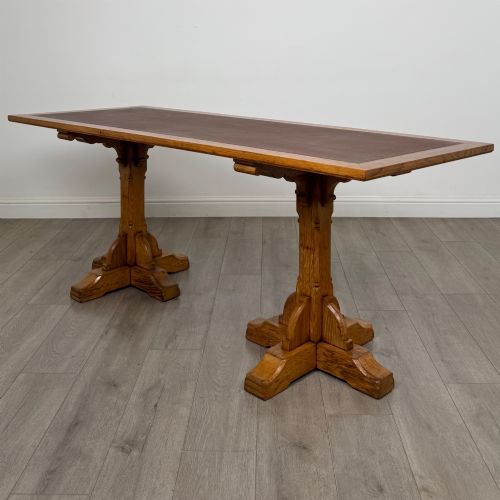
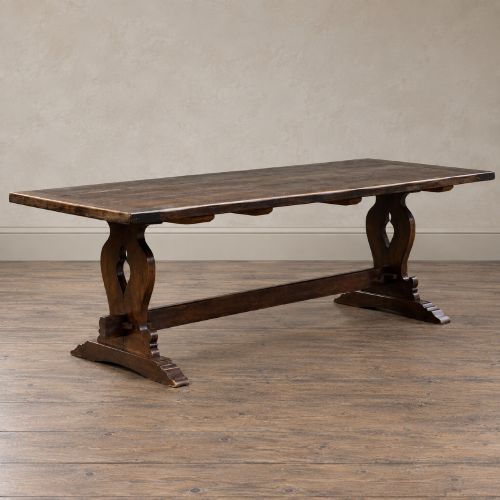
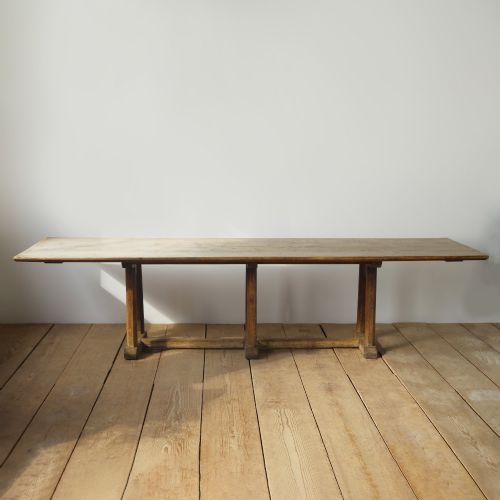
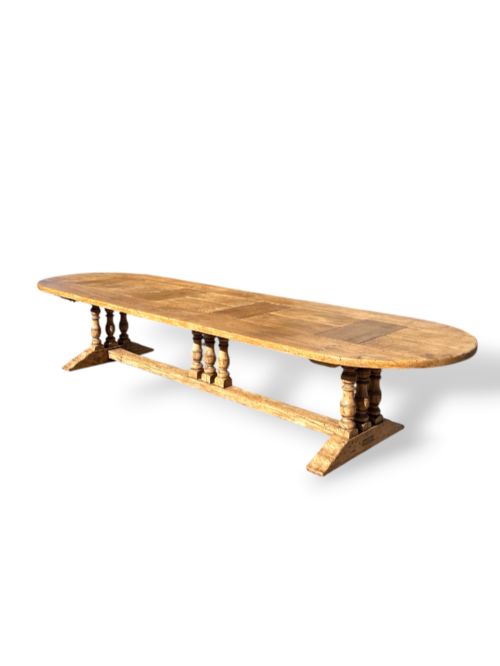
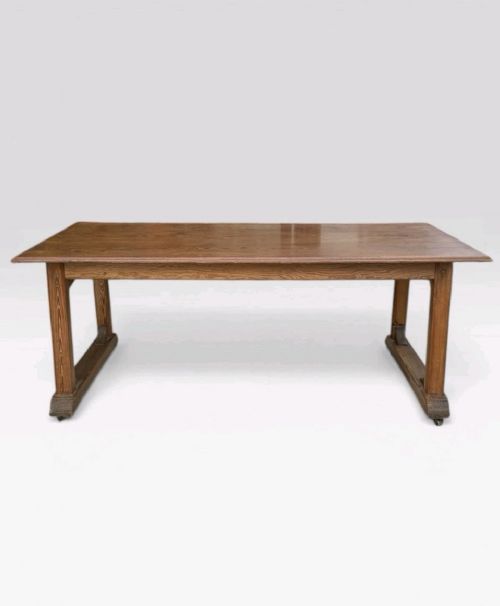
A 20th century refectory table is a long, substantial board supported by trestles or legs connected with stretchers, built primarily for communal dining. The examples gathered here span periods from Edwardian times through the decades leading up to 1930, appearing in forms designated as dining tables, library tables, and tavern tables.
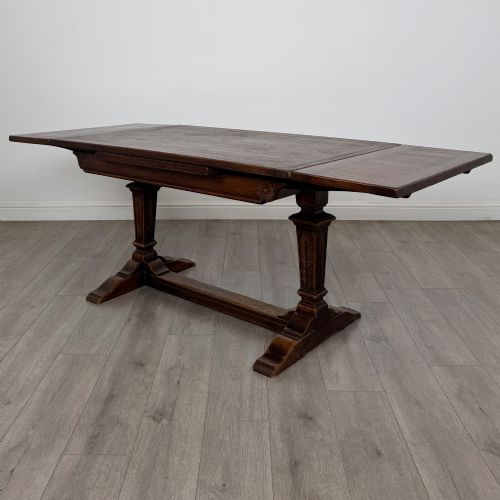
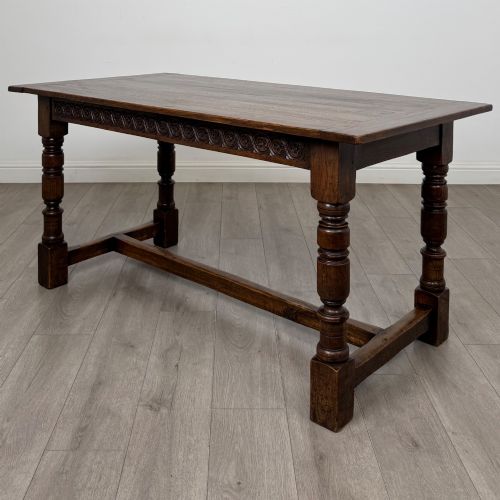
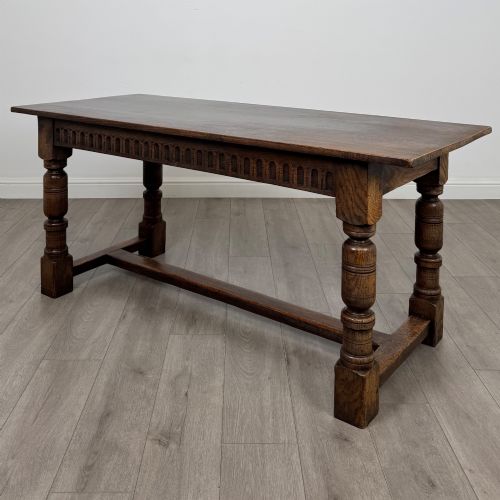
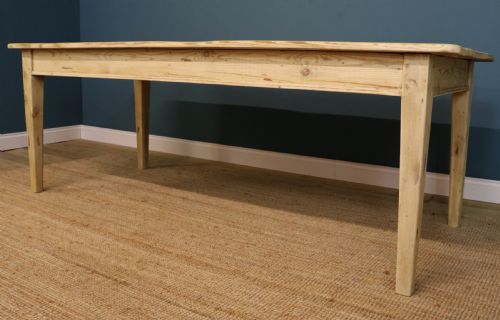
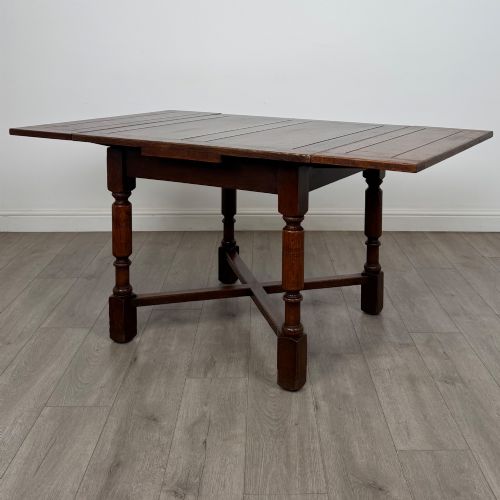
The version most commonly met on this page is constructed from solid oak, frequently adhering to Jacobean Revival, Arts and Crafts, or Tudor Revival aesthetics. Buyers also encounter variations including French Country bleached pine, walnut, and draw leaf mechanisms that extend the surface.
These tables serve domestic dining rooms, large kitchens, and libraries alike. Their substantial underframes and sturdy tops handle daily gatherings with ease.
How they were made
Makers built these pieces predominantly from solid oak and pine, utilising natural timber planks for the table surfaces. Tops often feature cleated ends to stabilise the wood against seasonal movement.
Underframes incorporate structural joinery such as carved stretchers, gothic elements, and sturdy legs. Metal components like iron and brass appear in hinges, brackets, or gallery fixtures on specialised pieces.
Keep an eye out for the ships gallery table complete with a gothic underframe, built for dining on stormy seas.
What varies in quality
The calibre of a table rests on the selection of timber and the ambition of the underframe construction. Superior pieces utilise thick, well-figured solid oak or walnut with intricate hand carving on the friezes and legs.
Simpler versions rely on plain pine boards and straightforward turned supports. The presence of functional mechanisms, such as draw leaf extensions or removable tops, adds complexity and ingenuity to the design.
The 20th Century Refectory Table Glossary
- Refectory table
- A long dining table traditionally used in monasteries and halls, characterised by a long plank top and stretcher-supported legs. Twentieth century versions adapt this medieval form for domestic dining.
- Draw leaf
- An extension system where two leaves slide out from beneath the main surface, lengthening the table automatically. This mechanism allows the surface to expand for larger gatherings.
- Cleated plank top
- A solid wood table top finished with transverse pieces of timber screwed or pegged to the ends. This technique prevents the main planks from warping over time.
- Gothic underframe
- A support structure decorated with pointed arches, tracery, or medieval ecclesiastical motifs. These details connect the legs and add architectural weight to the base.
20th Century Refectory Table: Frequently Asked Questions
How do I care for an oak refectory table?
Keep solid oak timber away from direct heat sources and sudden humidity changes to prevent the planks from splitting. Apply beeswax periodically to nourish the wood and maintain its natural lustre.
Use coasters and mats for hot dishes and liquids. Gentle dusting with a dry cloth keeps the surface clean without damaging the finish.
Are 20th century refectory tables suitable for daily use?
These tables are built with sturdy wooden frames and thick tops designed for heavy, regular usage. Their robust construction handles family meals and gatherings comfortably.
Pairing them with stable chairs ensures the underframe remains balanced. The durable materials withstand everyday wear while maintaining their structural integrity.
What is the difference between oak and pine versions?
Oak tables offer a heavy, dark, traditional aesthetic often associated with revival styles and carved details. They provide exceptional hardness and a formal presence in a room.
Pine tables, particularly French country examples, tend to have a lighter, bleached appearance with a more casual look. They bring a softer texture and brighter tone to kitchen and dining spaces.
How do draw leaf tables work?
A draw leaf table contains two hidden panels tucked beneath the main central top. When guests arrive, you pull these leaves outward from each end.
The main top drops slightly into place as the leaves slide flush, creating a seamless extended surface. This mechanism allows you to alter the table length without storing loose boards separately.