

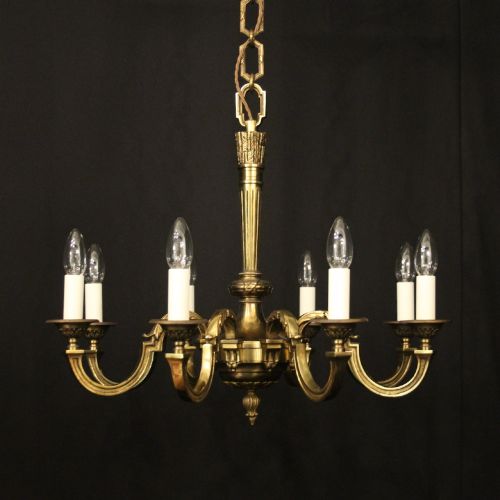
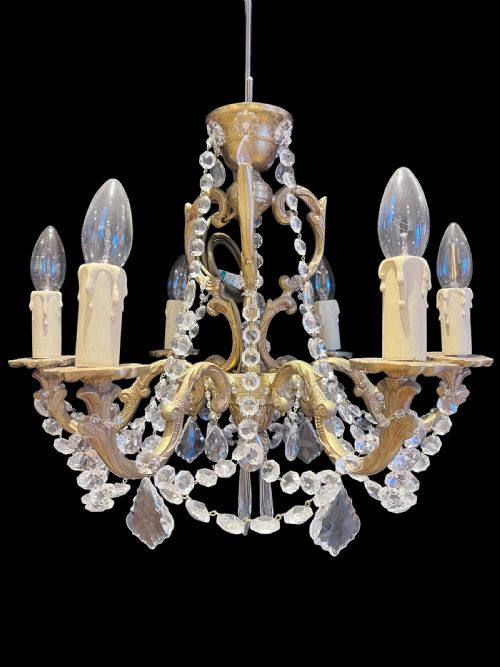
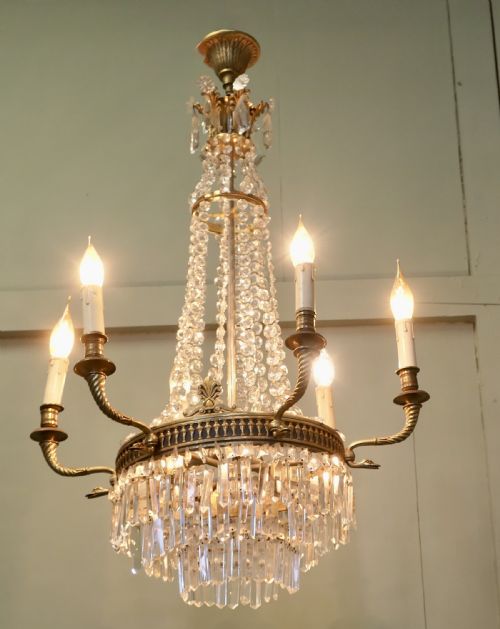
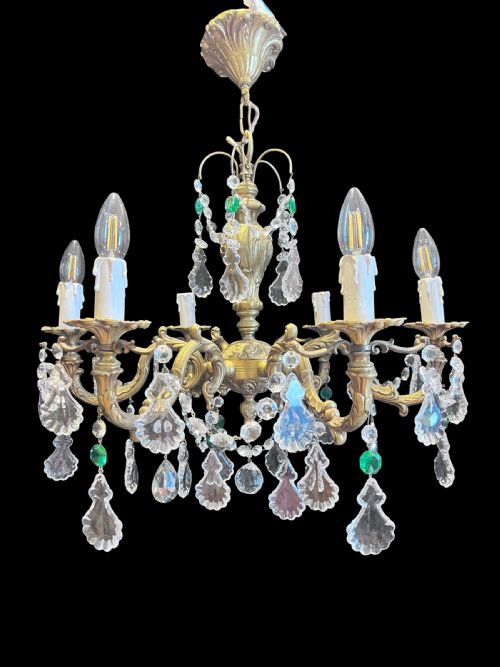


Six Branch Brass Chandelier
A six branch brass chandelier brings architectural weight and warm reflection to a room, spanning styles from French Empire to Dutch Revival.
Six Branch Brass Chandelier
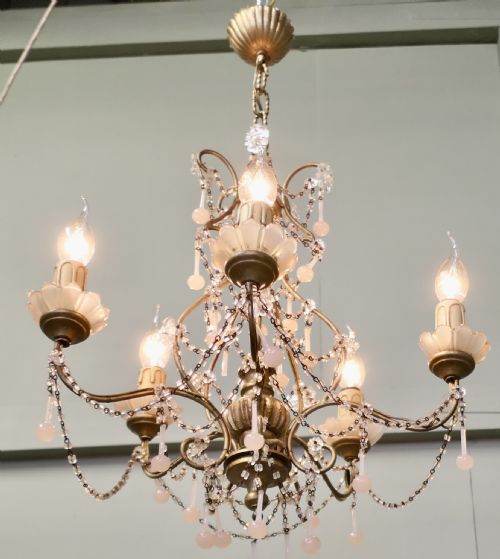
A six branch brass chandelier organises light around a central frame, often wired with crystal droplets or formed in distinct regional patterns. Buyers searching for a six branch brass chandelier will encounter pieces dating from the nineteenth century through the nineteen-thirties.
The selection ranges from French Chateau and Neoclassical designs to Dutch pendant fittings and Venetian Art Deco creations. Many examples incorporate glass, crystal, or fabric elements alongside the primary metal structure.
While most items function as ceiling lights, related variants such as table lamps and girandoles occasionally appear. The nineteenth century and the nineteen-twenties provide the bulk of the surviving inventory.
Construction and materials
Makers formed these fixtures primarily from cast and spun brass, sometimes applying silver plating, silver gilding, or fire gilding to the bronze and brass surfaces. Structural integrity depended on threaded rods and secure joints linking the six branches to the central boss.
Decorative elements relied on the integration of clear or coloured crystal drops, glass prisms, and occasional fabric components. French Empire examples frequently employed tent and waterfall glass configurations to catch and refract light.
Six Branch Brass Chandelier Retail Price Guide 2026
Typical asking prices for six branch brass chandelier among the pieces listed under this phrase on Sellingantiques today, from the lower quarter to the upper quarter. They describe what is for sale here now, not the wider market.
Materials recorded across the inventory include brass, gilded bronze, silver plate, crystal, glass, and fabric.
Assessing quality and craftsmanship
Quality reveals itself in the crispness of the brass casting and the depth of the chased ornamentation on the arms and central stem. Finer examples retain their original gilding or silvering rather than showing uniform modern replating.
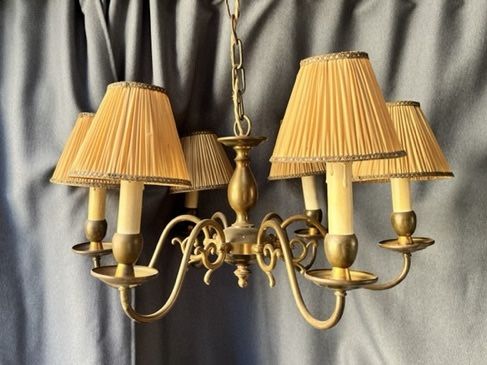
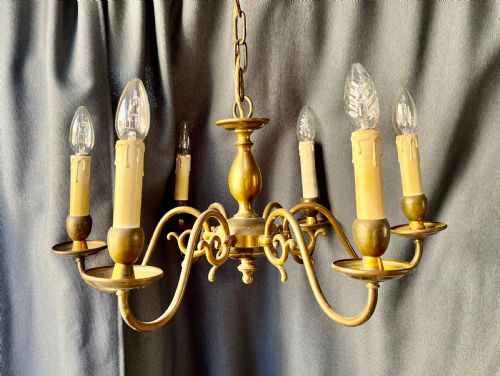
The completeness and quality of the crystal or glass drops distinguish high-status pieces from simpler utilitarian fittings. Heavier gauge metalwork and sophisticated regional styling, such as Dutch Baroque Revival casting, mark the superior end of the range.
The Six Branch Brass Chandelier Glossary
- Girandole
- A branched wall or table fixture that holds candles or electric lights, often featuring mirrored glass backs to multiply the illumination. These pieces share stylistic traits with larger ceiling suspensions.
- Tent and waterfall
- A lighting configuration where strings of glass beads form an upper tent shape that drops down into a cascading waterfall of crystals. This arrangement is common in French Empire designs.
- Gilt bronze
- Bronze metal that has been coated with a thin layer of gold using mercury amalgamation or electrochemical methods. It provides a durable, warm metallic finish.
- Dutch Revival
- A nineteenth-century design movement that reinterprets seventeenth-century Dutch brass chandelier forms with multiple curved arms and a central ball pendant.
Six Branch Brass Chandelier: Frequently Asked Questions
How do I date a brass chandelier?
Dating relies on examining the casting techniques, fastening methods, and the style of ornamentation relative to known periods like the Victorian era or the nineteen-twenties. Wiring and socket types also provide clues, though many older fixtures have been rewired for modern use.
Contextual details such as the composition of the brass and the cut of any crystal drops help narrow down the decade of manufacture. Comparing the piece to documented examples from French or Dutch workshops confirms the timeline.
Where should I hang a six branch light?
These fixtures suit dining tables, high-ceilinged hallways, or principal reception rooms where their six-light spread can adequately illuminate the space. The visual weight of brass demands sufficient clearance beneath the lowest point.
Consider the proportions of the room and the drop of the chandelier, particularly if the design includes crystal waterfalls or tent structures. Ceiling height determines whether a flush mount or a chain-suspended pendant is appropriate.
Are these fittings wired for modern electricity?
Most surviving examples have undergone conversion from candles or early gas to electrical wiring at some point in their history. Buyers should inspect the internal wiring to ensure it meets contemporary safety standards.
Rewiring a vintage brass fixture is straightforward for a qualified electrician, allowing the original lamp holders to be retained or updated while preserving the historic metalwork.
What is the difference between French and Dutch styles?
French designs, including Empire and Neoclassical styles, frequently incorporate crystal drops, gilded bronze, and refined architectural proportions. They emphasise decorative elegance and light refraction. Nineteeth-century and revival Dutch pieces tend to feature heavy cast brass frames with robust, sweeping branches and bulbous central stems. Their aesthetic is more utilitarian and grounded in seventeenth-century maritime and domestic traditions.