

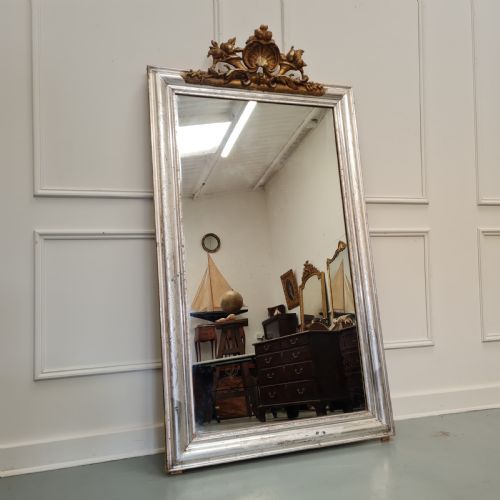


Silvered Wood Wall Mirror
A silvered wood wall mirror brings reflective depth and metallic luminescence to an interior, drawing the eye with surfaces worked in silver leaf, gesso, and carved wood.
Silvered Wood Wall Mirror
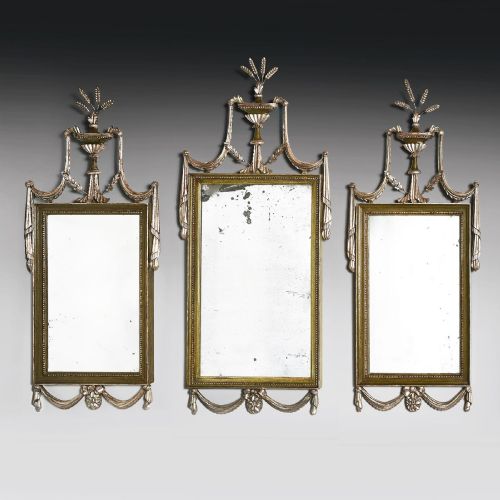
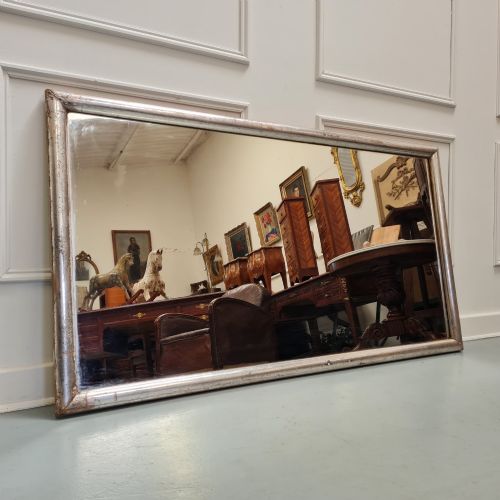
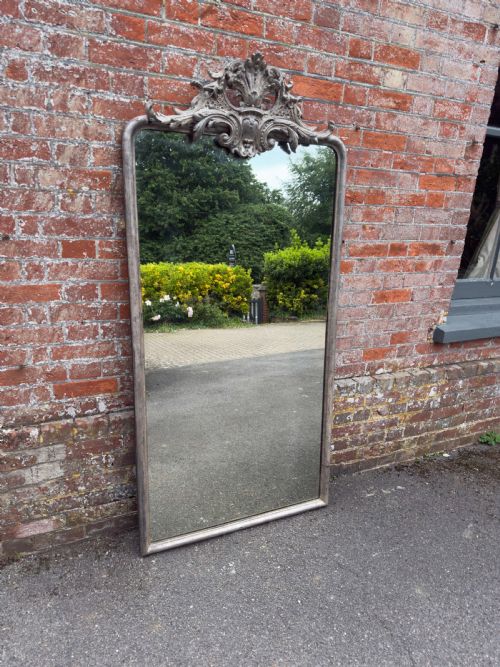
A silvered wood wall mirror comprises various forms designed to hang or rest above mantels, spanning expansive nineteenth-century French designs and earlier seventeenth-century examples. You will frequently encounter large arched top plates and overmantel mirrors alongside smaller girandoles and bistro pieces.
The materials visible across these pieces include silver leaf, gold leaf, gesso, and mirror glass mounted within carved wooden frames. Styles range from French Chateau and Louis Philippe to Italian Baroque, Victorian, and Art Deco.
Origin points stretch from English workshops to French studios and Venetian centres, demonstrating varied regional approaches to silvering and framing. Forms also extend to specialised objects such as mercury barometers and sorcerer mirrors.
Materials and construction techniques
Makers shaped frames from carved wood, applying layers of gesso to provide a smooth foundation for metallic leaf. Silver leaf or gold leaf was then laid onto the prepared surface by hand.
Reflective surfaces utilise glass, mirror glass, or pink mirror glass set securely within the decorated wooden rebates. Frames often incorporate painted or parcel-silvered finishes to achieve distinct tonal qualities.
Materials recorded across the inventory include gesso, mirror glass, carved wood, and gold leaf.
Distinctions in quality
Quality rests upon the depth and precision of the carved wood underneath the gesso and silver leaf layers. Crisp detail in floral or architectural motifs distinguishes finer frames from simpler production.
The integrity of the original silver leaf or silver-gilt surface dictates visual richness, where authentic ageing and distress differ from later repainting. Heavier overmantel structures require robust joinery to support large mirror glass plates over centuries.
Gillows Of Lancaster·A.J Rowley
The Silvered Wood Wall Mirror Glossary
- Silver leaf
- Extremely thin sheets of beaten silver applied to a prepared surface to create a metallic finish. It develops a natural patina over time.
- Gesso
- A plaster-like mixture applied to wood frames to create a smooth base for gilding or silvering. It allows for intricate relief carving.
- Overmantel mirror
- A large mirror specifically proportioned to hang above a fireplace mantel. These pieces often feature extended horizontal formats.
- Girandole
- A decorative wall mirror fitted with one or more candle branches or lights attached to the frame. The reflective glass amplifies the candlelight.
- Parcel-silvered
- A finish where only specific portions of a wooden object are highlighted with silver leaf. The remaining areas show exposed wood or paint.
Silvered Wood Wall Mirror: Frequently Asked Questions
How do I hang a heavy overmantel mirror safely?
Large overmantel mirrors require substantial wall fixings anchored directly into structural studs or masonry to support their considerable weight. Professional mirror hangers utilise heavy-duty brackets and wire rated specifically for antique frames.
Ensure the weight is distributed evenly across multiple points to prevent stress on the wooden joints and the original gesso surface.
How should I clean a fragile silver leaf frame?
Dust the carved wood and silvered surfaces gently using a soft, dry ostrich feather duster or a clean dry brush. Avoid all liquid cleaners, commercial sprays, and damp cloths, which can lift delicate gesso and strip the thin metallic leaf.
Keep the mirror away from direct sources of heat and moisture to protect both the wood and the silvering.
How do I identify a French Louis Philippe mirror?
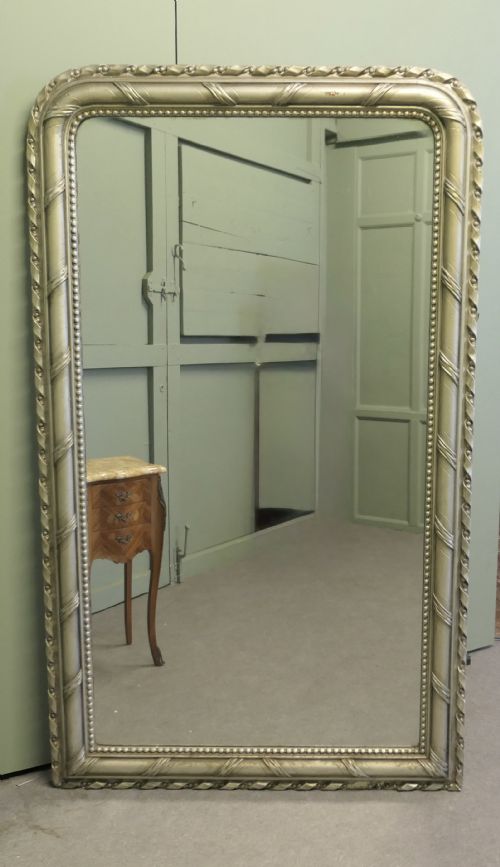
Louis Philippe mirrors typically feature clean architectural lines with rounded upper corners and a subtle, restrained crest at the top centre. The frames are often generous in scale, designed to lean on a mantel or hang securely in a principal room.
Construction details on the reverse usually reveal traditional pinned joints and heavy oak or pine backing boards.