


Silvered Metal Candlestick
A silvered metal candlestick brings a reflective gleam to a table, pairing sturdy base metals with bright plated finishes across centuries of design.
Silvered Metal Candlestick
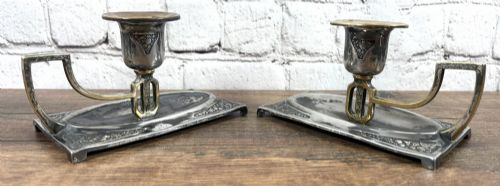
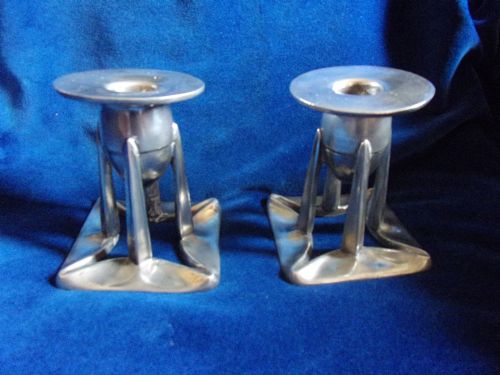
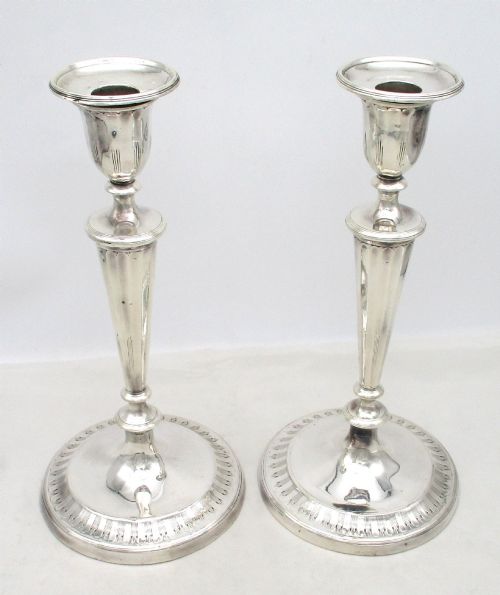
When you search for a silvered metal candlestick, you examine objects cast, beaten, or turned from various base substrates and given a luminous metallic skin. The versions you are most likely to meet on this page span the eighteenth, nineteenth, and early twentieth centuries, shifting from neoclassical proportions to fluid art nouveau curves and geometric art deco lines.
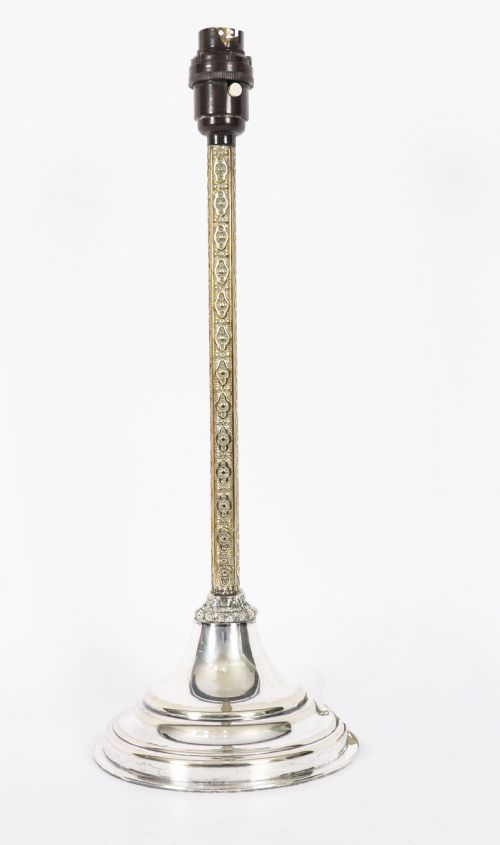
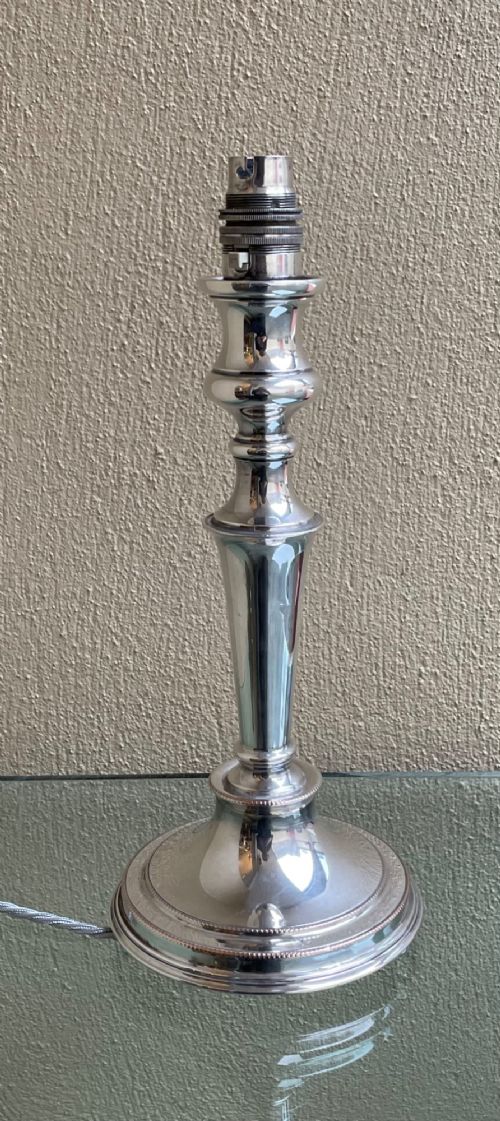
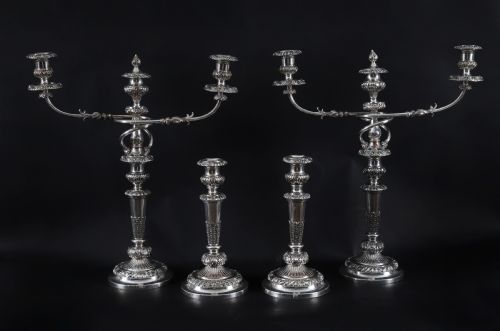
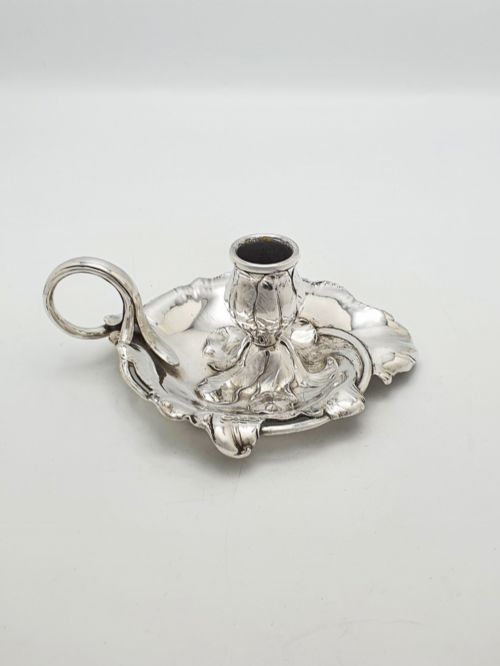
The objects take many forms beyond the simple column, appearing as chambersticks with fitted extinguishers, desk lamps, standard lamps, and multi-branched candelabra. Makers utilised copper, brass, pewter, bell metal, paktong, and spelter as a foundation, coating them in silver plate, old sheffield plate, nickel, or parcel gilt to achieve the desired radiance.
Materials and construction
Makers formed the body of each piece through casting, spinning, or sheet metal fabrication using base metals such as brass, pewter, copper, and bell metal. Artisans then applied a layer of silver via plating techniques, old sheffield plate methods, or nickel deposition to create a durable, reflective exterior.
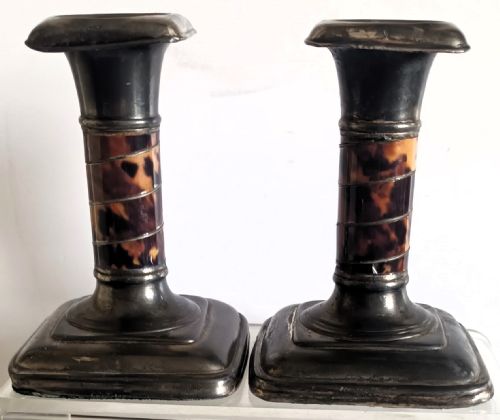
Detailing relied on supplementary materials and decorative processes like parcel gilt highlights, tortoiseshell insets, crystal drops, and bakelite components. Design motifs emerged through hand-chasing, stamping, or moulding, particularly in stylistic periods from rococo revival to modernist geometry.
Listings feature items spanning the 18th Century through to the 1950s, utilising materials from simple pewter to tortoiseshell.
Assessing quality and execution
The distinction between standard production and superior work rests in the crispness of the casting and the proportion of the silhouette. Heavier gauge base metals and substantial plating layers ensure the piece retains its structural integrity and surface depth through generations of polishing.
Design attribution and stylistic coherence elevate certain examples above utility items. Pieces bearing recognised firm marks or displaying ambitious sculptural elements, such as figural bases or complex multi-branch arrangements, demonstrate superior workshop standards.
Mappin & Webb's·Archibald Knox·WMF·Veritas Lamp Works·Blagden Hodgson And Co·Liberty & Co.·Elkington
The Silvered Metal Candlestick Glossary
- Silver Plate
- A thin layer of silver bonded to a base metal substrate, commonly utilised from the nineteenth century onward. This technique provided the visual appeal of solid silver at a lower cost.
- Old Sheffield Plate
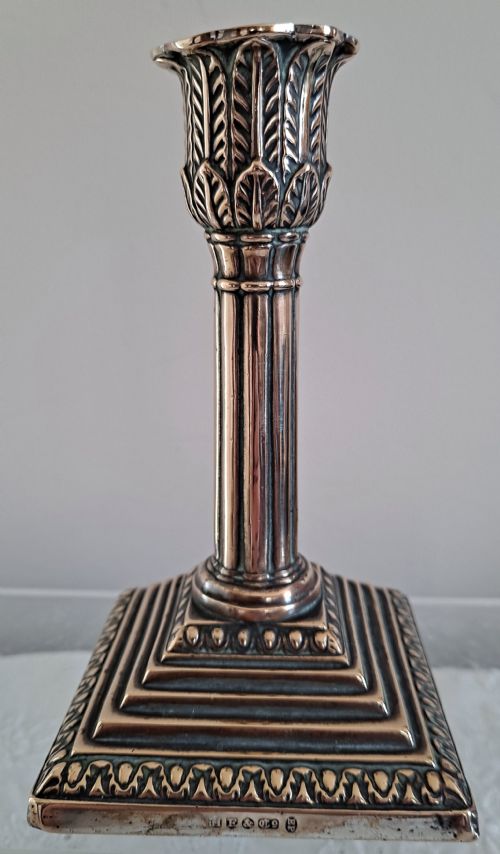
- An early fusing method where a sheet of silver is fused to a thicker copper ingot by heat and pressure. Items produced this way often reveal faint traces of copper showing through worn highlights.
- Paktong
- A traditional Chinese copper-nickel-zinc alloy prized for its bright, silvery appearance and resistance to corrosion. English makers shaped it into candlesticks during the eighteenth century.
- Bell Metal
- A hard alloy of copper and tin traditionally used for bells, chosen by makers for its resonant density and robust casting qualities. It develops a rich, dark patina over time.
- Chamberstick
- A low, portable candlestick fitted with a handle and a saucer base to catch melting wax. These items were carried through houses before the widespread adoption of domestic electric lighting.
Silvered Metal Candlestick: Frequently Asked Questions
How do I clean a silvered metal candlestick?
Use a soft cloth and a gentle, non-abrasive cleaner formulated specifically for plated surfaces or silvered items. Avoid harsh rubbing that might wear through the thin metallic skin to the underlying base metal.
Take care around soldered joints and decorative crevices where accumulated polish residue can harden. Regular, light dusting usually suffices to maintain the surface shine.
What is the difference between silver plate and old sheffield plate?
Old sheffield plate involves mechanically fusing a sheet of silver onto a copper base before rolling them together into sheets for construction. Later electroplating submerges the base metal in a chemical bath to deposit a layer of silver via electrical current.
Objects made from old sheffield plate frequently show subtle hints of copper at high points where generations of polishing have gently thinned the exterior layer.
How can I tell the period of a candlestick?
Examine the overall silhouette, weight, and decorative vocabulary against known design movements. Eighteenth-century examples often feature simple ejector mechanisms or heavy cast paktong, while nineteenth-century pieces display revivalist ornamentation.
Twentieth-century items commonly embrace cleaner modernist lines or distinctive art deco geometry. Maker marks and manufacturing stamps further help narrow down the production decade.
Were these candlesticks originally electrified?
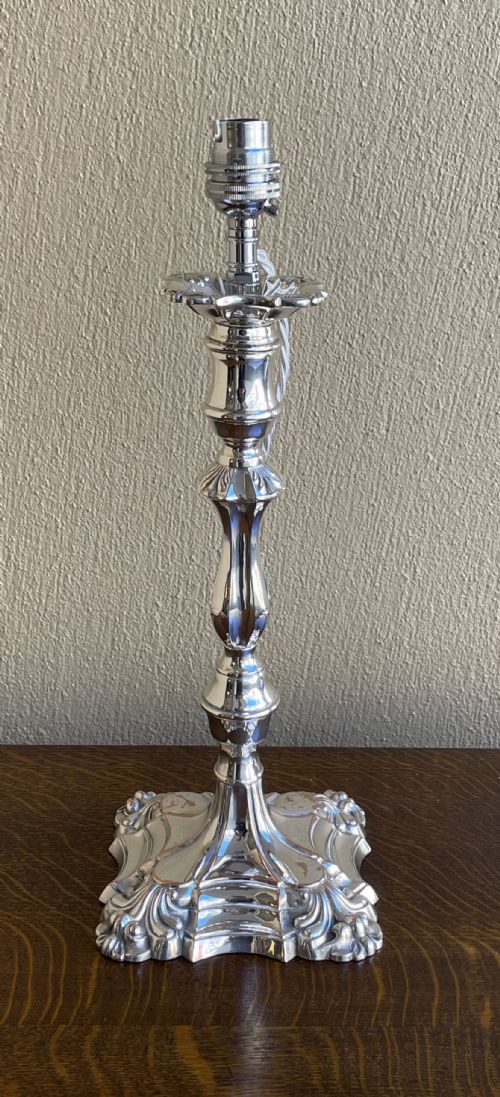
Many items listed as lamps or standard lamps were manufactured for electricity during the late nineteenth or early twentieth centuries. Candlesticks and chambersticks, conversely, were designed entirely for wax tapers before later adaptation.
Converted pieces often retain original switch fittings or weighted bases designed to support the added distribution of flex and bulb holders safely.