


Art Nouveau Candle Stand
An art nouveau candle stand brings organic curves and metalwork into a room, offering the distinct craftsmanship of the early twentieth century.
Art Nouveau Candle Stand
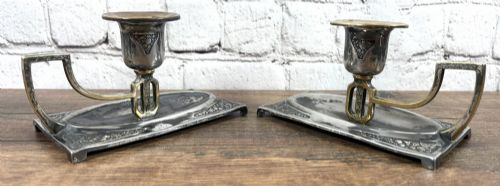
When you search for an art nouveau candle stand, you are looking at metal lighting accessories shaped during the organic design movements of the late nineteenth and early twentieth centuries. The examples appearing here span periods from the eighteen eighties through the nineteen twenties, embracing related styles like Arts and Crafts, Secessionist, and the Amsterdam School. You will frequently encounter pairs of candlesticks alongside chambersticks and larger candelabra.
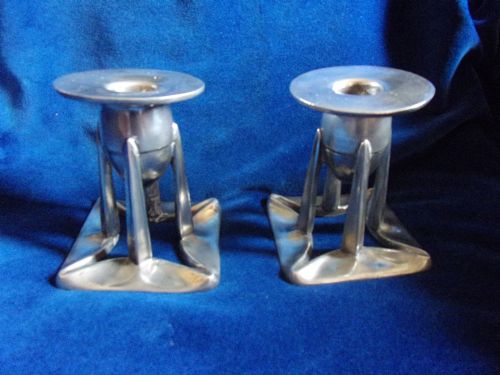
The objects take various forms, from simple pewter candle holders to substantial bronze and copper pricket sticks. Many pieces display the fluid plant motifs and whiplash lines characteristic of the era, while others lean towards the geometric discipline of Dutch design. Most items listed originate from English, French, and German workshops active around nineteen hundred.
Materials and construction
Makers utilised a range of metals, relying heavily on pewter, brass, copper, and wrought iron to achieve their structural forms. Pewter pieces often benefited from casting and silver plating, sometimes accented with enamel roundels or inset crystals. Wrought brass and copper were shaped by hand, creating textured surfaces that highlighted the physical labour behind each object.
Construction techniques varied according to the workshop and the metal used. Founders cast pewter and bronze in moulds, while smiths hammered and riveted iron and brass components together. The resulting stands balance utility with sculptural presence, holding candles securely through weighted bases and drip pans.
Several pieces include little maiden figures holding the candle aloft, adding a dramatic theatrical presence to the mantlepiece.
Distinguishing quality
Quality in these metal objects rests on the crispness of the casting and the sensitivity of the hand finishing. Superior pieces retain their original silvered surfaces and enamel details without crude repairs or excessive polish wear. The weight of the metal and the balance of the stem reveal the care taken in the workshop.
Attribution to known designers or prominent manufacturing houses elevates certain pieces above standard production work. Stronger examples show deliberate artistic intent in their profiles, whether following a flowing floral motif or a strict architectural silhouette.
WMF·Archibald Knox·Liberty and Co·Hugo Berger Goberg·Alexandre Clerget·Abel Landry·Birmingham Guild of Handicraft·Decoro England
The Art Nouveau Candle Stand Glossary
- Pricket
- A candlestick featuring an upward-pointing spike designed to impale the base of a candle, rather than a socket to receive it. This form appears frequently on continental church and altar lighting.
- Pewter
- A malleable metal alloy composed primarily of tin, used widely for domestic vessels and decorative metalwork. In this period, manufacturers often silvered the surface to brighten the finish.
- Chamberstick
- A low candle holder fitted with a wide drip pan and a loop handle for carrying room to room. Iron versions were common in utilitarian domestic settings.
- Secessionist
- A design movement originating in Central Europe that rejected historic revivalism in favour of simplified geometric forms and stylised floral patterns. It shares ground with British Arts and Crafts ideals.
- Candelabra
- A branched lighting fixture holding multiple candles upon a single base. These range from small desk pieces to tall floor-standing arrangements.
Art Nouveau Candle Stand: Frequently Asked Questions
What is an art nouveau candle stand?
These pieces are domestic lighting devices cast or forged from metals like pewter, brass, and copper during the early twentieth century. They served practical illumination needs while displaying the decorative art movements of their day.
Buyers find forms ranging from short chambersticks to tall candelabra. The designs draw heavily on natural motifs and modernist metalworking techniques.
How do I use them safely?
Place your stands on stable, level surfaces away from drafts and heavy foot traffic. Ensure the candle fits the socket securely or sits firmly upon the pricket.
Use drip trays to catch melting wax and protect the historic metal surfaces. Extinguish flames before the wax burns down close to the metal.
How do I clean old metal?
Dust the surfaces gently with a soft, dry cloth to remove surface grime. Avoid harsh chemical polishes that can strip original patinas, silvering, or applied finishes.
If the metal requires attention, consult a specialist conservator. Preserving the natural ageing process maintains the character of the object.
How do I tell periods apart?
Examine the stylistic cues and construction marks visible on the piece. Objects from around nineteen hundred often feature flowing whiplash lines and organic plant forms.
Later items from the nineteen twenties frequently adopt stricter geometric lines associated with the Amsterdam School or Art Deco. Maker marks and registration numbers also help anchor pieces to specific decades.