

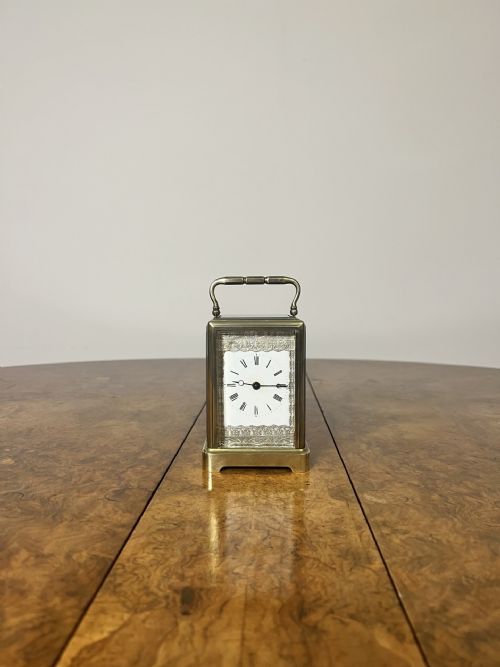


Silvered Brass Desk Clock
A silvered brass desk clock brings mechanical precision and polished metallic brilliance directly to the working surface.
Silvered Brass Desk Clock
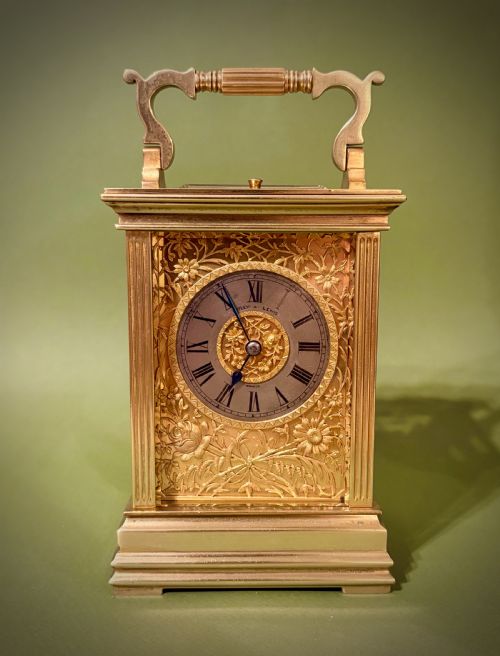
A silvered brass desk clock serves as a functional timepiece designed specifically for placement on a writing surface or table. These objects encompass various configurations, including compact carriage clocks, strut designs with easel backs, and specialised timepieces housed in metal cases.
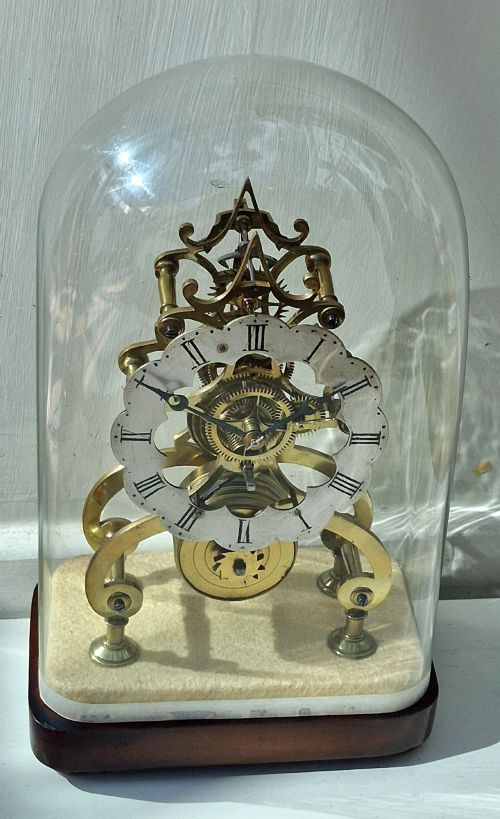
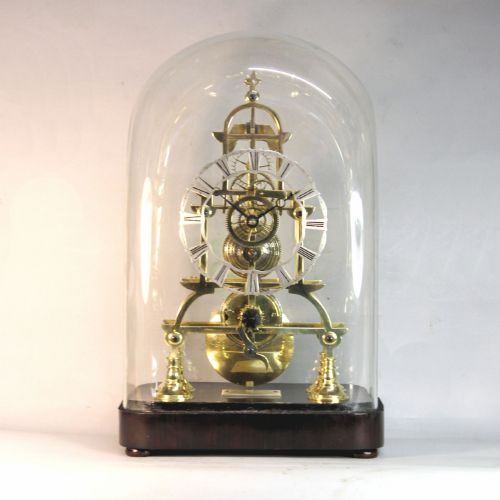
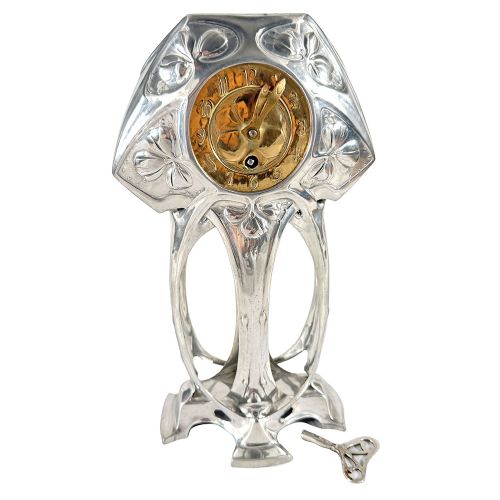
The pieces on this page emerge from periods spanning the Victorian era through the mid-twentieth century, incorporating styles such as Art Deco and Edwardian design. Buyers frequently encounter variants featuring reflective metallic dials paired with heavy structural brass.
Makers utilised diverse materials alongside brass and silvered metal, integrating glass, enamel, and mahogany into the overall housings. Each object reflects the horological priorities of its respective decade, balancing utility with decorative presence.
Materials and Construction
Horologists constructed these mechanisms using durable base metals like brass, often applying a silvered finish to dials and plates to enhance legibility and visual contrast. Enamel and glass frequently complement the metallic framework, protecting delicate hands and painted numerals.
The structural housings rely on precision machining and hand-assembly, utilising materials such as steel for internal gears and springs. Cabinets and desk stands occasionally incorporate wood or marble elements to provide stability and contrasting textures.
Some desk clocks included built-in thermometers and compasses, ensuring nineteenth-century travellers remained fully informed of their atmospheric surroundings.
Assessing Craftsmanship
Quality in these timepieces rests upon the precision of the movement and the integrity of the dial finishing. Finer examples display crisp engraving on silvered brass dials and smooth integration of escapement components.
The weight and thickness of the brass housing contribute significantly to the overall calibre of the piece. Superior construction ensures longevity and reliable timekeeping across decades of daily use.
Mappin and Webb·Richard Winter of Chieveley·Friedrich Adler for Osiris·Howell and James·Winterhalder and Hofmeier·Paul Garnier·Jaeger Le Coultre
The Silvered Brass Desk Clock Glossary
- Silvered dial
- A metal face treated with a compound of silver to produce a matte, reflective surface. This treatment improves readability under varied lighting conditions.
- Carriage clock
- A portable spring-driven timepiece equipped with a carrying handle and a glass case. Originally designed for travel, these clocks became popular desk accessories.
- Strut clock
- A timepiece supported by a hinged prop or easel attached to the back. This design allows the clock to stand upright on flat surfaces.
- Escapement
- The internal mechanism that controls the release of gear power to maintain pendulum or balance wheel swings. It creates the characteristic ticking sound.
Silvered Brass Desk Clock: Frequently Asked Questions
How do I wind a mechanical desk clock?
Most mechanical variants require a specialised key inserted into the dial or backplate to tension the mainspring.
Care must be taken not to overwind the mechanism, stopping as soon as resistance is felt.
What maintenance do these clocks need?
Regular dusting with a soft cloth keeps the brass and glass surfaces clear of debris.
Professional cleaning and lubrication of the internal gears are recommended every few years.
How can I identify the production period?
Stylistic indicators such as Art Deco geometry or Victorian ornamentation offer primary clues to the era of manufacture.
Signatures or patent marks inscribed on the movement plates provide more precise dating.
Where should I place a desk clock?
Position the timepiece away from direct sunlight, moisture sources, and heavy vibrations to protect the delicate movement.
A stable desk or mantel provides an ideal environment for consistent timekeeping.