





Silver Writing Pen
A silver writing pen or associated desk piece brings tactile permanence to correspondence, anchoring a room in the refined traditions of past centuries.
Silver Writing Pen
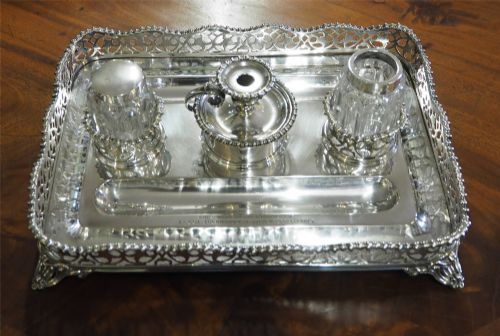
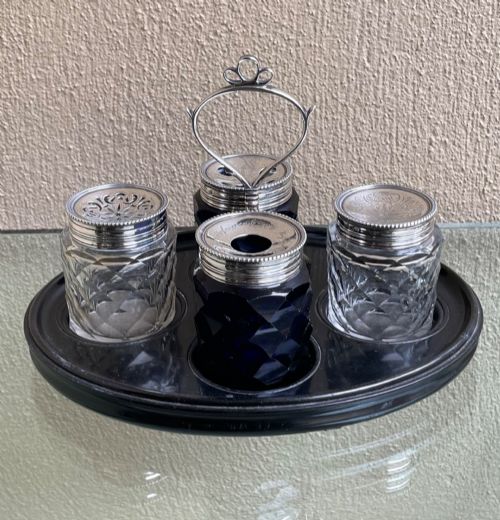
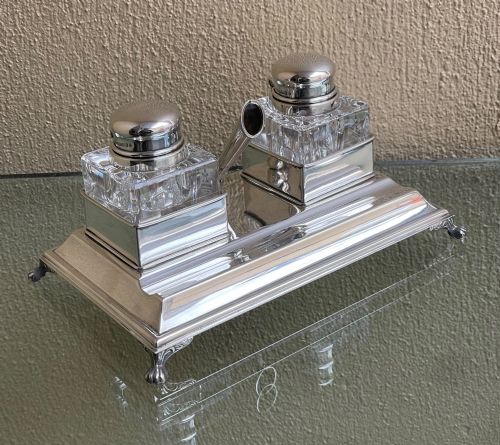
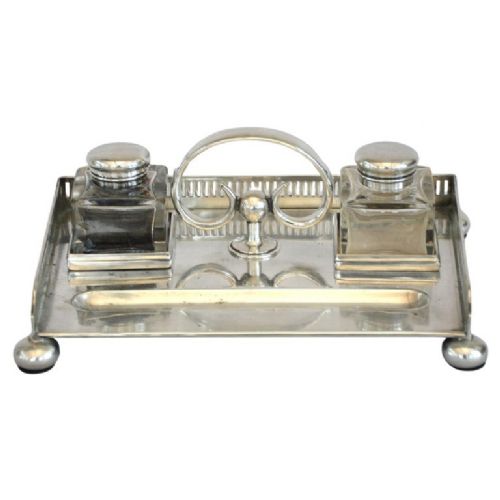
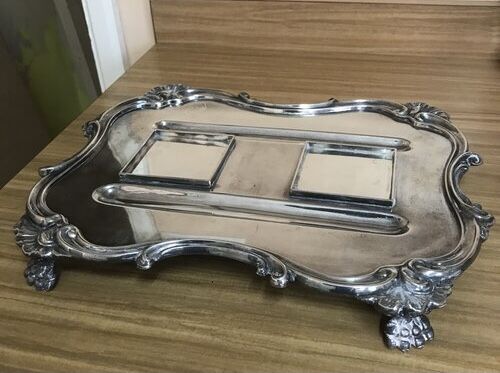
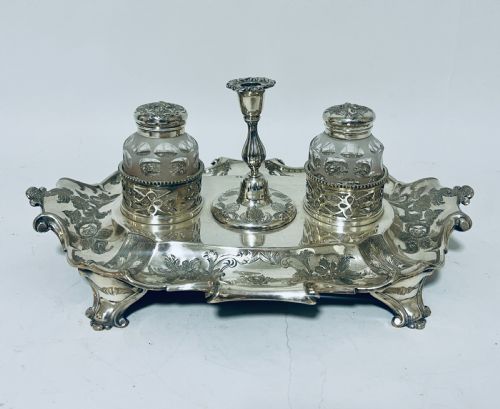
When you search for a silver writing pen setup, you encounter desk pieces designed for correspondence, predominantly taking the form of inkstands, inkwells, desk sets, and pen wipes dating from the Georgian, Victorian, and Edwardian eras. These objects range from simple capstan-shaped inkwells to elaborate multi-piece desk tidies incorporating chambersticks, stamp compartments, and pen rests.
The objects listed here frequently combine sterling silver or silver plate with traditional writing accessories such as cut glass bottles, pen nibs, and specific holders. Many items originate from workshops active during the nineteenth and early twentieth centuries, reflecting the high importance placed on handwritten correspondence during those periods.
Materials and construction methods
Maker workshops utilised sterling silver, Sheffield plate, and standard silver plate alongside contrasting natural materials including Scottish oak, coromandel, satinwood, ebony, horn, onyx, and lapis lazuli. Cut glass and standard glass were regularly shaped into heavy inkwells that sat securely within silver mounts or dedicated desk trays.
Silversmiths employed casting, hammering, and detailed mounting techniques to form complex desk furniture, often incorporating fitted elements such as hinged lids, pen rests, and stamp boxes. Metal components frequently received hallmarks indicating the assay office and date of creation, whilst wooden bases and trays relied on fine cabinetmaking skills.
Silver Writing Pen Retail Price Guide 2026
Typical asking prices for silver writing pen among the pieces listed under this phrase on Sellingantiques today, from the lower quarter to the upper quarter. They describe what is for sale here now, not the wider market.
Listings feature items from the Georgian, Victorian, and Edwardian periods, constructed in sterling silver, silver plate, cut glass, and various hardwoods.
Factors influencing quality
Quality in these writing accessories rests on the weight of the silver used, the crispness of the chasing or cast ornamentation, and the integrity of any fitted wooden or stone bases. Pieces produced by noted silversmiths demonstrate superior execution in the joining of dissimilar materials, such as silver mounts fitted precisely to exotic hardwoods or cut glass.
The survival of original components, including matching glass inkwell inserts, fitted pen trays, and clear hallmarks, distinguishes standard utilitarian items from exceptional examples. The incorporation of novelty elements, such as figural pen wipes or specialised novelty inkwells, also elevates the character of a desk set.
Sampson Mordan & Co·Walker And Hall·Elkington·Robert Garrard·Marson & Jones·Daniel Holy·Rupert Favell·Maurice Dufrene·Zimmermann·Harrods
The Silver Writing Pen Glossary
- Inkstand
- A portable tray or stand holding inkwells, pen rests, and sometimes sanders or wafer boxes for a desktop. These desk furnishings gathered all necessary writing implements into one coordinated unit.
- Capstan inkwell
- An inkwell shaped like a ship's capstan, featuring a wide circular base tapering upwards to a smaller top with a hinged lid. This profile provided stability on a moving ship or a busy desk.
- Pen wipe
- A small fabric or novelty accessory used to clean excess ink from steel nibs after writing. They appear in various forms, including novelty animal shapes.
- Sheffield plate
- A composite material made by fusing a thin sheet of silver to a thicker copper base. It predates modern electroplating and is identified by the characteristic appearance of underlying copper at edges.
- Desk tidy
- A compartmentalized tray designed to organise stationery, stamps, pens, and inkwells on a table. These pieces kept writing materials orderly in Victorian and Edwardian offices.
Silver Writing Pen: Frequently Asked Questions
What is a silver writing pen desk set?
A desk set typically comprises a tray, one or more inkwells, pen rests, and auxiliary compartments designed to hold writing equipment for correspondence.
These collections reflect the structured writing habits of past eras, keeping ink, sand, and pens organised in a single decorative unit.
How do I identify a Victorian inkstand?
Victorian inkstands often display heavy sterling silver mounts, substantive glass bottles, and stylistic influences ranging from Rococo Revival to Scottish Baronial. Examining the hallmarks provides an exact year and city of manufacture.
Many pieces from this period also incorporate novel forms, such as figural animals or specialised pen wipers, alongside traditional woodwork like oak or coromandel.
Were these items used daily?
Desk accessories such as inkwells and pen stands were essential daily tools in homes and offices before the widespread adoption of the fountain pen and ballpoint. People utilised them constantly to draft letters, record accounts, and sign documents.
Because they experienced heavy daily use, surviving examples often show minor traces of handling that attest to their original function.
What materials are combined with the silver?
Makers frequently paired silver with cut glass for inkwell reservoirs, allowing users to monitor ink levels easily. Other common materials include exotic hardwoods like coromandel and satinwood, alongside leather, horn, and semi-precious stones such as lapis lazuli.
These mixed-media designs created visually striking contrasts on nineteenth-century and early twentieth-century desks.
How should I clean a silver desk piece?
Silver components require gentle cleaning with a specialised polish formulated for silver to preserve delicate hallmarks and chased details. A soft cloth should be used around glass inserts, wooden bases, and fabric pen wipes to avoid moisture damage.
Harsh chemical dips must be avoided, particularly on items featuring mixed materials or plated surfaces.