


Silver Wine Decanter Label
When you handle a silver wine decanter label, you hold a small piece of dining history designed to identify the bottle and adorn the decanter neck.
Silver Wine Decanter Label
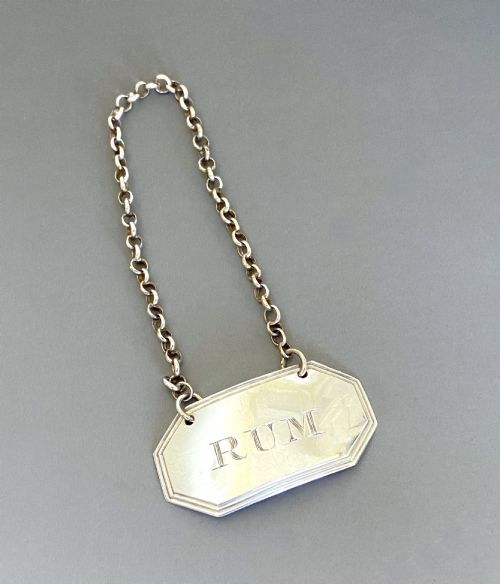
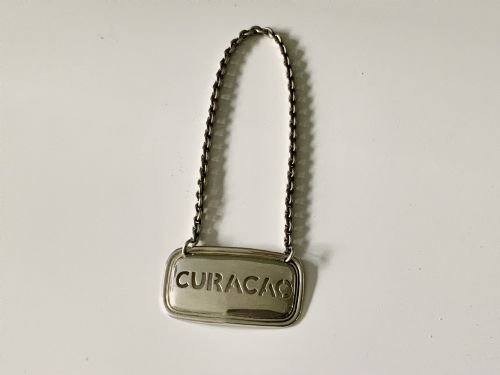
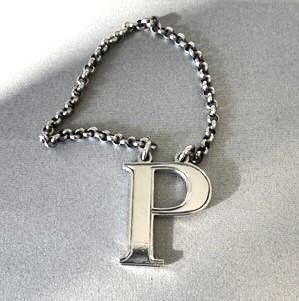
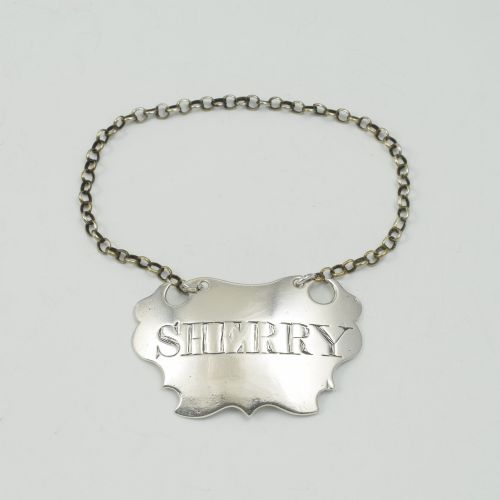
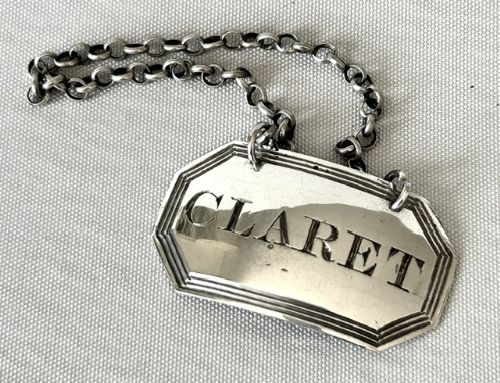
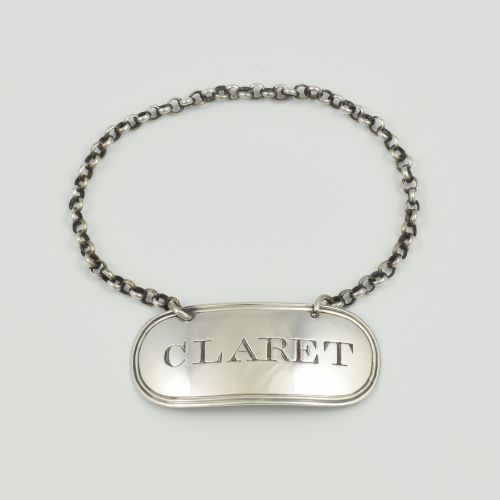
A silver wine decanter label sits upon the neck of a decanter, suspended by a small chain to identify specific spirits and wines like port, sherry, madeira, claret, rum, and brandy.
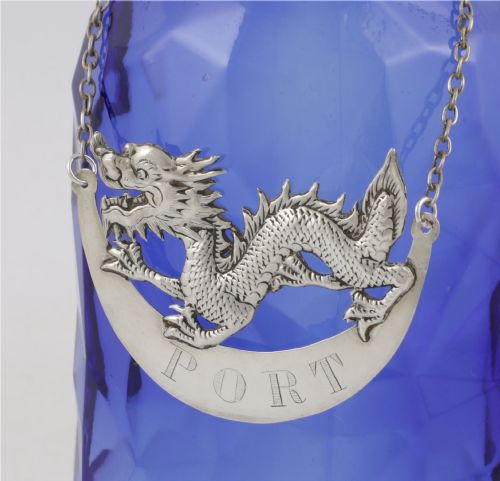
Most pieces encountered on this page originate from the Georgian and Victorian eras, taking forms ranging from simple escutcheon shapes to ornate vine leaves and engraved carttouches.
Makers produced these tags in solid silver, silver gilt, and occasionally paired them with enamel or coloured glass bottles to serve formal dining tables.
Materials and Construction
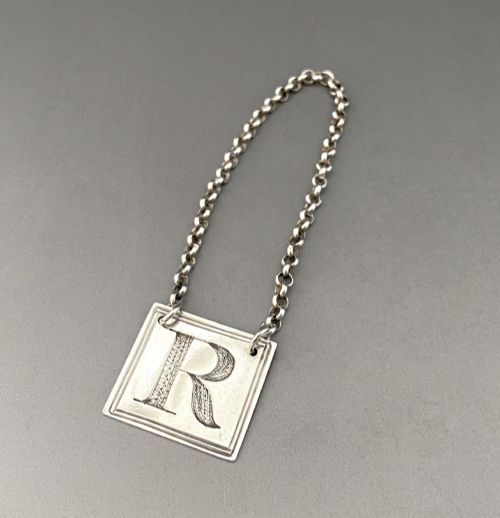
Silversmiths utilised sterling silver and solid silver, shaping them through piercing, stamping, and engraving techniques to create vine leaf motifs, crests, and distinct titles.
Many examples feature silver gilt finishes, enamel details, or cobalt and teal glass components, hung from matching silver chains to secure them around bottle necks.
One miniature silver rum label carries the specific designation 'One Go' for the solitary drinker.
Standards of Quality
Quality rests in the crispness of the hallmark stamps, the depth of the hand-engraved lettering, and the weight of the solid silver used in the body and chain.
Early maker marks, unusual drink titles, and detailed casting such as bacchus masks or naturalistic vine motifs elevate a piece above standard mass-produced examples.
Hester Bateman·Elizabeth Morley·Peter and Anne Bateman·Thomas Wallis II·John Reily·Taylor and Perry·Charles Rawlings·Digby Scott Benjamin Smith
The Silver Wine Decanter Label Glossary
- Escutcheon
- A shield-shaped plate used for engraving names or crests. This form is common among Georgian examples.
- Hallmark
- An official stamp indicating metal purity, place of assay, and date of manufacture. These marks help verify provincial and London makers.
- Silver Gilt
- Silver covered with a thin layer of gold on the surface. This technique provides a rich two-tone appearance on select wine labels.
- Decanter Accessory
- An item designed to accompany or identify serving vessels on the dining table. Labels form the main category of these small silver items.
- Vine Leaf
- A popular motif shaped like foliage from grapevines. Silversmiths frequently used this design for claret, port, and sherry labels.
Silver Wine Decanter Label: Frequently Asked Questions
How do you hang a decanter label?
Each label includes a small ring attached to a fine silver chain. You simply slip the chain around the neck of the decanter so the label rests against the glass.
This keeps the identification tag secure and visible as guests pour drinks at the dining table.
How do I identify a Georgian label?
Look for crisp hallmarks indicating London or provincial assay offices from the late eighteenth or early nineteenth centuries. Shape and engraving style also offer clues.
Georgian pieces often feature distinct hand-cut lettering, bright-cut engraving, and traditional shield or crescent forms.
Did makers sign these labels?
Many pieces carry maker marks stamped directly onto the reverse or front surface alongside the standard assay office marks. Prominent silversmiths often marked their output consistently.
Famous makers like Hester Bateman left distinct initials that collectors look for when dating and attributing pieces.