






Silver Whisky Cup
A silver whisky cup brings traditional drinking vessels and pocket flasks together for a dram.
Silver Whisky Cup
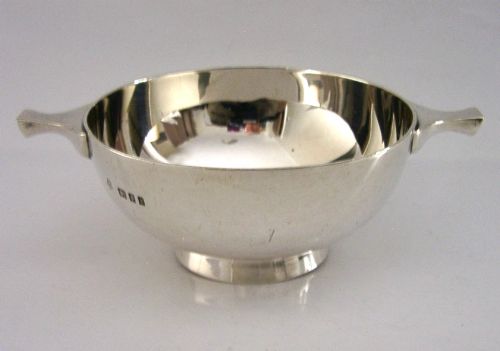
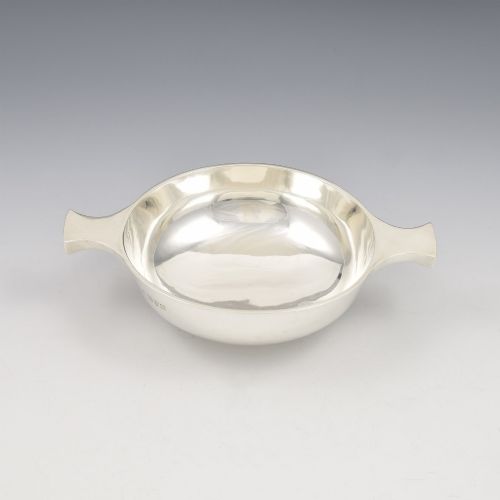
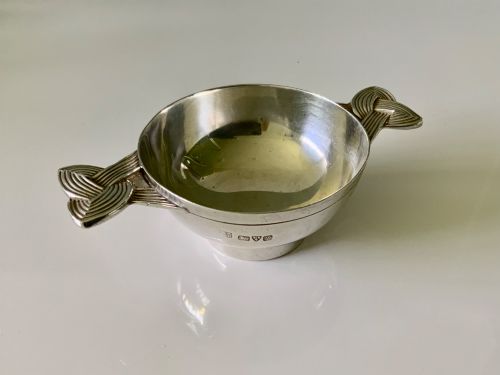
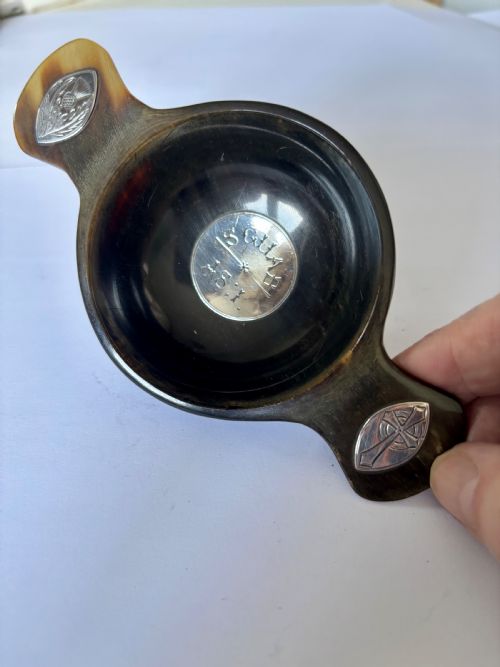
A silver whisky cup encompasses traditional drinking vessels, tumblers, beakers and two-handled quaichs designed for spirits. Quaichs appear frequently, drawing on Scottish drinking traditions with their characteristic twin lug handles.
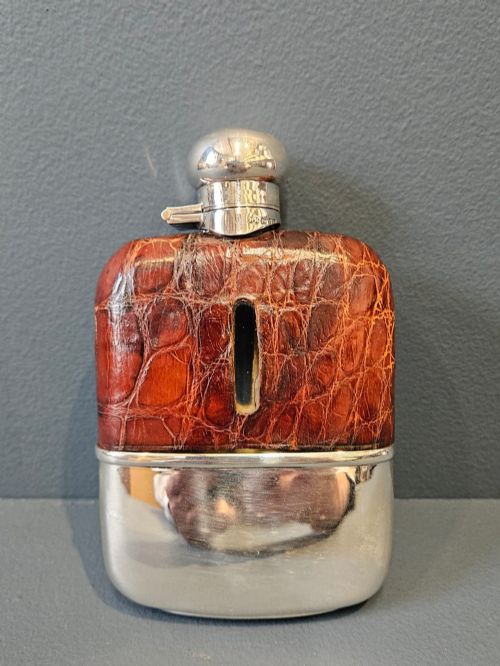
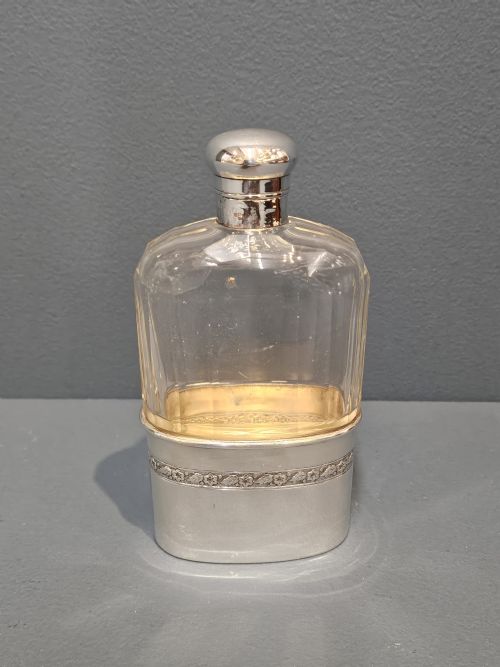
Pocket hip flasks also form a major part of the selection, often combining silver mounts with glass bodies, leather wrapping or exotic skins. These portable pieces frequently incorporate removable or collapsible cups for convenience on the move.
The selection spans Victorian, Edwardian and mid-century periods, showing shifts from ornate thistle motifs to clean Art Deco lines. Makers utilised sterling silver, silver plate, crystal and horn to create both table barware and personal items.
Materials and Construction
Metalsmiths shaped sterling silver and silver plate through hammering, spinning and casting to form bowls, cups and flask mounts. Planished surfaces show intentional hammer marks left by the maker to catch the light.
Glass bodies for flasks relied on heavy-walled cut crystal or moulded glass designed to withstand robust handling. Leather and crocodile skin coverings were stitched or glued around glass inserts to provide a secure grip.
Gilding inside bowls and cups protected the silver from tarnishing when exposed to alcohol, creating a warm gold contrast against the polished exterior. Horn mounts on quaichs required careful joining to metal rims using pins and adhesives.
Distinctions in Quality
Weight and gauge of the metal determine the heft and durability of a silver whisky cup, with heavier gauge sterling silver maintaining structural integrity better over time. Thicker metal allows for deeper hand-chased ornamentation without compromising the walls.
The precision of the joints between silver mounts, glass bodies and leather coverings marks the standard of the silversmith's workshop. Clean silver solder lines and secure hinge mechanisms on flask caps indicate superior craftsmanship.
Hallmarks stamped into the metal provide clear evidence of origin, maker and date, adding historical value. Crisp, unrubbed assay marks show that secondary polishing has not worn away the original maker's punches.
Nathan & Hayes·Hukin & Heath·Asprey London·Mackay & Chisholm·James Dixon & Sons·R E Stone·Bernard Instone
The Silver Whisky Cup Glossary
- Quaich
- A traditional Scottish drinking vessel featuring a shallow bowl and two opposing handles called lugs. These handles allowed the drinker to hold the vessel with both hands.
- Planished
- A metal surface finish achieved by hammering with a polished tool to create small, flat, faceted indentations. This technique hardens the silver while producing a distinct textured pattern.
- Lug
- A small handle or ear projecting from the side of a vessel such as a quaich. Quaichs typically feature two such grips.
- Silver Gilt
- Silver that has been coated with a thin layer of gold on its surface. This process is also known as vermeil.
- Assay Office
- An official body that tests the purity of precious metals and stamps items with hallmarks. Marks indicate the town of testing, metal standard and year of production.
Silver Whisky Cup: Frequently Asked Questions
What is a quaich?
A quaich is a traditional Scottish two-handled drinking vessel used specifically for sharing a dram of whisky. The shallow bowl design allows the drinker to view the colour of the spirit.
Twin handles, known as lugs, require the holder to use both hands, a custom historically associated with trust and fellowship among clansmen.
How do I clean silver barware?
Silver cups and flasks require gentle washing in warm, soapy water using a soft cloth to remove residues. Avoid harsh abrasive cleaners that can scratch polished surfaces or wear down thin silver plating.
Pat dry immediately with a lint-free cloth to prevent water spots. Specialist silver dips should be used sparingly and kept away from glass, leather or horn components.
Can I use these flasks for travel?
Pocket hip flasks from the Victorian and Edwardian eras were built for outdoor pursuits like shooting and walking. Glass and leather versions remain functional provided the screw caps retain their original cork seals.
Leather and crocodile skin wraps require occasional conditioning to prevent drying out. Checking the seal ensures spirits do not leak into pockets during movement.
How do hallmarks date a piece?
British hallmarks stamped into the metal include a date letter corresponding to a specific assay office year cycle. Additional marks show the lion passant for sterling silver and a maker's mark identifying the workshop.
Matching marks on removable flask cups and main bodies confirm that all components are original to the piece.