



Silver Urn Centrepiece
A silver urn centrepiece commands the table, uniting grand form and functional design for the dining room.
Silver Urn Centrepiece
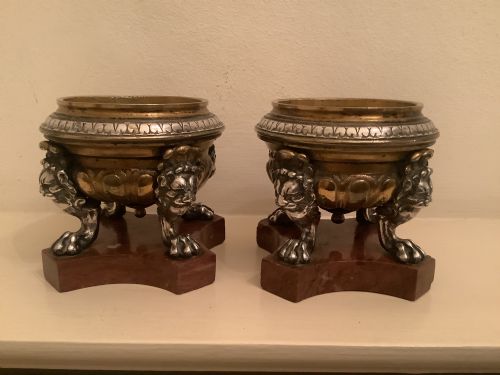
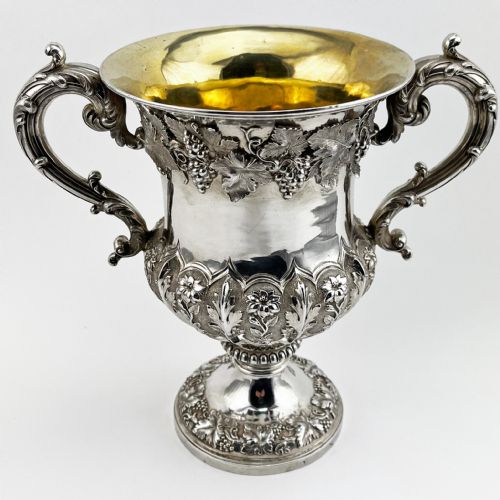
Buyers seeking a silver urn centrepiece examine substantial vessels shaped for display and table service, encompassing wine coolers, trophies, tazzas, and vases. These objects emerge from Georgian, Regency, Victorian, and early twentieth-century periods, showing diverse forms like campana shapes and covered presentation cups.
The versions most frequently met on this page span sterling silver, silver plate, Old Sheffield plate, and silvered bronze, often combined with marble, copper, or cut crystal. Makers such as Loetz Witwe and Lerolle Frères contribute to the variety of stylistic expressions visible across French Empire, Napoleon III, Art Nouveau, and Vienna Secessionist aesthetics.
Objects function variously as wine coolers, ice buckets, decorative bowls, and presentation pieces, reflecting the dining and display customs of the nineteenth and early twentieth centuries. Each piece bears the stylistic markers of its specific period, from Regency campana designs to Secessionist contours.
Materials and construction
Silversmiths and metalworkers shaped these pieces from sterling silver, copper-based Old Sheffield plate, and silver plate, frequently employing casting and chasing techniques for decorative relief. Bronze foundations received silvered finishes, while glassworks produced iridescent surfaces like the Phänomen glass associated with Loetz Witwe.
Secondary materials such as marble and cut crystal integrate into the structures of bowls and coolers, providing weight and textural contrast to the metallic elements. These varied combinations of metalwork, glass, and stone demonstrate the technical repertoire applied to nineteenth-century and early twentieth-century centrepieces.
Silver Urn Centrepiece Retail Price Guide 2026
Typical asking prices for silver urn centrepiece among the pieces listed under this phrase on Sellingantiques today, from the lower quarter to the upper quarter. They describe what is for sale here now, not the wider market.
Listings feature pieces from the nineteenth and early twentieth centuries, spanning Georgian, Regency, Victorian, and Art Nouveau styles.
Judging quality and execution
Quality separates through the crispness of chased ornament, the structural integrity of cast handles and mounts, and the purity of the underlying metal or glass. Pieces displaying masterwork casting by known foundries or workshops demonstrate superior execution compared to simpler production items.
The harmonious integration of mixed materials, such as the mounting of cut crystal into Dutch silver or bronze combined with silvered surfaces, indicates higher-tier manufacture. Preservation of original silver plating, vermeil, and patination further distinguishes premier examples from heavily restored or worn alternatives.
Loetz Witwe·Lerolle Freres
The Silver Urn Centrepiece Glossary
- Campana
- A bell-shaped vessel form commonly utilised for wine coolers and urns during the Regency and Georgian periods. This classical silhouette provides stability and wide proportions suitable for cooling bottles.
- Old Sheffield Plate
- A fused composite material made by melting a sheet of sterling silver to a thicker base of copper. This technique predates modern electroplating and leaves a characteristic edge where the base metal shows.
- Tazza
- A shallow bowl or cup elevated on a stem and foot, frequently utilised for presentation or serving fruit and confectionery. These forms appear in bronze, silver, and plated metals across the nineteenth century.
- Vermeil
- Sterling silver coated with a thin layer of gold, providing a rich yellow-gold surface finish. This technique enhances decorative vessels and presentation cups.
- Phänomen
- An iridescent glass finish developed by Loetz Witwe featuring combed, wavy surface patterns. This technique defines specific Art Nouveau vases from the opening of the twentieth century.
Silver Urn Centrepiece: Frequently Asked Questions
What defines a silver urn centrepiece?
A silver urn centrepiece is a large decorative or functional vessel, such as a wine cooler, trophy, or vase, placed centrally on a dining table or sideboard.
These objects draw on Georgian, Regency, and Victorian designs, using silver, silver plate, bronze, or glass to create commanding visual focal points.
How were wine coolers used?
Wine coolers served to chill bottles during formal dining, often filled with ice or cold water. Their deep urn shapes and sturdy handles accommodated heavy use at the dining table.
Over time, many transitioned into pure display pieces or presentation cups, reflecting changing household rituals.
How do I care for silvered bronze?
Silvered bronze requires gentle dusting with a soft, dry cloth to protect the delicate metallic surface layer. Avoid harsh chemical polishes that can strip the silvering from the bronze base.
Store pieces in stable environments away from excessive humidity to preserve the original finish.
How do I distinguish Regency from Victorian styles?
Regency pieces often favour strict classical restraint, clean campana silhouettes, and archaeological inspiration derived from ancient Greece and Rome. Victorian designs frequently introduce heavier, more exuberant ornamentation, eclectic historical revivals, and diverse material combinations like marble and cut crystal.