

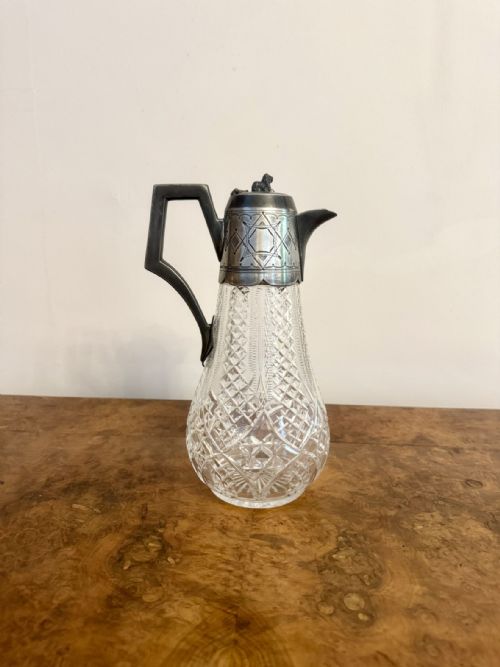
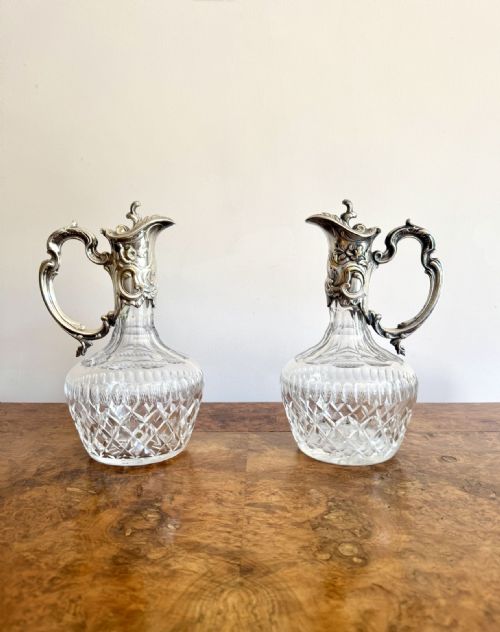


Silver Top Crystal Carafe
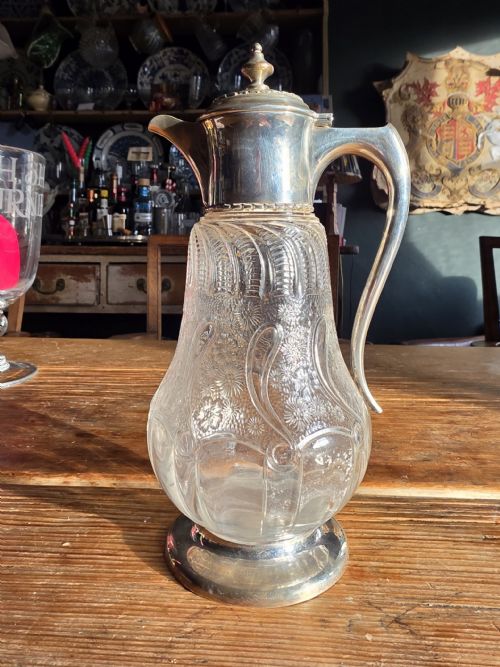
A silver top crystal carafe brings weight and sparkle to the table, combining heavy cut glass with bright metal mounts.
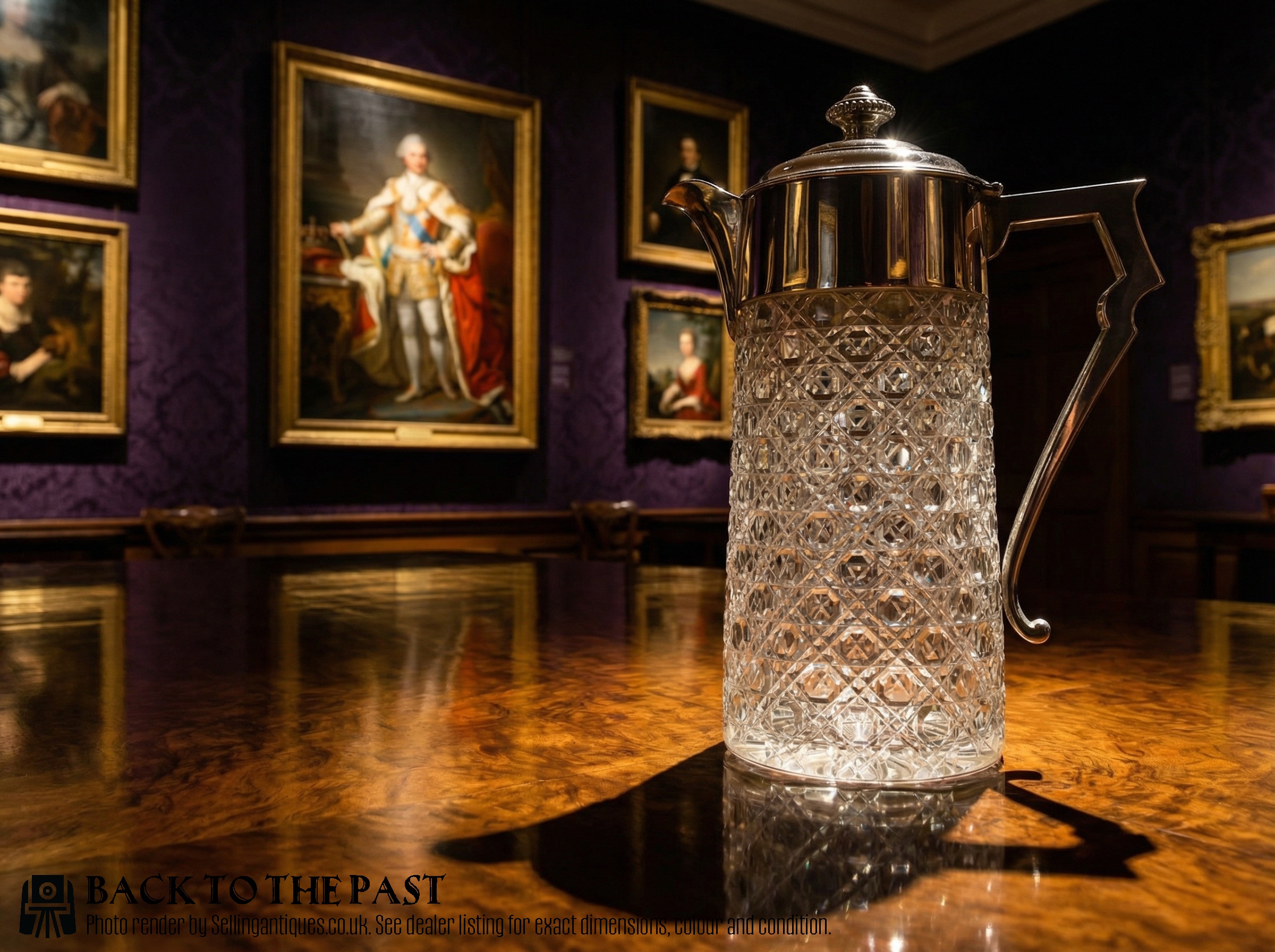
Silver Top Crystal Carafe
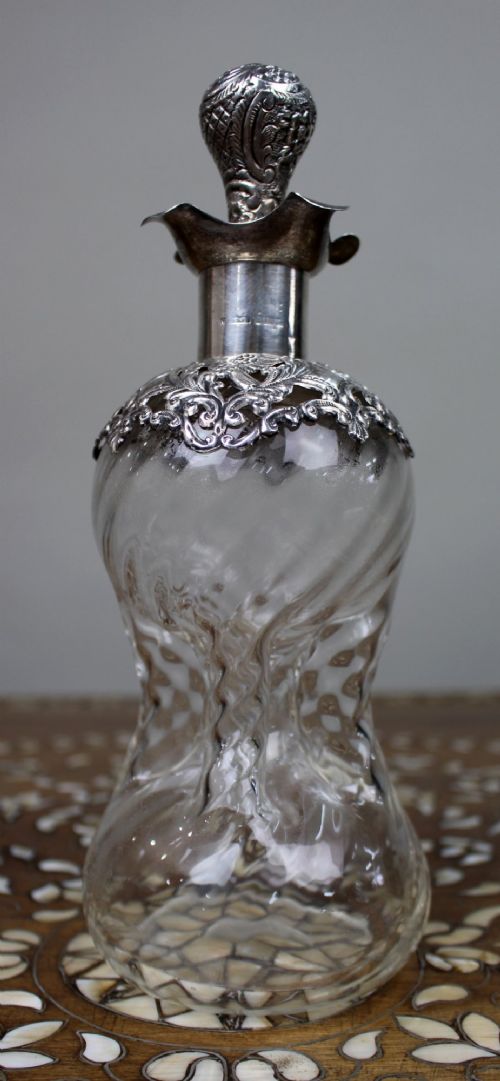
A silver top crystal carafe groups together serving vessels designed for wine and water, encompassing claret jugs, decanters, and ewers. When you search for a silver top crystal carafe, you encounter vessels produced across the nineteenth and twentieth centuries in Victorian, Edwardian, and Art Deco styles.
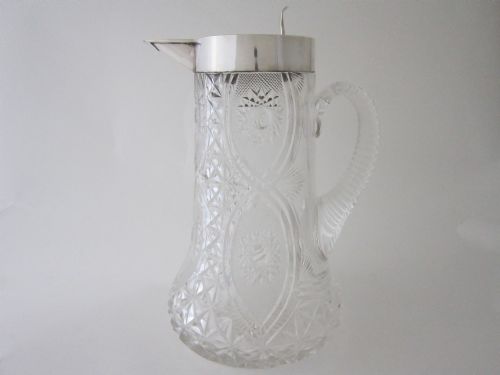
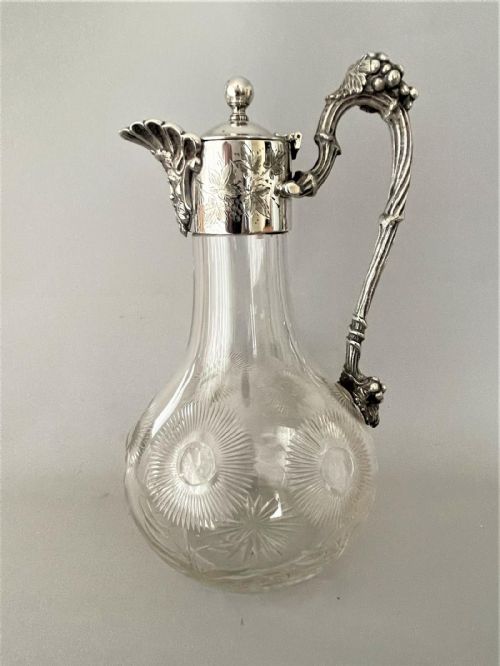
The most common versions on this page are Edwardian and Victorian claret jugs featuring cut glass bodies and either sterling silver or silver plated mounts. These pieces range from simple glass vessels with plain silver collars to elaborate jugs with hinged lids and spout masks.
Materials and Techniques
Makers formed the vessels from heavy crystal and glass, often applying deep hobnail or geometric cutting to refract light through the contents. The glass body was then fitted with mounts formed from sterling silver or silver plate, secured around the neck with a handle and a hinged cover.
Silversmiths shaped the metal mounts by casting, chasing, and engraving, sometimes incorporating figural elements such as Bacchus masks or unusual face spouts. Hallmarks stamped into the silver parts record the assay office, date letter, and maker's mark.
Object types recorded across the inventory include claret jugs, decanters, ewers, and water pitchers.
Factors of Quality
Quality rests upon the crispness of the glass cutting and the weight of the crystal body. Sharp, deep facets and clear ringing metal-free crystal indicate superior production.
The standard of the metalwork equally defines the piece, seen in the substantial gauge of the silver, the smooth action of the hinged lid, and the balance of the handle against the filled vessel.
William Comyns·Asprey and Co. Ltd·Tiffany·Hukin & Heath Ltd
The Silver Top Crystal Carafe Glossary
- Claret jug
- A specialised pouring vessel designed specifically for serving red wine at the dining table. They typically feature a handle and a hinged silver cover.
- Hobnail cut
- A distinct pattern of deep faceted cutting across the glass surface that resembles the faceted head of a traditional iron nail. It provides grip and brilliant light refraction.
- Silver plate
- A layer of fine silver fused to a base metal, commonly used for the mounts and handles of nineteenth century and Edwardian vessels. It offered the appearance of solid silver at a lower cost.
- Sterling silver
- An alloy consisting of pure silver and other metals, legally standardised to contain a high proportion of silver by weight. It forms the solid mounts on higher quality pieces.
- Ewer
- A large jug with a wide spout and a curved handle, used historically for water or wine. Many antique examples double as decorative serving pitchers.
Silver Top Crystal Carafe: Frequently Asked Questions
What is a silver top crystal carafe used for?
These vessels were originally made for serving wine, particularly claret and dessert wines, at formal dining tables. They allowed hosts to aerate the wine and present it elegantly.
Today, they function both as serving pieces for gatherings and as decorative display items in dining rooms or living spaces.
How do I date a silver mounted decanter?
Dating relies primarily on the hallmarks stamped into the silver mounts, which indicate the year of assay and the maker. Stylistic details like Victorian floral chasing or Art Deco geometric lines also help assign a period.
The shape of the glass body and the cutting style further narrow down the decade of manufacture.
Are the metal mounts solid silver or plated?
Listings feature both sterling silver and silver plated mounts, depending on the piece and its maker. Hallmarks on the metal will indicate solid sterling silver, while unmarked pieces frequently use silver plate over a base metal.
Both materials were common across the Victorian and Edwardian periods for serving jugs.
How do I clean a crystal claret jug?
Cleaning requires warm water and mild detergent, avoiding harsh abrasives that can scratch the crystal or damage the silver mounts. Special care must be taken with antique silver plate to preserve the remaining finish.
Allowing the vessel to dry thoroughly prevents water spots from forming on the interior glass.