

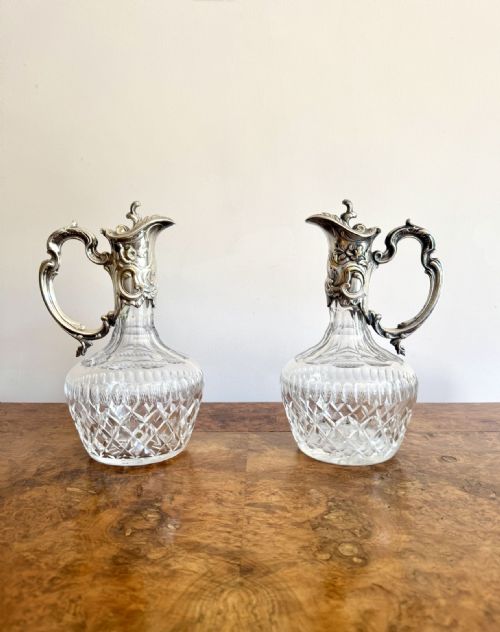


Silver Top Claret Jug
When you search for a silver top claret jug, you are looking at nineteenth and twentieth-century vessels designed to pour wine at the dining table.
Silver Top Claret Jug
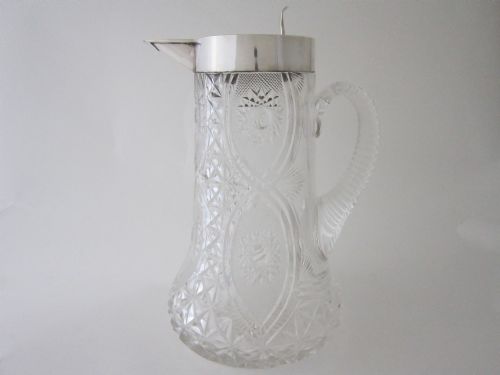
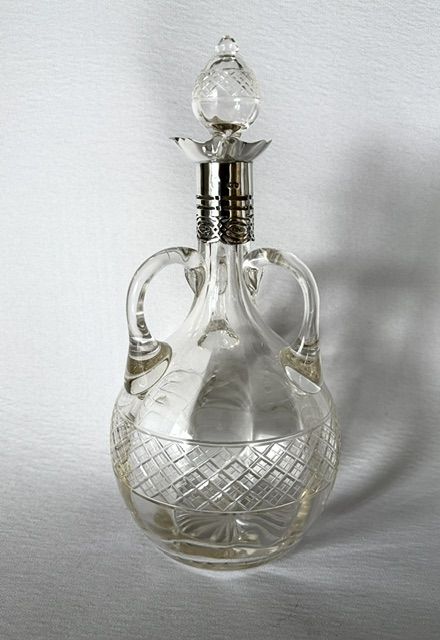
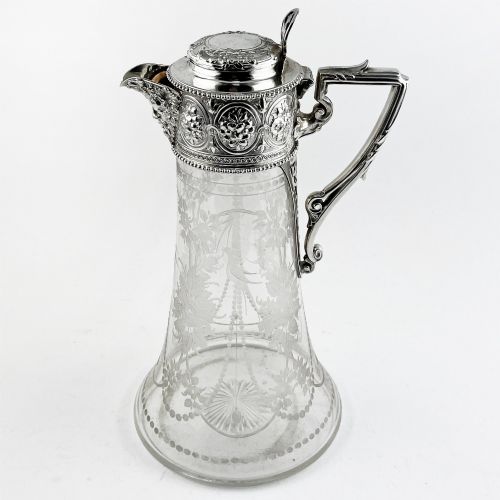
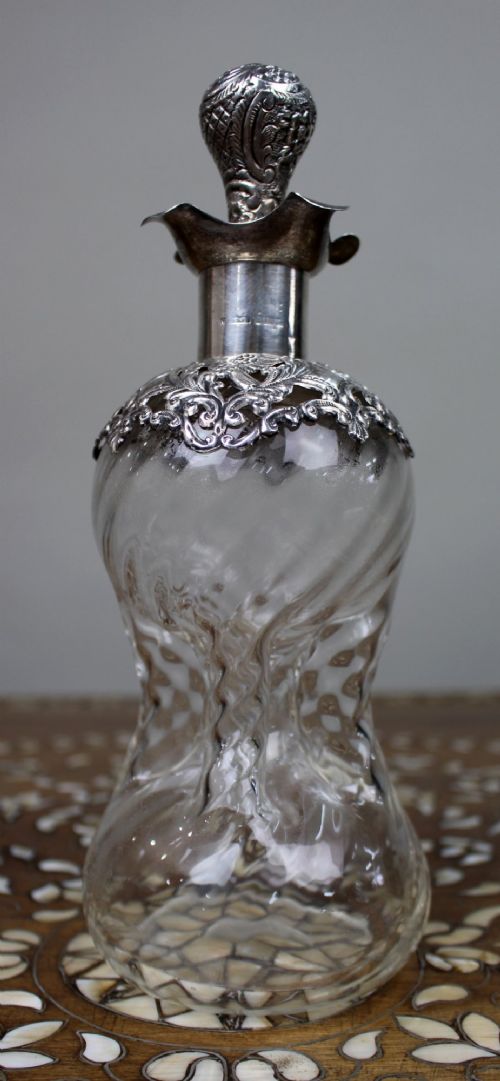
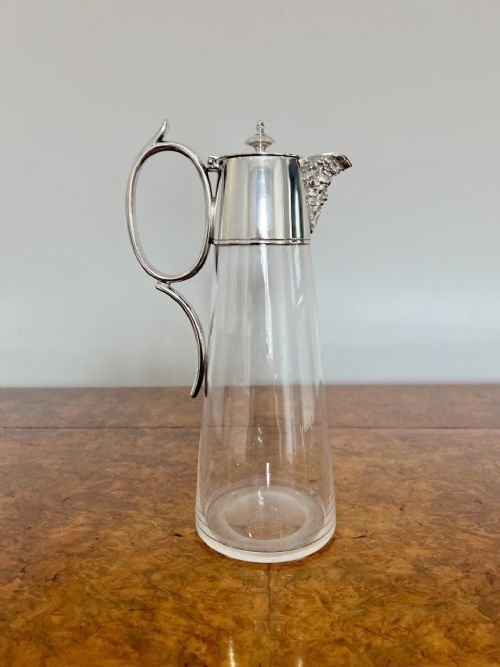
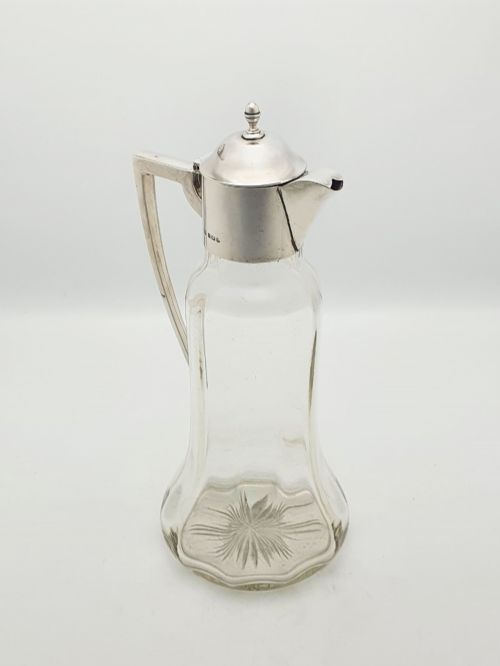
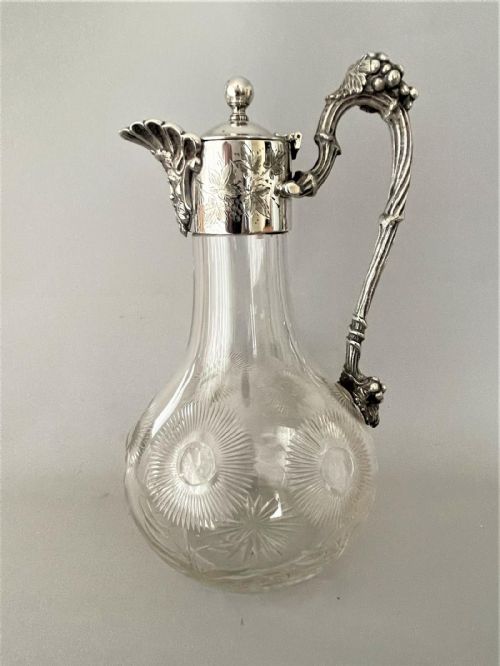
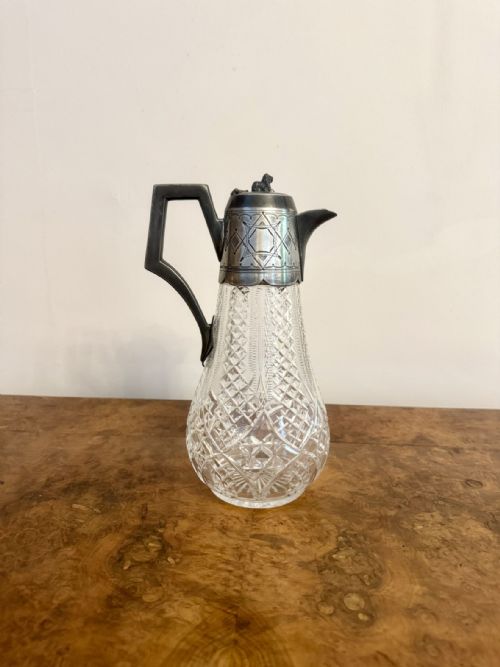
A silver top claret jug combines a glass or crystal body with a metal mount, cover, and handle. You will frequently encounter Victorian and Edwardian examples featuring heavily cut or etched glass paired with silver plate or sterling silver mounts.
The form evolved to serve claret and other dessert wines, transitioning from plain nineteenth-century shapes through elaborate revivalist designs into early twentieth-century interpretations. These serving vessels range from modest domestic pieces to substantial jugs with hinged lids and scroll handles.
How they were made
Makers formed the bodies by blowing glass or crystal into moulds or cutting deep geometric and floral patterns directly into the cooled material. Some vessels utilise coloured glass, such as cranberry, vaseline, or Bristol blue, adding rich tones beneath the metal work.
Silversmiths constructed the mounts, collars, and hinged covers from sterling silver or silver plate, securing them to the glass necks with collars. Handles were cast or formed to match the aesthetic of the period, from plain mounts to ornate Victorian Rococo revival patterns and Arts and Crafts designs.
Listings span the Victorian, Edwardian, and Art Deco periods, utilising cut glass, sterling silver, and silver plate.
What varies in quality
The weight and depth of the glass cutting distinguish standard production from finer examples, with deeply faceted crystal reflecting light more sharply. Heavy gauge silver or thick silver plating on the mounts and hinged lids indicates higher original cost and better survival through use.
Proportion and decorative harmony between the glass body and the metal mount separate simpler vessels from masterworks. Pieces carrying clear hallmarks with identifiable maker marks offer documented provenance that elevates their standing.
Asprey and Co. Ltd·Tiffany·Charles Boyton·Elkington
The Silver Top Claret Jug Glossary
- Sterling silver
- A silver alloy containing 92.5 percent pure silver by mass, widely used for the mounts and covers of high-end jugs. Hallmarks stamped into the metal verify its standard and origin.
- Silver plate
- A layer of silver fused to a base metal, commonly utilised to provide the appearance of solid silver at a lower manufacturing cost. Many surviving Victorian jugs employ this technique.
- Cut glass
- Glass decorated by grinding facets or patterns into the surface using wheels, creating light-catching textures across the body of the vessel. It forms the most common medium for these wine jugs.
- Hinged lid
- A cover attached to the collar of the jug by a small pivot, allowing the pourer to open the vessel with a thumbpiece. This mechanism keeps the contents covered during dining.
- Bacchus mask
- A decorative motif depicting the face of the classical god of wine, frequently cast into the spout or mount of the jug. It connects the vessel directly to its vinous purpose.
Silver Top Claret Jug: Frequently Asked Questions
What is a silver top claret jug?
It is a decorative serving vessel featuring a glass or crystal body fitted with a metal mount, handle, and hinged lid. These pieces were designed to hold and pour claret at the dining table during the nineteenth and twentieth centuries.
Craftsmen combined blown or cut glass with silver or silver-plated mounts to create functional tableware that doubled as a display piece. The form ranges from simple domestic jugs to elaborate revivalist designs.
How do I date a silver mounted jug?
Dating relies primarily on the hallmarks stamped into the metal mounts, which indicate the assay office, year, and maker. Stylistic clues, such as heavy Victorian cutting versus cleaner Edwardian or Art Deco lines, also help determine the era.
Examining the manufacturing techniques of the glass body provides additional context. Victorian examples often feature deep floral engraving or Rococo revival curves, while later pieces adopt simpler geometries.
How were these jugs used originally?
They were filled from larger bottles and placed on the dining table to serve claret or other red wines during dessert courses. The hinged lid kept the wine covered while allowing guests or hosts to pour easily.
Some specialised versions included internal ice chambers to keep beverages chilled without diluting the liquid. Others served water or whisky in domestic settings alongside wine service.
How do I clean a glass and silver jug?
Careful hand washing with warm water and mild soap protects both the glass and the delicate metal mounts. Avoid submerging plated pieces for extended periods to prevent damage to the silver surface.
Silver polish should be used sparingly on the mounts, keeping compounds away from the glass interface. Proper drying prevents water spots from forming on the cut crystal.