
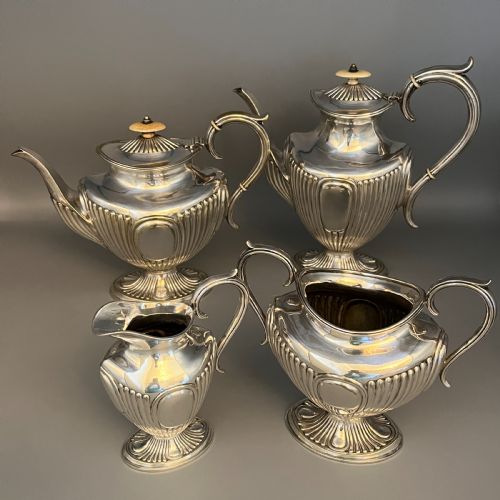
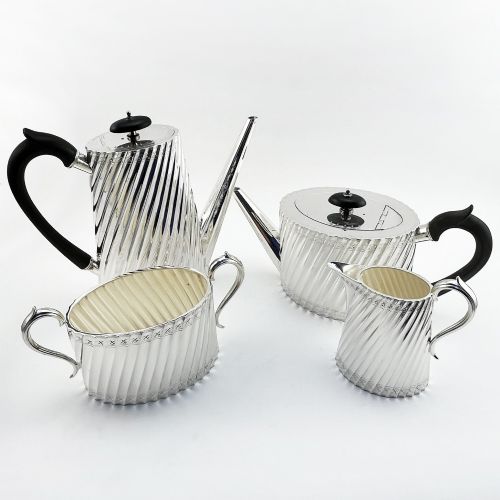
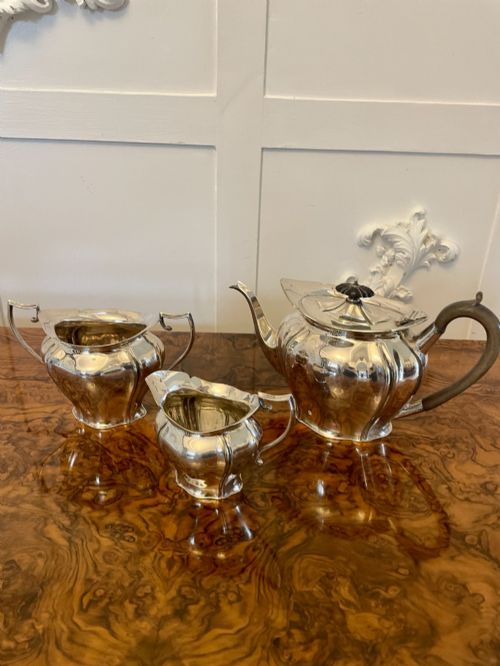
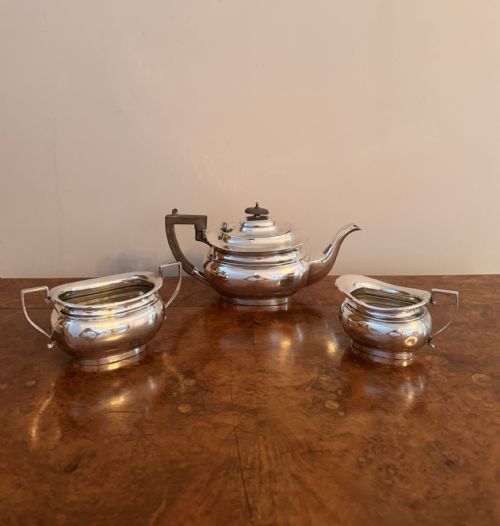


Silver Tea Service Bowl
A silver tea service bowl anchors the tea table, bringing form and utility from periods spanning the Georgian era to Art Deco.
Silver Tea Service Bowl
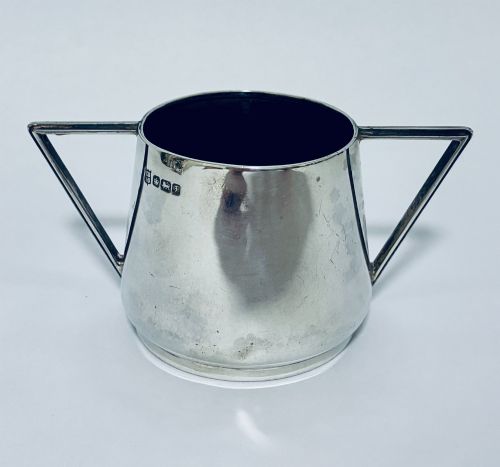
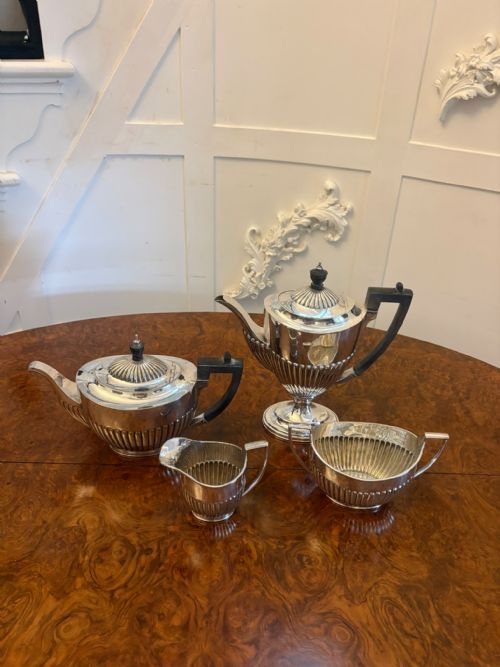
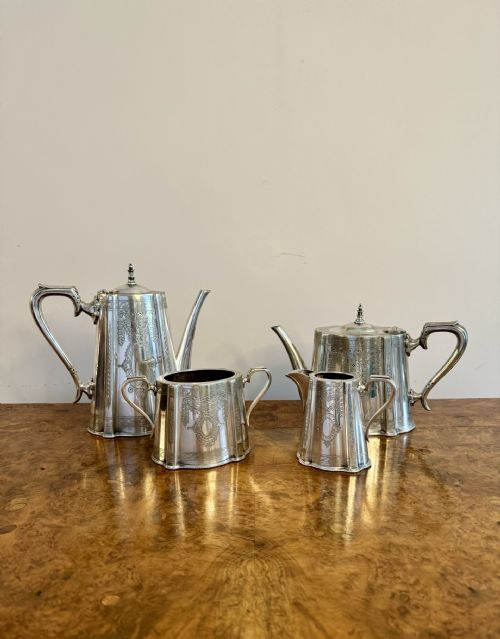
A silver tea service bowl forms part of a larger tea or coffee set, functioning primarily as a sugar basin or slop bowl. When exploring this selection, buyers frequently encounter Edwardian silver plated examples alongside sterling silver items from the Victorian and Georgian periods.
Origins stretch from early nineteenth century workshops to twentieth century manufacturing firms, reflecting shifts in dining habits and interior presentation.
Materials and construction methods
Makers utilised sterling silver and silver plate, alongside electroplated nickel silver over base metal. Interiors occasionally feature gold gilt washes, while handles incorporate insulating elements such as wood, ebony, or ebonised wood.
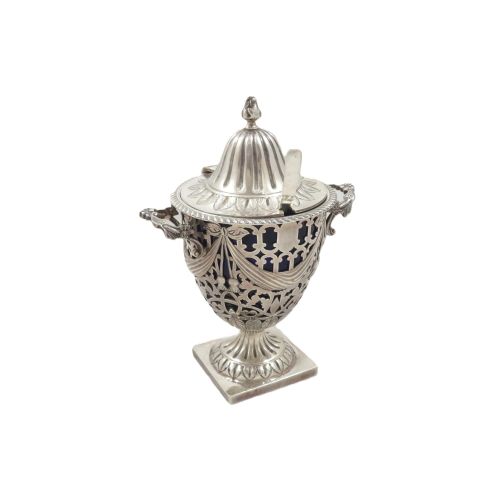
Construction techniques involve traditional silversmithing, stamping, and Sheffield plating methods. Decorative approaches include ornate grapevine detailing, rococo revival embossing, and clean geometric lines typical of Art Deco design.
Some sugar bowls come equipped with dedicated sifter spoons, ready to dust lumps of sugar with absolute Victorian propriety.
Distinguishing quality across the range
Quality rests upon the weight of the metal, the crispness of the chasing or engraving, and the integrity of any applied ornamentation like grapevine motifs. Maker attribution and original fitted presentation cases elevate certain pieces significantly.
The durability of the silver plating on base metal items versus solid sterling construction alters longevity, while balanced proportions and robust handle joints define superior manufacturing standards.
Joseph Rodgers & Sons·Walker and Hall·Joseph Craddock·Benjamin Smith·Mappin & Webb·Archibald Knox for Liberty·Goldsmiths & Silversmiths Co·George Fox·Harry Atkin
The Silver Tea Service Bowl Glossary
- Sterling silver
- A silver alloy containing 92.5 percent pure silver by mass, standard for quality British tableware. It carries hallmarks indicating the assay office, date letter, and maker.
- Silver plate
- A layer of silver fused or electroplated onto a base metal core, such as copper or nickel silver. This technique provided an accessible alternative to solid silver.
- Sheffield plate
- An early form of composite material produced by fusing a sheet of silver to a copper ingot. It represents a precursor to standard electroplating.
- Electroplated nickel silver
- A base alloy of copper, nickel, and zinc coated with a thin layer of silver through electrolysis. It offers high resistance to corrosion.
- Gold gilt
- A thin coating of gold applied to the interior surfaces of silver bowls, often used for sugar basins to protect the metal from corrosive contents.
- Sugar basket
- An open vessel, frequently fitted with a swing handle or resting on a footed base, designed to hold lump sugar on the tea table.
Silver Tea Service Bowl: Frequently Asked Questions
What is a silver tea service bowl used for?
These bowls served primarily to hold loose sugar cubes or granules during afternoon tea and formal dining gatherings. They also functioned as slop basins for spent tea leaves.
Placed alongside teapots and cream jugs, they formed an integral component of domestic hospitality rituals.
How do I care for silver bowls at home?
Regular dusting with a soft cloth prevents tarnish accumulation, while periodic cleaning with specialised silver polish maintains the reflective surface. Avoid harsh abrasives that wear down thin plating.
Storing pieces in dry environments away from direct sunlight protects organic handle components like wood or ebony.
How do I distinguish Victorian from Edwardian pieces?
Victorian designs often embrace heavy ornamentation, floral motifs, and rococo revival curves, reflecting mid to late nineteenth century tastes. Maker marks and hallmarking date letters provide definitive verification.
Edwardian pieces tend toward lighter, refined Edwardian aesthetics or cleaner proportions, bridging the gap into early twentieth century manufacturing.
Are these bowls always sold as part of a set?
Many items survive as standalone pieces or paired simply with a cream jug rather than a complete multi-piece service. Individual sugar bowls and baskets frequently appear independently in collections.
Matching sets of four or more pieces represent more extensive surviving table services.