

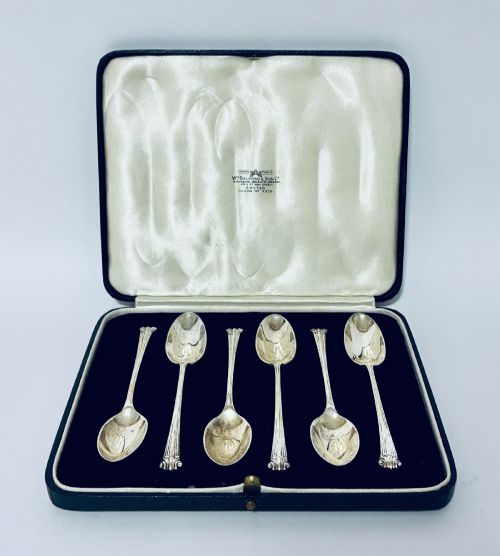
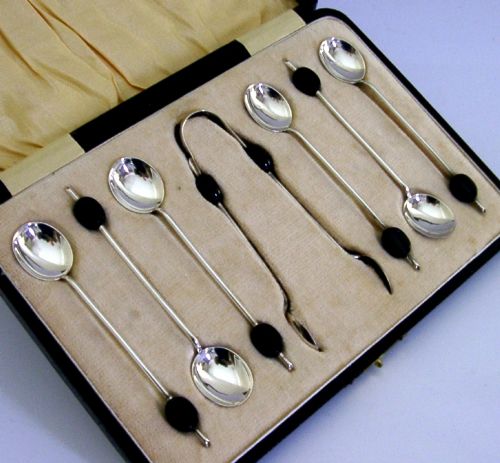
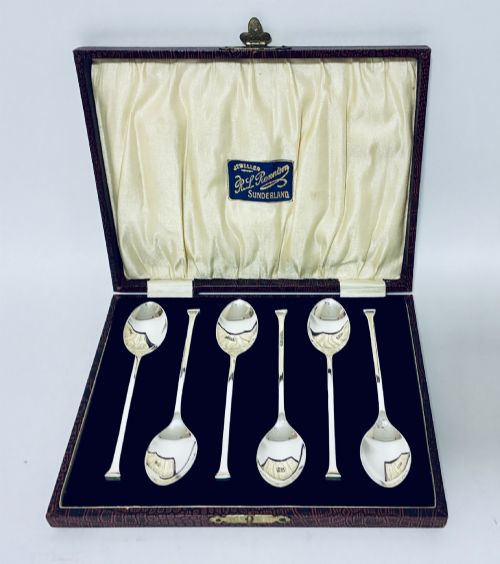
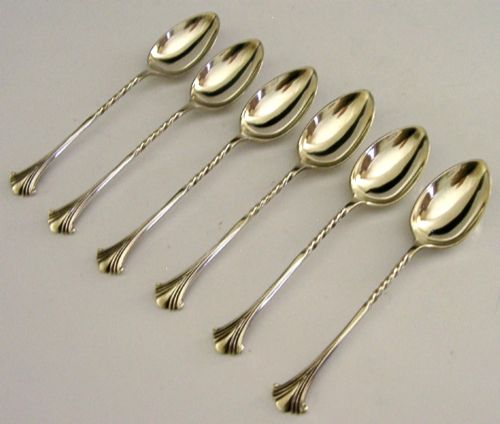
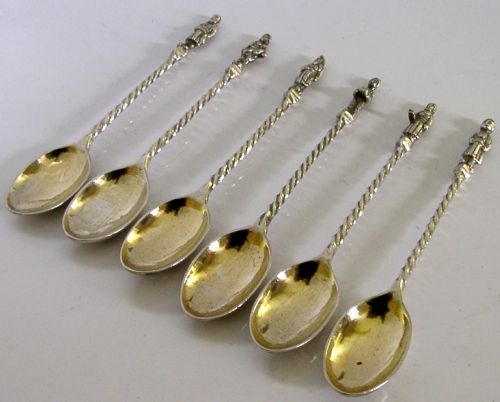
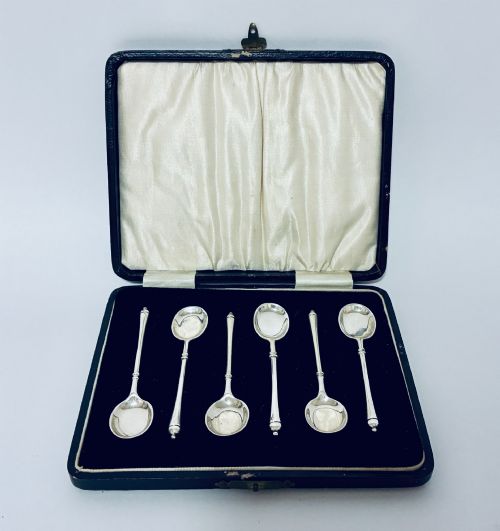
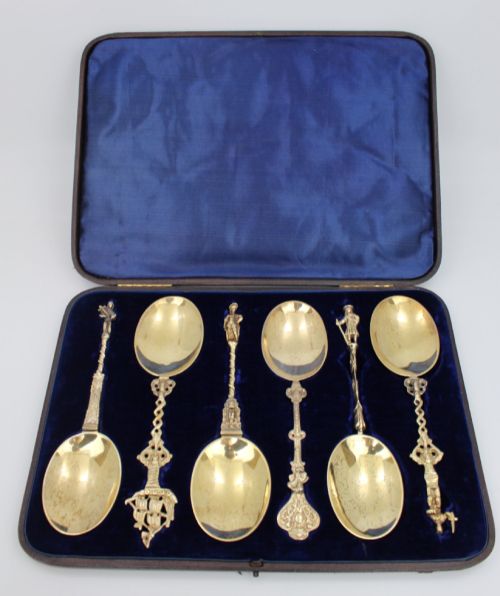
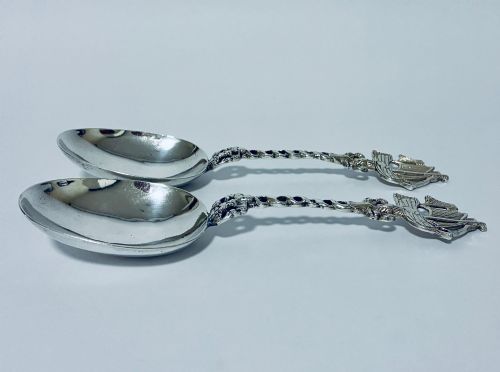


Silver Tea Flatware Set
A silver tea flatware set gathers spoons, knives and forks intended for the table, uniting solid metal and fitted cases.
Silver Tea Flatware Set
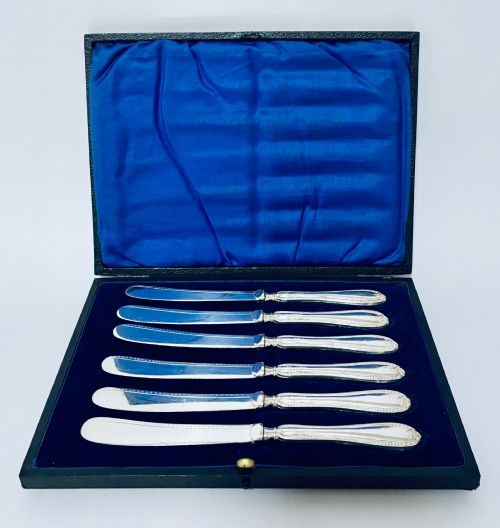
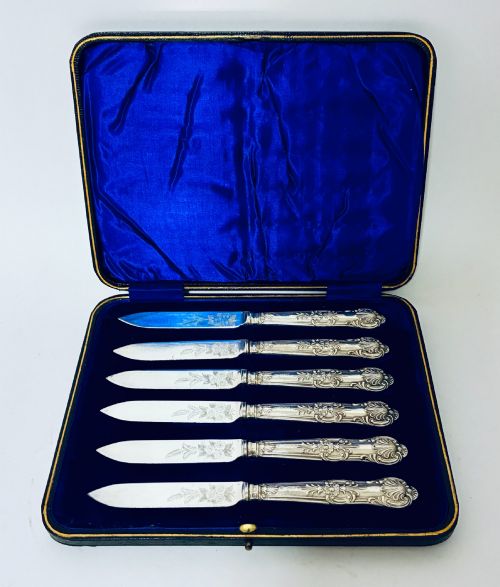
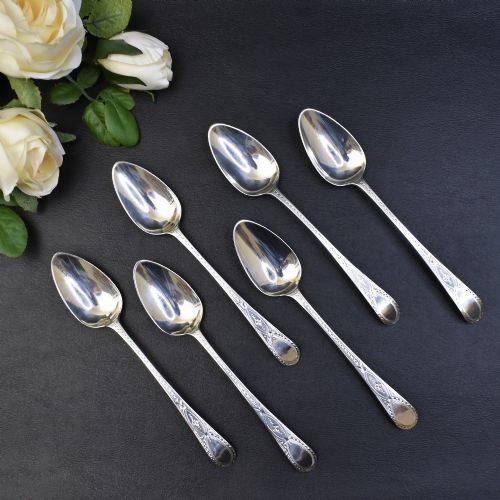
A silver tea flatware set comprises matched groupings designed for service, most frequently encountered here as sets of six teaspoons, coffee spoons or butter knives. These collections span the Georgian, Victorian, Edwardian and Art Deco periods, ranging from provincial English offices to continental workshops.
Buyers seeking a silver tea flatware set will discover cased presentations alongside individual tablespoons, sugar tongs, cake forks and pickle forks. The forms reflect dining habits from the nineteenth and early twentieth centuries, preserved in fitted boxes lined with silk or velvet.
Materials and technique
A silver tea flatware set relies principally upon sterling silver, silver-gilt, and steel, occasionally augmented with enamel, mother of pearl or German silver. Handles incorporate steel blades for knives, whilst specialised spoons utilise silver-gilt finishes for decorative contrast.
Techniques range from bright-cut engraving on Georgian pieces to cloisonné enamel on later twentieth-century designs. Storage vessels employ leatherette, wood, silk, and velvet linings to protect the metal surfaces.
Silver Tea Flatware Set Retail Price Guide 2026
Typical asking prices for silver tea flatware set among the pieces listed under this phrase on Sellingantiques today, from the lower quarter to the upper quarter. They describe what is for sale here now, not the wider market.
Ottoman figural spoons bring unexpected charm to the tea table, proving that even a quiet afternoon brew enjoys a touch of theatrical sculpture.
Distinctions in standard
The standard of a silver tea flatware set rests upon the crispness of hallmarks, the weight of the metal, and the preservation of original fitted cases. Provincial assay offices and notable makers introduce regional interest, whilst enamelled surfaces demand intact glazing without loss.
Subtleties in engraving quality, such as bright-cut details on eighteenth-century handles, separate standard production from superior silversmithing. Complete sets retaining matching tongs and untouched velvet linings command greater appreciation than assembled groupings.
Deakin & Francis·P A W Bateman·Robert Stebbings
The Silver Tea Flatware Set Glossary
- Sterling silver
- A silver alloy containing 925 parts pure silver per thousand, standard for quality British tableware. This grade ensures durability for daily service and longevity.
- Silver-gilt
- Silver that has been coated with a thin layer of gold on its surface, often termed vermeil. This technique provides a warm tone inside bowl interiors.
- Bright-cut
- An engraving technique utilising faceted cuts to create reflective geometric patterns. This decoration catches light across Georgian spoon stems.
- Cloisonne
- An enamelling method where vitreous paste is applied within wire partitions soldered to a metal base. Russian pieces frequently display this intricate decoration.
- Assay office
- An official body testing precious metal purity and stamping items with hallmarks. Offices in London, Birmingham, Sheffield, Chester and Exeter mark British silver.
Silver Tea Flatware Set: Frequently Asked Questions
What pieces comprise a set?
Sets typically contain six teaspoons, coffee spoons, or butter knives, occasionally accompanied by matching sugar tongs or forks. Many arrive complete with fitted presentation boxes.
Larger assortments might include serving pieces like jam spoons or pickle forks, suited for traditional afternoon tea service.
How do I read hallmarks?
Hallmarks identify the assay office, metal standard, and year of manufacture through small stamped letters and symbols. Sterling marks confirm the silver purity.
Maker's marks stamped alongside provide the initials or full name of the silversmith responsible for the creation.
How should I clean silver?
Gentle washing in warm soapy water using a soft cloth removes everyday residue without scratching the metal. Avoid abrasive dips that strip natural patination.
Enamelled pieces require particular care, avoiding prolonged soaking to protect the delicate coloured glass surfaces.
Are cased sets original?
Fitted leatherette or velvet-lined boxes usually date from the period of manufacture, designed specifically to house the flatware safely. Silk and velvet interiors protect the spoons from movement.
Matching fitted cases enhance the historical completeness of Edwardian and Art Deco tableware collections.