


Silver Taper Sticks
Silver taper sticks are diminutive lighting pieces designed for melting wax and sealing correspondence, and a buyer wants one for the elegance they bring to a desk.
Silver Taper Sticks
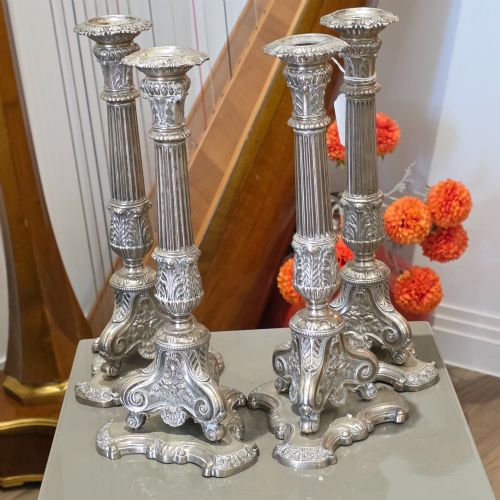
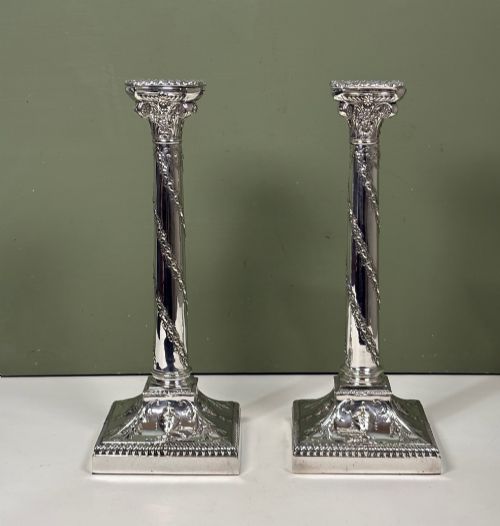
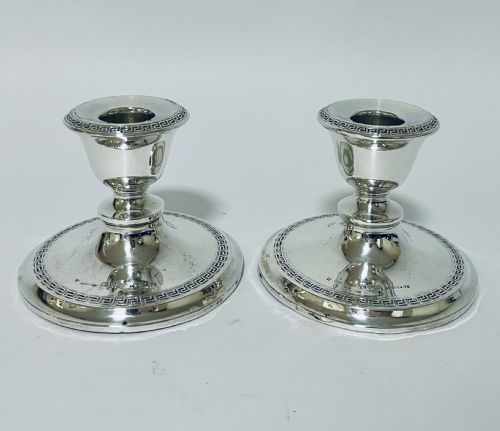
Silver taper sticks appear primarily as diminutive candlesticks, chambersticks and candelabra designed for lighting wax seals rather than illuminating a room. The examples meeting this search phrase span the Georgian, Victorian and Edwardian eras, alongside later twentieth-century production.
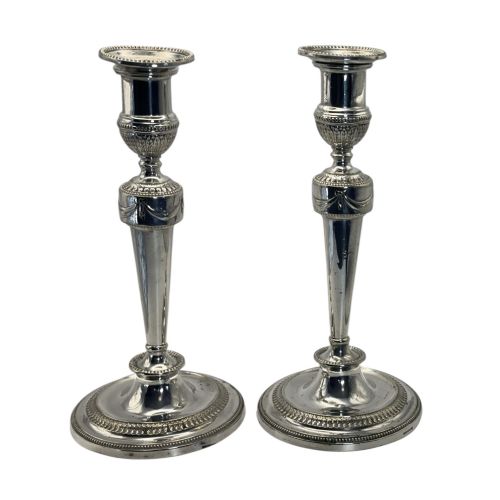
The domestic interior supplied a steady demand for these smaller lighting devices throughout the eighteenth and nineteenth centuries. Most pieces follow the prevailing architectural and decorative movements of their decade, ranging from plain tapering stems to neoclassical column forms.
Makers produced these smaller light-holders in sterling silver, old Sheffield plate and later silver plate. Buyers frequently encounter matched pairs designed for the writing table or mantelpiece, often retaining removable sconces.
Materials and Construction
Silversmiths utilised sterling silver, copper, brass and pewter to form the structural bodies of these lighting items, applying silver plating or silver gilt for a reflective surface finish. Old Sheffield plate combined a thin layer of silver fused to a copper base, creating durable domestic wares.
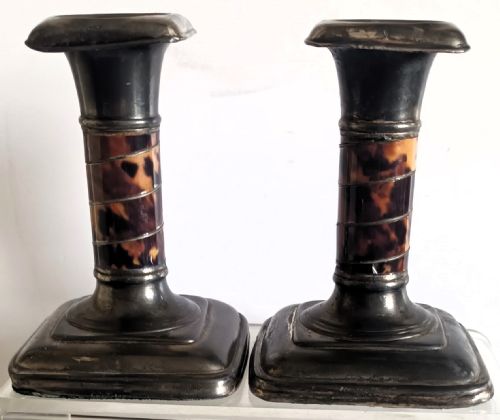
Craftsmen shaped columns and bases through casting, hammering and turning techniques before assembling the components by soldering. Decorative accents such as tortoiseshell insets or enamel details appear on specific Victorian and mid-twentieth-century pieces.
Desk candlesticks often kept nocturnal correspondents company while melting the wax seals on midnight letters.
Distinctions in Execution
Quality rests in the crispness of the chasing, the weight of the metal and the integrity of the joins between base, stem and sconce. Superior examples maintain balanced proportions and retain their original removable drip pans.
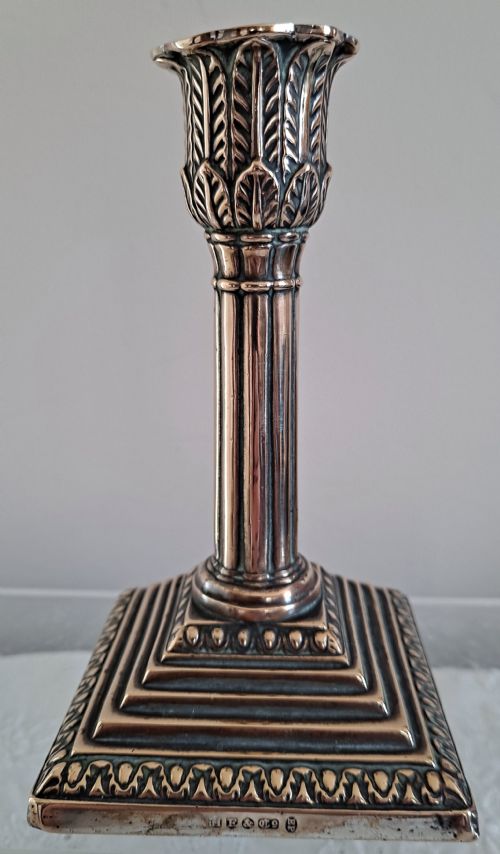
Plated wares reveal craftsmanship through the evenness of the silver layer over the base metal, whilst solid silver pieces rely on clear hallmarks to confirm origin and date. The harmony of design in matched pairs separates standard production from finer workshop output.
Garrard & Co.·Mappin & Webb·John Pound & Co·Barker Ellis·Ferdinand Barbedienne
The Silver Taper Sticks Glossary
- Sconce
- The detachable nozzle or pan fitted to the top of a candlestick to catch melting wax. This component is often lost or replaced over time.
- Old Sheffield Plate
- An early composite material made by fusing a sheet of silver to a copper ingot. This technique preceded modern electroplating.
- Chamberstick
- A low candlestick fitted with a handle and a saucer base designed for carrying a light to bed. These frequently include a small metal cone snuffer.
- Corinthian Column
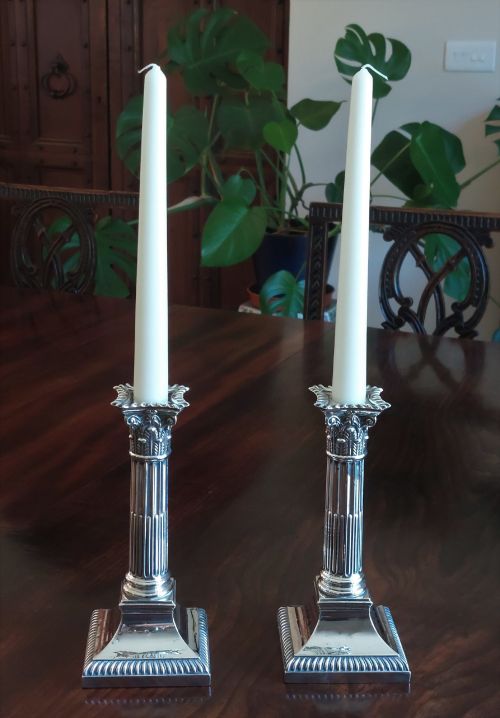
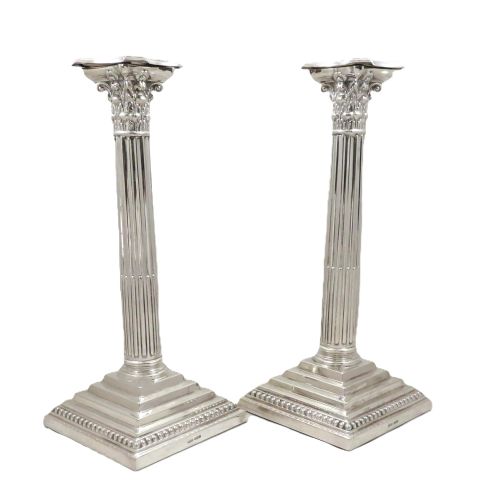
- A classical architectural style adapted for candlestick stems, featuring ornate capitals decorated with acanthus leaves. This design appears frequently in Georgian and revival pieces.
- Hallmark
- An official stamp applied to precious metals indicating purity, maker and year of assay. These marks provide definitive evidence of age and origin.
Silver Taper Sticks: Frequently Asked Questions
What are silver taper sticks used for?
These small lighting devices were historically used to melt sealing wax for correspondence and documents rather than lighting a large space.
Their diminutive size suited them for placement on writing desks and small tables where a focused flame was required.
How do you clean silver taper sticks?
Cleaning requires a soft microfibre cloth and a mild, non-abrasive silver polish formulated to protect historic metal surfaces.
Harsh chemical dips must be avoided, particularly on plated items or pieces with delicate enamel and tortoiseshell elements.
Are removable sconces important?
Removable sconces catch dripping wax and protect the main body of the candlestick during use.
Finding a pair that retains its original matching sconces adds significantly to the historical integrity of the piece.
How can you tell the age of a piece?
Solid silver pieces rely on official hallmarks stamped into the metal to verify the exact year and assay office of manufacture.
Stylistic cues such as neoclassical columns or proportions help date unmarked plated wares to specific periods.