



Silver Table Cruet
A silver table cruet brings order to the dining table, holding condiments with elegance across centuries of British and continental design.
Silver Table Cruet
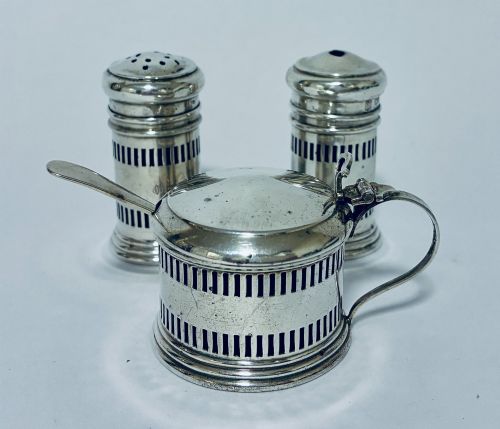
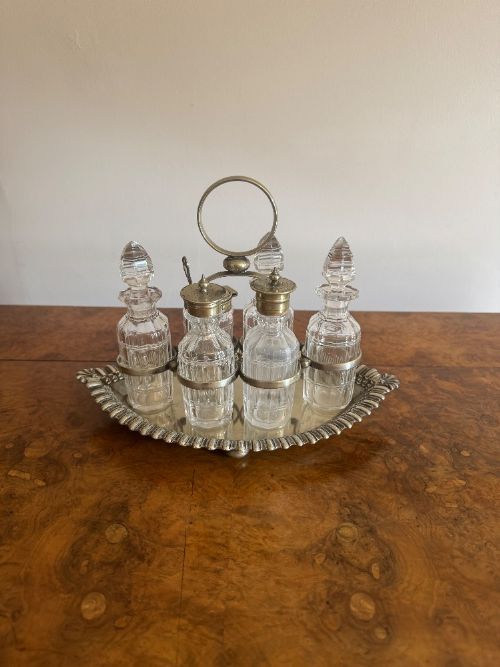
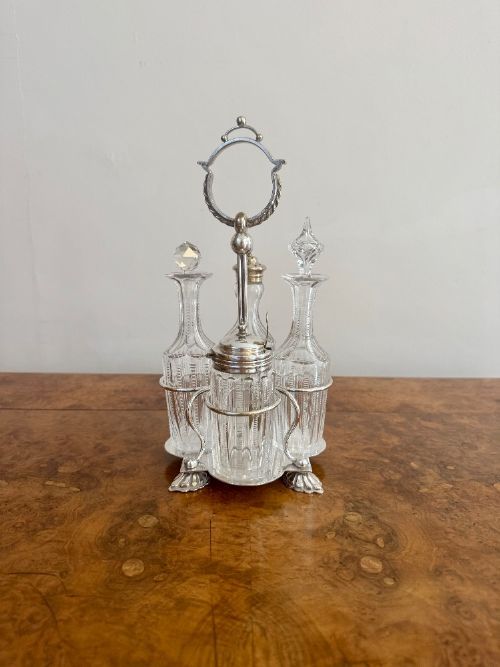
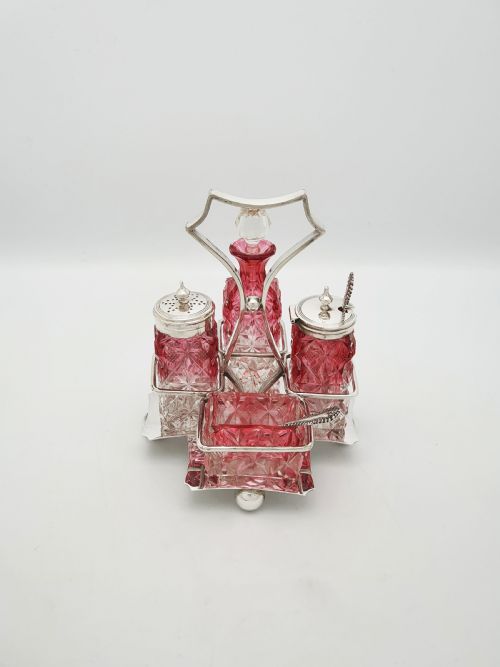
A silver table cruet gathers together bottles, pots, and casters for vinegar, oil, mustard, salt, and pepper into a single fitted stand for the dining room. These domestic service pieces survive in forms ranging from compact three-piece sets to large multi-bottle frames.
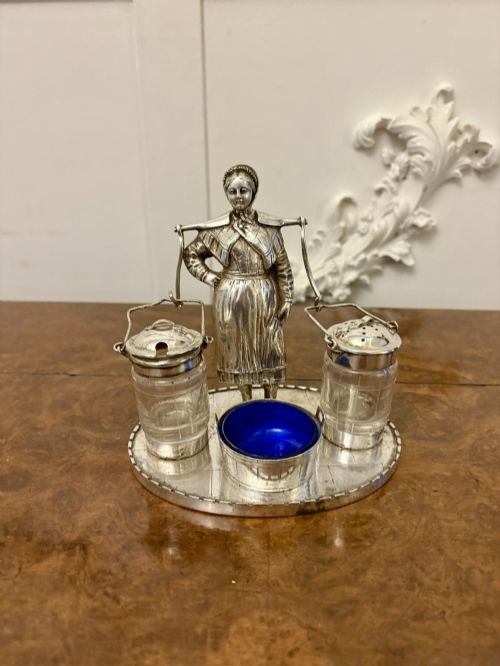
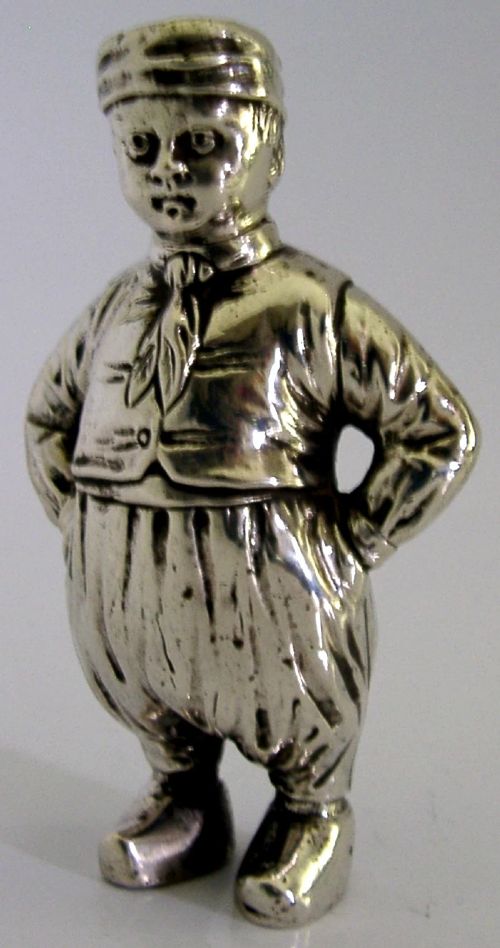
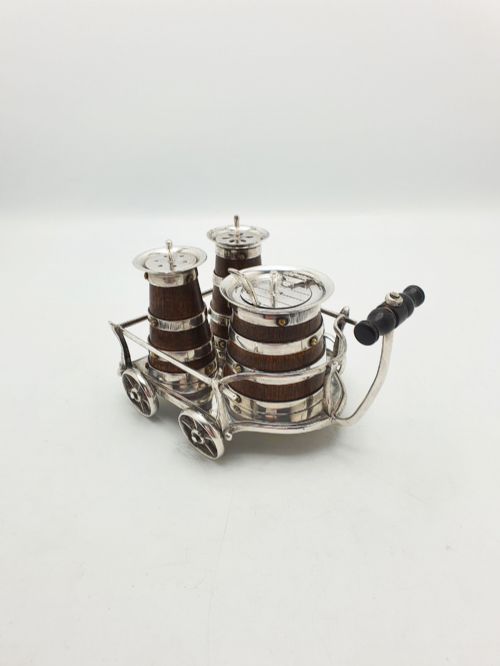
The version most commonly met on this page is the Edwardian silver-plated stand fitted with cut glass bottles, though examples stretch from Georgian multi-bottle frames down to mid-century modern sterling silver condiment sets. Stands take oval, rectangular, or novelty shapes including carriages, barrels, and farmyard animals.
Makers produced these for daily dining and formal entertaining, utilising sterling silver, silver plate, and electroplated nickel silver paired with clear, cranberry-flashed, or cut glass containers.
Materials and construction
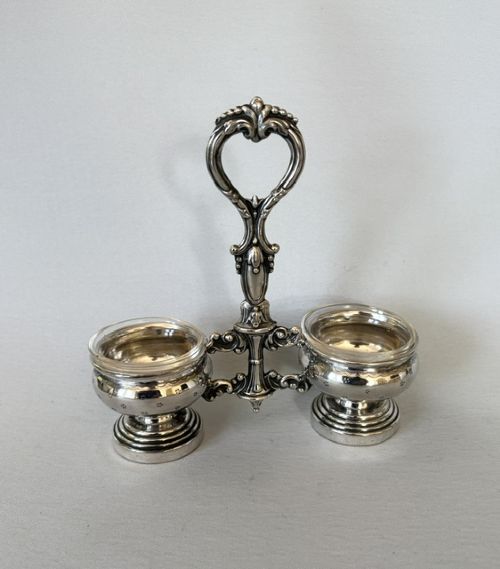
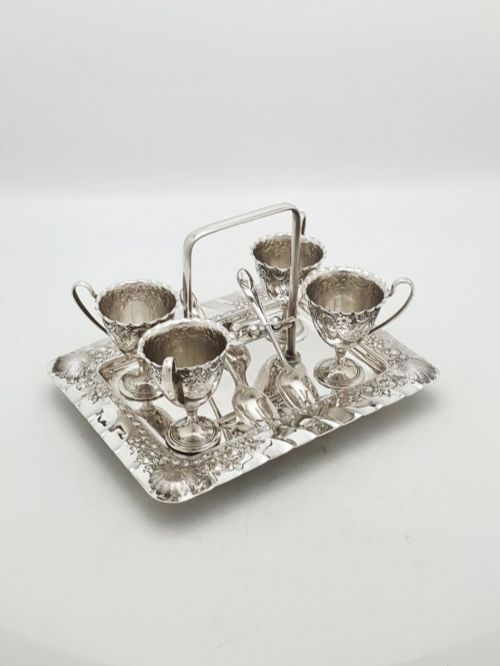
Silversmiths formed the frames and casters from solid sterling silver or applied silver plate over base metals like electroplated nickel silver. Pierced work, embossing, and cast decorative mounts gave structure and ornament to the stands.
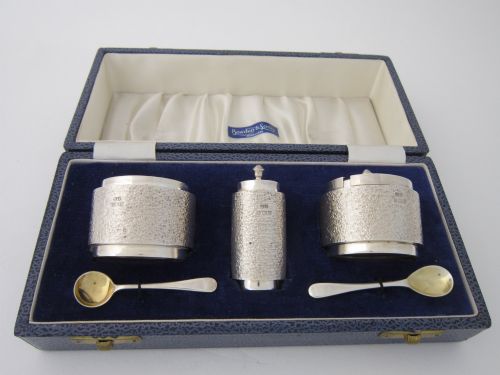
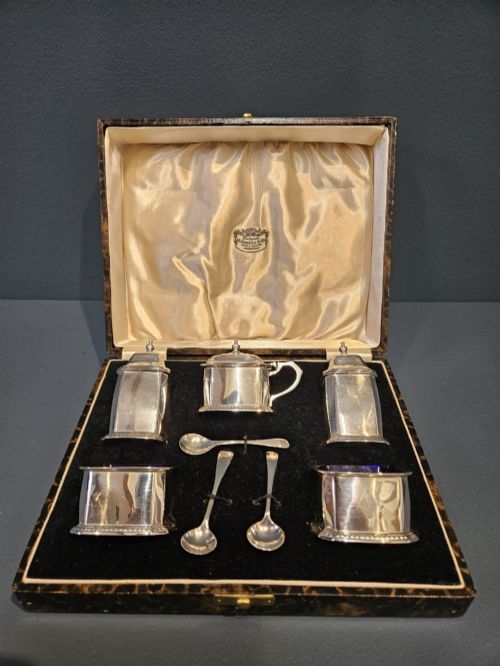
Bottles and jars combined blown glass with hand-cut geometric or fluted patterns, often fitted with silver collars and lids. Velvet and satin sometimes lined presentation boxes designed to house the sets.
Listings feature items spanning the eighteenth century through to the mid-twentieth century, including Georgian, Victorian, Edwardian, and Art Deco periods.
Assessing quality and craftsmanship
Quality rests upon the weight and crispness of the metalwork, distinguishing heavy cast or solid pieces from lighter stamped alternatives. Pierced galleries, chased details, and substantial frames show superior workshop standards.
The integrity of the glass elements matters greatly, with depth of cutting, clarity, and matching original bottles separating standard sets from exceptional survivors. Complete sets retaining all matching original casters and stoppers command the strongest interest.
Goldsmith & Silversmith's·Mappin Brothers·Hester Bateman·Bricks & Sons·Sampson Mordan·Wilmot Manufacturing Co.
The Silver Table Cruet Glossary
- Caster
- A small perforated jar used for sprinkling sugar or dry spices over food. They form a standard component of multi-bottle cruet frames.
- Condiment set
- A collection of small pots for salt, pepper, and mustard, often presented on a matching stand or tray. These superseded larger traditional cruet frames in later dining fashions.
- Silver plate
- A layer of silver fused to a base metal, commonly utilised to produce durable tableware. Manufacturers employed techniques like electroplating to create affordable domestic items.
- Cut glass
- Glass decorated by grinding facets or patterns into the surface with a wheel. It adds weight and brilliance to cruet bottles.
- Bachelor cruet
- A smaller scaled cruet set intended for individual use or intimate dining. These compact stands typically hold fewer bottles than standard family frames.
Silver Table Cruet: Frequently Asked Questions
What is a silver table cruet?
A silver table cruet is a framed stand holding bottles and pots for table condiments such as oil, vinegar, salt, pepper, and mustard. They served dining rooms by keeping seasonings organised and accessible during meals.
Designs range from simple pairs of salt and pepper pots to elaborate frames housing seven or more glass bottles.
How do I date a cruet set?
Dating relies on hallmarks stamped on the silver components, stylistic traits, and manufacturing techniques. Georgian sets feature simpler, robust frames while Victorian and Edwardian examples often display ornate piercing and embossing.
Novelty shapes and art deco geometric lines point clearly to the twentieth century.
Were these sets used daily?
Many sets saw active service on dining tables for everyday family meals as well as formal dinner parties. Sturdier silver-plated versions handled frequent use, while delicate sterling silver sets were reserved for grander occasions.
Fitted presentation boxes indicate that some sets were given as wedding gifts or kept protected when not in use.
How should I clean silver cruet frames?
Silver frames and mounts require gentle cleaning with a specialist silver polish to remove tarnish without wearing away the plating. Glass bottles and stoppers wash safely in warm soapy water.
Avoiding harsh abrasimwrite materials preserves the engraved details and maker marks.