



Silver Plated Wine Stands
Silver plated wine stands are table accessories designed to hold bottles securely, combining metalwork and wood to protect dining surfaces.
Silver Plated Wine Stands
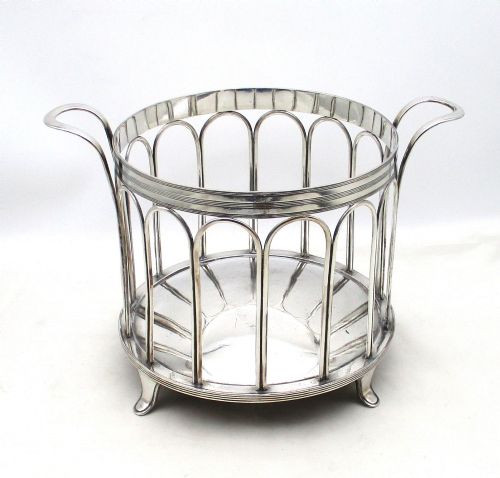
When you search for silver plated wine stands, you encounter a variety of table coasters, bottle holders, and decanter rests spanning several centuries. The selection ranges from early nineteenth-century George III examples through Victorian and Edwardian pieces up to mid-twentieth-century designs.
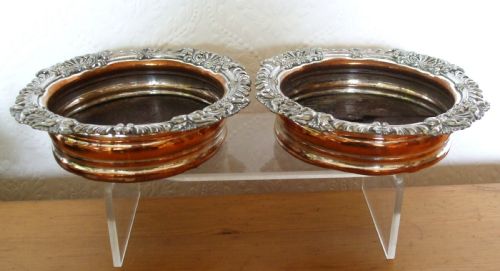
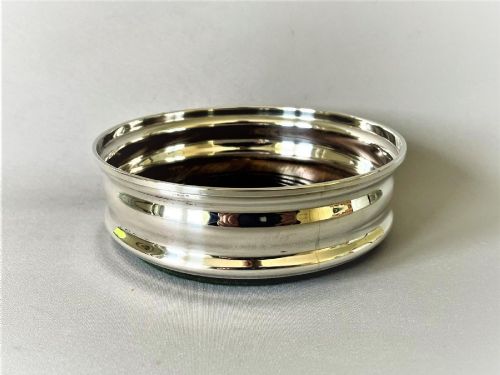
The most common forms on this page are circular bottle coasters, often found in pairs or sets, alongside larger multi-bottle holders and presentation bowls. These pieces served the practical purpose of sliding along the dining table during port and wine service while protecting the polished wood underneath.
Materials and Construction Methods
Makers utilised silver plate over copper, with many early pieces produced using the Old Sheffield Plate technique, which fuses a thin layer of silver to a copper base. This method often reveals the warm reddish copper tone beneath worn highlights along the rims and edges.
Wooden bases, particularly turned mahogany, appear frequently inside the metal galleries to support the bottles and dampen sound when placing decanters down. Some examples incorporate turned wood entirely alongside metal mounts, or integrate ceramic elements like Staffordshire china.
Listings feature silver plated wine stands spanning the Georgian, Victorian, and Edwardian periods, constructed from silver plate, copper, and turned mahogany.
Distinctions in Quality
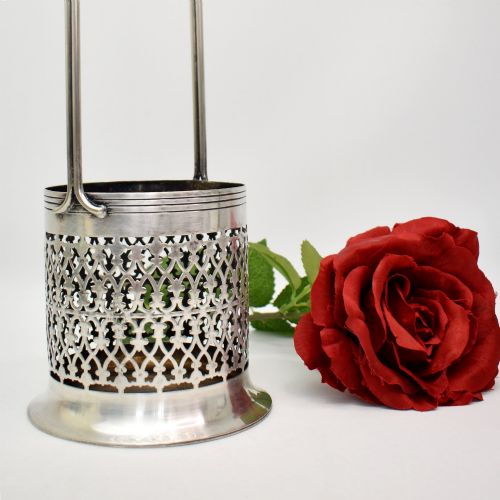
The distinction between standard production and the finest work lies in the crispness of the chased or pierced ornamentation along the gallery walls. Superior pieces retain deep, clean detailing in floral, scroll, or neoclassical motifs without softening from excessive polishing over the decades.
Construction solidity also defines the upper tier, where heavy gauges of silver plate and robust turned wooden bases ensure the stand remains rigid and balanced. Maker attribution, particularly pieces bearing marks from notable workshops, elevates the standing of an individual item.
Brook & Son Edinburgh·Christofle·WMF·Matthew Boulton
The Silver Plated Wine Stands Glossary
- Old Sheffield Plate
- An early method of fusing silver to a copper ingot before rolling them into sheets. This technique predates electroplating and leaves characteristic copper edges.
- Gallery
- The pierced or solid vertical wall surrounding the base of a coaster or stand. It keeps the bottle contained while allowing the label to remain visible.
- Coaster
- A small portable tray or stand designed to hold a wine bottle or decanter. They were traditionally slid across the mahogany table after dinner.
- Decanter
- A vessel used for holding and serving wine, typically paired with a matching coaster. These often feature cut glass and a stopper.
- Presentation Bowl
- A larger open vessel in silver plate used for cooling multiple bottles or displaying fruit. These share construction methods with standard wine stands.
Silver Plated Wine Stands: Frequently Asked Questions
How were silver plated wine stands used?
These stands were placed on dining tables during and after meals to hold wine bottles and decanters. Diners slid them across the polished wood surface to pass drinks down the table.
The raised galleries kept bottles secure while moving, and the base protected the table finish from condensation or drips.
What is Old Sheffield Plate?
Old Sheffield Plate is an early composite material made by fusing a thin sheet of silver onto a thicker copper base. Smiths then rolled the combined metal into sheets to fashion coasters and holloware.
Over long periods of use, the silver layer wears thin on high points, revealing the reddish copper underneath.
How do I date an antique wine stand?
Dating relies on stylistic clues such as the neoclassical motifs of the Georgian period, the flowing lines of Art Nouveau, or the geometric forms of the nineteen-thirties. Maker marks and construction techniques also provide clear indicators of age.
Examining whether a piece uses Old Sheffield Plate or later electroplating helps narrow down the production era.
Can I use these stands for modern wine bottles?
Most antique coasters accommodate standard wine and champagne bottles, though exceptionally wide modern bottles might not fit standard nineteenth-century dimensions. Measuring the internal diameter of the gallery ensures compatibility with contemporary bottles.
They function well on modern dining tables just as they did historically.