



Vintage Bottle Frame
A vintage bottle frame holds glass vessels securely in silver plate, oak or mahogany for the dining table or sideboard.
Vintage Bottle Frame
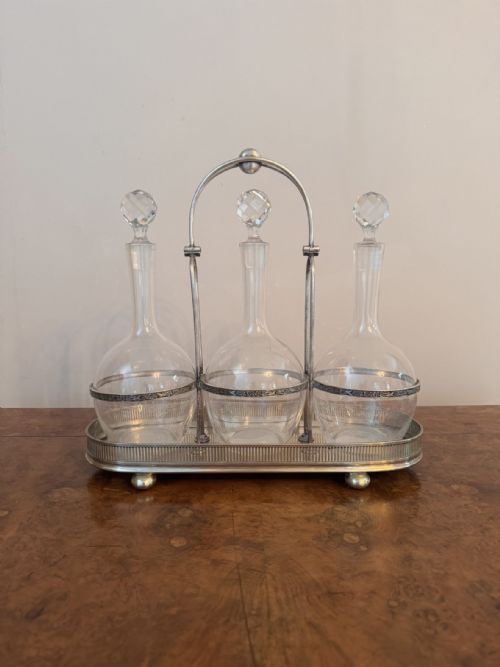
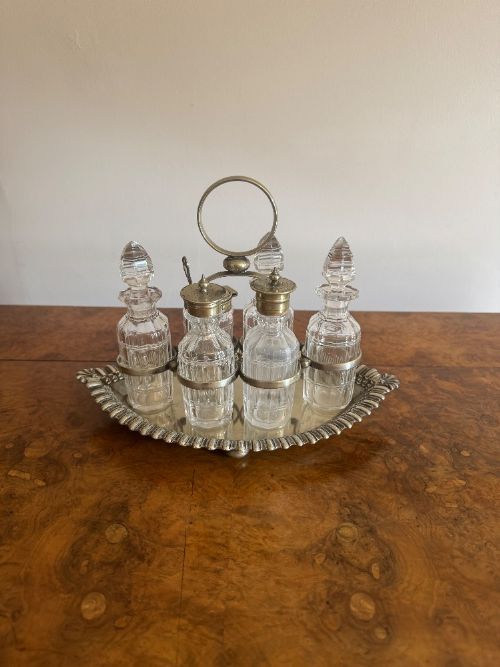
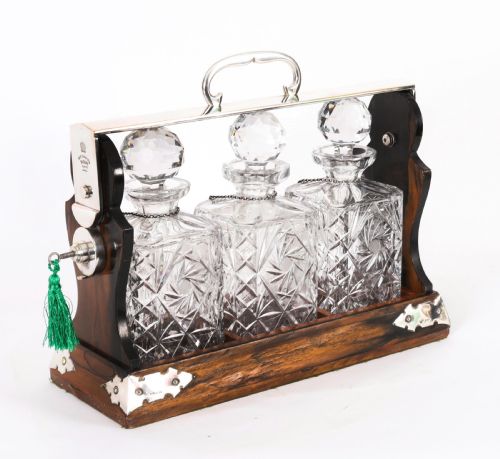
When you search for a vintage bottle frame, you encounter metal, wood and glass assemblies designed to hold multiple glass bottles together in a single stand. These pieces span Georgian, Victorian, Edwardian and later periods, functioning primarily as cruet sets, decanter stands and tantalus units.
Beyond tableware, the category also encompasses decorative bottle holders, perfume atomiser stands, and French demijohn carboys housed in iron baskets.
Materials and construction methods
Makers utilised durable hardwoods such as oak, mahogany and exotic coromandel for the structural bases and frames, frequently pairing them with robust silver plate, Old Sheffield plate or solid silver mounts.
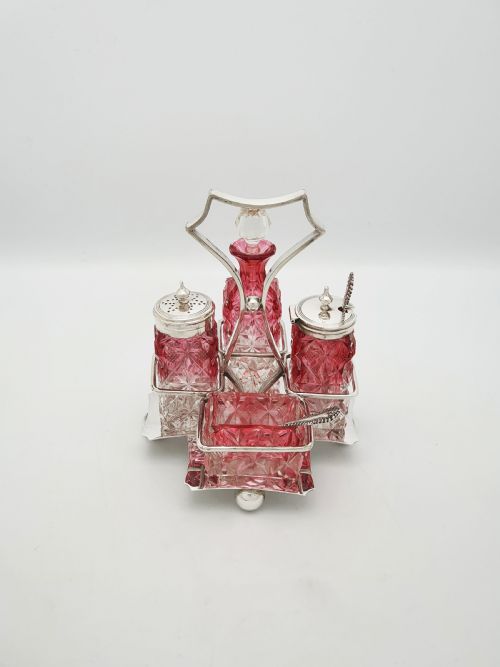
The glass elements involve heavy cut glass, crystal, cranberry flashed glass, and moulded bottles, often shaped to fit precisely into bespoke metal collars or wooden dividers.
Locking mechanisms on tantalus units and hinged handles on cruet frames required precise metalworking to ensure the frames secured the bottles safely during transit.
Listings feature items spanning the eighteenth century through to the mid-twentieth century, utilising oak, mahogany, cut glass, brass and silver plate.
Assessing quality in bottle frames
Quality rests upon the weight and thickness of the silver plating or the density of the hardwood chassis, where heavier gauge metals and well-figured timber distinguish finer productions from standard domestic items.
The integrity of the glass components matters significantly, with deeply hand-cut crystal bottles matching the quality of the stand holding them, rather than later or mismatched replacements.
Ingenuity of design, such as functioning locking bars with working keys on a tantalus or intricate pierced metalwork on a cruet stand, elevates the standing of an individual piece.
Betjemann·Elkington·The Goldsmith Co·Irene Christobelle Pownoll Williams·James Kerr McArthur
The Vintage Bottle Frame Glossary
- Cruet set
- A matched collection of glass bottles or cruets mounted in a frame for holding condiments, oil, vinegar, salt and pepper at the dining table.
- Tantalus
- A locked wooden or metal frame displaying decanters securely behind a bar while preventing unauthorized access to the contents.
- Old Sheffield plate
- An early form of composite metal made by fusing a thin sheet of silver to a thicker copper base before shaping.
- Cranberry flashed glass
- Glass featuring a thin exterior layer of rich pinkish-red glass over a clear glass body, common in Edwardian tablewares.
- Coromandel
- A dense, heavily figured tropical hardwood imported from Asia, prized for dark grain patterns in high-end Victorian boxes and frames.
Vintage Bottle Frame: Frequently Asked Questions
What is a tantalus?
A tantalus is a locking bottle frame that holds decanters securely in place while keeping the contents visible yet physically barred from casual access.
Originating in the Victorian era, these units used a hinged wooden or metal bar secured by a key to prevent household staff or guests from helping themselves to spirits.
How do I date an oak bottle frame?
Dating an oak frame relies on examining the construction methods, hardware design, and the style of any silver-plated mounts attached to the wood.
Earlier pieces from the Georgian and Victorian periods feature hand-cut joinery and heavy silver plating, whereas Edwardian and 1930s examples often display machine-tooled screws and simpler decorative surrounds.
What were cruet sets used for?
Cruet sets served as portable condiment holders placed centrally on dining tables during the eighteenth and nineteenth centuries.
They contained individual glass bottles for oil, vinegar, mustard, and sauces, allowing diners to season their food without reaching across the table.
How do I clean silver-plated frames?
Cleaning silver-plated frames requires a soft cloth and a gentle, non-abrasive silver polish formulated to protect thin metal platings from wearing away.
Avoid submerging wooden bases or locking mechanisms in water, applying cleaning agents strictly to the metal components while keeping moisture away from glued or joined sections.