




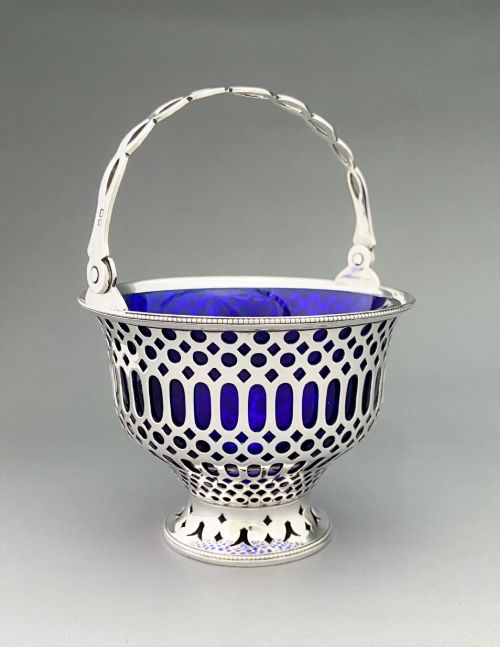
Silver Swung Handle Dish
A silver swung handle dish brings tactile grace to a table, offering an arched grip above pierced or solid metalwork designed for fruit, sugar or small morsels.
Silver Swung Handle Dish
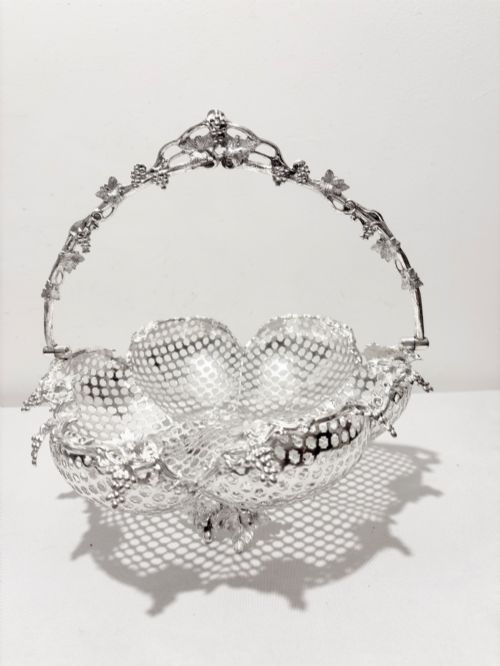
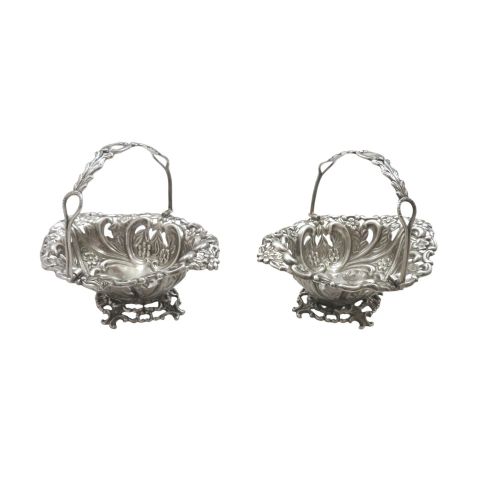
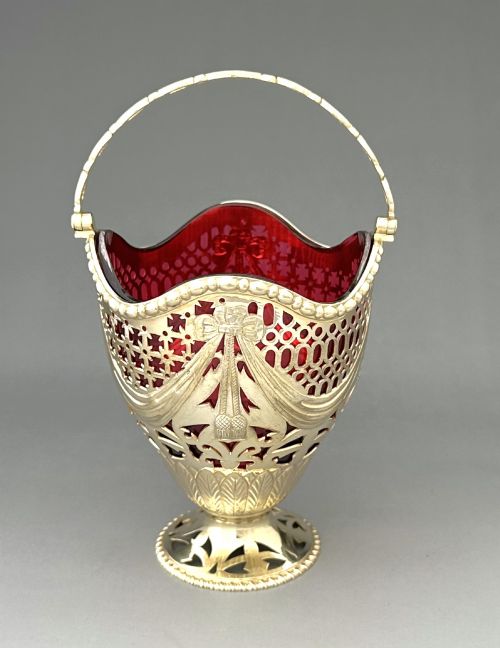
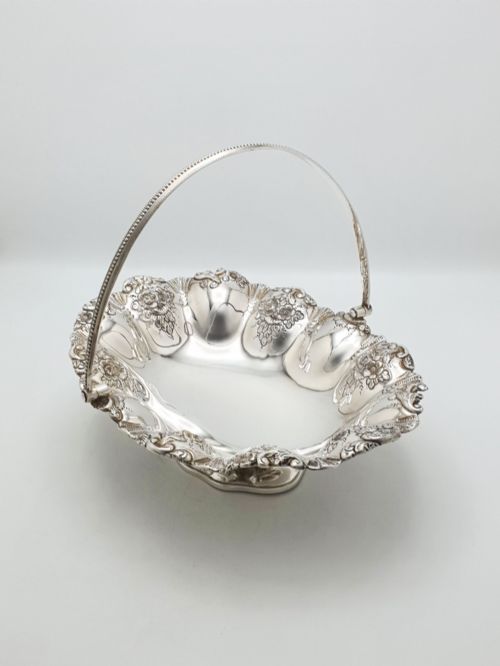
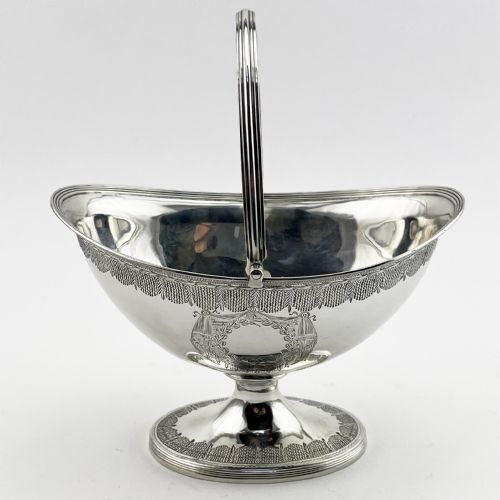
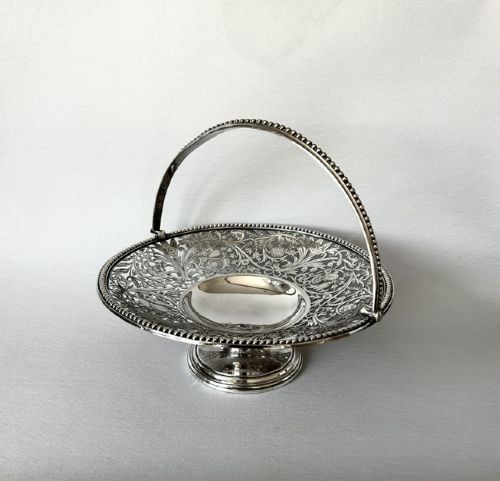
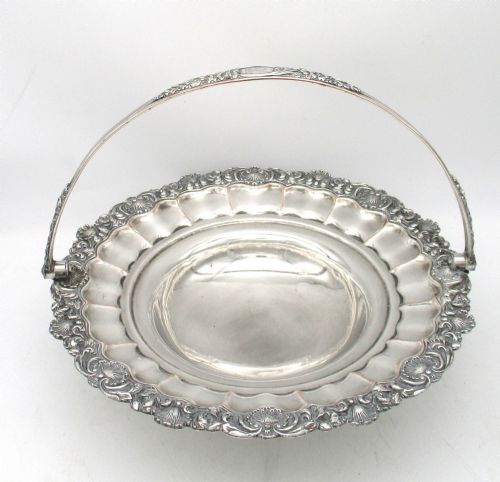
When you search for a silver swung handle dish, you encounter decorative tableware designed for serving sugar, fruit, bonbons or cakes across various eras. These pieces typically feature a movable arched handle mounted on pivots above a bowl, basket or dish form.
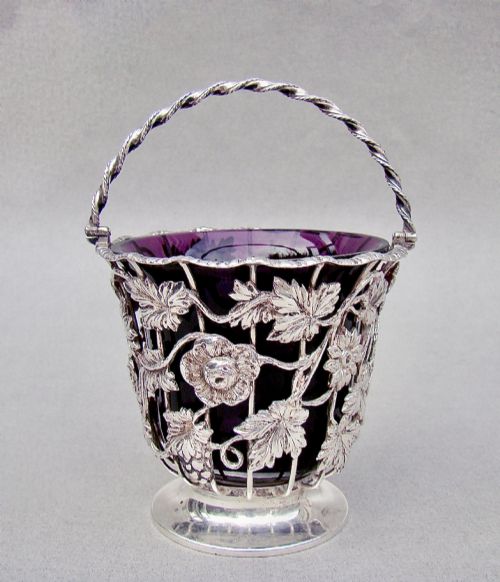
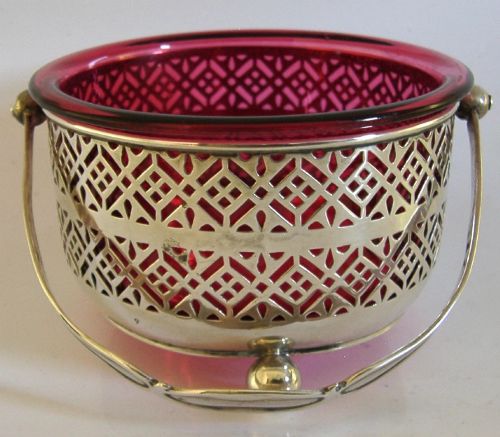
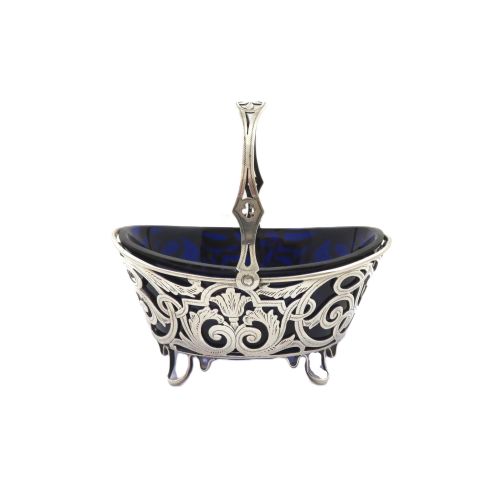
The selections span from Georgian and Victorian times into the Edwardian period and the early twentieth century. Common forms include sugar baskets, fruit bowls, cake baskets and sweet bowls, sometimes accompanied by coloured glass liners in cranberry, ruby or cobalt hues.
Originating largely from British and Irish workshops, these items reflect changing dining rituals from the eighteenth century onward. You meet both solid sterling silver examples and silver plated or Old Sheffield plated alternatives on this page.
Materials and construction methods
Makers utilised sterling silver, silver plate, Old Sheffield plate and electroplated nickel silver as the primary metallic bases for these vessels. Many examples incorporate contrasting materials, pairing the metal framework with blown or moulded glass liners in rich tones.
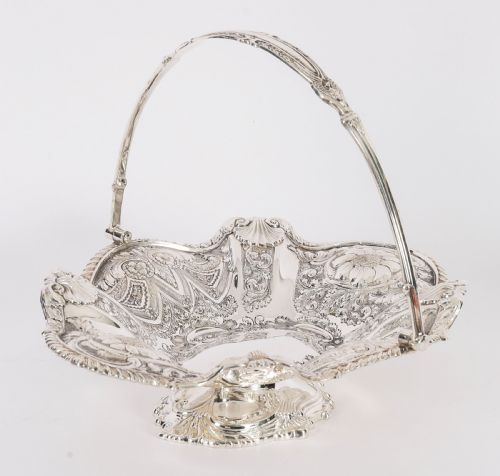
Techniques such as piercing, repoussé embossing, and casting were employed to decorate the body and handle. Pierced work created intricate openwork patterns, whilst repoussé provided raised floral and scroll detailing pushed out from the reverse.
Silver Swung Handle Dish Retail Price Guide 2026
Typical asking prices for silver swung handle dish among the pieces listed under this phrase on Sellingantiques today, from the lower quarter to the upper quarter. They describe what is for sale here now, not the wider market.
Listings feature items spanning from the Georgian era through the Victorian and Edwardian periods into the 1930s.
Distinctions in craftsmanship and design
The quality of a piece often lies in the crispness of its pierced decoration and the weight of the metal utilised. Hand-chased floral repoussé and cast handles with detailed relief work demonstrate superior artisan effort compared to lighter, stamped alternatives.
The integrity of the swing handle mechanism and its pivot joints indicates initial manufacturing standard. Examples retaining original coloured glass liners without chips or replacements hold greater appeal for collectors.
Henry Chawner·Elkington·James Deakin and Sons·George W Scott and Sons Ltd·William Bond
The Silver Swung Handle Dish Glossary
- Swing handle
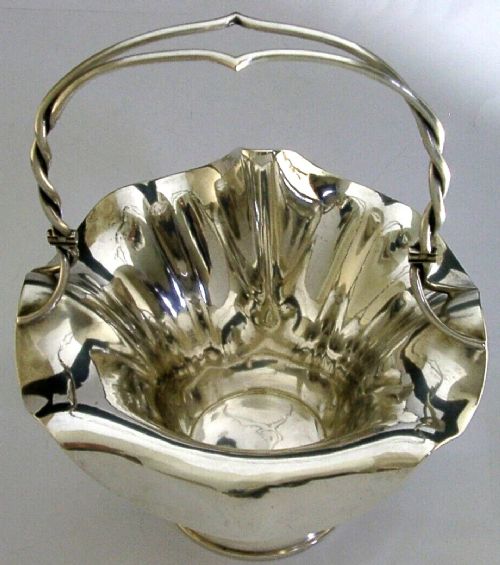
- A movable arched handle attached to the rim of a basket or bowl via small pivot pins. This feature allows the handle to drop flat to either side for easy access or storage.
- Pierced work
- A decorative technique where metal is cut through to create openwork patterns and designs. It lightens the visual weight of silver fruit and cake baskets.
- Repoussé
- A method of ornamentation where metal is hammered from the reverse side to form raised designs on the front. This creates tactile floral and scroll motifs around the rim or body.
- Old Sheffield plate
- An early fused plating method where a thin layer of silver is fused to a copper core before rolling into sheets. It represents a precursor to later electroplating techniques.
- Silver gilt
- Silver coated with a thin layer of gold on its surface, often applied to the interior of bowls and baskets. This finish protected the metal from corrosive food acids.
Silver Swung Handle Dish: Frequently Asked Questions
What was a silver swung handle dish used for?
These vessels served functional roles on formal dining tables for holding loose sugar lumps, sweetmeats, cakes or fresh fruit. The movable handle allowed servants or guests to lift the dish easily during dessert courses.
Over time, their domestic function shifted towards decorative display. Today, they remain versatile centrepieces for holding small items or accenting a sideboard.
How do I identify a Georgian silver basket?
Georgian pieces, dating from the eighteenth and early nineteenth centuries, often exhibit hand-raised bodies with crisp piercing and clear hallmarks denoting London, Chester or Dublin assay offices. Their stylistic cues frequently lean towards classical restraint or early neoclassical motifs.
Examine the construction of the foot and handle joints, as Georgian silversmiths relied on hand-assembly rather than mass production. Maker's marks from notable silversmiths like Henry Chawner or William Bond provide definitive attribution.
Why do some baskets have glass liners?
Glass liners were introduced to protect the metal from the acidic juices of fresh fruit or the moisture of certain foods. Cranberry glass, ruby glass and cobalt glass liners added vibrant colour contrast to the pierced silver framework.
Finding a piece with its original liner intact enhances its completeness. These glass inserts were typically blown and sometimes faceted to catch the light.
How should I care for silver plated baskets?
Maintenance requires gentle cleaning with a soft cloth and a reputable silver polish formulated for plated items. Avoid abrasive materials that can wear through the thin silver layer down to the base metal.
When displaying pieces with glass liners, remove the glass during cleaning to prevent moisture trapping. Store them in a dry environment to minimise tarnishing.