

Silver Standing Frame
These silver standing frame pieces bring character to a room while holding portraits and photographs securely on desks and mantelpieces.
Silver Standing Frame
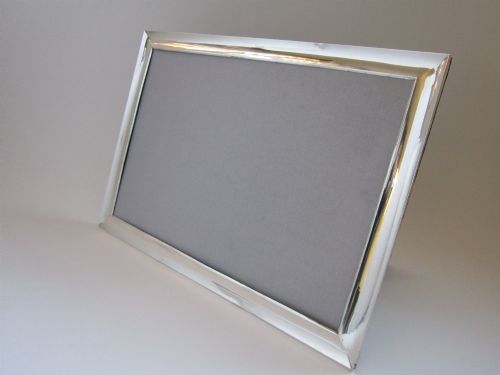
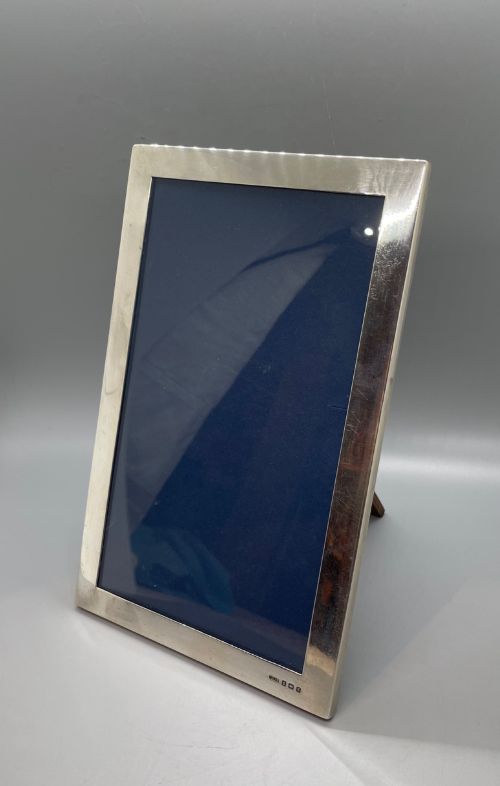
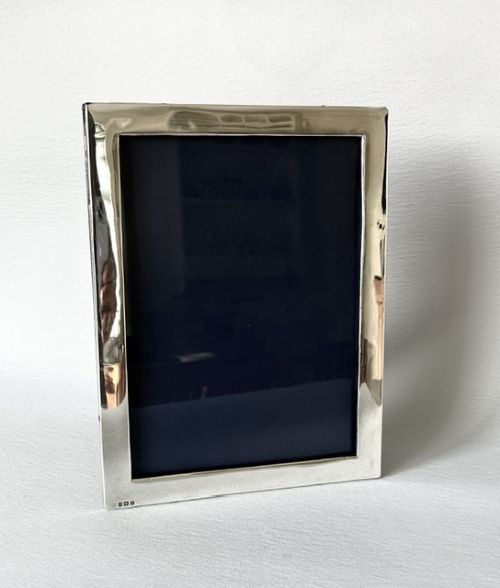
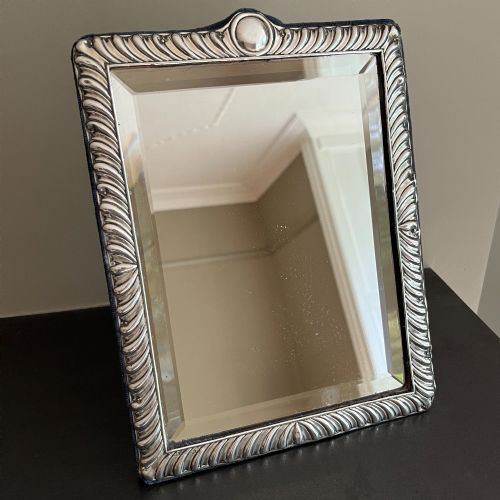
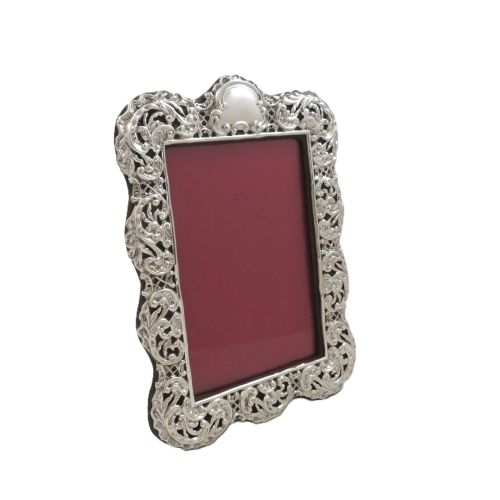
A silver standing frame is a desk or tabletop accessory designed to display a photograph, portrait or mirror upright using an integral support strut at the back. These items appear most frequently from the Victorian, Edwardian and Art Deco periods, spanning the late nineteenth and early twentieth centuries.
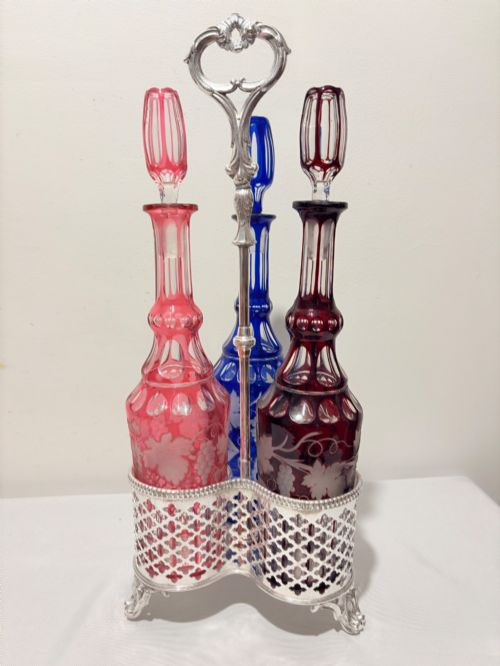
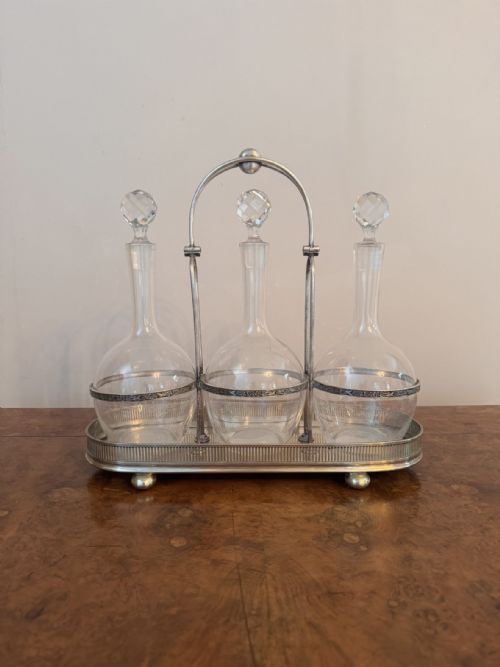
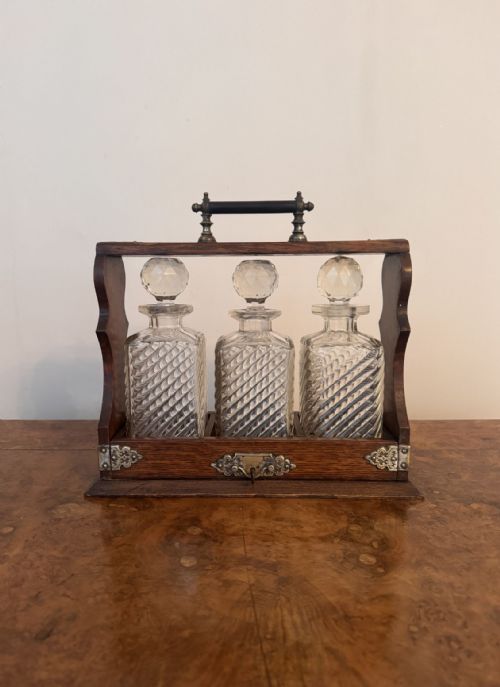
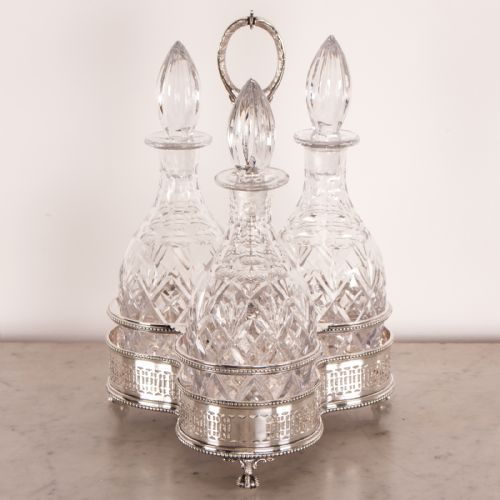
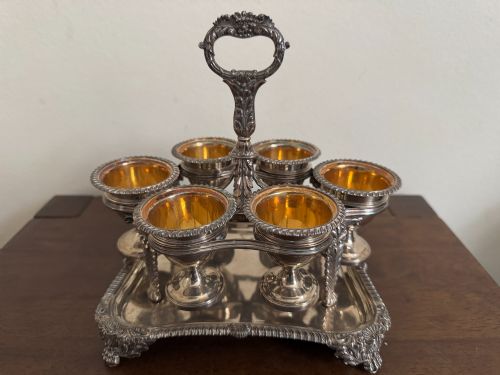
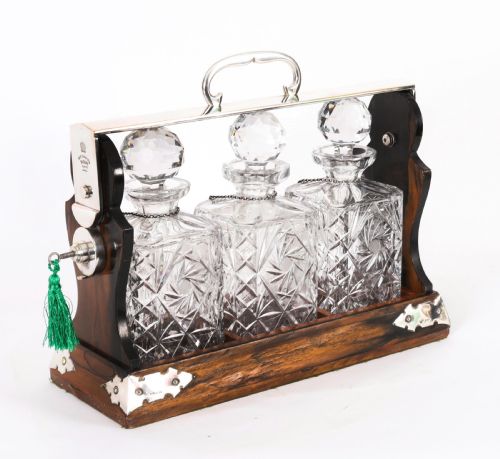
The physical form ranges from small round or oval surrounds to large rectangular formats, often accompanied by related items on stands such as cruet sets, decanters in tantalus frames, and dressing table mirrors. Materials extend beyond metal to incorporate wood, glass, leather and velvet backing boards.
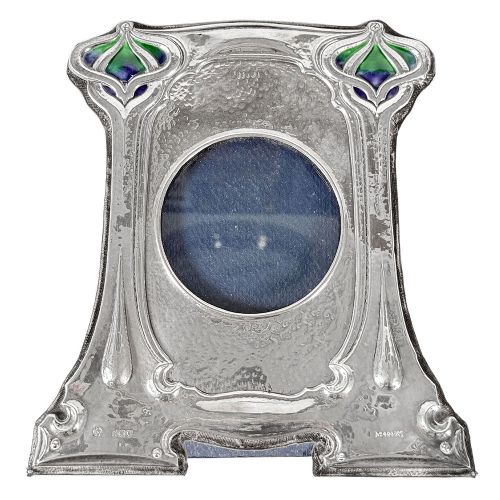
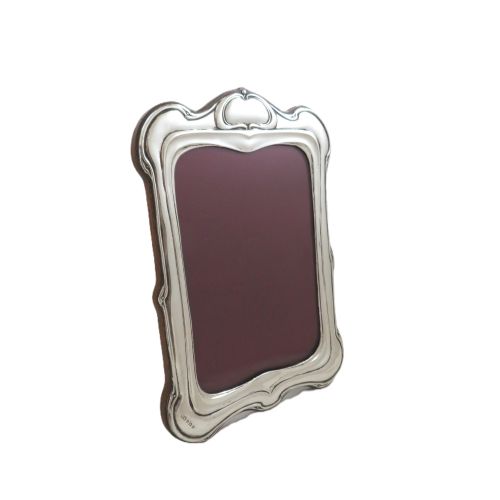
Makers utilised various decorative vocabulary, including embossed floral borders, piercing, engine-turned patterns and distinctive Art Nouveau or Arts and Crafts styling. Examples emerge in sterling silver, silver plate and nickel silver across different sizes.
Materials and construction methods
Silversmiths shaped sterling silver or silver plate over wooden templates, incorporating materials like oak, velvet and leather to construct the rigid backing and structural support struts. Cut glass and crystal components appear in related stands, fitted securely into metal frameworks.
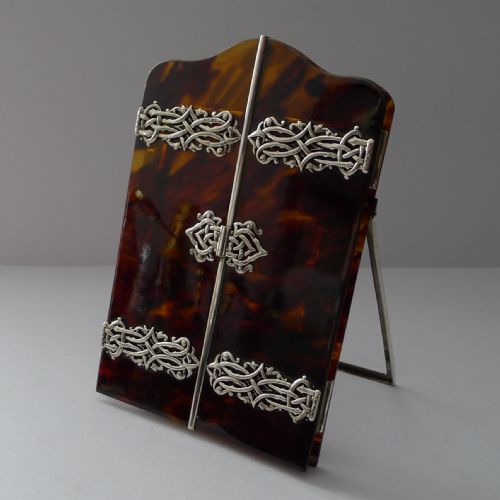
Decoration relied on manual techniques such as embossing, piercing and engine-turning to create surface patterns on the metal. Enamel accents and mounted tortoiseshell panels were also applied to the silver borders to add colour and texture.
Listings feature items incorporating oak, cut glass, tortoiseshell, leather and velvet alongside sterling silver and silver plate.
Distinctions in quality and execution
Quality rests on the crispness of the chased or embossed decoration and the weight of the metal utilised in the construction. Heavier gauge sterling silver maintains its structural integrity better than lighter silver plate or nickel alternatives.
The integrity of secondary materials dictates overall merit, particularly the condition of the original wood backing, leather supports and velvet linings. Intricate details such as hand-applied enamel or careful piercing separate standard commercial output from finer workshop productions.
William Hutton And Sons·Walker And Hall·Mappin Brothers·Charles Thomas Fox·William Burwash
The Silver Standing Frame Glossary
- Strut
- The hinged leg or support attached to the back of a frame that allows it to stand upright on a flat surface.
- Hallmark
- An official stamp applied to precious metals indicating the standard of purity, the assay office, and the date of production.
- Engine-turned
- A geometric surface pattern mechanically engraved into metal using a lathe.
- Cruet set
- A collection of glass bottles for condiments mounted together within a matching metal stand.
- Pierced work
- Metal cut through with a pattern or design to create an openwork decorative border.
Silver Standing Frame: Frequently Asked Questions
How do I date a silver frame?
Dating relies primarily on the assay office hallmarks stamped into the metal, which indicate specific years of production.
Stylistic indicators such as Edwardian floral embossing or Art Deco geometric shapes also help narrow down the period of manufacture.
What is a strut back?
The strut back is the hinged support arm attached to the rear of the frame that props the item up on tables.
These supports are frequently covered in dark velvet, leather or wood, matching the internal backing board.
Can these frames be polished?
Silver and silver-plated surfaces can be maintained with a soft cloth and appropriate metal cleaner to remove tarnish over time.
Care must be taken around delicate inset materials like tortoiseshell, enamel or glass panels during cleaning.