



Silver Spoon and Fork Set
A silver spoon and fork set brings tactile elegance to dining and gift-giving, spanning intimate christening collections to grand canteens.
Silver Spoon and Fork Set
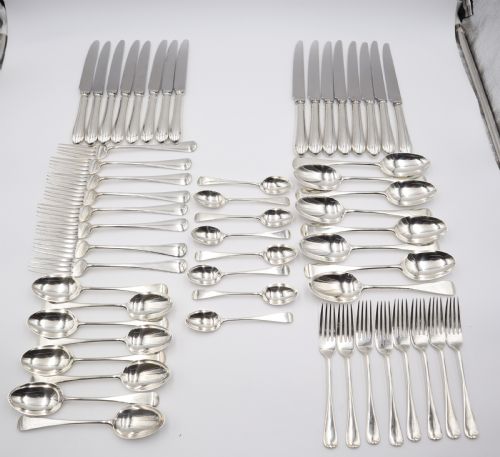
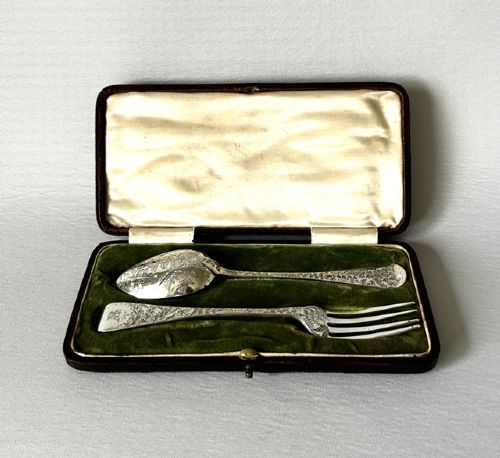
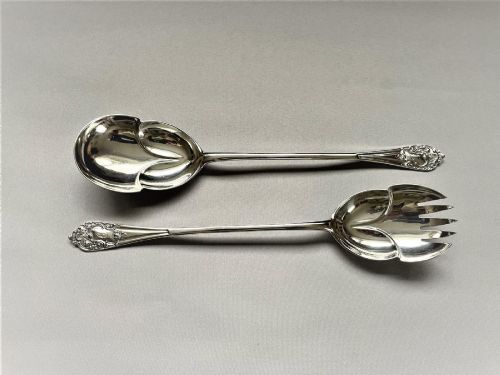
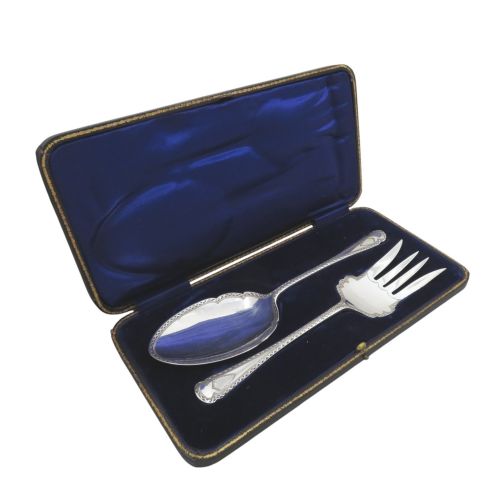
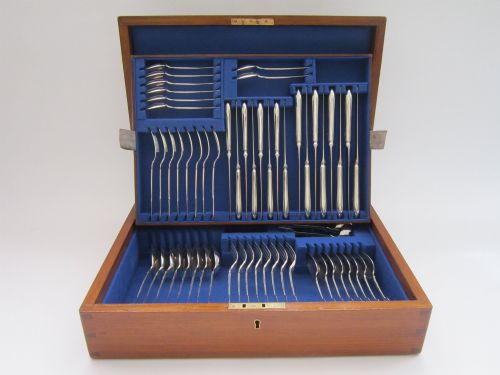
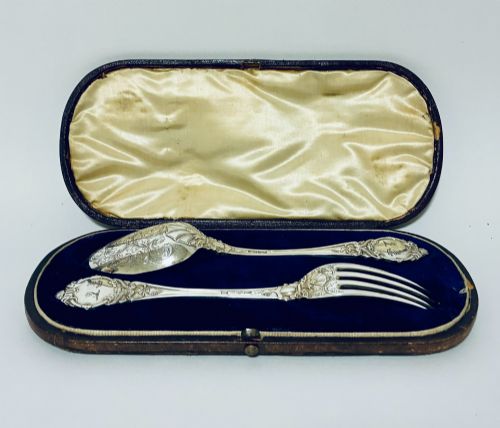
A silver spoon and fork set encompasses matching or paired eating implements, most frequently encountered in this inventory as Victorian and Edwardian christening sets, salad servers, or larger canteens for twelve persons. Buyers seeking these combinations will discover individual dining pairs, three-piece child sets, and specialised serving utensils housed in fitted boxes.
The selections range from George III and Georgian dining utensils to mid-century utilitarian items and Russian Revival cloisonne pieces. Many configurations include protective cases lined with velvet, silk, or leatherette to preserve the silver surfaces when not in use.
Materials and construction methods
Objects in this category are fashioned primarily from sterling silver, solid silver, or silver plate, occasionally incorporating secondary materials such as steel for knife blades, glass bowls, horn, mahogany, and leather for fitted cases. Techniques span traditional silversmithing, rat tail reinforcement, and detailed enamel work.
Handles and stems display various regional patterns, including the distinct fiddle pattern, while specialised serving sets integrate organic elements like horn with silver mountings. Maker techniques reflect the period standards of workshops operating in London, Sheffield, and Chester.
One versatile pocket tool appears disguised as a multi-bladed camping knife bearing the Jowika maker name.
Judging the quality of silver cutlery
Quality rests upon the weight and gauge of the silver used in the spoon and fork, alongside the crispness of the handle ornamentation and any engraved detailing. Pieces displaying substantial metal thickness maintain their structural integrity through centuries of use.
The integrity of the original fitted case, whether lined in velvet, silk, or leather, contributes significantly to the desirability of a set. Preservation of maker marks, clear hallmarks, and undamaged enamel work further distinguish superior examples from standard production.
Walter and John Barnard·Thomas Harwood and Co·John Round·Martin and Hall
The Silver Spoon and Fork Set Glossary
- Sterling silver
- An alloy consisting of ninety-two point five percent silver and seven point five percent other metals, usually copper, chosen for durability in tableware.
- Fiddle pattern
- A nineteenth-century flatware handle design characterised by a narrow stem broadening into a shoulder and a square-topped terminal resembling a violin.
- Rat tail
- A strengthening tongue of metal extending from the underside of a spoon bowl down the neck of the stem, common on earlier server designs.
- Cloisonne
- An enamelwork technique where thin metal wires are soldered to the silver base to form compartments filled with coloured vitreous paste.
Silver Spoon and Fork Set: Frequently Asked Questions
What is a christening set?
A christening set typically comprises a matched silver spoon and fork, sometimes accompanied by a knife, presented in a fitted box as a traditional gift for a newborn or infant.
These pieces were designed for daily childhood use or kept as heirloom keepsakes, frequently bearing engraved initials or birth dates from the Victorian and Edwardian eras.
How do I identify a salad server set?
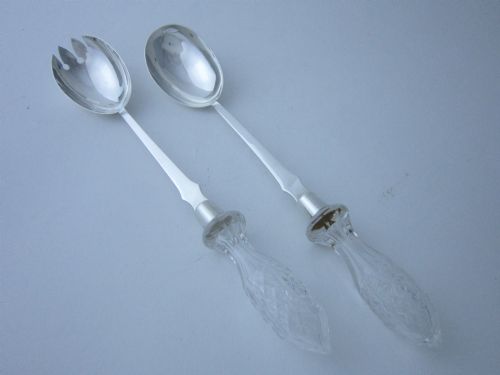
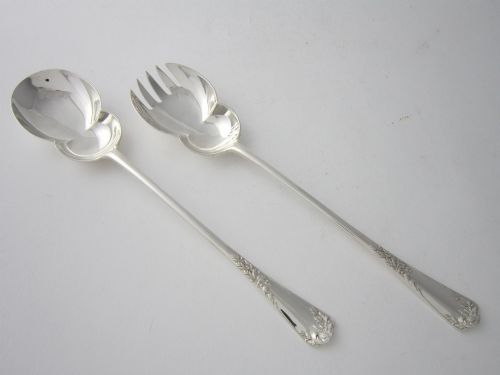
Salad servers consist of a notably large serving spoon and a matching fork, often with elongated handles and deep bowls suited to tossing and portioning greens.
Materials in this inventory include sterling silver paired with glass bowls, horn handles, or turned mahogany stems dating back to the Georgian and Edwardian periods.
How should I clean antique silver?
Antique silver requires gentle maintenance using appropriate cloths and mild cleaning agents formulated specifically for precious metals to avoid removing surface details.
Harsh abrasives and chemical dips can damage the delicate hallmarks, enamel work, or patination accumulated on Victorian and Georgian items over generations.