
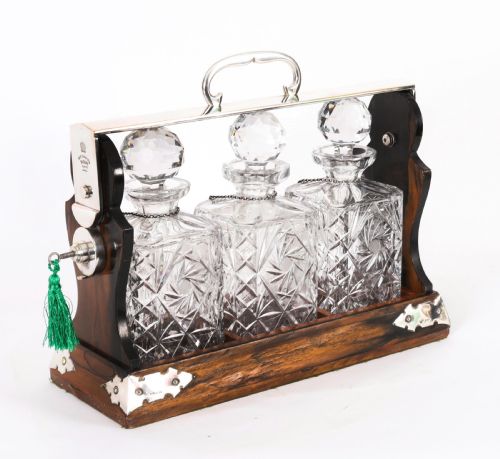


Silver Spirit Decanter Stand
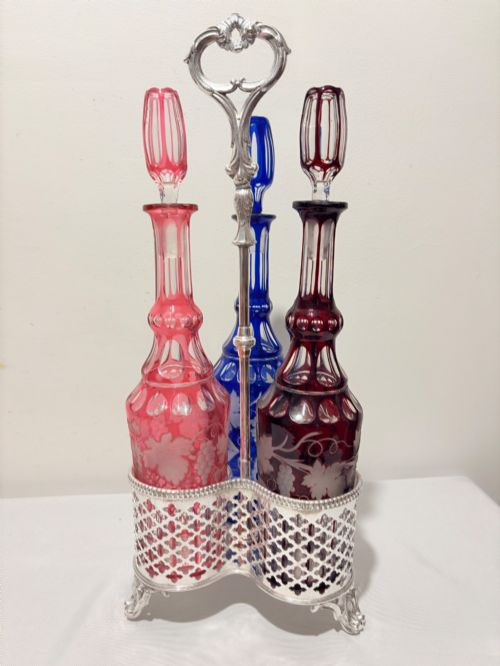
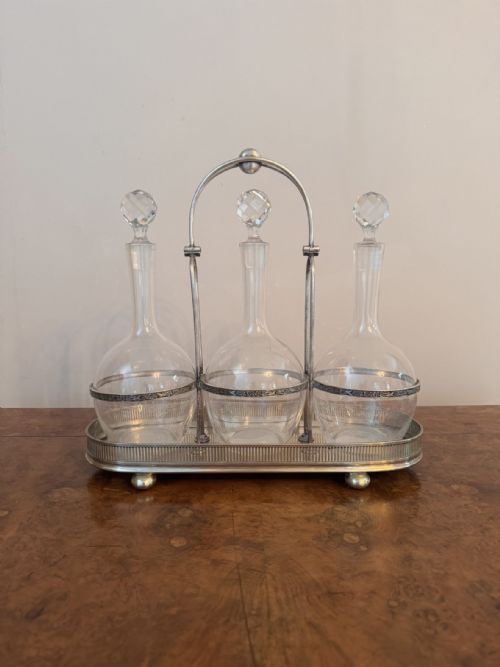
A silver spirit decanter stand brings order and theatre to after-dinner hospitality, holding crystal vessels securely within an ornate metal frame.
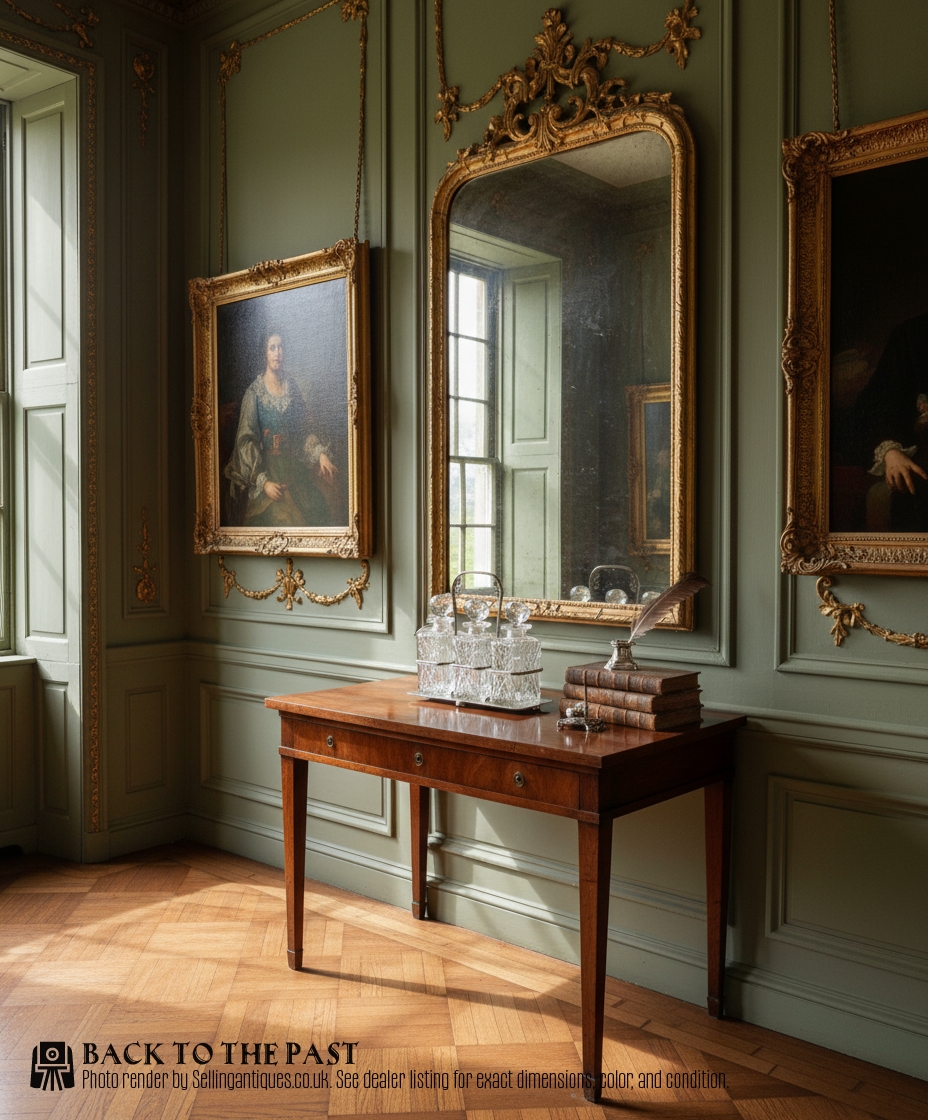
Silver Spirit Decanter Stand
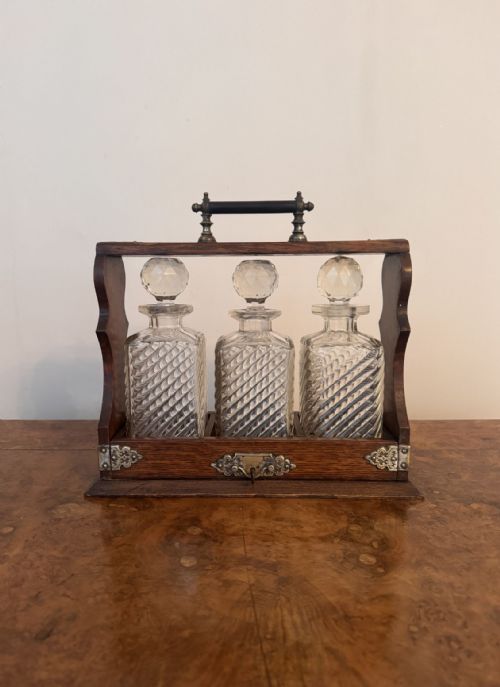
A silver spirit decanter stand arranges glass bottles within a secure metal or wooden frame, often designed for locking mechanisms known as tantalus units. When collectors search for a silver spirit decanter stand, they typically encounter Victorian and Edwardian iterations featuring silver plate, oak, and cut crystal.
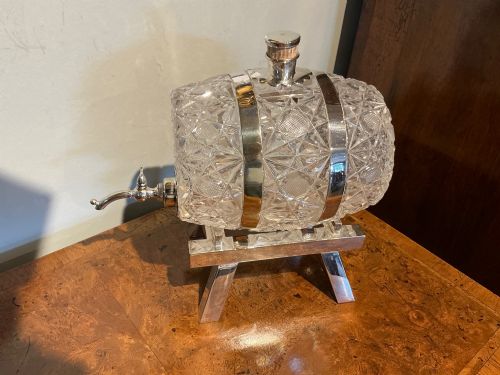
The objects span open bottle frames, multi-bottle cruets, and elaborate locking boxes fitted with games compendiums or spirit barrels. Most surviving examples rely on silver plated frames paired with heavy cut glass or crystal decanters.
Originating largely from the nineteenth and early twentieth centuries, these pieces served as functional barware in domestic dining rooms and libraries. The selection ranges from simple two-bottle stands to complex three-bottle oak and coromandel frameworks.
Judging Quality and Execution
Quality rests in the weight and clarity of the cut crystal decanters and the thickness of the silver plating on the structural frame. Finer examples retain their original matching bottles and functional locking mechanisms with matching keys.
Design complexity also separates standard utility items from top-tier exhibition pieces, such as those incorporating coromandel veneer, games compendiums, or patent security bars by notable makers.
Victorian travellers enjoyed portable refreshment via novelty spirit barrels and locking cases built for bumpy carriage rides.
Betjemann’s·Elkington·The Goldsmith Co.·Hukin and Heath·Philip Ashberry·Mappin Brothers
The Silver Spirit Decanter Stand Glossary
- Tantalus
- A locking spirit stand that keeps bottles secure within a metal bar framework while displaying their contents. The design prevents pouring until the locking mechanism is released with a key.
- Silver Plate
- A base metal, such as copper or Britannia metal, coated with a thin layer of silver. This technique allowed makers to achieve the appearance of solid silver at a lower production cost.
- Old Sheffield Plate
- An early form of plate created by fusing a sheet of silver to a copper core before rolling them together. This method results in a durable material often seen on nineteenth-century barware.
- Coromandel
- A dense, heavily figured timber imported from Asia and used for luxury Victorian boxes and tantalus frames. Its rich dark grain makes it highly sought after by collectors.
- Cut Crystal
- Glass containing lead oxide, cut and polished with geometric facets to increase brilliance and weight. It forms the standard material for decanters housed in period stands.
Silver Spirit Decanter Stand: Frequently Asked Questions
How do I secure a tantalus?
A locking handle or side bar swings down over the stoppers to block them from being removed. Turning the key engages the internal mechanism, securing the bar in place.
Most surviving pieces rely on a small brass or steel lock set into the wooden base or upright frame. Finding an example with a working key adds significantly to its practical utility.
Are the decanters usually original?
Many pieces retain their matched cut glass or crystal decanters, though replacements are common due to breakage over the decades. Inspecting the neck and base facets helps determine if the bottles match the wear patterns of the frame.
Original bottles often fit the individual slots precisely and share the same period of manufacture as the silver plated stand.
How should I clean the silver plate?
Clean silver plated frames gently with a non-abrasive silver polish and a soft cloth to avoid wearing through the plating to the base metal. Avoid harsh chemical dips, which can damage soldered joints and decorative engraving.
Wash the glass decanters separately in warm, soapy water, using bottle brushes carefully to preserve any interior residue or delicate cut facets.
What is the difference between a cruet and a tantalus?
A cruet generally refers to an open frame designed for condiments, oil, vinegar, or smaller bottles with easy access. A tantalus specifically incorporates a locking mechanism to restrict access to alcoholic spirits.
Both forms utilise silver plated frames and cut glass bottles, but the tantalus prioritises security and after-dinner presentation.