
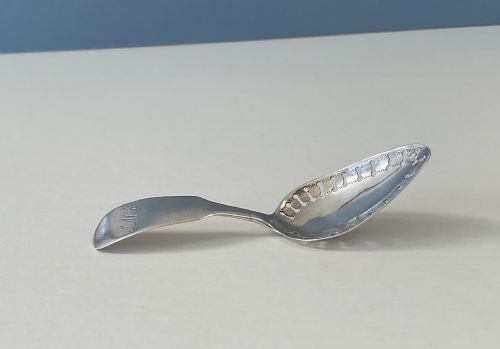


Silver Shovel Spoon
These silver shovel spoons are delightful miniature implements, prized by collectors for their charming form and practical role in dispensing dry tea leaves.
Silver Shovel Spoon
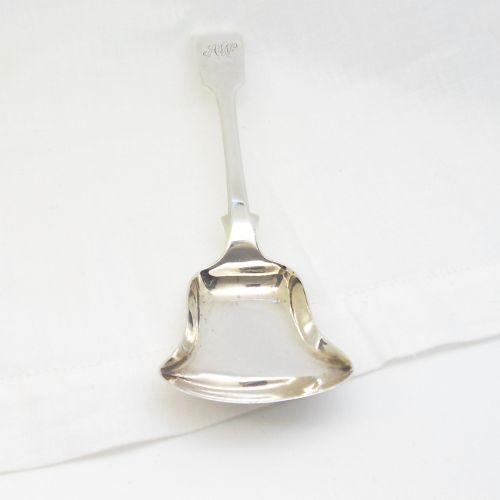
A silver shovel spoon is a specialised small implement, most commonly encountered as a tea caddy spoon or sugar shovel designed for precise measuring. These pieces emerge primarily from the Georgian, Victorian, and Edwardian eras, with occasional appearances from the 1920s and 1940s.
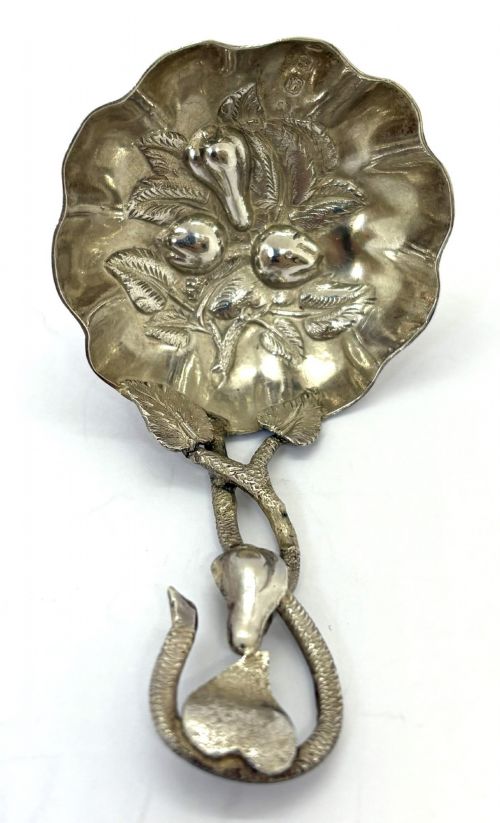
The form typically mirrors a miniature shovel or spade, sometimes featuring a flat bowl with embossed floral or scroll decoration. Buyers find these items grouped among tea accessories and wider silver cutlery, reflecting their domestic heritage.
How they were made
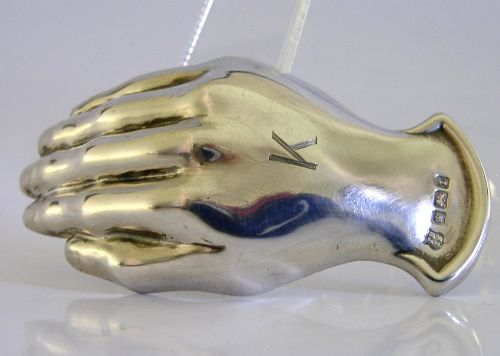
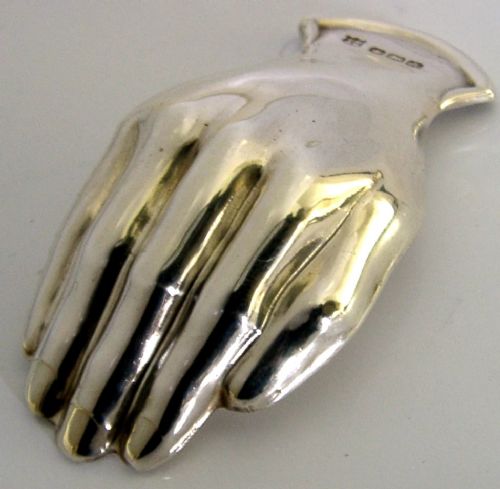
Makers fashioned these pieces from sterling silver, occasionally applying parcel-gilt or silver-gilt finishes to enhance the bowl interior. Silversmiths utilised traditional techniques of hammering and stamping to create the characteristic flat shovel blade and decorative handles.
Provincial and London workshops stamped their creations with assay office marks, providing clear records of origin and date of manufacture.
What varies in quality
The distinction between standard examples and superior pieces rests on the crispness of the chasing and the individuality of the handle design. Novelty forms, such as those shaped like human hands, demonstrate higher sculptural ambition than plain shovel bowls.
Maker attribution and legible hallmarks significantly elevate an item's standing, separating anonymous provincial work from documented silversmith production.
John Walton·Mappin & Webb·Georg Jensen·George Unite·Josiah Snatt·Joseph Taylor·George Wintle
The Silver Shovel Spoon Glossary
- Caddy spoon
- A short-handled spoon specifically designed for scooping loose tea leaves from a caddy into a teapot. These small utensils became popular in the eighteenth century alongside the rise of tea-drinking culture.
- Parcel-gilt
- A method where only specific portions of a silver object receive a thin coating of gold. This technique highlights particular decorative details against the white silver ground.
- Assay mark
- An official stamp applied to precious metals to guarantee their standard of purity. These marks usually include a maker's mark, a standard mark, and a date letter.
Silver Shovel Spoon: Frequently Asked Questions
What is a silver shovel spoon used for?
These miniature implements were primarily created to measure out loose tea leaves from storage caddies into pots during the eighteenth and nineteenth centuries. Their shallow, broad bowls made them equally suitable for transferring granulated sugar.
Today, modern collectors prize them as decorative display items or utilise them for their original purpose during afternoon tea gatherings.
How do I date an antique silver spoon?
Dating relies heavily on the hallmarks stamped directly onto the silver, which include specific symbols and letters corresponding to assay office records. Stylistic clues, such as the presence of Georgian scrollwork or Edwardian novelties, provide further context.
Examining the shape of the shovel blade and the manufacturing technique also helps narrow down the period of creation.
Are these spoons made of solid silver?
The majority of pieces encountered are formed from solid sterling silver, bearing the appropriate lion passant or equivalent purity marks. Some examples feature parcel-gilt or full silver-gilt surfaces, where a layer of gold covers the silver base.
Plated versions do appear occasionally among nineteenth-century novelty items, though solid metal remains the standard for antique caddy spoons.
How should I display silver shovel spoons?
Due to their small size and distinct shovel profiles, these spoons suit shallow cabinet displays or specialised collector trays where the handles remain visible. Keeping them enclosed helps slow down natural tarnishing processes.
Their compact dimensions allow them to sit comfortably alongside vintage tea sets or within dedicated silver collections.