


Silver Service Set
A silver service set brings together matched pieces for dining, tea or condiment use, offering both practical utility and period elegance.
Silver Service Set
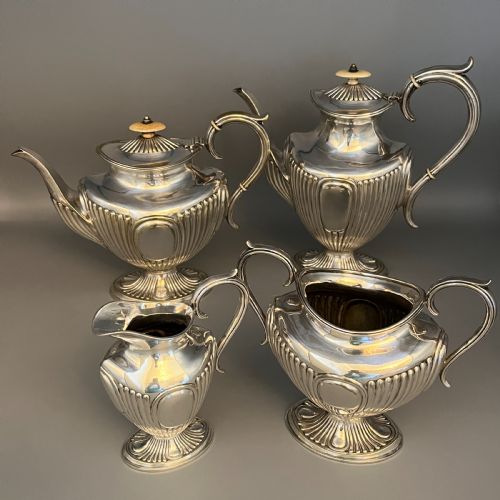
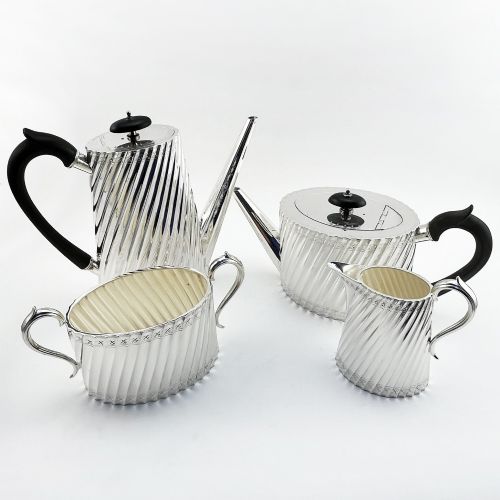
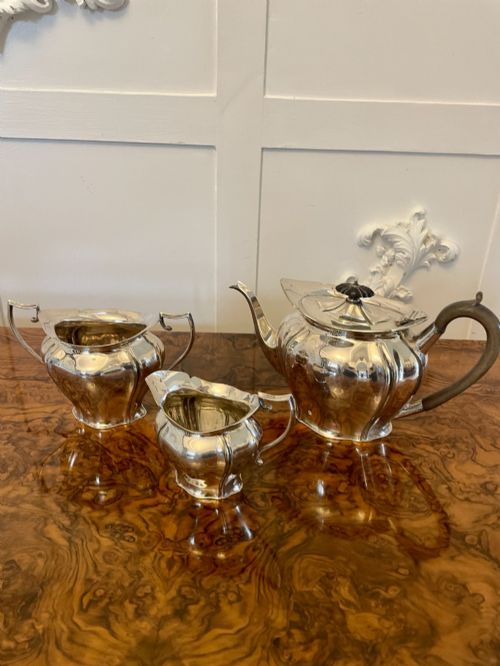
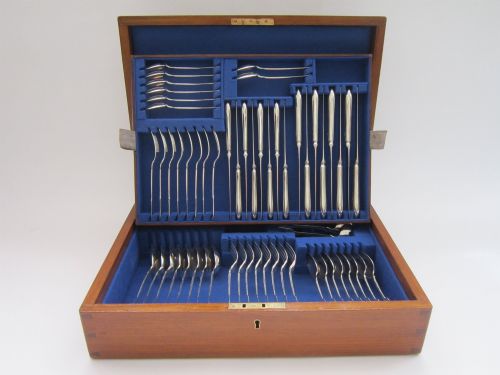
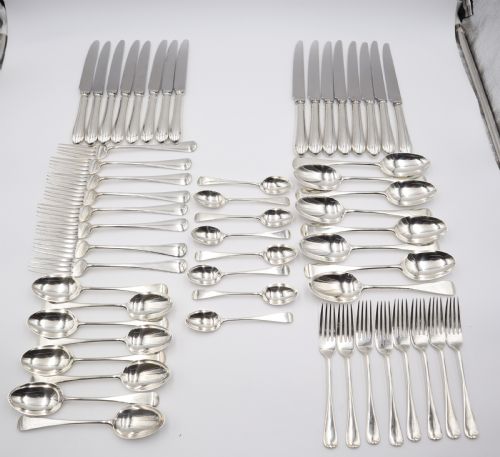
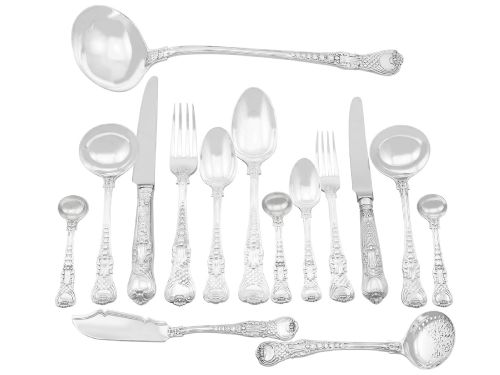
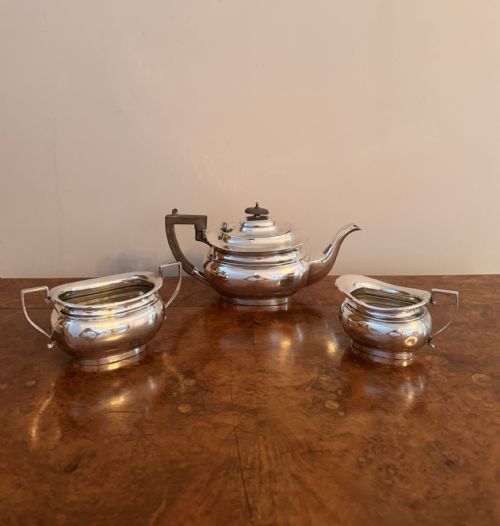
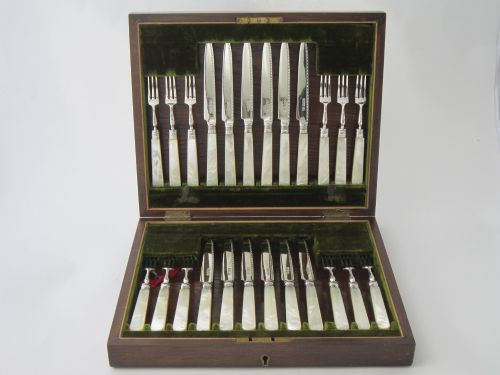
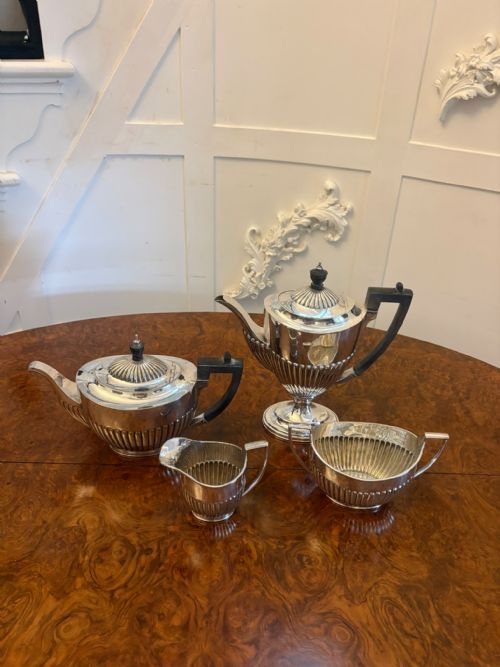
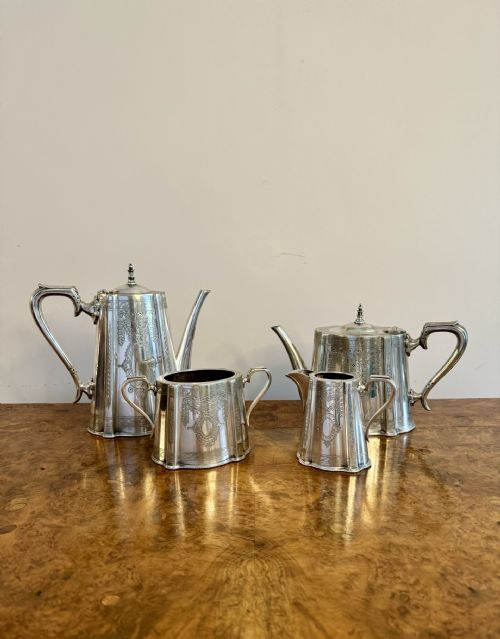
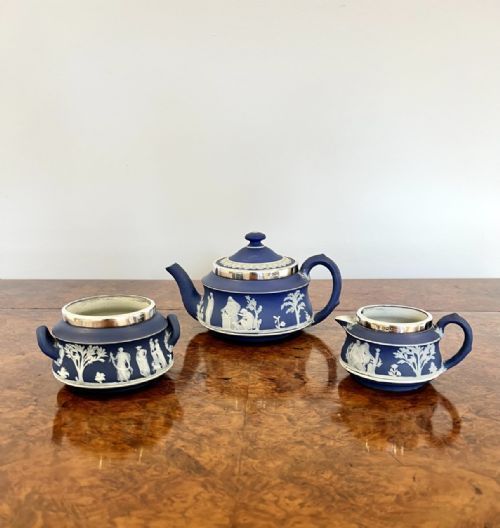
A silver service set encompasses matched groupings designed for dining, tea, or condiment service, spanning tea sets, cruet sets, and large canteens of cutlery. These collections range from compact settings for two persons to extensive canteens built for thirty.
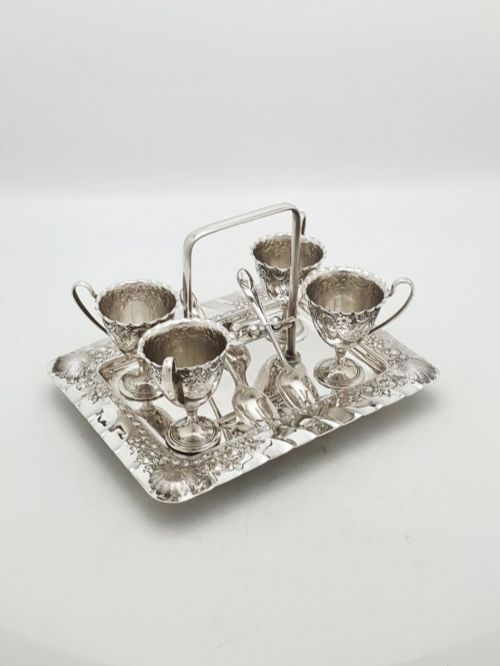
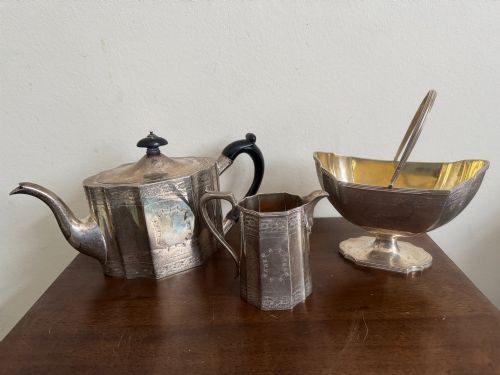
The selections encountered here predominantly date from the Georgian, Victorian, and Edwardian eras through to the Art Deco period, utilising both sterling silver and silver plate. Tea services, egg cruets, and dessert sets frequently dominate the available forms.
Makers and silversmiths shaped these sets for formal dining rooms and drawing rooms, applying styles from traditional Rococo Revival to clean geometric lines. Buyers encounter everything from simple domestic silver plate to heavy sterling silver services.
How they were made
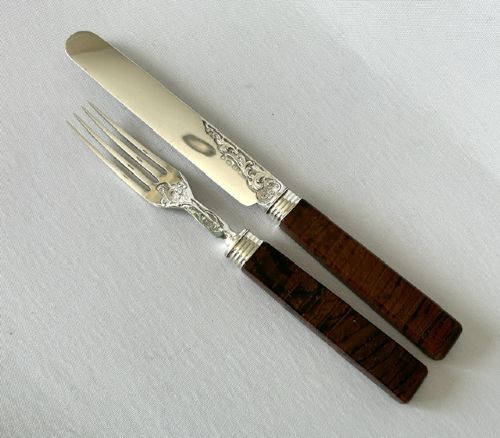
Makers utilised sterling silver and silver plate, alongside electroplated nickel silver and Sheffield plating techniques, providing durable metallic surfaces for daily or formal dining. Workshops often integrated materials such as wood, velvet, ebony, cut glass, and mother of pearl into handles, liners, and fitted cases.
Silversmiths employed casting, embossing, and hand engraving to shape teapots, cruet bottles, and flatware handles. Structural elements like Fiddle pattern cutlery and ornate grapevine detailing required specialised metalworking skill.
Silver Service Set Retail Price Guide 2026
Typical asking prices for silver service set among the pieces listed under this phrase on Sellingantiques today, from the lower quarter to the upper quarter. They describe what is for sale here now, not the wider market.
Some dessert sets paired silver forks with hand-painted Doulton Burslem plates, ensuring strawberries were eaten in absolute style.
What varies in quality
The caliber of a service rests on the weight of the metal, the crispness of the chased or embossed ornament, and the integrity of any fitted wooden or leather case. Heavier gauge sterling silver and deeply detailed silver plate command attention for their substantial feel and durability.
Completeness and maker attribution also distinguish exceptional sets, particularly when matched with original components like cut glass bottles or Doulton Burslem porcelain plates. Well-preserved makers' marks and uniform patination across all pieces indicate a cohesive, superior service.
Joseph Rodgers And Sons·Walker And Hall·Christofle Marly·Tiffany·Elkington·Carrington
The Silver Service Set Glossary
- Sterling silver
- A silver alloy containing 92.5 percent pure silver and 7.5 percent other metals, usually copper. This standard composition guarantees durability while maintaining a bright metallic lustre.
- Silver plate
- A base metal, such as copper or nickel silver, coated with a thin layer of pure silver. It provided an accessible alternative to solid sterling for large dining services.
- Cruet set
- A matched collection of small bottles or containers for condiments, vinegar, oil, salt, and pepper, often housed in a dedicated silver frame. These sets sat at the centre of formal dining tables.
- Canteen
- A fitted box, chest, or case designed to store a complete set of cutlery or flatware. Canteens kept large services organised and protected when not in use.
- Fiddle pattern
- A traditional nineteenth-century flatware design characterised by a stem that widens toward the end in the shape of a violin. It remains a staple of antique cutlery sets.
Silver Service Set: Frequently Asked Questions
How do I care for silver plate?
Silver plate requires gentle cleaning with specialised silver polishes and soft cloths to preserve the thin metallic layer over the base metal.
Storing pieces in dry, anti-tarnish environments prevents excessive oxidation and maintains the original finish.
What is an egg cruet set?
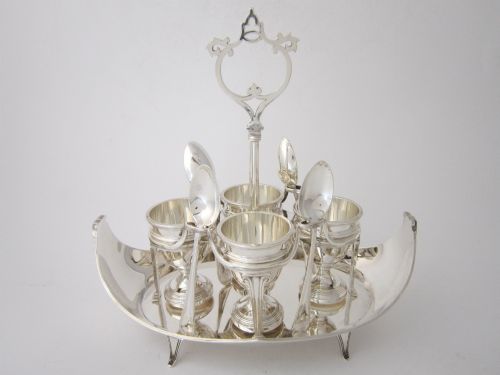
An egg cruet set is a specialised tabletop service featuring a stand holding multiple egg cups, spoons, and salt cellars.
These sets were popular during the Victorian and Edwardian periods for formal breakfast service.
How do I identify the date of a set?
Dating silver relies on examining the hallmarks stamped into the metal, which indicate the assay office, year code, and silversmith's mark.
Silver plate relies on maker stamps and stylistic clues such as Edwardian embossing or Art Deco geometric forms.