



Silver Service Bowl
A silver service bowl provides the definitive centrepiece for formal hospitality, bringing solid weight and reflective brightness to a traditional table.
Silver Service Bowl
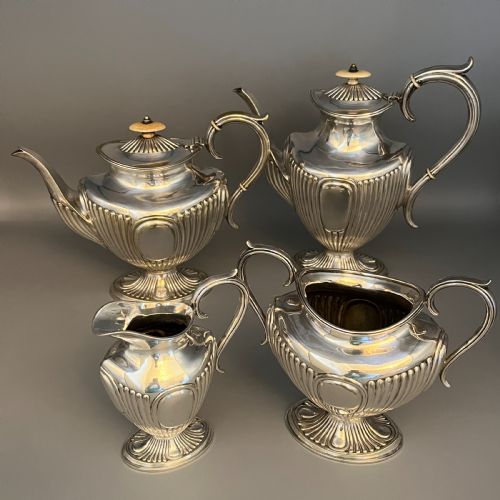
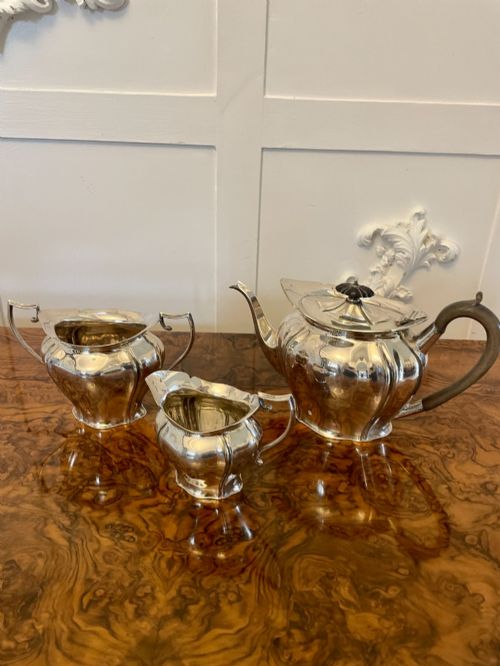
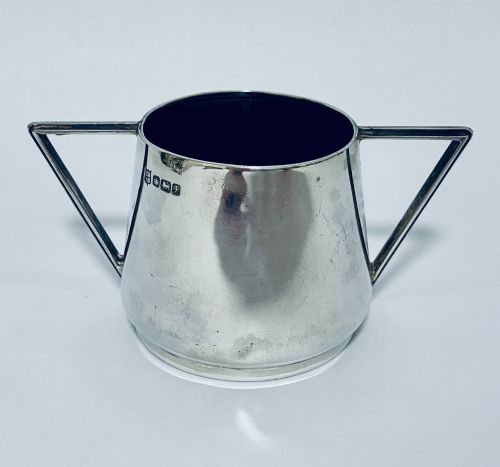
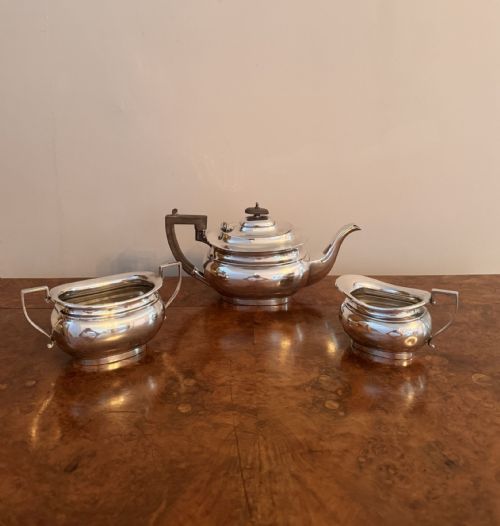
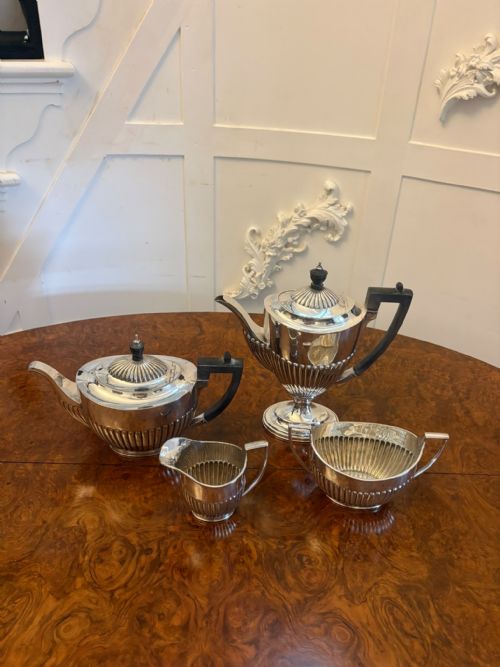
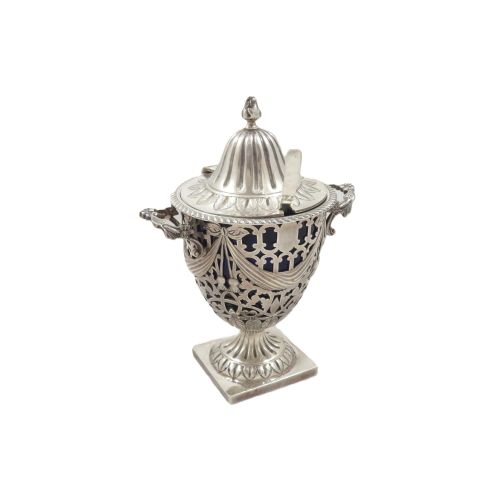
A silver service bowl for a tea or coffee set appears most frequently as part of a larger matched grouping, or as a standalone sugar bowl and sugar basket from the Victorian and Edwardian eras. These domestic vessels range from smaller individual basins to large ornamental centerpieces associated with formal service.
The selection includes pieces spanning the Georgian, Victorian, Edwardian, and Art Deco periods, encompassing distinct stylistic shifts from rococo revival curves to geometric modernist lines. Sugar baskets with swing handles and lidded urn forms sit alongside open bowls designed for tableware arrangements.
Materials and construction
Makers utilised sterling silver and silver plate, alongside Sheffield plating on copper base metals, with some pieces incorporating electroplated nickel silver and gold gilt interiors. Selected items feature complementary elements of wood, ebony, and ebonised wood for insulation handles and knobs.
Craftsmen shaped these metals through hammering, spinning, and casting, often applying chased and engraved surface decoration such as grapevine motifs, zodiac designs, and ornate Rococo borders. Handles and finials were frequently cast separately and soldered or pinned to the main body.
Silver Service Bowl Retail Price Guide 2026
Typical asking prices for silver service bowl among the pieces listed under this phrase on Sellingantiques today, from the lower quarter to the upper quarter. They describe what is for sale here now, not the wider market.
Materials across the inventory include ebonised wood, crystal glass, gold gilt linings, and electroplated nickel silver alongside solid sterling.
Distinctions in manufacture
Quality rests upon the weight of the metal used and the crispness of chased or embossed details, where deeper hand-work maintains sharpness across intricate patterns. Thicker silver plate and substantial sterling gauge ensure durability and resistance to deformation over decades of use.
The integrity of soldered joints, the smooth movement of swing handles on baskets, and the retention of original gilding inside sugar bowls separate standard production items from workshop pieces bearing identifiable maker marks.
Joseph Rodgers & Sons·Walker and Hall·Joseph Craddock·Benjamin Smith·Mappin & Webb·Archibald Knox for Liberty·Goldsmiths & Silversmiths Co·George Fox·Harry Atkin
The Silver Service Bowl Glossary
- Sheffield Plate
- A composite material made by fusing a sheet of silver to a thicker copper ingot before rolling, common in Georgian tableware.
- Sugar Basket
- An open or lidded vessel, often featuring a swing handle, designed to hold sugar lumps on the tea table.
- Electroplated Nickel Silver
- A base metal alloy of copper, nickel, and zinc coated with a layer of pure silver through an electrolytic process.
- Sterling Silver
- An alloy consisting of ninety-two point five percent silver by mass and seven point five percent other metals, typically copper.
- Gilt
- A thin application of gold applied to the interior surface of a silver bowl to prevent tarnishing from acidic contents.
Silver Service Bowl: Frequently Asked Questions
How do I clean a silver service bowl?
Wash the piece gently in warm water with a mild, phosphate-free soap, then dry thoroughly with a soft cotton cloth to prevent water spots.
Avoid abrasive dips or harsh scrubbing brushes that strip thin plating and damage the underlying metal surface over repeated polishing sessions.
Can I use sterling silver bowls for food?
Sterling silver and heavy silver plate are food safe and suitable for serving sugar, fruit, or dry items during meals.
Keep highly acidic foods such as citrus fruits or vinegar mixtures out of silver vessels for extended periods to prevent surface pitting.
How do I identify a Georgian piece?
Georgian items often display Sheffield plating characteristics or early sterling hallmarks showing duty marks and maker initials without standard date letters.
Form language tends to rely on restrained neoclassical lines or early revival flourishes before the heavy ornamentation of the Victorian period.
What is the difference between plate and sterling?
Silver plate consists of a thin outer layer of pure silver bonded to a base metal core such as copper or nickel alloy.
Sterling silver is solid precious metal all the way through, marked with specific lion passant or standard purity stamps.