




Silver Sauce Server
A silver sauce server brings period elegance to the table, offering a practical vessel for pouring rich gravies and dressings.
Silver Sauce Server
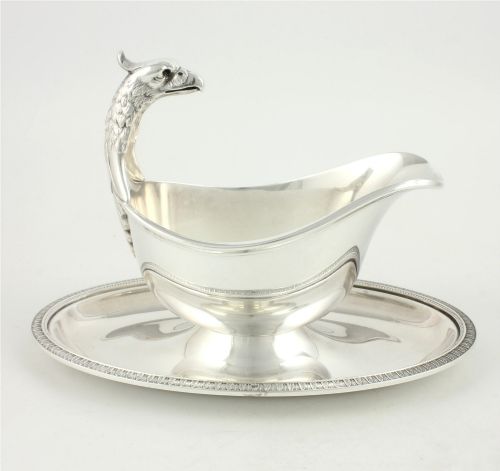
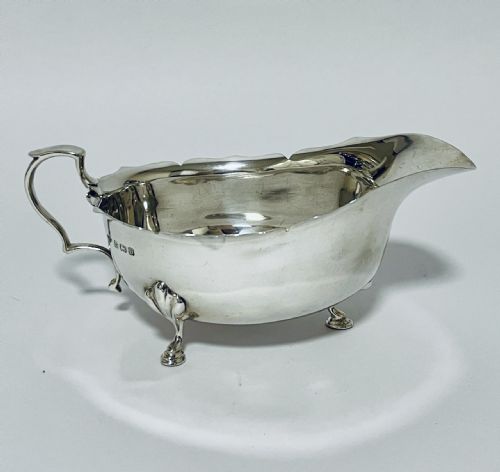
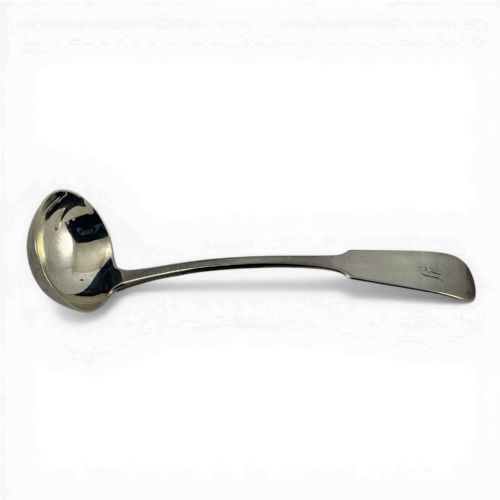
A silver sauce server encompasses a range of dining implements designed for table service, primarily taking the form of sauce boats, gravy warmers, tureens, and dedicated ladles. When you search for a silver sauce server, you encounter pieces spanning from the Georgian and Regency eras through the Victorian, Edwardian, and mid-twentieth-century periods.
Forms vary from plain Georgian designs to ornate Victorian scrollwork and Edwardian revivals. Buyers select these items both for formal dining use and as traditional display pieces on sideboards.
Construction and materials
Makers utilised solid sterling silver and various plated methods, including Old Sheffield Plate and electroplated nickel silver on copper bases. These techniques allowed workshops to produce durable domestic tableware with polished metallic finishes.
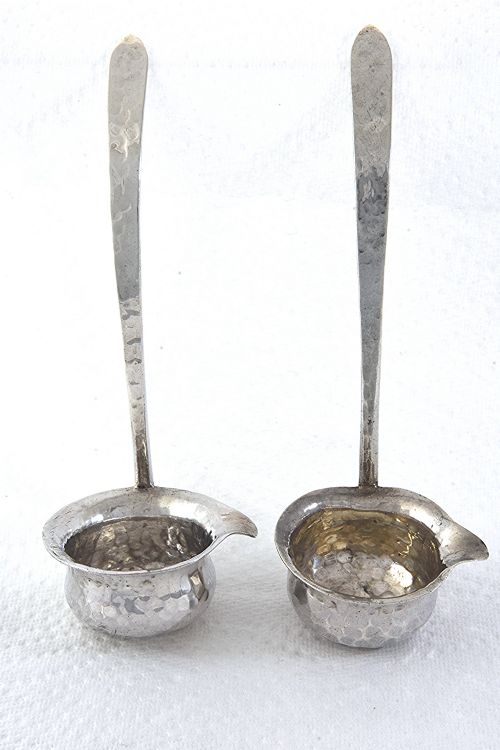
Decorative elements relied on manual silversmithing skills, featuring chased scrollwork, applied borders, and cast handles. Ladles and boats often combined hammered bowls with reinforced rims to withstand regular table service.
The selection includes specialised serveware forms such as argyle gravy warmers, relish caddies, and asparagus serving dishes.
Assessing quality and craftsmanship
Quality rests in the weight of the metal, the crispness of any chased or embossed detail, and the balance of the handle against the bowl. Superior pieces maintain clean solder joints and retain their original plating without excessive wear to the base metal.
Maker marks and provincial hallmarks provide clear indications of origin and standard, distinguishing workshop productions from unmarked utilitarian wares.
Christofle Gallia·William Ferguson·Mappin and Webb·Theodore B. Starr
The Silver Sauce Server Glossary
- Sheffield plate
- An early form of composite metal made by fusing a sheet of silver to a copper core. This technique was widely used before the invention of electroplating.
- Argyle
- A specialised vessel or gravy warmer featuring a heated compartment or inner core. It kept sauces warm at the table using hot water.
- Hallmark
- An official stamp or series of marks applied to precious metals indicating the standard of purity, the maker, and the assay office.
- Provincial silver
- Items made and marked outside the main assay towns, often by local silversmiths in regional areas.
Silver Sauce Server: Frequently Asked Questions
How do I clean a silver sauce server?
Use a specialised silver polish and a soft cloth to gently clean solid or plated surfaces, avoiding harsh abrasives that remove thin plating.
Rinse the piece thoroughly in warm water and dry it immediately with a lint-free cloth to prevent water spots.
Are these servers safe for modern dining?
Most solid silver and silver-plated servers remain entirely functional for serving warm gravies and sauces during meals.
Ensure older plated pieces are washed by hand rather than placed in a dishwasher to preserve the surface finish.
How do I date an antique silver sauce boat?
Examine any stamped hallmarks or maker marks on the base, which often correspond to specific assay office date letters.
Stylistic indicators, such as Georgian gadroon borders or Victorian scrollwork, also help determine the period of manufacture.