





Silver Rimmed Tray
A silver rimmed tray anchors a tabletop or drinks trolley, combining practical service with crisp metalwork.
Silver Rimmed Tray
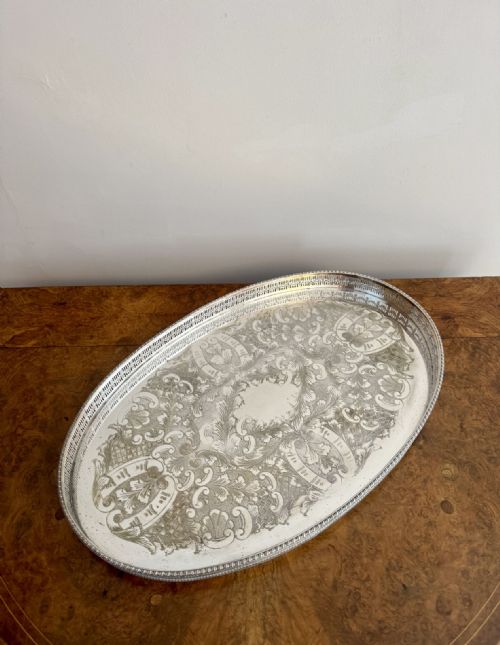
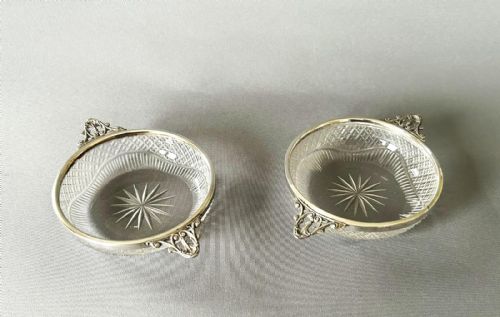
A silver rimmed tray brings together a central body of timber, glass, or plated metal framed by a defined metallic border. These pieces range from compact trinket dishes and card trays to large serving and cocktail trays designed for entertaining.
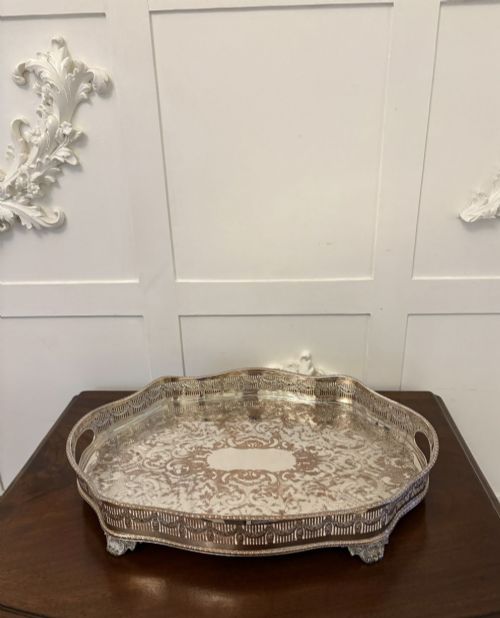
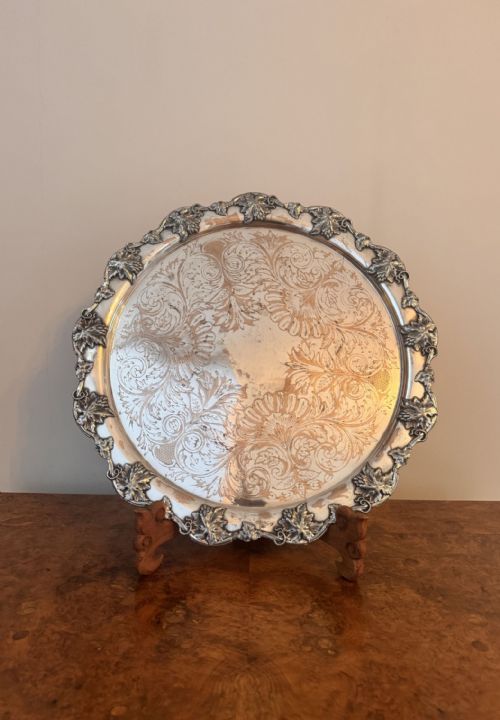
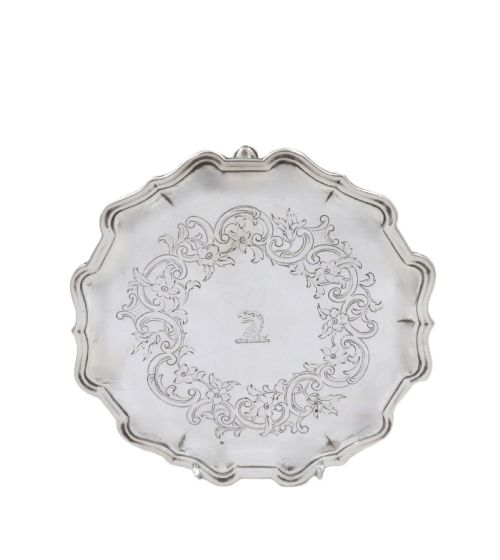
The versions most common on this page date from the Victorian and Edwardian periods, alongside interwar examples from the 1920s and 1930s. Forms vary from circular salvers and octagonal gallery trays to oval serving pieces fitted with handles.
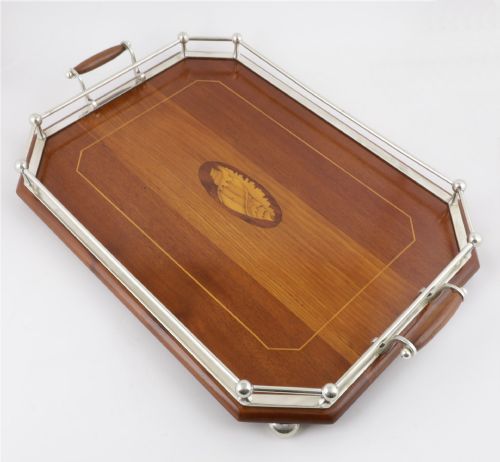
Makers utilised contrasting materials such as mahogany and oak alongside sterling silver and silver plate, creating pieces that function as both display surfaces and practical servers.
Materials and Construction
Silversmiths and manufacturers formed these trays using sterling silver, Old Sheffield plate, and electroplated nickel silver over base metals. Wooden trays in mahogany and oak incorporate applied silver mounts, galleries, and inlaid shell details to secure the rim.
Surface decoration relies on intricate embossed scrolls, hand engraving, and pierced or reticulated borders. Glass elements, including cut glass and mirror glass, appear combined with silver mountings for drinks and trinket service.
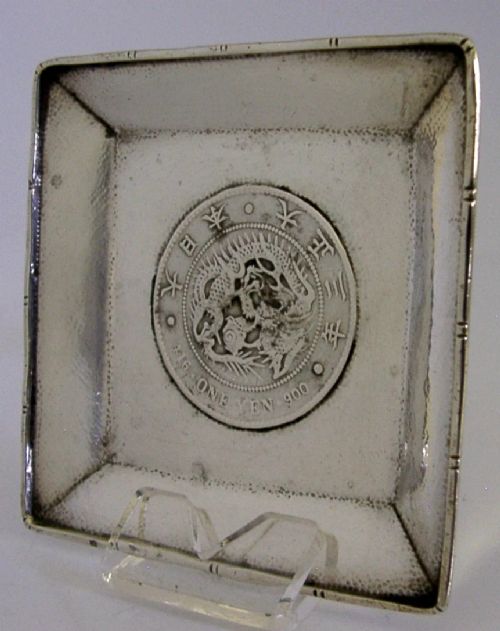
One extraordinary nineteenth-century dish repurposes a Japanese one-yen coin into its silver mount.
Judging Quality and Craftsmanship
Quality rests on the crispness of the chased or engraved surface detail and the structural integration of the rim to the base. Heavy gauge plating or solid sterling construction ensures durability, whereas lesser examples show thin plating wear over base metal.
Design sophistication distinguishes standard production from finer workshop output, particularly in the weight of cast handles, the precision of pierced galleries, and the integration of decorative elements like crests or inlay.
Tiffany and Co·Walker and Hall·J H Potter·S Duncomb
The Silver Rimmed Tray Glossary
- Salver
- A flat tray, usually circular and supported on small feet, used for serving drinks or presenting cards.
- Gallery tray
- A tray featuring a pierced or solid upright metal wall around its perimeter to secure items.
- Old Sheffield plate
- An early fusing technique where a sheet of silver is fused to a copper core.
- EPNS
- Electroplated nickel silver, a common base metal method utilised for Victorian and Edwardian tableware.
Silver Rimmed Tray: Frequently Asked Questions
How do I clean a silver rimmed tray?
Use a specialised silver cloth or mild polish suitable for plated or sterling surfaces, avoiding abrasive pads that damage engraved details.
Take care around wooden bases or glass inserts to prevent moisture or cleaning agents from seeping into joints.
Can I use an antique tray for serving drinks?
Most silver plated and wooden trays function well for serving cocktails, glassware, and tea sets during gatherings.
Ensure heavy items do not stress fragile handles or delicate gallery rims on older pieces.
What is the difference between sterling and silver plate?
Sterling silver consists of solid precious metal throughout, marked by specific hallmarks denoting purity.
Silver plate applies a thin layer of silver over a base metal such as copper, nickel, or Britannia metal.
How do I date an Edwardian tray?
Edwardian pieces typically date between 1901 and 1910, reflecting stylistic influences from earlier Georgian and Victorian revivals.
Look for manufacturer stamps, registry numbers, or specific material descriptions in the listing details.