

Silver Pocket Watch T Bar
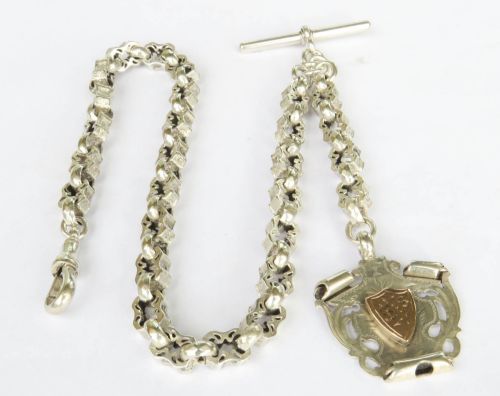
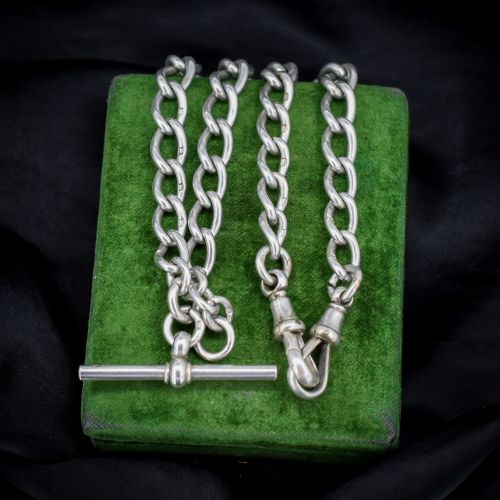
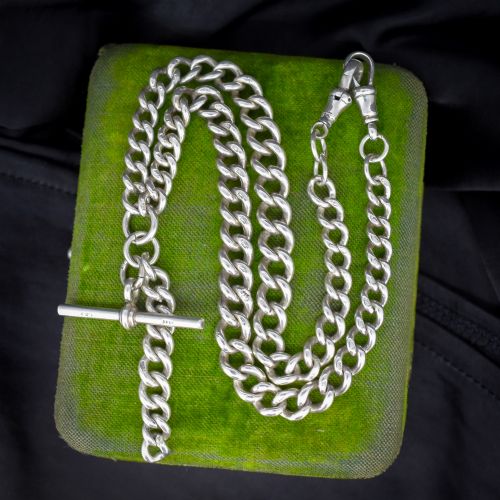
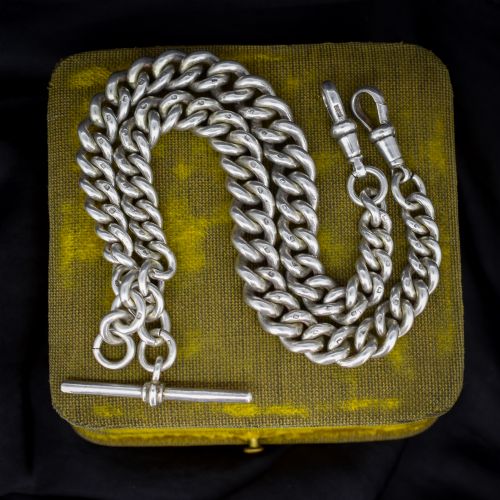
A silver pocket watch t bar anchors the classic albert chain, securing a waistcoat buttonhole while the watch itself rested safely in the pocket.
Silver Pocket Watch T Bar
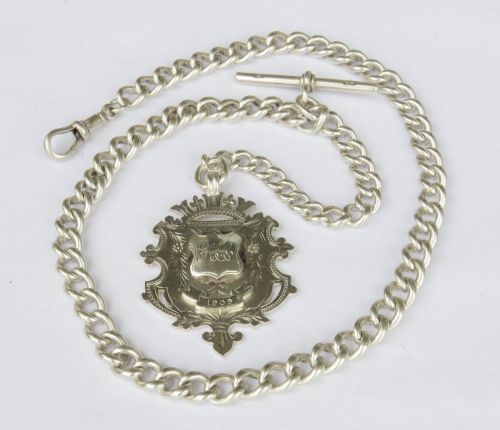
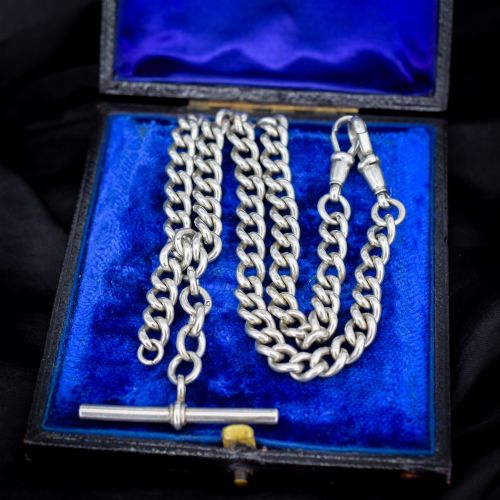
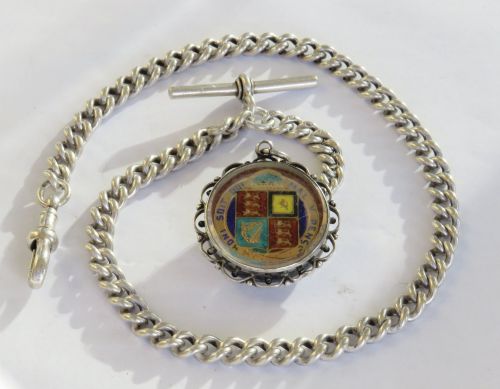
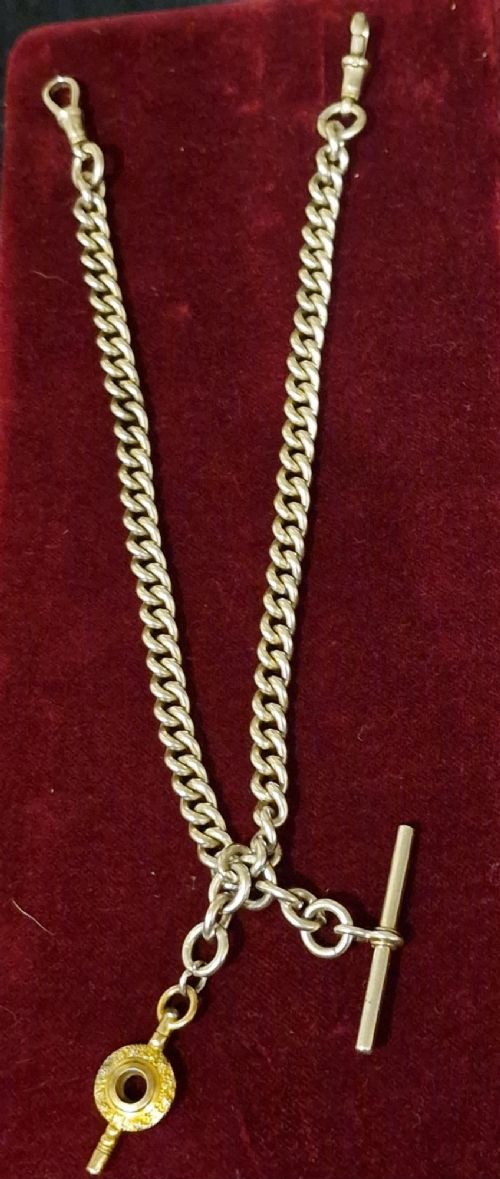
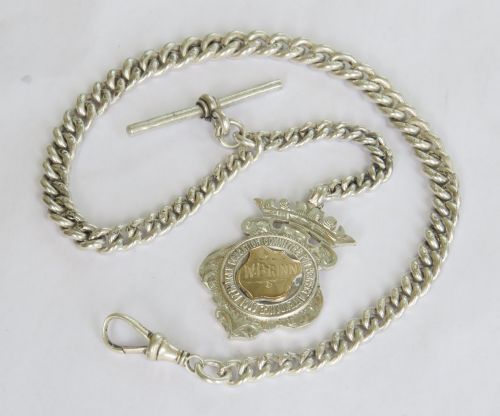
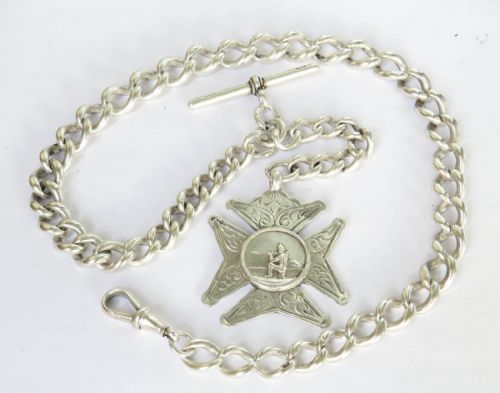
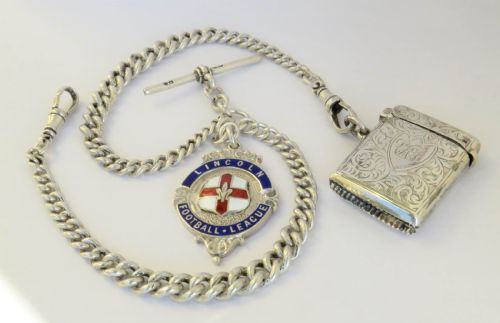
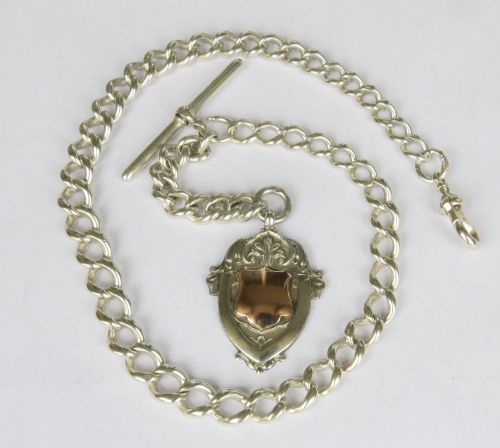
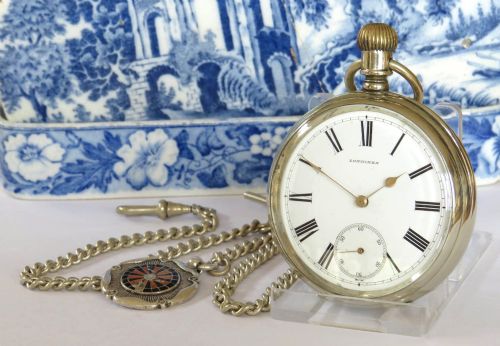
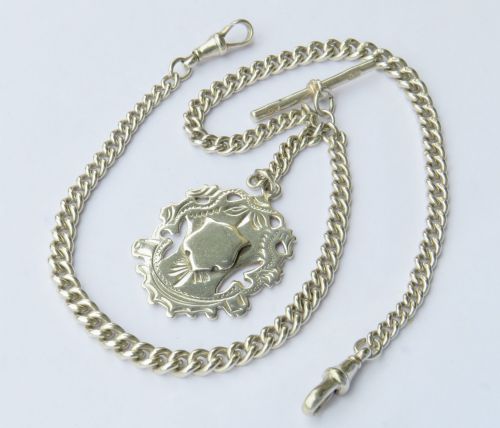
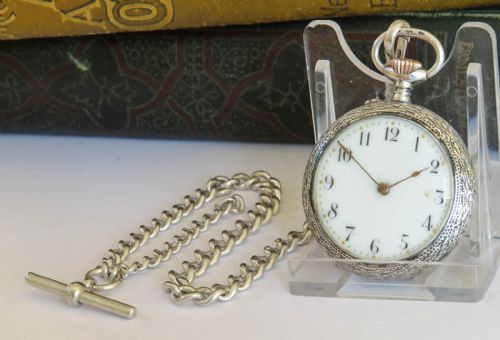
A silver pocket watch t bar is the defining crossbar component attached to traditional watch chains, designed to slip through a waistcoat buttonhole to anchor the timepiece securely. These functional items appear primarily on albert chains and watch chains dating from the Victorian and Edwardian eras through to the 1930s.
The versions most commonly met on this page include sterling silver curb link, trombone link, and fancy link chains fitted with dog clips and the characteristic t-bar drop. Many of these pieces arrive accompanied by silver fobs, vestas, or pocket watches from makers such as Waltham, Omega, and Doxa.
The form spans the nineteenth century and early decades of the twentieth century, reflecting the daily habits of a period when portable timekeeping required sturdy silver connections. Pieces range from straightforward heavy duty lengths to intricate double albert chains adapted for contemporary wear as necklaces.
Materials and construction
Items in this category rely predominantly on sterling silver, solid silver, and silver plate, occasionally accented with gold, enamel, glass, or bloodstone set into associated fobs. Metals are worked into varied link formations including curb, trombone, figaro, and fancy patterns that provide both flexibility and tensile strength.
Links are joined by hand or mechanical assembly into continuous chains terminating in swivel dog clips and the solid t-bar itself. Hallmarks stamped onto links and bars record the assay office, standard of silver, and year of manufacture, linking the metalwork directly to British silversmithing traditions.
Silver Pocket Watch T Bar Retail Price Guide 2026
Typical asking prices for silver pocket watch t bar among the pieces listed under this phrase on Sellingantiques today, from the lower quarter to the upper quarter. They describe what is for sale here now, not the wider market.
Listings on this page span the Victorian era, Edwardian period, First World War, and the Art Deco style of the 1920s and 1930s.
Quality and proportion
The calibre of a chain rests on the substantial weight of the silver links and the crispness of any engraved details upon the t-bar and associated fobs. Heavier gauges of sterling silver impart a reassuring heft, whereas lighter constructions rely entirely on hollow or stamped components.
Proportion and completeness govern the integrity of the piece, particularly where original dog clips, matching hallmarks across multiple links, and corresponding swivel fobs remain intact. The clarity of period stamps and the smoothness of the swivel mechanisms distinguish superior examples from ordinary utilitarian survivors.
Lancashire Watch Co·W Hind·Waltham·Paul Garnier·Horos·Tellus·Cyma·Doxa
The Silver Pocket Watch T Bar Glossary
- T-bar
- The small horizontal metal bar attached to a watch chain that slips through a waistcoat buttonhole to secure the chain. It provides the essential anchor that keeps the pocket watch from falling.
- Albert chain
- A type of watch chain named after Prince Albert, designed to secure a pocket watch to a garment. It can be a single length or a double albert that drapes across two pockets.
- Dog clip
- A spring-loaded snap hook attached to the end of a watch chain to fasten onto the pocket watch loop. This mechanical clasp allows the watch to be detached quickly.
- Vesta
- A small matchbox, often made of silver and carried on a watch chain, used to hold matches for lighting pipes or cigars. They frequently feature engraved floral or geometric decoration.
- Trombone link
- A specific style of watch chain link formed by alternating long rectangular links with smaller circular or oval connectors. This pattern gained popularity during the late nineteenth century.
- Swivel fob
- A decorative pendant attached to a watch chain that rotates on a pivot, often set with stones like bloodstone or carnelian. It served as a personal seal or decorative ornament.
Silver Pocket Watch T Bar: Frequently Asked Questions
How do you wear a watch chain today?
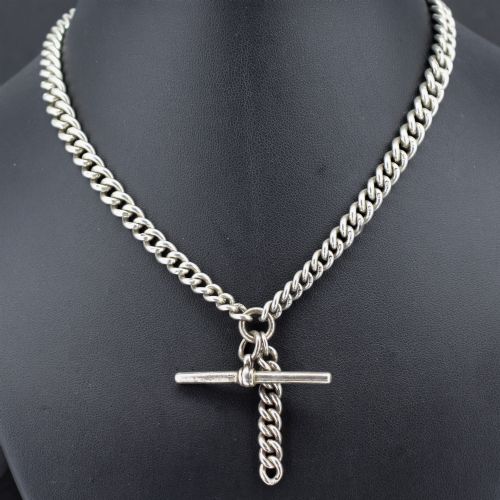
Many people wear these chains around the neck as a necklace by utilising the existing length and dog clips. The t-bar drops down as a decorative pendant element in the centre.
Alternatively, a traditional chain can be threaded through a waistcoat buttonhole using the t-bar, with the watch tucked into the lower pocket.
How do I read silver hallmarks on a chain?
British silver hallmarks typically include a maker mark, a standard mark such as a lion passant for sterling, and a date letter indicating the exact year of assay. Additional town marks reveal which office tested the metal.
Checking these stamps helps establish the age and origin of the piece, as individual links often carry duplicate partial marks to confirm authenticity.
What are fobs and why were they attached?
Fobs are decorative or functional pendants suspended from the chain alongside the pocket watch. They served as personal seals for stamping wax documents or simply as decorative ornaments.
Common examples include sports medals, engraved shields, or swivel stones like bloodstone, reflecting the personal associations of the original owner.