


Silver Pocket Calling Case
A silver pocket calling case holds stiff pasteboards for social visits, combining pocket-sized utility with ornate period metalwork.
Silver Pocket Calling Case
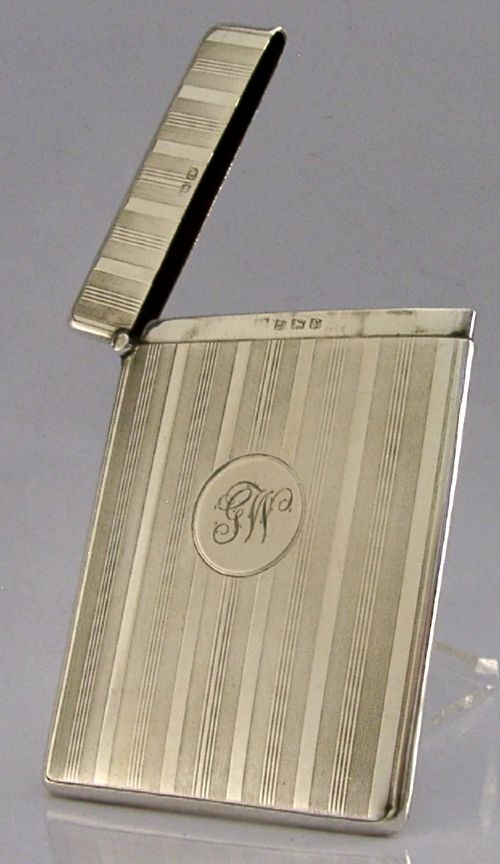
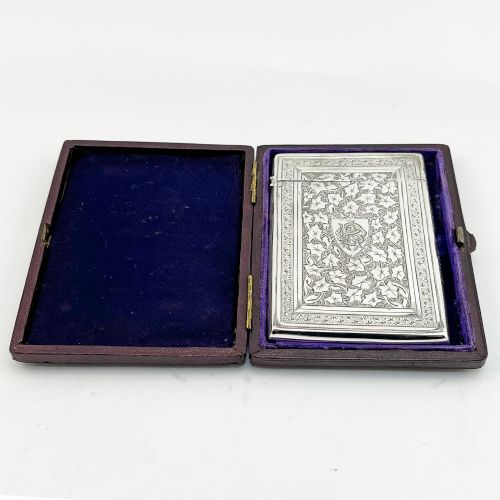
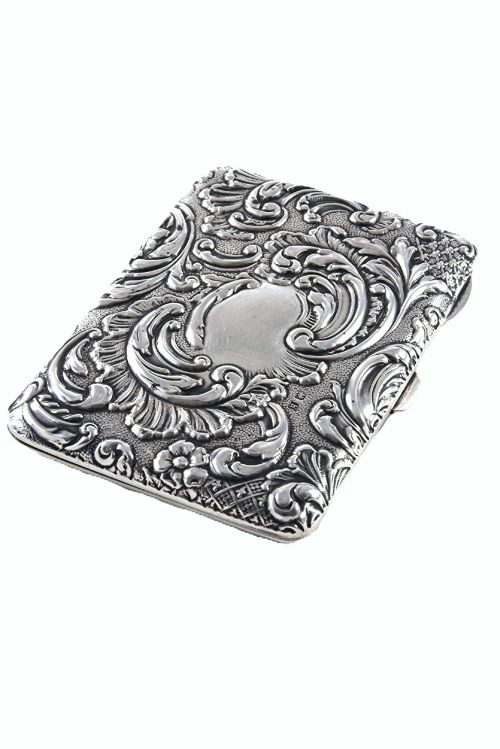
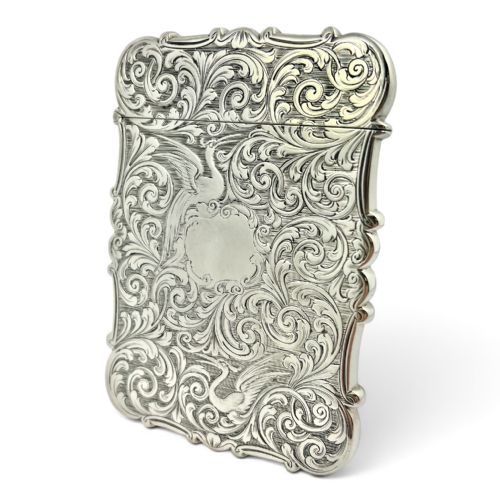
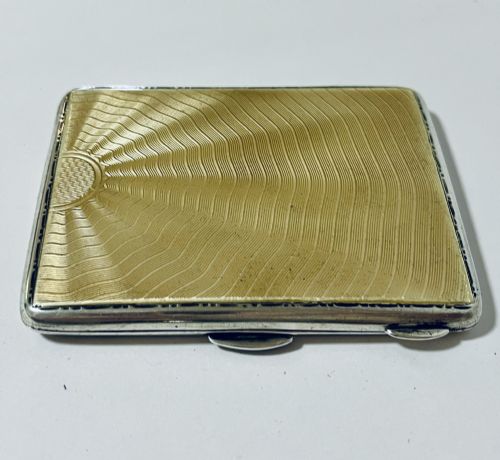
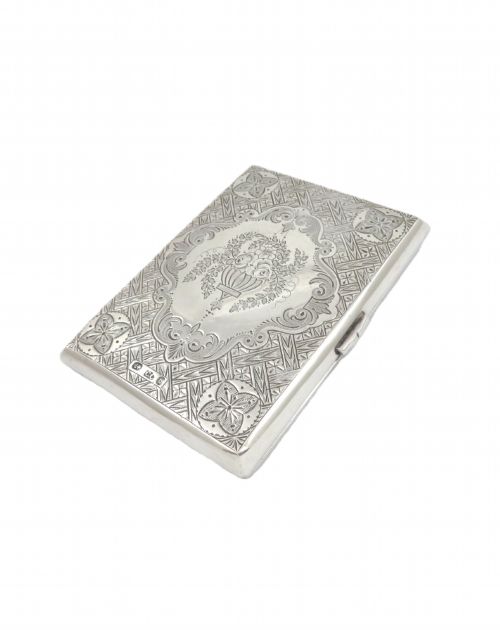
A silver pocket calling case primarily takes the form of a slim rectangular holder designed to protect visiting cards during nineteenth and twentieth-century social rounds. Examples span early Victorian origins through to Art Deco designs, reflecting shifting tastes in personal metalwork.
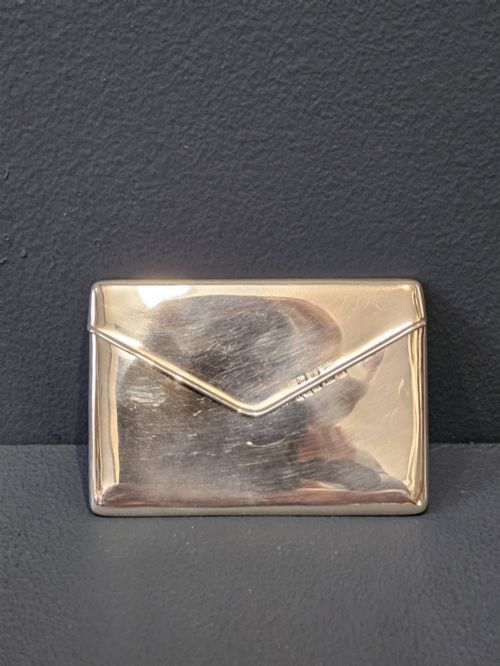
Makers produced variants ranging from plain pocket sleeves to hinged card and stamp cases, spring opening envelope mechanisms, and combined aide-memoire notebooks. Many incorporate fitted interiors lined with leather or velvet to cushion the contents.
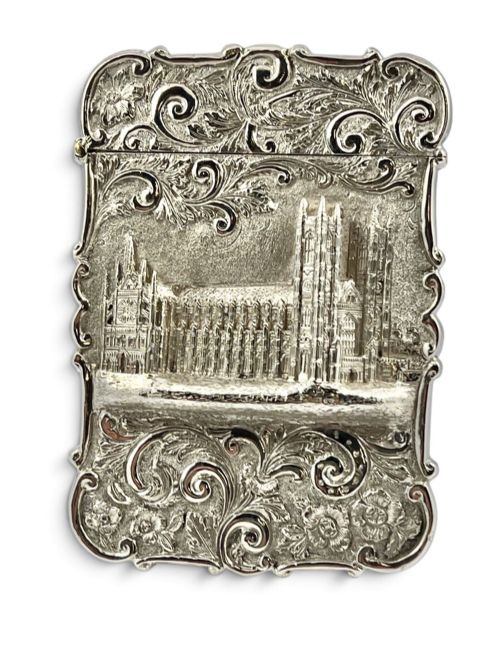
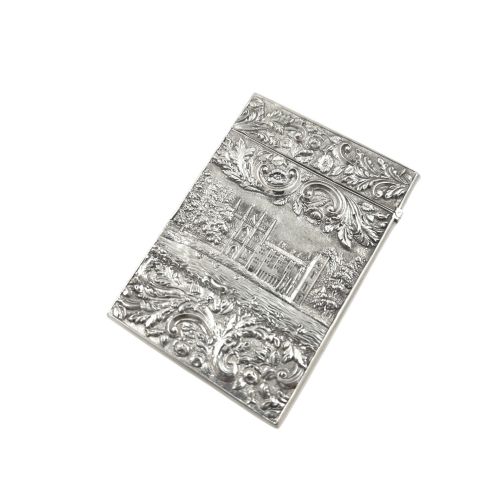
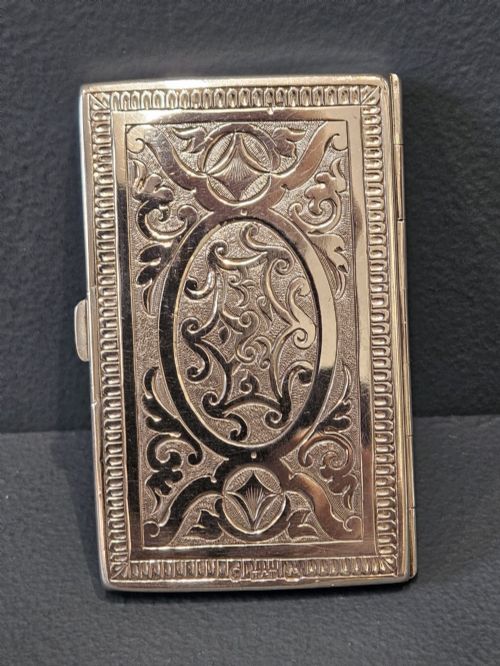
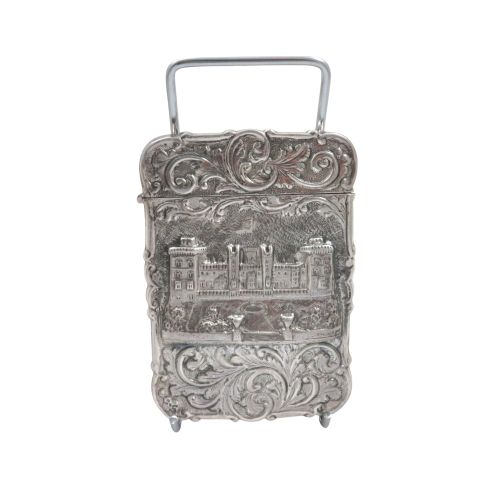
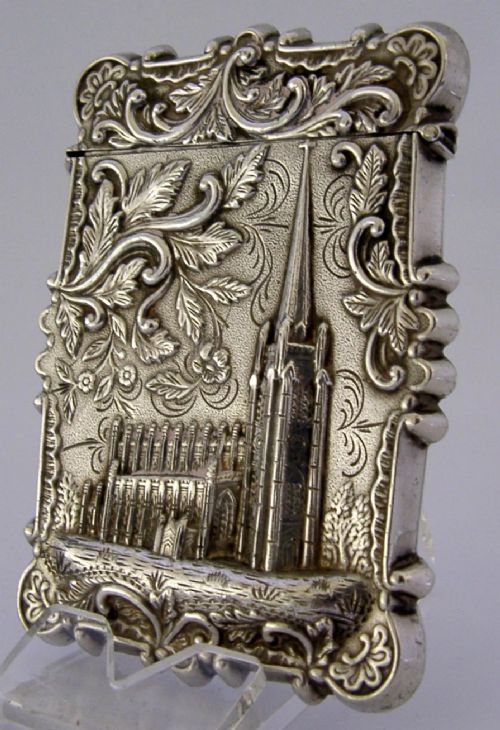
Geographic origins extend across British workshops in Birmingham and London alongside continental European, Russian, American, and Anglo-Indian production. Buyers encounter architectural castle top motifs depicting landmarks such as Westminster Abbey and Windsor Castle alongside engraved foliate patterns.
Markers of Distinction
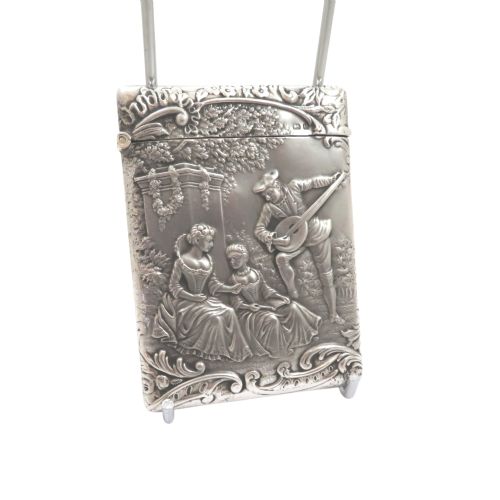
Depth and crispness of relief work define the visual hierarchy, particularly on castle top pieces where architectural detail must remain sharp rather than worn down from polishing. High-tier examples display intricate hand-chased scenes rather than repetitive machine stamping.
Complexity of construction separates standard sleeves from superior multi-functional pieces incorporating internal writing tablets, silk linings, or specialised spring-release mechanisms. The survival of pristine enamel panels and undamaged tortoiseshell backing significantly elevates a piece.
Silver Pocket Calling Case Retail Price Guide 2026
Typical asking prices for silver pocket calling case among the pieces listed under this phrase on Sellingantiques today, from the lower quarter to the upper quarter. They describe what is for sale here now, not the wider market.
Listings incorporate sterling silver, silver gilt, enamel, leather, velvet, tortoiseshell, and gemstone materials across Victorian, Edwardian, and Art Deco periods.
Nathaniel Mills·George Unite
The Silver Pocket Calling Case Glossary
- Castle top
- A style of metalwork featuring high-relief depictions of famous architectural landmarks on the cover. These scenes were typically cast and chased before being applied to the case body.
- Aide memoire
- A small pocket notebook or memorandum pad integrated into the case design, often containing pages for recording social engagements and a miniature pencil.
- Repoussé
- A metalworking technique where the artisan hammers the design from the reverse side to form a raised relief on the front. Fine examples show crisp definition on the finished surface.
- Silver gilt
- Sterling silver that has been coated with a thin layer of gold on the surface. This treatment protects the underlying metal from tarnishing and provides a warm interior contrast.
Silver Pocket Calling Case: Frequently Asked Questions
How do I date a silver case?
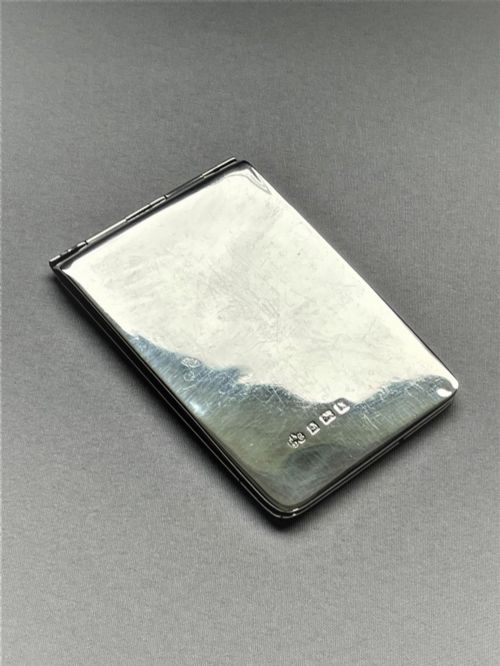
British pieces typically bear hallmarks indicating the assay office, date letter, and sterling standard. Birmingham and London marks are common across the selection.
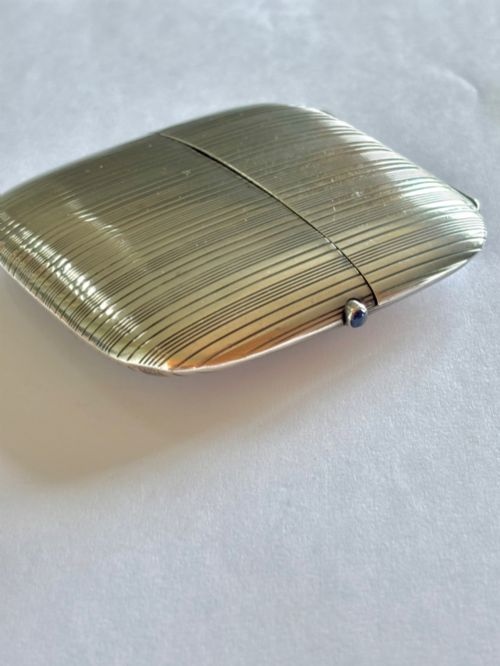
Stylistic cues such as architectural castle top motifs point to early and mid-Victorian decades, while geometric lines indicate later Art Deco production.
Were these cases only used for visiting cards?
While primarily designed for visiting cards, many examples incorporated compartments for stamps, coins, or calling notes. Some variants functioned simultaneously as cigarette cases or memorandum books.
Internal leather or velvet partitions allowed owners to carry multiple small paper items securely in one pocket.
What are castle top cases?
Castle top cases feature high-relief sculptural lids depicting well-known buildings, churches, or historic ruins. Prominent examples show Westminster Abbey or Windsor Castle.
Silversmiths produced these sought-after items during the Victorian period, utilising detailed repoussé work to render recognisable architectural facades.