

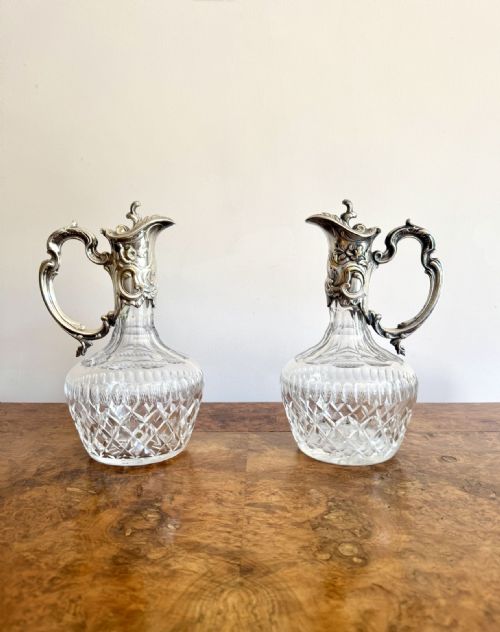


Silver Plated Wine Carafe
A silver plated wine carafe brings heavy glass and gleaming metal together for the dining table, offering a traditional way to serve claret and spirits.
Silver Plated Wine Carafe
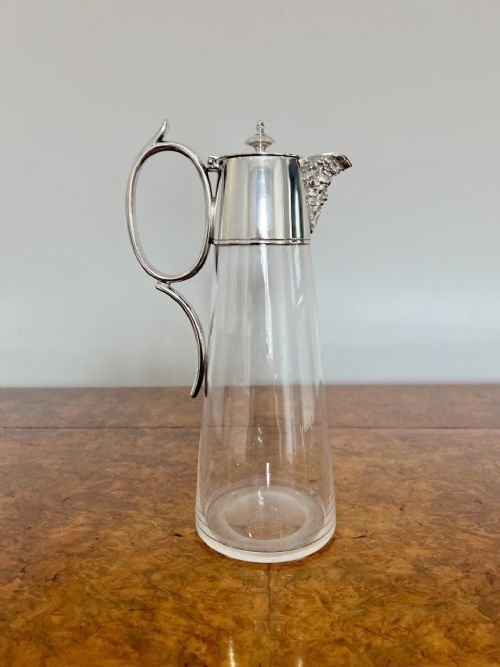
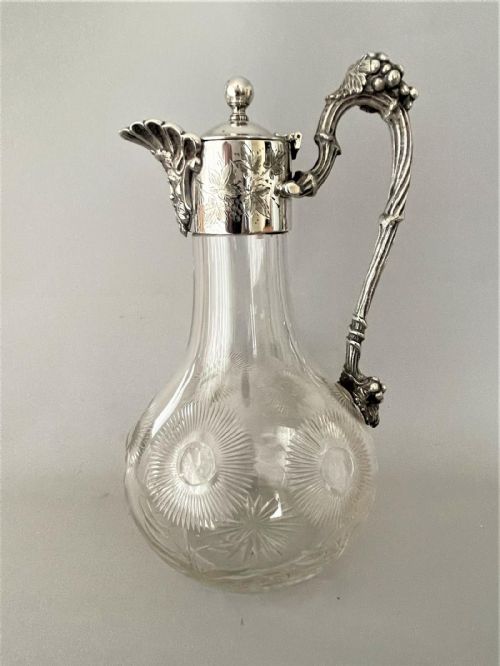
A silver plated wine carafe is most frequently encountered in the form of a claret jug, wine decanter, or serving ewer dating from the Victorian and Edwardian eras. These vessels combine functional glass bodies with decorative metal mounts, handles, and hinged lids designed for pouring wine at the table.
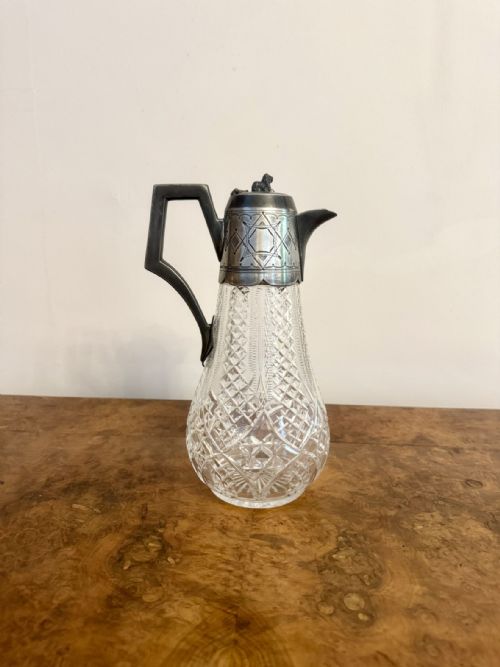
The selection ranges from straightforward nineteenth century glass bottles with plated collars to elaborate nineteenth and early twentieth century jugs featuring cut crystal, etched designs, and novelty shapes. Makers produced these pieces for formal dining, utilising various styles from traditional revivalism to cleaner modernist lines.
Examples on this page span several decades of British and European production, highlighting how dining customs shaped domestic silver and glassware. Buyers encounter matching pairs as well as single vessels intended for claret, sherry, or dessert wine.
What varies in quality
Quality rests on the weight and clarity of the glass vessel, where deep hand cutting and crisp etching separate standard production from finer work. The thickness of the silver plate and the crispness of cast details on the handle and mount also dictate the tier of the piece.
Design ambition distinguishes ordinary vessels from notable examples, particularly where specific makers or avant-garde styles like Art Nouveau and Arts and Crafts influence the mount. Balance in the hand, secure mounting of the collar, and the smooth action of the hinged lid determine the execution of the object.
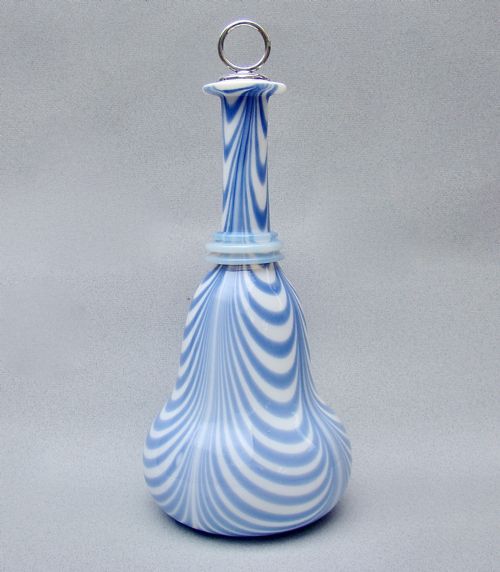
Object forms span claret jugs, spirit bottles, wine bottle holders, and novelty champagne bottle decanters.
Elkington·Hukin & Heath·Rupert Favell & Co
The Silver Plated Wine Carafe Glossary
- Claret jug
- A specialised pouring vessel designed specifically for red Bordeaux wine, featuring a handle and a hinged lid.
- Old Sheffield plate
- An early form of composite metal made by fusing a thin sheet of silver to a thicker copper base, common on nineteenth century items.
- Cranberry glass
- A rich red-pink glass coloured with gold chloride, frequently utilised for decorative Victorian decanters.
- Mount
- The metal collar, handle, spout, and lid assembly fitted to the upper portion of a glass decanter body.
- Cut crystal
- High-clarity glass faceted by grinding and polishing wheels to create complex geometric patterns that catch the light.
Silver Plated Wine Carafe: Frequently Asked Questions
What is a silver plated wine carafe used for?
These vessels were created to hold and serve claret, sherry, and other table wines during formal meals in the nineteenth and early twentieth centuries.
The hinged lid kept the contents covered between pours while the handle and spout allowed for controlled serving at the dining table.
How do I clean a glass and silver plate decanter?
Wash the glass interior gently with warm water and mild detergent, avoiding harsh abrasives that might scratch the surface or damage old glass.
Polish the silver plated mounts carefully with a soft cloth and appropriate metal cleaner, taking care not to let polish residue build up where the metal meets the glass.
How can I tell Victorian pieces from Edwardian ones?
Victorian examples often feature heavier, ornate ornamentation such as Rococo revival scrolls, deep cut glass patterns, and heavier casting.
Edwardian pieces generally lean towards simpler silhouettes, lighter glass cutting, or distinct stylistic movements like Art Nouveau and Arts and Crafts.
Can I use these carafes for everyday dining?
These antique and vintage vessels are fully functional for serving wine and spirits provided they are handled with care during washing and pouring.
Due to the age of the silver plate and the delicate nature of nineteenth century glass, hand washing is essential to preserve the materials.