


Silver Collar Wine Decanter
A silver collar wine decanter combines heavy glass and precious metal mounts to serve your table with distinction.
Silver Collar Wine Decanter
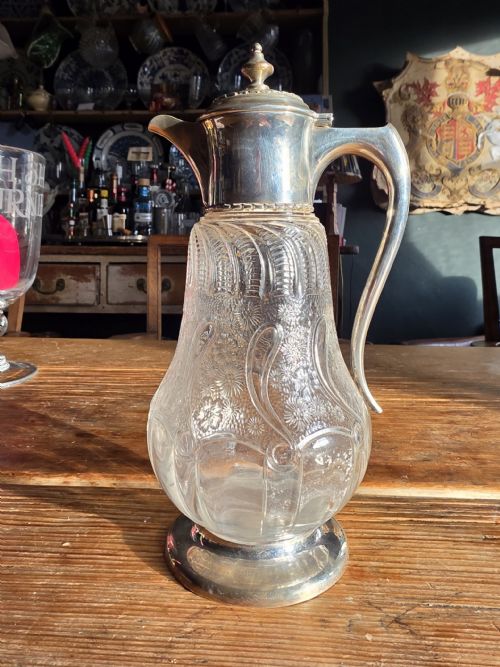
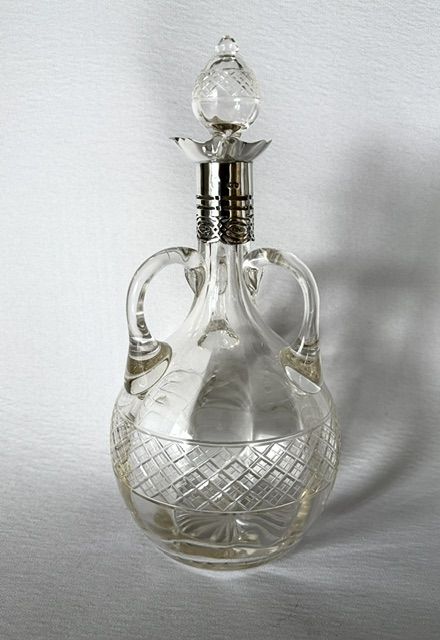
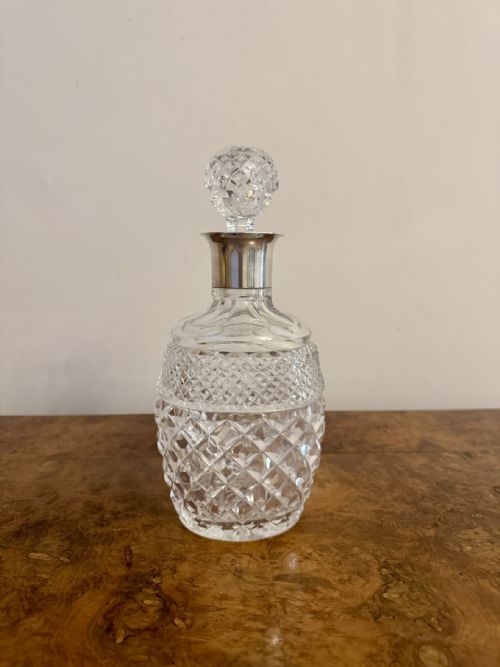
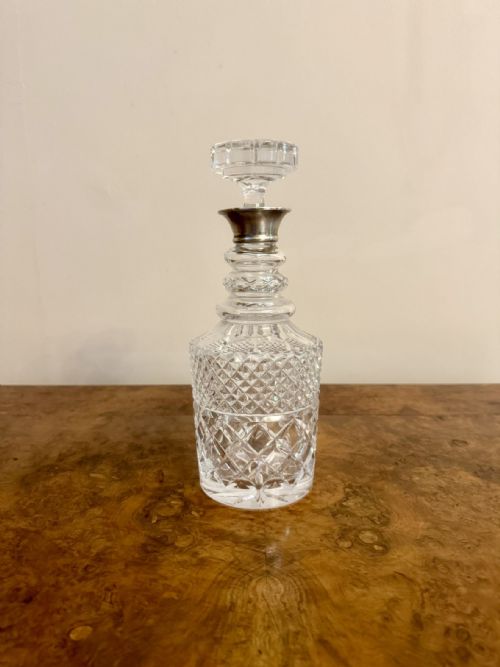
A silver collar wine decanter is typically a glass vessel fitted with a metal neck mount, designed for serving wine, claret, and spirits. You will frequently encounter Edwardian and Victorian examples on this page, reflecting periods of fine dining and hospitality.
The body of these vessels ranges from simple clear blown glass to heavily cut crystal and coloured glass such as cranberry. Alongside standard decanters, you will find claret jugs, whisky noggins, and matching silver bottle labels designated for hock or brandy.
Makers utilised various silver grades, from standard sterling to silver plate and higher continental purities. Forms vary from straightforward bottle shapes to elaborate Arts and Crafts designs and revival styles.
Materials and construction methods
Glass bodies were mouth-blown, sometimes moulded, and often finished with deep hand-cutting, engraving, or faceting to catch the light. The glass was then paired with a fitted metal collar, which was secured around the neck to protect the rim and hold the pouring spout or stopper.
Silversmiths formed the mounts from sterling silver or silver plate, sometimes applying parcel gilt or enamelled details for rich contrast. Mounts were secured to the glass using specialist adhesives or mechanical tightening to ensure a permanent fit.
Listings feature pieces spanning the Victorian and Edwardian eras, utilising sterling silver, cranberry glass, and heavy cut crystal.
Distinguishing quality across pieces
Quality rests heavily on the clarity and weight of the glass, alongside the crispness of any cutting and engraving. Heavy, brilliant-cut crystal bodies with well-defined facets denote superior craftsmanship compared to plain, thin glass.
The distinction also lies in the weight and design of the metal mount. Substantial solid silver mounts, particularly those bearing hallmarks from notable makers or distinct artistic styles like Art Nouveau and Arts and Crafts, elevate a piece above standard plated wares.
William Comyns·Hukin & Heath·Archibald Knox for Liberty·William Davenport·Mappin and Webb
The Silver Collar Wine Decanter Glossary
- Claret jug
- A specialised pouring vessel designed specifically for serving red Bordeaux wine. These typically feature an integrated handle and a hinged metal lid.
- Silver collar
- The metal band fitted around the neck of the glass vessel. It often bears hallmarks indicating the metal standard, assay office, and year of manufacture.
- Cranberry glass
- A rich red glass created by adding gold chloride to the molten batch. It appears frequently in Victorian and Edwardian drinkware.
- Cut glass
- Glass decorated by grinding facets or patterns into the surface using a rotating wheel. Deep cutting creates sharp edges and brilliant light refraction.
- Decanter label
- A small metal tag hung by a chain around the neck of the bottle to identify the contents. Common examples designate spirits and wines such as brandy and hock.
Silver Collar Wine Decanter: Frequently Asked Questions
How do I clean a decanter?
Fill the vessel with warm water and specialised cleaning beads, then swirl gently to lift residue from the base. Avoid sudden temperature changes to protect the glass.
Dry the interior thoroughly before storing, and polish the silver collar with a soft cloth to preserve the metal finish without marking the glass.
Are these decanters safe for modern use?
Most antique glass vessels remain entirely functional for serving wine and spirits today. Ensure the interior is clean and inspect the collar fitting before pouring.
Hand wash only to protect both the glass and the historical silver mounts from harsh dishwasher detergents.
How do I date a silver collar?
Examine the hallmarks stamped directly onto the metal mount. These small marks typically reveal the assay office, the silver standard, and a date letter.
Matching the letter to historical assay tables provides the exact year the mount was tested and certified.
What is the difference between a decanter and a claret jug?
A decanter is generally designed with a stopper and a simple neck for pouring. It suits a broad range of fortified and table wines.
A claret jug incorporates an integrated handle and a hinged spout operated by a thumbpiece, tailored specifically for serving red wine at the dining table.