


Silver Plated Pepper Pot
A silver plated pepper pot brings tactile weight and period character to the table, whether you choose a Victorian novelty or an Edwardian stand.
Silver Plated Pepper Pot
A silver plated pepper pot is typically encountered as part of a larger condiment or cruet set, or as a standalone novelty piece modelled after everyday objects. The pieces span the Victorian and Edwardian eras, alongside items from the 1920s.
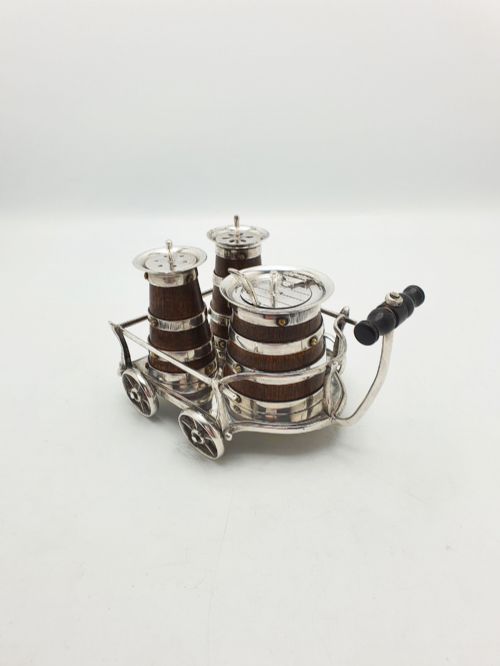
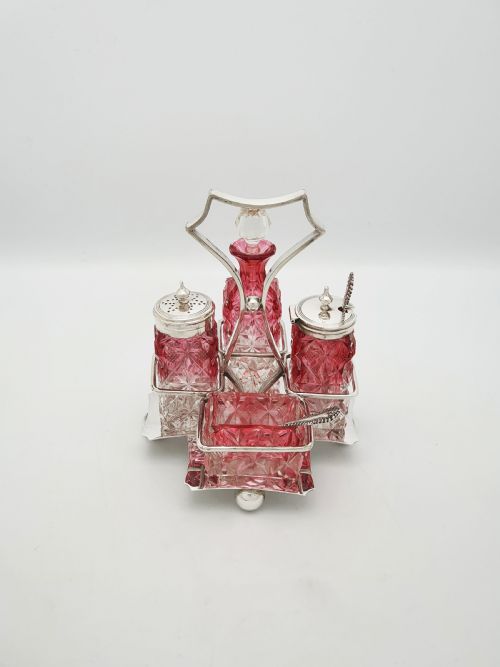
Buyers frequently find these items paired with cut glass, cranberry glass, or cobalt blue glass liners, housed within silver plate frames. Standalone examples often take whimsical forms such as barrels, milk churns, thistle shapes, or carriages.
The materials reflect the domestic dining habits of the late nineteenth and early twentieth centuries. Oak and wood frequently appear alongside metal and glass components to form substantial table accessories.
Materials and construction
Makers applied silver plating over base metals to achieve the appearance of solid silver at a more accessible cost. Cut glass and coloured glass inserts were blown and wheel-cut to fit securely within metal collars.
Joinery in wood and oak elements, particularly in barrel or butler tray frames, combined traditional cabinet-making with metal mounting. Pierced and chased silver plate work formed the pierced caps and protective surrounds of the pots.
Dining tables of the past often featured miniature violins and farmyard animals dispensing your daily seasoning.
Assessing craftsmanship and design
The distinction between standard domestic items and superior pieces rests on the crispness of the casting and the depth of the silver plating. Novelty forms with intricate mechanical or realistic details command greater interest.
The integration of materials determines the overall cohesion of a piece, where thick cut glass and well-fitted wooden mounts elevate the object. Heavier gauge metalwork withstands decades of handling better than thin plating.
Mappin Brothers·Mappin & Webb
The Silver Plated Pepper Pot Glossary
- Cruet set
- A matched collection of condiment bottles and pots held in a metal or wooden frame. These sets usually contained mustard, pepper, and oil containers.
- Silver plate
- A thin layer of silver bonded to a base metal core. This technique became widespread during the Victorian period for domestic tableware.
- Novelty cruet
- A condiment container shaped to resemble an animal, vehicle, or familiar object. Victorian makers produced these in large numbers for dining table amusement.
- Cranberry glass
- A rich red-pink glass created by adding gold chloride to the molten mixture. It frequently appears in late Victorian and Edwardian tablewares.
- Cut glass
- Glass decorated by grinding facets or patterns into the surface using a rotating wheel. This technique adds considerable weight and sparkle to condiment bottles.
Silver Plated Pepper Pot: Frequently Asked Questions
What is a silver plated pepper pot?
A silver plated pepper pot is a small tabletop container designed to dispense ground pepper, featuring a pierced top and a metal-plated body. They appear frequently as standalone novelties or as components within larger dining cruet stands.
These pieces date predominantly from the Victorian and Edwardian eras, reflecting the formal dining customs of the time. Manufacturers combined silver plate with materials like cut glass, oak, and coloured glass to create durable table accessories.
How were novelty cruets used?
Novelty cruets served both a functional purpose on the dining table and a conversational role among guests. Shaped as barrels, milk churns, or musical instruments, they held seasonings while adding amusement to formal meals.
Guests or hosts would pass these small figures around the table during dinner courses. Their clever designs often concealed the screw threads or push-fit caps used to refill the spices.
How do I date a silver plated piece?
Dating these items relies on stylistic clues, manufacturing techniques, and any accompanying hallmarks or maker stamps. Victorian examples often feature heavier casting and more ornate detailing compared to later Edwardian designs.
Materials also offer chronological markers, such as the distinct cranberry or cobalt glass liners popular in the late nineteenth century. Structural forms like oak barrel frames point directly to specific decades of production.
How do I care for silver plate?
Caring for silver plate involves gentle cleaning with a soft cloth and dedicated silver polish to maintain the shine without wearing through the thin metal layer. Avoid abrasive materials that can strip the plating from the underlying base metal.
Glass and wooden components should be cleaned separately using appropriate mild solutions to protect the mounts and fixings. Proper humidity and careful handling prevent tarnishing and preserve the structural integrity of the frame.