







English Silver Plate Condiments
English silver plate condiments bring Victorian and Edwardian dining tables to life with brilliant metalwork and coloured glass.
English Silver Plate Condiments
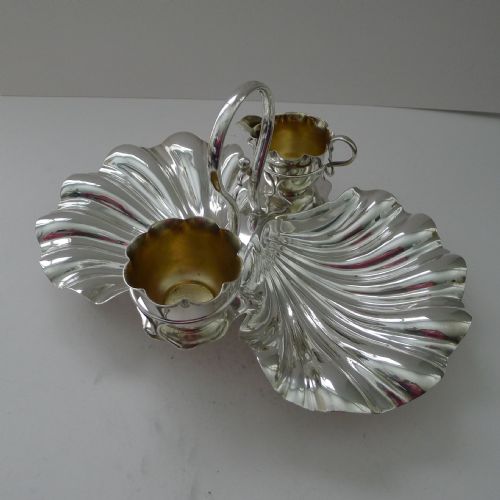
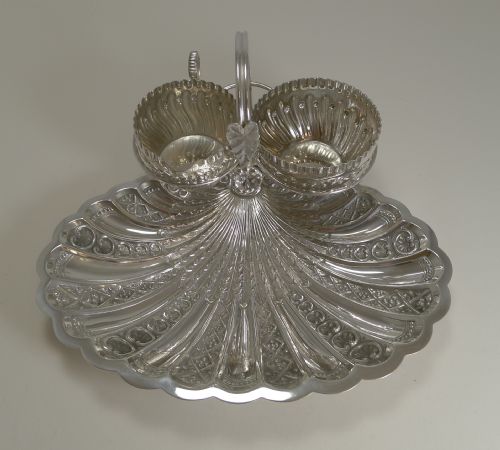
English silver plate condiments encompass practical table items such as cruet sets, salt cellars, sauce boats, and serving dishes. These pieces date from the Victorian and Edwardian periods, stretching from the 1870s through to the early decades of the twentieth century. Buyers seeking these items encounter matching sets, cased stands, and inventive novelty designs that served both domestic and social functions.
Cruet sets and salt cellars form the core of what appears on this page, frequently paired with colourful inserts like cranberry glass or fitted with delicate mother-of-pearl handles. Alongside standard cruet frames, the selection includes specialised strawberry sets and hors d'oeuvres forks designed for specific dining rituals. These objects reflect the varied demands of nineteenth and twentieth-century dining, combining utility with decorative display.
Materials and construction
Makers utilised silver plate and electroplated nickel silver as the foundational metals for these condiment stands and dishes, occasionally adding gold wash interiors. The metalwork combines with cut glass, cranberry glass, silk, and velvet linings to create tactile contrast. Oak frames and mother-of-pearl components also appear in specific serving pieces and novelty cruets.
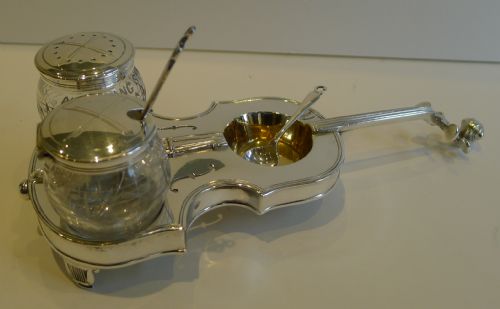
Craftsmen shaped these materials into intricate novelty forms, such as violins and miniature butler trays, alongside conventional cruet frames and double heart-shaped dishes. The combination of durable electroplated metal with fragile glass liners required precise fitting and secure housing within cased sets. Detail work ranges from simple rolled rims to figural novelty castings.
English Silver Plate Condiments Retail Price Guide 2026
Typical asking prices for english silver plate condiments among the pieces listed under this phrase on Sellingantiques today, from the lower quarter to the upper quarter. They describe what is for sale here now, not the wider market.
Some Victorian diners seasoned their meals from miniature violins and tiny butler trays.
Judging quality in silver plate condiments
Quality rests in the crispness of the casting on figural novelty cruets and the structural integrity of the silver plate over nickel silver. Superior pieces maintain an even distribution of plating and secure joints on handles, frames, and stands. The inclusion of undamaged original glass liners, particularly cranberry glass or cut glass, elevates the integrity of a set.
Daniel Arter·Roberts and Belk
The English Silver Plate Condiments Glossary
- Cruet set
- A matched collection of condiment bottles, jars, or castors held within a silver-plated frame or stand. These sets typically held vinegar, oil, mustard, and pepper for the dining table.
- Electroplated nickel silver
- A base metal alloy of copper, nickel, and zinc coated with a thin layer of pure silver through electrolysis. This technique became widespread during the Victorian era for producing affordable tableware.
- Cranberry glass
- A rich red-pink transparent glass coloured with gold chloride during production. It frequently appears as liners inside Victorian salt cellars and condiment pots.
- Gold wash
- A thin layer of gold applied to the interior surface of silver-plated salt cellars or sauce boats. This treatment protected the underlying metal from the corrosive effects of salt and mustard.
- Novelty cruet
- A condiment set designed in a playful or pictorial shape, such as a musical instrument or household object. These pieces combined table utility with amusing conversation starters.
English Silver Plate Condiments: Frequently Asked Questions
What are English silver plate condiments?
These items are table accessories made from silver-plated metals and electroplated nickel silver during the Victorian and Edwardian eras. They include cruet frames, salt cellars, sauce boats, and specialised serving dishes designed to hold seasonings.
Many incorporate coloured glass liners, such as cranberry glass, or feature playful novelty shapes. They functioned as both practical dining tools and decorative table centerpieces.
How were cruet sets used on the table?
Cruet sets held essential condiments like salt, pepper, mustard, oil, and vinegar within easy reach of diners. Servants or hosts placed them centrally on the table or on sideboards during formal meals.
Individual salt cellars sat beside each guest's plate for personal seasoning. Specialised pieces like strawberry sets and hors d'oeuvres forks served specific courses during multi-course Victorian dinners.
How do I care for silver plated condiments?
Gentle cleaning with a soft cloth and mild soap preserves the silver plate without wearing away the thin metal layer. Avoid harsh abrasive dips that can strip electroplated finishes or damage delicate velvet and silk elements.
Glass liners and mother-of-pearl handles require separate, careful washing by hand. Proper storage away from damp conditions prevents tarnishing and protects organic materials like oak and velvet.
How can I tell Victorian from Edwardian pieces?
Victorian pieces often display heavier ornamentation, ornate figural novelty designs, and rich cranberry glass liners dating from the 1870s to the late 1890s. Edwardian items tend toward lighter frames, cleaner lines, and cased sets popular around the turn of the twentieth century. Nomenclature, registration numbers, and stylistic shifts between mid-Victorian elaboration and Edwardian refinement help anchor pieces to specific decades.